Veratrum Album L
Historical document, translated for reference. It reflects medical knowledge of the 1920s–30s and is not medical advice.
Summary
Veratrum Album L, or white hellebore, is a poisonous plant from the lily family found throughout Europe and Asia. Its rhizome contains several toxic alkaloids including protoveratrin, jervine, and pseudojervine, and has been used in veterinary medicine for digestive disorders and rheumatic conditions.
Encyclopedia entry (1928–1936)
VERATRUM ALBUM L BUM ., white hellebore, a plant of the lily family (Liliaceae), found throughout Europe and Asia. A tall herb of mountain meadows, reaching the height of a person. It has a perennial rhizome, from which 1-3 leafy shoots arise. These terminate in a pyramidal panicle of greenish flowers. All parts of the plant are poisonous. Only the rhizome has been chemically investigated. From it have been isolated: an extraordinarily poisonous, non-crystalline protoveratrin (C,jHnNOu); jervine (0.1%), slightly poisonous; pseudojervine, rubijervine, protoveratridine; the latter alkaloids have not been experimentally studied in terms of their effects.
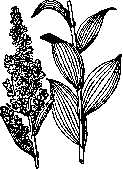
Veratrum album L.
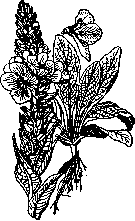
Verbascum phlomoides L- poino Tinct. Veratri (Ph. VII) is used in veterinary practice for digestive disorders and for rheumatic diseases of the muscles.
Related articles
Cite this page
“Veratrum Album L.” Soviet Medical Encyclopedia. English translation of Bolshaya Meditsinskaya Entsiklopediya, 1st ed. (Moscow, 1928–1936), ed. N. A. Semashko. https://sovietmedicalencyclopedia.pages.dev/article/veratrum-album-l/