Asymmetric Carbon
Historical document, translated for reference. It reflects medical knowledge of the 1920s–30s and is not medical advice.
Summary
An entry from the Soviet Medical Encyclopedia explaining the concept of an asymmetric carbon atom, which is bonded to four different groups or atoms. It describes the tetrahedral model of carbon valency, the absence of a plane of symmetry in such molecules, and the resulting optical isomerism.
Encyclopedia article (1928–1936)
ASYMMETRIC CARBON, a carbon atom that is bonded to four different groups or atoms. For example, in bromopropionic acid, CH3-C*H(Br)-COOH, the carbon atom marked with an asterisk is an asymmetric carbon. The carbon atom is represented as being located at the center of a regular tetrahedron; the action of the valence forces of this atom are then directed along the lines connecting the center of this tetrahedron with its four vertices. If even only two of these vertices are occupied by identical atoms or groups attached to the carbon, then the carbon atom will not be asymmetric, since a plane can be mentally drawn through the tetrahedron at an equal distance between both identical attached groups, passing through the center and through both of the other vertices of the tetrahedron occupied by different groups. Such a plane, cutting the entire tetrahedron with its groups into two symmetrical parts, will be a plane of symmetry (see Figure 1). If, however, different groups or atoms are attached to all four vertices of the tetrahedron, then a plane of symmetry cannot be drawn through such a tetrahedron, and such a carbon atom is therefore called asymmetric. When, from a chemical carbon compound with two different and two identical groups
attached to the carbon, it is necessary to obtain a compound in which all four groups are different, one of the identical groups must be replaced by a new group, different from all the other three attached to the carbon. Depending on whether the new, replacing group takes its place to the right or to the left of the midpoint between both identical groups, two new compounds with an asymmetric carbon will be obtained. These compounds will not be identical to each other, but similar, just as left and right gloves are similar to each other (see Figure 2); one of them will be the mirror image of the other. Both of these compounds are called optical antipodes or stereoisomers (see). In terms of their physical and chemical properties, they differ from each other only by their opposite optical activity and, in the case of crystals, by the different arrangement of their hemihedral planes. Their difference can be explained by the different, but symmetrical direction of the spatial arrangement of the groups attached to the asymmetric carbon.
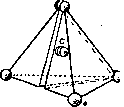
Figure 1.
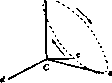
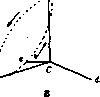
Figure 2.
The difference can be explained by the different, but symmetrical direction of the spatial arrangement of the groups attached to the asymmetric carbon.
Related articles
Mentioned in
Cite this page
“Asymmetric Carbon.” Soviet Medical Encyclopedia. English translation of Bolshaya Meditsinskaya Entsiklopediya, 1st ed. (Moscow, 1928–1936), ed. N. A. Semashko. https://sovietmedicalencyclopedia.pages.dev/article/asymmetric-carbon/