Banga Micro Methods
Historical document, translated for reference. It reflects medical knowledge of the 1920s–30s and is not medical advice.
Summary
Banga micro methods are techniques for determining various blood components in very small blood samples (about 0.1g). These methods use filter paper to absorb blood and then extract specific substances for analysis, primarily for measuring blood sugar and lipids.
Encyclopedia article (1928–1936)
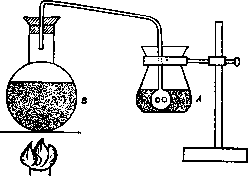
BANGA MICRO METHODS, serve for determining the various components of blood in very small amounts of it (about 0.1 g). The principle of B.'s methods is based on the fact that blood obtained by a finger prick is drawn into a small piece of special filter paper, previously weighed on torsion balances, with the weighing process taking 2-3 seconds. The paper with blood is weighed again and extracted with a solution corresponding to each substance being determined. Research is performed in the resulting blood extract. - Determination of s u g a r is based on the reduction of copper oxide by glucose to cuprous oxide; the latter is oxidized by iodine acid, the excess of which is determined by titration. Reagents: 1) filter papers; 2) saturated solution of potassium chloride, 1,300 cubic cm, 25% hydrochloric acid 1.5 cubic cm, uranyl acetate 3 g, water to 2 l; 3) potassium carbonate 75 g, Rochelle salt 20 g, water to 1 l; 4) n/10 potassium iodate 20 cubic cm, copper sulfate 0.25 g, water to 100 cubic cm; 5) 20% (by volume) sulfuric acid; 6) n/100 sodium thiosulfate; 7) 1% starch; 8) 5% potassium iodide. - Procedure. The paper with blood is extracted in a test tube with 6.5 cubic cm of solution (2), which is poured into flask A (see figure); the test tube is rinsed with new 6.5 cubic cm of solution (2). Add 2 cubic cm each of solutions (3) and (4) and pass water vapor from the steam generator (B) for 4 min, add 2 cubic cm H2SO4 (5), after 5 min add another 25 cubic cm water; after adding 0.5 cubic cm KI (8) and a few drops of starch (7), titrate with thiosulfate (6). Subtract in calculation the number of cubic cm of potassium iodate spent in a blank test; 0.28 cubic cm of consumed Na2S2O3 corresponds to 0.1 mg of glucose. B.'s method is used for determining sugar in blood in carbohydrate metabolism disorders. At present it is increasingly being replaced by the more convenient and precise micro method of Hagedorn and Jensen (Hagedorn, Jensen; see Hagedorn-Jensen method).-Determination of lipoids is based on the fact that the latter are oxidized by chromic acid, the excess of which then liberates an equivalent amount of iodine, determined by titration. Reagents: 1) defatted papers, 2) filter paper, 3) petroleum ether, 4) 92% alcohol, 5) 1% solution, 6) 4% solution, 7) 25% caustic soda, 8) 5% sulfuric acid, 9) 5% potassium iodide, 10) n/10 alcoholic solution of digitonin, 11) concentrated sulfuric acid, 12) n/10 chromic acid in sulfuric acid, 13) n/10 sodium thiosulfate, 14) 1% starch.- Determination of neutral fats and cholesterol. a) Joint determination: the paper with weighed blood is extracted with petroleum ether, then transferred to another test tube. To the ether extract add 1 cubic cm of solution (5), evaporate the ether, add 1 cubic cm of solution (12) and 5 cubic cm of concentrated H2SO4. After 15 min add 20 drops KI (9), a few drops of starch (14) and titrate with thiosulfate (13). The number of cubic cm of reduced chromic acid, divided by 2.45, indicates in mg the fat content in the blood taken, b) Neutral fats: treat the paper as in the previous case; after distilling off petroleum ether add 1 cubic cm of solution (10). The next day cholesterol-digitonide is filtered, washed with petroleum ether, which is then processed as above. The difference between a and b gives the cholesterol content. - Determination of cholesterol esters and phosphatides. a) Cholesterol esters: the paper extracted with petroleum ether is extracted with alcohol (4). After removing the paper add one drop of solution (7), evaporate the alcohol, add petroleum ether. After 24 hours the petroleum ether is filtered and processed in the usual way, b) Phosphatides, cholesterol esters and soaps: to the alcohol extract similar to a, add one drop of solution (6), evaporate the alcohol. Add one drop of solution (8) and petroleum ether. After a day filter; the petroleum extract is processed in the usual way. From the number obtained in b subtract a. The difference corresponds to the amount of phosphatides and soaps. This method gives accurate and reliable results only if performed with great care and maximum purity of apparatus and reagents; used for determining fluctuations in lipoids in various pathological conditions.- Banga balances, see Balances.
The Banga micro methods represent an important historical approach to blood analysis in the early 20th century, particularly valuable when only small blood samples were available. These techniques, developed by Soviet researcher Yu. Gefter, focused on precise quantitative analysis of blood components including glucose, lipoids, cholesterol, and related substances through carefully controlled chemical reactions and titration procedures. While largely superseded by more modern methods, they represent an important stage in the development of clinical laboratory medicine.
Related articles
Cite this page
“Banga Micro Methods.” Soviet Medical Encyclopedia. English translation of Bolshaya Meditsinskaya Entsiklopediya, 1st ed. (Moscow, 1928–1936), ed. N. A. Semashko. https://sovietmedicalencyclopedia.pages.dev/article/banga-micro-methods/