Cereals (Gramineae, a family of monocotyledonous)
Historical document, translated for reference. It reflects medical knowledge of the 1920s–30s and is not medical advice.
Summary
An overview of the family Gramineae (cereals/grasses), detailing their botanical characteristics, worldwide distribution, and significance in human life, agriculture, medicine, and nutrition.
Encyclopedia article (1928–1936)
CEREALS, Gramineae, a family of monocotyledonous plants (approx. 300 genera and 4,000 species). The external appearance of cereals is very typical. Stems are mostly hollow, slightly swollen at the nodes (culm). Leaves are narrow, with a long sheath embracing the stem. Flowers are small, usually consisting of 3 stamens and one pistil, covered by two scales; they are gathered into spikelets, and the latter into compound spikes (wheat) or panicles (oats). Cereals are wind-pollinated; in some, self-pollination occurs (oats, wheat, barley). The fruit of cereals is mostly a caryopsis (commonly grain), containing a single seed fused with the pericarp; rarely the fruit is a nut or even a berry (e.g., in the East Indian Melocanna bambusoides, it is edible, 8-13 cm in diameter). Most wild cereals are perennial grasses, more rarely annual grasses, and even more rarely trees (bamboos). Cereals are distributed worldwide; the majority of species belong to the tropics, but cereals achieve mass development chiefly in temperate latitudes, where they often set the primary tone of the landscape (meadows, steppes, prairies, pampas). In human life, cereals play an exceptionally important role, serving as the foundation of our entire culture, since agriculture and animal husbandry are based upon them. Aside from cereal grains, the most important are sugar cane and bamboos. Sugar cane (Saccharum officinarum) is a large plant up to 6 m in height; it is now cultivated everywhere in warm climates (especially abundantly in America). Sugar is contained in the stem (13-16%, rarely up to 18-20%). Its world production (162 million quintals) is nearly double the production of sugar beets (89.5 million quintals). Bamboo (Bambusa and other species) has diverse uses as a building and crafting material, especially in Southeastern Asia. In medicine, the use of cereals is negligible. Occasionally, couch grass rhizome—Rhizoma, s. Radix Graminis, wheat starch—Amylum Tritici, rice starch—Amylum Oryzae, barley flour—Farina Hordei preparata, barley malt—Extractum Malti, barley grains in Species pectorales cum fructibus, and oat decoction are used. Until the beginning of the 19th century, the South Asian cereal Andropogon laniger was used under the name Herba Schoenanthi, s. Foenum camelorum; in India, certain species of Andropogon are still used in medicine today, but they are of much greater importance for obtaining valuable essential oils (citronella, lemongrass, palmarosa, etc.). Formerly, stigmas of female corn flowers—stigmata Maydis, and rhizomes of Arundo Donax were used for bladder diseases, to stop milk secretion in women, and for some other purposes. In the East, under the name tabashir, peculiar silica concretions found inside the hollow internodes of certain bamboos are used as a medicine and as aphrodisiacs. Finally, great use is made of the sclerotia of the parasitic fungus ergot, Secale cornutum, which occur in the form of violet-black horns in the ears of rye and other cereals. Poisonous cereals are almost nonexistent. The fruits of some (species of feather grass, Andropogon lanatus, etc.) pierce the sheep's skin, burrow into the internal organs, and can cause the animal's death. During the flowering of cereals, their pollen causes so-called hay fever in hereditarily predisposed individuals. Our cereal crops can be indirectly poisonous when infected with certain parasitic fungi (ergot, etc.; see below). Pathogenic actinomycetes living on cereals cause actinomycosis in humans and livestock. Cereal grains have been cultivated since prehistoric times; wheat and barley were already cultivated in the Stone Age. At present, world production of cereal grains exceeds half a billion tons, and some (wheat, rice) are cultivated in thousands of varieties. In first place in world production (about 120 million tons), diversity of use, and nutritional value is wheat. Approximately the same is the world production of corn and rice, with the latter feeding more than a third of the globe's population. Following them, perhaps, is sorghum, the main cereal grain of Africa. Next come oats (60-70 million tons per year), rye (40-50 million tons), barley (35-40 million tons), and millet. The grains of cereal grasses (caryopsis) have a structure that is essentially the same in all. In most, they are tightly covered by or even fused with the bracts (glumes), forming so-called hulled fruits (millet, rice, hulled barleys, oats). The color of the grain in hulled cereals depends on the color of these glumes. At the upper end of the caryopsis in certain cereals, there are hairs, differences in the structure of which are used in identifying flour. In the coat of the caryopsis itself, one can distinguish the outer, or pericarp coat, composed of many layers of cells, and the inner, or seed coat, mostly of 2 cell layers. Differences in the structure of the pericarp cells are used in identifying flour, where they end up as bran. The inner layer of the seed coat contains pigment, which determines the color of the grain in naked cereals. The coats consist chiefly of cellulose, which is indigestible by the human organism—and for obtaining the best grades of flour, they are removed. Beneath the seed coat in the grain lies the embryo and the endosperm ("farinaceous body", "albumen"), which serves to nourish the embryo during grain germination. The embryo lies at the base of the grain. It is separated from the endosperm by the so-called scutellum, the sole cotyledon of cereals, which serves to suck nutrients from the endosperm during germination. The embryo in wheat, rye, and barley constitutes 1.5-3% of the grain weight, in oats 3-4%, and in corn 10-14%. It is rich in nitrogenous substances, cane sugar, fat (from 12.3% in rye to 32.94% in corn). During storage, the fat quickly turns rancid and spoils the flour, so during milling, the embryo is best removed. The most valuable part of the grain, for the sake of which cereal grasses are cultivated, is the endosperm, making up on average about 84% of its weight by. Its outer layer, the so-called aleurone, or gluten layer, consists of thick-walled cells densely packed with fine-grained contents—proteins and fat (figure 2); it also contains (or produces) enzymes (diastase, etc.), as well as hypothetical vitamins. The proteins of the aleurone layer are rather poorly assimilated, since the thick walls of its cells are not destroyed during milling; it imparts a dark color to the flour, makes it more hygroscopic, so that it spoils sooner; therefore, in obtaining top grades of flour, an effort is made to get rid of it. There are, however, several methods (Finklor, Lapicque, Legendre, etc.) for processing grain in which the proteins of the aleurone layer are utilized (so-called terminal, or normal bread). The main mass of the endosperm consists of large thin-walled cells filled chiefly with starch grains lying among a protein mass. If the spaces between the starch grains are filled with protein substances, the grain acquires a characteristic glassy appearance on fracture (fig., hard wheat varieties); if there is little protein and air is present in the spaces between the starch grains, the grain has a mealy appearance on fracture (soft mealy wheat varieties); the proteins of the bulk of the endosperm are highly nutritious, and, for example, the market value of wheat varieties depends on the percentage of proteins in them. Protein content depends on many factors: species and variety of cereal, climate, soil, etc. For example, hard wheats average 15.9% protein, and soft ones 12.44%; winter varieties generally contain less protein than spring varieties. The drier and more continental the climate, the more proteins accumulate in the grains. In the USSR, for instance, the amount of protein in cereal grains increases by 1.5-2 times when cultivation moves from west to east or from north to south. Among the proteins
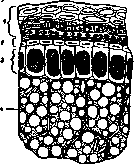
Figure 2. Section of the outer part of a wheat grain: 1-pericarp; 2-seed coat; 3-aleurone layer; 4-cells with starch.
of cereals are included: 1) water-soluble plant albumins (0.3-0.4% of the whole grain), 2) salt-soluble globulins (0.6-1.95%), 3) alcohol-soluble prolamins, or gliadins (1.5-4.25%), 4) alkali-soluble glutenins (2.4-4.68%). The varying properties of flour from different cereals are explained by unequal content and...

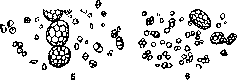
Figure 3. Starch: 1-rye; 2-wheat; 3-barley; 4-corn; 5-oat; 6-rice.
due to the non-identity of their proteins. For example, wheat gliadin and glutenin produce a cohesive, sticky, ductile mass known as gluten; during bread-making, this retains gases and produces a high, porous dough. Rye proteins analogous to these do not produce an equally cohesive gluten. The proteins of rice, corn, and oats do not produce gluten, which is why their flour is unsuitable for bread-making. The endosperm starch of cereal grains presents no chemical differences, but the shape of its grains varies, which is utilized in flour analysis (Fig. 3). On average, from many hundreds of determinations, the composition of cereal grain (in percentages) is as follows (according to König): Nitrogenous substances are predominantly proteins. Up to 9/10 of all nitrogen-free extractives fall to starch; fat is contained predominantly in the germ, and cellulose mainly in the coat; in the inner parts of the grain (flour) it is contained at 0.7%, and in the outer parts (bran) at 10%. The greatest amount of ash is also contained in the coats and the peripheral part of the endosperm. The ash contains up to 50% P2O5, 20-30% K2O, less MgO, and even less CaO and SiO2. For domestic animals, cereal grains (oats, barley) are fed directly as food, whereas for humans they are processed beforehand into flour or groats. To obtain groats, the grains, after cleaning from impurities, are husked, and then, depending on the kind and grade of the groats, sometimes further crushed and polished. Cereals also provide material for distilling, brewing, and starch production. The most important world cereal is wheat. The main regions of its cultivation are Canada, the United States, Argentina, Australia, partly Romania, British India, and the USSR. To the north, it hardly extends beyond the 60th parallel. Botanically, wheat consists of several species. Soft wheats (Triticum vulgare) are the most widespread, richest in varieties, and cultivated almost worldwide. Hard wheats (Triticum durum), with a glassy fracture and protein-rich grain, are distinguished by very valuable qualities. From them, with some admixture of soft wheats, the best grades of high-grade flour (krupchatka), semolina, and macaroni are obtained. Their cultivation (spring-sown in our country) is widespread in the southeast of the RSFSR, in Western Siberia, in the Mediterranean region, and in Asia Minor. Spelts are characterized by a fragile ear and grain that does not drop out of the spikelets during threshing. They are cultivated in small quantities. Russian wheats (in grain quality) surpass Western European and American ones. The homeland of soft wheats is southwestern Asia, and of hard wheats, eastern mountainous Africa. Semolina is obtained by crushing wheat grain stripped of its coats and germ. Rye (Secale cereale) is a secondary cereal on a global scale; the main regions of its cultivation are eastern Germany and the northern and middle zones of the USSR. It is hardier than wheat and extends up to 69°38' north latitude, and in the mountains (in Switzerland) up to 2,100 m. Its homeland is southwestern Asia. Barley (Hordeum vulgare, less often other species) penetrates further north (up to 70°) and into the mountains (in the Himalayas up to 4,300 m) than other cereals; it is cultivated mostly as a spring crop. Lacking viscous gluten, it does not make good bread and is consumed by humans primarily in the form of pearl and pot barley; the former consists of whole, decorticated, and de-germed polished grains, while the latter consists of crushed grains. Barley is also used in brewing, for the manufacture of coffee substitutes, malt extract, and other nutritional preparations, and as fodder. Varieties with a low protein content (not exceeding 10.5%) are most suitable for brewing. The homeland of hulled barleys is Abyssinia and Eritrea, and of naked barleys, southeastern Asia. Oats (Avena sativa and occasionally some other species) are used mainly as feed for horses; for human consumption, they are used in the form of groats, flour for kissels and soups, tolkno (ground, roasted oat malt), and oat decoctions, forming an easily digestible, nutritious food especially suitable for convalescents. Its cultivation is possible up to 69.5° north latitude. Maize, or corn (Zea Mays), is the highest-yielding of all cereals and is cultivated in a multitude of varieties in the United States, Mexico, Argentina, southern Europe, and the south of the USSR, approximately up to 52° N. Its main use is for livestock feed. For human consumption, it goes mainly in the form of flatbreads or thick porridge (polenta in Italy, mamaliga in Romania). For baking bread, it is used only in mixture with a large amount of wheat or rye flour. Young cobs are eaten as a vegetable. An intoxicating beverage is prepared by fermentation from the sugary juice of the stalks in Mexico. The seeds are also used to obtain alcohol, starch, glucose, etc. Leaves and stalks are used for paper, cigar wrappers, and hats. The corn germ contains about 33% fat, which easily turns rancid; therefore, at mills, it is separated from the grains and valuable oil is extracted from it, used for food and technical purposes. Pellagra often develops when consuming corn; according to some data, it has an avitaminotic character, while according to others, it depends on poisoning by pellagrosan, which arises during the decomposition of fats and proteins in the flour if the germ has not been removed. The homeland of corn is Mexico and the South American Andes. Rice (Oryza sativa) is cultivated everywhere in hot countries, especially in India, the Malay Archipelago, China, and Japan; in the USSR, it is cultivated only in the Far East, in Turkestan, and in Transcaucasia. Its cultivation is carried out mostly on artificially flooded fields and contributes to the spread of malaria, so that in some places it is prohibited. Upland rice varieties are of poorer quality and lower yield. Rice is easily assimilated by the organism, but due to its low protein and fat content, it is less nutritious than other cereals. Abundant or exclusive feeding on rice causes a bloated, so-called "rice" belly in children. Rice is unsuitable for baking bread. During the processing of rice, its grains are machined and polished, whereby vitamins necessary for humans are removed; with a monotonous diet of such rice, the disease beriberi (see) develops. Rice is also used to make starch, powder, and alcoholic beverages (sake in Japan, arrack in Java). Rice was probably first introduced into cultivation in southeastern Asia. Sorghum, Negro millet, durra (Andropogon sorghum), is cultivated mainly in Africa, India, and China; in the USSR, its cultivation is possible in the south. Bread is not baked from it, but flatbreads, porridge, and alcoholic beverages are prepared. Varieties of sorghum include kaoliang (in our Far East), dzhugara (in Turkestan), and sugar sorghum, from the stalks of which sugar can be prepared. Millet (Panicum miliaceum) is cultivated mainly in Eastern Europe and Asia. Its homeland is probably central Asia. It is consumed primarily in the form of groats (millet groats), which are obtained after simple "husking" (removal of husks). As a cereal, so-called Italian millet (Setaria italica) is also cultivated in Japan, Korea, Northern China, the Himalayas, in Transcaucasia ("gomi"), Turkestan ("kunak"), and Siberia ("chumiza"). Its homeland is southeastern Asia. Table of digestibility of various cereals (according to König): Highest grade of wheat bread or flour ... Coarse grade of wheat bread or flour ... Highest grade of rye bread or flour ... Coarse grade of rye bread or flour ... Rice ... Corn flour ... Oat flour ... Barley, hulled and boiled ... Pests of cereal grains are parasitic fungi and insects. Among fungi, the greatest harm is caused by smuts (species of Ustilago, Tilletia), which destroy the grain itself, forming instead a black, powdery (loose smut) or dense (hard, stinking smut) mass of spores. Not infrequently, the infection of cereals by smut exceeds 50% and causes colossal losses. The black spores of smut contaminate the flour, and according to some data, their admixture in food can even be dangerous. When determining smut in grain, a sample of grain is washed with alcohol, the alcohol is centrifuged, and the number of spores in it is determined under a microscope using a counting chamber; then the percentage of smut is determined by a special formula. To combat smut, seed material is treated with formalin and some other agents. A harmful parasite on rye is the ascomycete fungus ergot. The fungus Fusarium graminearum forms a pink coating on grains and causes so-called "drunken bread," consumption of which causes symptoms resembling intoxication; it is especially widespread in the Far East. For expertise on Fusarium, grains are germinated, and after 1–2 days they become covered with the aerial mycelium of the fungus. The permissible infection of grains should not exceed 5%. Rust fungi (species of Puccinia) are very widespread parasites of cereals. In cereals affected by them, the grain does not fill out well and comes out shriveled; the straw is also of poorer quality. Control measures consist mainly of breeding resistant varieties. Among harmful insects, the corn leaf beetle (three species of Anisoplia) is particularly dangerous for cereals, eating out the stamens, ovaries, and young grains. The larvae of the Hessian fly (Cecidomyia destructor), living between the leaf sheath and the stem, damage the stems so that they easily bend and break. The larvae of the frit fly (Oscinis frit) eat out the stems of young shoots, which turn yellow and die. Thrips, by sucking on the ear, cause whitening and death of the entire ear or parts of it (white-ear).
Sometimes the caterpillars of the turnip moth (Agrostis segetum) destroy large areas of winter crops. Mass Assimilability in % of eaten ; destruction of grain crops is produced by ____ quantities
Cereals retain their seed germination capacity for a short time. Stories about the germination of wheat from Egyptian pyramids are a fable. Already 16-year-old wheat gives only 1% germination. Grain is stored in barns or elevators adapted for drying, sorting, cleaning, and reloading it. Poor sanitary conditions of grain stores—dampness, poor ventilation, humid warm air, lack of light or direct sunlight, dirt, etc.—cause grain spoilage: ----------------germination, spontaneous combustion accompanied by the decomposition of organic substances and the appearance of bad odors, development of microorganisms, pest insects (granary weevil, grain moth), etc. When evaluating commercial grain, an average sample is taken from it for study according to special rules. By various methods, sometimes quite complex for quantitative determinations, the grain bulk density (volumetric weight), weight of 1,000 grains (absolute weight), moisture, weediness, infestation by pests, etc., are determined in it. Weediness can be so-called dead or indifferent debris, weed seeds (non-harmful), and harmful impurities. Dead debris—earth, sand, straw, broken grains. Harmful impurities—smut, ergot, corn cockle (for oats), Dry matter 95.1 89.1 93.0 86.0 95.9 93.5 84.1 84.9 I Nitrogenous substances 80.0 65.2 79.6 78.2 71.7 Fat (75.1) (63.5) (95.2) (90.7) 92.9 61.2 Carbohydrates 93.5 92.5 (93.5) 89.3 99.1 93.6 Mine- I ral; sub- i stances < 55.0 59.3 38.3 85.0 67.9 (43.3) ; _ ; _

608
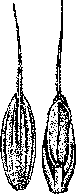
Figure 5. Darnel.
darnel, etc. The seeds of the corn cockle (Agrostemma githago, figure 4), when ingested in food, cause intestinal irritation, vomiting, and other pathological phenomena. A parasitic fungus lives in the seeds of the darnel (cereal - Lolium temulentum, fig. 5) and forms the poisonous temulin there, which causes poisoning phenomena. To determine the quality of grain for each variety, there are special standard norms. In the USSR, by a decree of the Council of People's Commissars of January 8, 1925, a unified state grain inspection was approved. Its duties include the development of standards for grain standardization and classification and supervision of the quality of commercial grain. Grain intended for export, the domestic market, and sowing must be inspected by grain inspectors and provided with certificates.
Related articles
Cite this page
“Cereals (Gramineae, a family of monocotyledonous).” Soviet Medical Encyclopedia. English translation of Bolshaya Meditsinskaya Entsiklopediya, 1st ed. (Moscow, 1928–1936), ed. N. A. Semashko. https://sovietmedicalencyclopedia.pages.dev/article/cereals/