Scales
Historical document, translated for reference. It reflects medical knowledge of the 1920s–30s and is not medical advice.
Summary
This article describes various types of weighing instruments used in the early 20th century, ranging from high-precision analytical balances to industrial and clinical scales. It details the mechanical principles behind these devices, including the use of beams, prisms, dampers, and torsion mechanisms for accurate measurement.
Encyclopedia article (1928–1936)
SCALES, an instrument for determining the weight of bodies. In a broader sense, it refers to certain instruments for measuring forces of a different origin than gravity. 1. Scales for precise weighing. At the present time, the system proposed by Sartorius is mainly used. The most critical part of these scales is the beam, cast from a light alloy of aluminum and silver. To reduce the weight of the beam to a minimum while at the same time giving it sufficient strength and rigidity, it is given a shape resembling a bridge truss. In the middle of the lower side of the triangle of such a beam, a sharp three-sided steel prism is placed, with a well-sharpened and hardened lower edge resting on a steel hardened plate (sometimes the latter is made not of steel, but of quartz). At the ends of the beam, there are two similar steel prisms, on the edges of which, facing upward, the pan suspensions rest. The support here is also made of steel and carefully hardened. It is extremely important that the arms of the beam be exactly equal to each other and that the supporting edges of all three prisms lie in the same plane. Complete fulfillment of the latter condition is impossible, since the load placed on the scale pans causes the beam to bend and thereby lowers its ends. Usually, beams are arranged in such a way that the edges of the prisms come into one plane at some average load of the pans: then, in the unloaded state, the edges of the outer prisms will be higher than the edge of the middle one, and at the maximum load permissible for the given scales, they will drop below it. The theory of scales shows that when the beam bends, their sensitivity decreases. To reduce bending, all other things being equal, one has to make the scales as short-armed as possible. This achieves another property: the period of oscillation of the beam is reduced, which is extremely important, especially with a large number of weighings. The third basic condition that the prisms must satisfy is the strict parallelism of their supporting edges. For the stability of the beam, it is necessary that its center of gravity be located slightly below the supporting edge of the middle prism. However, the lower it is located, the lower the sensitivity of the scales. Therefore, the distance between the center of gravity and the supporting edge is made very small. To ensure the sharp edges of the steel prisms do not dull for as long as possible, they are brought into contact with the quartz support plates only when weighing is performed; in the non-working state, the beam rests on a special device called an arrestment mechanism. A similar device also supports the scale pans, which rest on their suspensions only during weighing. The arrestment mechanism must work so as to smoothly disengage and engage the edges of the steel prisms and the quartz support plates. To ensure the beam with the pans stops swinging as quickly as possible, so-called "dampers" (the German word "Dämpfer" is often used) are arranged under the pans. Usually, these are light hollow cylinders located under the scale pans that enter with a certain clearance (without touching the walls) into two other cylinders embedded in the base. Such dampers can make the movements of the beams with the pans aperiodic. To protect the scales from external influences, from dust, uneven heating, and air movement, they are placed under a glass display case. Weights are placed on the scale pan by lifting the front glass wall; as for the riders, which are placed on top of the beam itself, they are applied by means of a special hook that can be moved from the outside without opening the display case. The sensitivity of the scales is characterized by the magnitude of the angle S, by which the scale beam deviates from the equilibrium position when one of the pans is overloaded by a small weight. If we denote the weight of the beam itself by P, the weight of the body lying on one pan by Q, and on the other, consequently, by Q+q, the length of the beam arm by L, and the distance of its center of gravity from the fulcrum by h; if we assume, finally, that the beam does not bend and the edges of all 3 supporting prisms lie on one straight line, then it can be shown that the sensitivity of the scales is expressed by the formula: S = L / (P * h), i.e., the sensitivity is directly proportional to the length of the beam and inversely proportional to its weight and the distance between the fulcrum and the center of gravity of the beam. To eliminate errors that may arise when weighing on not perfectly equal-armed scales, there are several methods; thus, Gauss proposed performing a "double weighing": placing the body under investigation first on one pan, and then on the other, and taking the arithmetic mean. Mendeleev proposed the so-called "constant load" method, which allows weighing to be performed always with the same sensitivity. Weights are placed on one pan, the weight of which is equal to the greatest weight to be determined. Small weights are placed on the other pan, weighing in total the same amount. If the body to be weighed is now placed on the latter pan, it will be necessary to remove a certain amount of weights to restore equilibrium. Their weight will represent exactly the weight of the placed body. Riders used in precise weighing replace very small weights; they are made of thin wire and are placed on top of the beam. Since they can be hung on the latter closer to the middle and thereby reduce the arm, they allow for a more subtle change in the moment acting on the beam than weights on the pans.
2. Roberval scales are very often used for weighings that do not require high precision. Their pans rest on two rods that enter a system of articulated levers. During the oscillations of such a complex beam, the entire system of levers retains the shape of a parallelogram (at equilibrium, the parallelogram turns into a rectangle). The reading of the scales does not depend at all on where the load lies on the pan.
3. Decimal scales are used for weighing large loads, using relatively small weights. With specific dimensions of the levers, to balance a load lying on the platform, it is required to place on the pan a weight whose weight is 10 times less than the weight of the load. Usually, a device analogous to a rider is also used. In medicine, similar scales are used for weighing patients. In technology, hundredweight scales and those of greater multiplicity are often used.
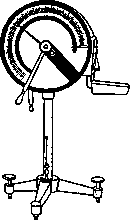
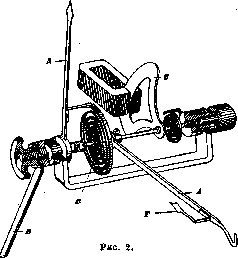
4. Micro-balances, an instrument that allows for the measurement of negligibly small weights, as well as for detecting extremely small changes in the weight of a body. They can be most simply arranged as follows: from glass or, even better, from quartz, a very thin thread is drawn, which for greater sensitivity should be twisted into 2-3 turns at one end. The thread is attached to a fixed support, and the body under investigation is suspended from the other end. By the lowering of the free end of the thread, one can obviously determine the weight of the body if the instrument is pre-calibrated. The movements of the end of the thread can be monitored either with the naked eye (by a scale) or through a microscope. V. Shuleikin. In ordinary microanalysis, Pregl-Kuhlmann micro-balances are most often used, allowing for the detection of fluctuations of 0.001 mg under a load of 20 g, i.e., to perform measurements with an accuracy of up to 10-8. Since the error of most analytical methods lies around 10-3, the indicated micro-balances allow for analyses to be performed using only a few mg of substance. In a number of cases, it is important to perform the weighing of a substance as quickly as possible. In such cases, so-called torsion scales are very convenient, based not on the principle of a lever, but on the twisting of a spring. The most common such scales are those of the Hartmann und Braun firm, manufactured for various weighing limits (from a few mg to g). They were used by Bang for various clinical blood analyses and are therefore often known as Bang scales. Figure 1 shows their external appearance, and Figure 2 shows the internal structure. The object is suspended from the hook of the movable lever A, then by rotating the knob B, the spring C is twisted until the pointer D, connected to the lever A, stands against the mark. The arrow E directly indicates the weight on the scale. An aluminum plate F, connected to the axis of the scales and moving between the poles of a magnet, serves as a "damper" and makes the scales almost aperiodic. The entire weighing takes only a few seconds.
5. Torsion scales see Coulomb.
V. Engelhardt. Scales for weighing infants, differ 1) in their external appearance in that they have a special tray (see Figure 3) so that the placed child cannot

Figure 3.
to fall during weighing, 2) by their construction: they are arranged so that the child's movements have as little effect as possible on the rocking of the beam, at the end of which is mounted a pointer indicating that the corresponding position of the weights balances the child's weight. These weights move along two joined beams equipped with divisions, on the lower (with the large weight) from 0 to 15 or 25 kg, and on the upper (with the small weight) from 0 to 1 kg. The accuracy of these scales is usually up to 10.0 g. On the left side, at the bottom or at the left end of the beam, is a counterweight with movable weights on a screw for setting the scales in equilibrium without the child. Sometimes a weight is suspended on the right side of the beam at the bottom, balancing the tray, which is usually detachable, so that by removing the weight and the tray, the child can be weighed in a standing or sitting position. The reduction of the influence of the child's movements on the rocking of the scales is achieved by the fact that the platform is mounted on movable suspensions resting on the edges of triangular prisms. The scales are mounted on a low, sturdy cast-iron pedestal, painted with oil enamel, and their individual parts are nickel-plated, making them easily subject to disinfection. Such scales are an essential accessory of every institution for young children. In a home setting, ordinary spring scales for weighing products are often used, equipped with a corresponding tray instead of a round cup. Accurate weighing of a child on them is impossible, since the clock hand constantly trembles with the child's movements.
Related articles
Mentioned in
Cite this page
“Scales.” Soviet Medical Encyclopedia. English translation of Bolshaya Meditsinskaya Entsiklopediya, 1st ed. (Moscow, 1928–1936), ed. N. A. Semashko. https://sovietmedicalencyclopedia.pages.dev/article/scales/