Bird Lice
Historical document, translated for reference. It reflects medical knowledge of the 1920s–30s and is not medical advice.
Summary
Bird lice are small wingless insects that live among bird feathers or mammal fur, feeding on feathers, down, and skin scales. They cause skin irritation and can affect the health and behavior of their hosts.
Encyclopedia article (1928–1936)
BIRD LICE, or feather-eating lice, Anoplura or Mallophaga, are small wingless insects living among bird feathers or in mammal fur. Their bodies are flattened with a broad head and short legs. In some species, eyes are completely absent. The mouthparts are for chewing and located on the underside of the head. The abdomen consists of 8-10 segments. The body and head often have long hairs or projections that help retain the parasites in the host's fur or feathers. Bird lice feed on feathers, down, and shedding epidermal scales, but they can also swallow blood. Crawling on the host's skin and gnawing at their coverings, bird lice cause skin irritation (itching, etc.). Under their influence, birds become agitated, gain little fat during fattening, and hens sometimes completely abandon incubation of eggs. Additionally, hosts peck itchy areas of skin or scratch them vigorously with their beaks. Bird lice spend their entire lives on their hosts and reproduce on them as well. Eggs (similar to nits) are glued to feathers or hairs. All developmental stages of bird lice feed in the same way. The larvae resemble adult forms (incomplete metamorphosis). Bird lice do not parasitize humans. Among bird lice, one can note Menopon gallinae (chickens) and Lipeurus columbae (pigeons). The dog biting louse (Tricho-dectes canis) and the cat biting louse (Trichodectes subrostratus) are intermediate hosts of the cucumber tapeworm (Dipylidium ca-ninum), which in its mature stage can also parasitize humans. In biting lice, this tapeworm lives in the cysticercoid stage. - Control of bird lice is carried out in premises (coops) or on the animals themselves (bathing in sulfurated lime, blowing Persian powder into the feathers of birds).
E. Pavlovsky.
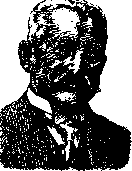
PFEIFFER Richard (Richard Pfeiffer, born 1858), outstanding German bacteriologist. He studied in Berlin from 1875 to 1879. From 1879 to 1889 he was a military doctor, then in 1887 he was sent to Berlin to the institute of R. Koch. From 1889 to 1891 he was assistant at the Berlin Institute of Hygiene. In 1891 he was appointed professor at the newly founded Institute of Infectious Diseases, where he remained until 1899. In 1897 he was sent with the German commission for the study of plague to India. In 1898 he studied malaria with Koch in Italy. In 1899 he received the position of full professor and director of the Institute of Hygiene in Königsberg. In 1909 he received a similar position in Breslau, where he remained until 1926. - The scientific activity of P. relates mainly to the field of immunology and bacteriology. On these questions, he has published over 100 printed works. He put forward the theory of the bactericidal action of organic fluids of the human body. In the early 90s, he described a phenomenon bearing his name (Pfeiffer's phenomenon) which consists of the following. The same doses of cholera vibrio emulsion are injected into the abdominal cavity of two guinea pigs, one of which is vaccinated against cholera, and the other is not. Ten minutes later, using a syringe, peritoneal exudate is taken from both animals. In the unvaccinated guinea pig, the vibrios retained their shape and mobility, and the animal soon dies of cholera. In the vaccinated guinea pig, the vibrios lost their mobility, are agglutinated, turn into balls (lysis) and dissolve, while the animal survives. - The name of P. is also closely connected with his discovery during the influenza epidemic of 1889-90 of a special microbe bearing his name* which P. himself and many other researchers consider the specific causative agent of influenza. Among the numerous works of P., his research in the field of immunity and classical works on cholera, plague and some other infections should be noted; these works are scattered in German periodicals, mainly* in Deutsche med. Wochenschrift and in Centralblatt f. Bacteriologie, Abt. 1, Originale. - P. is an honorary member of the R. Koch Institute and the G. Speyer Institute in Frankfurt, a member of the Royal Medical Society in London, the Swedish Academy of Sciences, etc. P. edited a number of major collective works ("Enzyklopadie der Hygiene", Vol. I-II, ed. by R. Pfeiffer u. B. Proskauer, Lpz., 1905; "Lehrbuch der Mikrobiologie", ed. by E. Friedberger u. R. Pfeiffer, Vol. I-II*, Jena, 1919) and since 1896 has been a member of the editorial board of "Centralblatt fur Bacteriologies, Abt. I."
Related articles
Mentioned in
Cite this page
“Bird Lice.” Soviet Medical Encyclopedia. English translation of Bolshaya Meditsinskaya Entsiklopediya, 1st ed. (Moscow, 1928–1936), ed. N. A. Semashko. https://sovietmedicalencyclopedia.pages.dev/article/bird-lice/