Emil Roesle
Historical document, translated for reference. It reflects medical knowledge of the 1920s–30s and is not medical advice.
Summary
A biographical overview of Emil Eugen Roesle (born 1875), a renowned German medical statistician and demographer. It details his organizational work, editorial contributions to the Archiv für soziale Hygiene und Demographie, major publications, and his positive engagement with Russian and Soviet public health statistics.
Encyclopedia article (1928–1936)
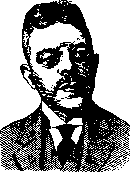
ROESLE, Emil Eugen (Emil Eugen Roesle, born 1875), a German medical statistician of world renown. The Statistik department organized by Roesle at the Dresden Hygiene Exhibition in 1911 gained major scientific significance due to the richness and systematic nature of the German and international sanitary statistical material collected there, illustrated by an extensive catalogue. This work immediately established Roesle's name in international medical and demographic statistics. In 1913, he was invited to the Imperial Health Office (Reichsgesundheitsamt) and took over the management of state medical statistics. In the same year, he also took over (from Professors A. Grotjahn and I. Kaup) the editorship of the journal Archiv für soziale Hygiene. This oldest European journal on social hygiene was expanded by Roesle with the introduction of a department of demography and medical statistics, which was reflected both in the title of the journal (Archiv für soziale Hygiene und Demographie) and by attracting statisticians from various states to participate in it, which gave it an international character. The bibliography of Roesle's literary works includes over 200 titles of individual writings, articles, and essays on all the main departments of demography and medical statistics. The principal ones are: Die natürliche Bewegung der Bevölkerung in den europäischen Staaten in dem ersten Jahrzehnt dieses Jahrhunderts (Ztschr. f. soz. Med., B. IV, 1909); Die Sterblichkeit im ersten Le
bensmonat (ibidem, 1910, p. 172); Der Geburtenrückgang, seine Literatur und Methodik seiner Ausmassbestimmung (Lpz., 1914); Ergebnisse der Todesursachenstatistik im Deutschen Reich, Braunschweig, 1912–1919; Ergebnisse der Heilanstaltenstatistik im Deutschen Reich (Med.-stat. Mitt. d. Reichsgesundheitsamt, B. XXI, 1920); Die Geburte- und Sterblichkeitverhältnisse (Statistik d. Deutsch. Reichs, B. CCCXXXVI, 1928). Roesle's demographic surveys cover all cultural states of Europe, America, Asia, and other parts of the world. In later times, he took an active part in the development of the international nomenclature of diseases and causes of death in the commission of the International Statistical Institute and the League of Nations.
-
Since 1911 (Dresden Hygiene Exhibition), Roesle's acquaintance with Russian sanitary statistics and lively communication with its representatives was established. He was interested in these works, followed them, and, giving them a prominent place in his Archiv, popularized them in Europe. He repeatedly published his works on demography in Russian journals. The new system of state institutions of public health and statistics in the USSR found in Roesle a resolute and ardent champion, and it was popularized by him in German journals in recent years in a series of essays: on the organization of Russian statistics and the Central Statistical Administration, on the preventive direction of Soviet medicine, on the organization of healthcare in the USSR, The Truth About Soviet Medicine, etc. (in the journals: Das Neue Russland, Archiv für soziale Hygiene und Demographie, Deutsches Statistisches Zentralblatt, 1925–1930, and others).
Related articles
Cite this page
“Emil Roesle.” Soviet Medical Encyclopedia. English translation of Bolshaya Meditsinskaya Entsiklopediya, 1st ed. (Moscow, 1928–1936), ed. N. A. Semashko. https://sovietmedicalencyclopedia.pages.dev/article/emil-roesle/