Neuberg
Historical document, translated for reference. It reflects medical knowledge of the 1920s–30s and is not medical advice.
Summary
Carl Neuberg (1877-1956) was a prominent biochemist who made significant contributions to the study of carbohydrate metabolism, particularly alcoholic fermentation. He established the Biochemical Institute in Berlin and founded the journal 'Biochemische Zeitschrift', becoming a central figure in international biochemistry.
Encyclopedia article (1928–1936)
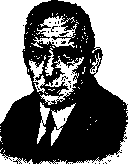
NEUBERG Karl (Carl Neuberg, b. 1877), one of the greatest contemporary biochemists. Beginning his work with Salkowski in Berlin, N. received the title of professor at Berlin University at the age of 29, and in 1919 was elected a full professor at the university and the Higher Agricultural School in Berlin. In 1924, N. became head of the Biochemical Institute he had founded, which is part of the Kaiser Wilhelm Institute for scientific institutions. N.'s scientific activity is extremely productive: he has published over 100 works. Among them are also major works, for example, the classic guide to urine analysis ('Der Harn sowie die ubrigen Ausscheidungen u. Korperflussigkeiten von Mensch u. Tier', Vol. 1-2, Berlin, 1911), a number of chapters in the leading guides to biochemistry (Oppenheimer) and physiology (Bethe-Bergmann-Embden-Ellinger) and others. N.'s most important research is devoted to one fundamental problem - the chemical mechanism of carbohydrate metabolism. Thanks to his skillful application of the 'trapping method' (Abfangverfahren) discovered by him in 1914, N. managed to penetrate the mechanism of the process that is the prototype of the most important transformations of carbohydrates in the living cell - the chemical mechanism of alcoholic fermentation. N. discovered very important enzymes - carboxylase and carboligase (see). In his works, N. consistently develops the idea of the unity of the basic chemical processes of exchange in the cell, from the lowest single-celled micro
n
organisms to the highly differentiated tissues of animals. In 1906, N. founded and continues to edit to this day the journal 'Biochemische Zeitschrift' (Berlin; about 230 volumes have been published), which has become the central periodic publication in world biochemical literature. N. is a full and honorary member of numerous scientific societies and academies, including the Academy of Sciences of the USSR, and his works have been awarded a number of prizes, medals and distinctions.
Related articles
Mentioned in
Cite this page
“Neuberg.” Soviet Medical Encyclopedia. English translation of Bolshaya Meditsinskaya Entsiklopediya, 1st ed. (Moscow, 1928–1936), ed. N. A. Semashko. https://sovietmedicalencyclopedia.pages.dev/article/neuberg/