Paraphrenia
Historical document, translated for reference. It reflects medical knowledge of the 1920s–30s and is not medical advice.
Summary
Paraphrenia is a form of mental disorder conditionally separated from paranoid schizophrenia by Krepelin. It is characterized by chronic delirium prone to systematization with hallucinations but without personality disintegration, splitting phenomena, or catatonic symptoms. The disease eventually leads to slowly progressive dementia, distinguishing it from paranoia.
Encyclopedia article (1928–1936)
PARAPHRENIA (paraphrenia), a form of mental disorder, conditionally separated by Krepelin from the composition of paranoid schizophrenia. To this day, it has not been established whether P. represents an independent disease or an atypical form of schizophrenia. The disease is characterized by the development of chronic delirium, prone to systematization, with hallucinations, but without personality disintegration, without splitting phenomena and catatonic symptoms, characteristic of schizophrenia. However, at the end of the disease, slowly progressive dementia sets in, which brings this form closer to schizophrenia and distinguishes it from paranoia (in which, moreover, there are almost never hallucinations). The pathogenesis of P. has not been clarified. A mixed hereditary burden (schizophrenia and manic-depressive psychosis) is often noted. The onset of the disease is usually in mature age. Cases of recovery apparently do not occur. Treatment is unknown. Patho-anatomically, diffuse parenchymal changes have been established, mainly in the frontal, temporal, and lower parietal lobes of the cortex, predominantly in layers III and V. The following forms of P. are described: 1) Systematized P. (paraphrenia systematica), corresponding to the previously described Magnan's "chronic delirium with systematic development" (delire chronique a revolution systematique). The disease develops imperceptibly from a period of distrust, irritability; the patient sees all sorts of hints everywhere, takes casual conversations, notes in newspapers, etc., personally. Hallucinations begin, mostly auditory. Delusional ideas gradually form into a system of persecution. Later, ideas of greatness are added, which are connected with the persecution delusion, and the content of the delusion is often enriched with hallucinations. The mood at the beginning of the disease is tense, later it becomes self-satisfied. At the same time, the patient remains reasonable, his performance is usually preserved, his behavior is correct in everything not related to the delusion. However, the patient seeks to protect himself from persecution, often goes on the offensive against his "enemies" and becomes very dangerous; in other cases, he turns to public opinion or to the court and other authorities to protect his rights. After many years, the delirium becomes confused and absurd, behavior becomes incorrect and strange. Placement in a hospital is rather harmful for the patient, increasing his suspiciousness, but it is necessary as a measure of social protection. 2) Expansive P. (paraphrenia expansiva) is characterized by the development of a magnificent delusion of greatness with an elevated mood, slight psychomotor agitation and often the presence of visual hallucinations. 3) Confabulatory P. (paraphrenia confabulatoria) differs in that the development of the delusion is associated with numerous false memories. 4) Fantastic P. (paraphrenia phantastica) is characterized by the development of strange, changeable and contradictory delusional ideas, often against a background of general depressive mood and in the presence of common-sense hallucinations.
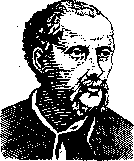
(although quite primitive) the doctrine of the arche - the supreme principle governing all chemical processes in the body. This reflected his general philosophical views, in which he was a follower of Plato. His interests were extremely diverse; his works concerned not only theoretical issues, but he also developed a number of purely practical tasks, in particular he worked a lot in the field of medicinal chemistry; despite the fact that none of the medicines he proposed remained in practice, his significance in the history of pharmacy is nevertheless great. His works on syphilis retained their significance until the 19th century. He was one of the early heralds of balneology. One of the main merits of P. was his desire to oppose the scholastic science of the Middle Ages with experience, observation of nature and experiment. The number of printed works of P. is extremely large; their complete collection was recently reissued in 11 volumes ("Paracelsus sammtliche Werke", hrsg. v. K. Sudhoff u. W. Mathissen, B. I-XI, Munchen, 1927-28).
Related articles
Mentioned in
Cite this page
“Paraphrenia.” Soviet Medical Encyclopedia. English translation of Bolshaya Meditsinskaya Entsiklopediya, 1st ed. (Moscow, 1928–1936), ed. N. A. Semashko. https://sovietmedicalencyclopedia.pages.dev/article/paraphrenia/