Starch
Historical document, translated for reference. It reflects medical knowledge of the 1920s–30s and is not medical advice.
Summary
This article from the 1928–1936 Soviet Great Medical Encyclopedia details the chemical composition, structure, and physiological properties of starch. It covers the hydrolysis of starch into glucose and maltose, its classification into amylose and amylopectin, and its role in human nutrition and digestion.
Encyclopedia article (1928–1936)
STARCH, (C6H10O5)n, a carbohydrate belonging to the colloidal polyoses. The final product of its acid hydrolysis is d-glucose, and of its enzymatic hydrolysis (amylase) is maltose; the intermediate products of hydrolysis are soluble starch and dextrins (see). Starch is a white, tasteless powder, insoluble in alcohol and ether, and almost insoluble in cold water; in hot water, starch forms a paste, which coagulates upon long standing (retrogradation of the paste); the temperature of gelatinization varies depending on the type of starch. Starch does not possess reducing ability and does not react with phenylhydrazine, which indicates the absence of free carbonyl groups in it. Hydroxyl groups remain free, three for each glucose residue. Starch is not a homogeneous substance; it contains amylose, which constitutes the inner part of starch grains, and amylopectin, which forms their outer part; some types of starch also contain a carbohydrate of the hemicellulose type. Silicic acid is always contained in the ash of starch. The relative quantities of amylose and amylopectin have not yet been precisely determined (various authors have found from 15% to 83% amylopectin). In starch grains, amylose is contained in two forms: in the form of spherocrystals, soluble in water, staining blue with I+KI, and easily saccharified by malt diastase, and in a colloidal form, which is difficult to dissolve, does not stain with iodine, and is more difficult to saccharify; both forms can transform into one another; the latter phenomenon causes the retrogradation of the paste—the precipitation of amylose. As a result of heating amylose with glycerin, the anhydrodisaccharide dihexosan (C6H10O5)2 was obtained (Pringsheim). Amylopectin is a mucilaginous substance that swells in hot water and causes the viscosity of the paste; it stains red-brown with I+KI. Amylopectin is an ether-like compound of a carbohydrate (erythroamylose) with phosphoric acid. Up to 65% of amylopectin is saccharified by amylase (see), after which the so-called "limit dextrin" remains, identical to trihexosan (C6H10O5)3 (β-glycosylmaltosan; Pictet). Trihexosan was also obtained by heating amylopectin with glycerin to 200–210° (Pringsheim). Ling obtained αβ-hexamylose and further hexatriose C18H32O16 through the action of amylase on amylopectin. Di- and trihexosan convert into maltose under the action of amylase. Upon oxidation of starch with nitric acid, saccharic acid COOH(CHOH)4COOH is formed, and upon oxidation with bromine, gluconic acid CH2OH(CHOH)4COOH. From the products obtained by the dry distillation of starch in a vacuum, levoglucosan (Pictet) was isolated, and at ordinary pressure, maltol (2-methyl-3-oxy-γ-pyrone), which is found in preformed form in some plants and beer. Upon heating starch with water under pressure, or heating with glycerin to 190°, soluble starch (amidulin) is formed in the initial stage of acid and enzymatic hydrolysis; it is a mixture of substances that do not possess reducing ability and strongly rotate the plane of polarization of light to the right: [α]D = circa + 203°; it is a product of the depolymerization of starch. Upon heating to 200°, starch is dextrinized. Research in recent years leads to the concept that starch is formed by the polymerization of relatively low-molecular-weight, glycoside-like linked anhydrosaccharides (d-glucose residues); these molecules are polymerized into large particles, which determine the colloidal nature of starch solutions. X-ray studies indicate structural molecules of C6H10O5 or (C6H10O5)2 (Ott). According to Karrer, starch is a polymerized anhydride of maltose. Pringsheim assumes dihexosan to be the elementary molecule of amylose, and trihexosan to be that of amylopectin. M. Bergmann believes that potato amylose is not a polysaccharide, but a polymerized anhydride of glucose C6H10O5; according to his concepts, amylose does not contain preformed bonds of the maltose type or other di- and polysaccharides that form from amylose. Nottin observed the formation of glucose at the very beginning of the hydrolysis of starch with sulfuric acid and believes that starch is simultaneously split into several products: glucose, maltose, other reducing sugars, and non-reducing polysaccharides, which in turn are split further. In the organism, starch is saccharified under the influence of a diastatic enzyme (amylase) contained in the juices of the pancreas and salivary glands (ptyalin in humans and herbivores) and in small quantities in almost all organs and fluids of the body. Splitting under the influence of amylase proceeds to the stage of maltose; the formation of isomaltose during this process is disputed. Cooked starch is easily saccharified by salivary ptyalin, while raw starch is saccharified with difficulty. Pancreatic amylase acts energetically on raw starch at body temperature. The presence of acids or alkalis harms the reaction; bile eliminates this harmful influence and enhances the action of diastase. When starch is introduced through the mouth, even in significant quantities (500 g), it is well assimilated without causing the appearance of sugar in the urine; this is explained by the fact that absorption and assimilation proceed as slowly as saccharification. Starch has been found in the contents of the small intestine and in feces. The reaction for starch is the appearance of a blue color from a solution of I+KI; the reaction is extremely sensitive, the color disappears upon heating and reappears upon cooling. Methods for the quantitative determination of starch are usually based on converting it into glucose or soluble starch (determination of the rotation of the plane of polarization) or on its isolation due to its insolubility in 60% alcohol.
L. Broude. Starch (Amylum) is contained in the form of grains in almost all plants, predominantly in seeds, tubers, bulbs, and rhizomes. Starch is the form in which reserves of potential energy are deposited in plants. Starch is obtained from potatoes, cereals, rice, maize, manioc, sago, and arrowroot. Starch grains of different plants have different shapes and sizes; some of them appear concentrically layered, and they have a microcrystalline structure (birefringent spherocrystals). Starch is found in plants in 3 forms: assimilation starch (in places of assimilation), transitory starch (transported to places of starch consumption in the plant), and reserve starch (deposited in reserve). Only reserve starch is of importance for the technical production of starch. The production of starch generally boils down to the fact that the cells of the corresponding parts of the plant are destroyed as completely as possible, the starch grains contained in them are washed out with water, and the resulting milky-looking liquid is filtered through a fine sieve. In the filtered liquid, the compact mass of starch that gradually settles is cleaned of impurities by agitation and skimming of foam, and after this, the liquid is allowed to settle. The settled starch, after the water is poured off, is pressed, removed, and dried. The specific gravity of starch is about 1.5. Under a microscope, starch has the appearance of grains of various sizes, spherical, egg-shaped, spindle-shaped, or pear-shaped, and often polygonal (Fig. 1-5). The shape and size of starch grains are different in different plants and are characteristic for many plants. Besides wheat starch, arrowroot (see) (Amylum Maranthae), sago (Amylum Sagi or Sagu from Metroxylon Sagu Rotboell and Metroxylon or Sagus Rumphii), and tapioca (Amylum Manihot from Manihot utilissima and Manihot Aipi Pohl or Manihot dulcis Humb.) are of importance in medicine. Arrowroot, sago, and tapioca are of primarily dietary importance; from them...
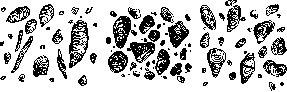
Figure 1.
Figure 2. Figure 5. Figure 3.
Figure 4. Figure 1. Starch grains of maize (corn). Figure 2. Starch grains of lentils (cracks characteristic of leguminous plants). Figure 3. Starch grains of turmeric (spindle-shaped). Figure 4. Starch grains of potato. Figure 5. Starch grains of arrowroot. Large grains, under high magnification, reveal layering around a single point: a central slit, cavity, or nucleus. When observing starch in oil, benzene, etc., layering in the grains is not observed. Spherical, centrally layered starch grains show an orthogonal black cross in a polarizing microscope, as is characteristic of biaxial crystals (Fig. 6). Wheat starch (Amylum Tritici Ph. VII) is obtained from wheat seeds (Triticum sativum); it is a white powder with a neutral reaction; under a microscope, it should not show foreign impurities or eroded grains; starch and the paste prepared from it should not show signs of spoilage by taste or smell, or have any foreign odor or taste at all. Starch should contain no more than 12% moisture and no more than 1% ash. Admixture of potato starch is recognized by its grassy odor and also by the shape of the grains. At a magnification of 300–400 times, wheat starch grains under a microscope have a round or elliptical lenticular shape with a central nucleus; large grains are from 15 to 45 µm, and small ones from 2 to 9 µm; there are very few grains of intermediate size. The nucleus and layering are weakly expressed; cracks are simple and rarely encountered. Starch is included in the following preparations (Ph. VII): glycerin ointment and salicylic paste according to Lassar; starch in powder form is included in almost all tablets as a substance that mechanically facilitates the rapid disintegration of tablets in the stomach. Wheat starch, like any other starch, in its effect on the skin and mucous membranes, belongs to protective or emollient substances; therefore, it moderates the irritating effect of various substances and slows the absorption of soluble drugs. Starch is used in the form of dusting powders, pastes, and internally in the form of a paste, per rectum in the form of an enema to reduce irritation of the intestinal tract during inflammatory and ulcerative processes. Starch paste is prescribed internally for poisoning with iodine (starch adsorbs iodine), bromine, acids, and other caustic and irritating substances; mucilaginous soups and porridges are prepared, which are prescribed to convalescents after exhausting diarrhea and to children. In industry, starch is used for starching laundry, gluing paper, for the preparation of dressing and sizing in the linen and cotton industry, for the manufacture of powder, starch gum, grape sugar, fuming nitric acid, explosives, and for clarifying mother liquors. Gloss starch consists of wheat starch powder with 5% or more borax or stearic acid. Starch paste is used in iodometry as an indicator. Among starch derivatives, one should mention the medical agents amyloform and amyloiodoform. Amyloform, according to Classen, should be considered as a compound of starch with formaldehyde. It is a white, odorless powder, insoluble in water; under the influence of weak acids or alkalis, it releases formaldehyde. Its antiseptic effect is due to the presence of formaldehyde. Amyloiodoform is a compound of starch, iodine, and formaldehyde; it is a black-blue powder (it has nothing in common with iodoform). In human nutrition, starch plays a very important role. The physiological need of the organism for carbohydrates is satisfied mainly by starchy food: bread, various types of cereals, and potatoes. The processes of digestion and assimilation of starch in the body ultimately boil down to the formation of glucose, which is then absorbed. B. Slovtsov points out that from the point of view of assimilation, starches of different origins have unequal biological value. Although the question of this inequality has not yet been sufficiently scientifically developed, one can nevertheless note a number of interesting observations, for example, that arrowroot and maize starch are assimilated better than rice starch. Oat starch apparently changes differently under the influence of digestive juices (in terms of the rate of dissolution) than wheat starch, and this may perhaps explain the peculiar attitude of diabetics toward the oat diet (Noorden's diet).
N. Kornilov. The microscope, the determination of starch grains in the contents of the stomach and fecal masses, is of importance for assessing the digestive capacity of the gastrointestinal juice. A. Microscopic structure. Being spherocrystals, starch grains consist of crystalline needles (trichites) arranged radially and forming concentric layers. In some plants (potato), the center of layering lies eccentrically; in others (rye, wheat, beans), the grain is constructed concentrically. 1) Concentric layers in the grains are noticeable without any treatment, but they appear especially clearly after prolonged exposure to highly diluted chromic acid. 2) The radial structure is revealed by treating the grains with diluted acids and water, in the initial stage of grain swelling in a weak solution of caustic potash, or by boiling (1/2 minute) the grains in a small amount of chloroform with a few drops of chromic acid. 3) The shell is revealed upon the swelling of the grains after heating them in water under a coverslip until bubbles form twice. B. Examination of starch grains in polarized light. Under crossed nicols, the grains give a black cross, like spherocrystals, with the point of intersection of both branches of the cross coinciding with the center of layering, being arranged concentrically (rye, legumes) or eccentrically (Fig. 6). When a gypsum plate is placed in the analyzer, the light intervals are colored in complementary colors in pairs: the cross becomes red or green depending on the arrangement of the nicols, and the intervals become blue and yellow. C. Microchemical reactions. 1) In hot water, the grains swell strongly with the disappearance of layering; upon boiling, a colloidal solution (paste) is formed; cold solutions of caustic alkalis act similarly. 2) The iodine reaction is given by grains that are not completely dried; a purely blue coloring of the grains is obtained under a coverslip when using a freshly prepared aqueous solution of iodine (a few drops of an old alcoholic solution per several cm3 of water). Lugol's solution is also used, preferably with a reduced content of KI (0.5 KI + 20 I2 + 100 cm3 H2O), which usually colors the grains in various shades of blue, sometimes (Oryza sativa, etc.) red. Starch grains in various stages of hydrolysis during the digestive process are colored blue, red-violet, and pale yellow. It is necessary to bear in mind that those reagents that convert iodine into a true solution (alkalis, chloroform, alcohol, tannin, etc.), as well as heating and an excess of KI, prevent the formation of the blue color. Preservation of the iodine reaction is not successful; when moistened with I2 + KI and dried,
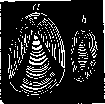
Figure 6. Starch grains when viewed in a polarizing microscope: a - simple, b - double (compound) grain. Magnification 300.
grains enclosed under a coverslip in paraffin oil with iodine (1 g I2 + 100 g Paraf. liqu.) retain for quite a long time the brown coloring into which their initially blue color turns. To detect starch grains in dry plant material, it is treated with lactic acid with a small amount of iodine. D. Staining of grains. For fixation, chromium-containing mixtures are recommended, which protect the grains from the action of warm water. Many dyes (carmine, Congo red, hematoxylin, methylene blue, etc.) do not stain the grains at all. The most suitable are gentian violet and methyl violet. The dye is allowed to dry on the preparation, then it is doused with a highly diluted aqueous solution of calcium nitrate or a solution of picric acid, after which it is washed, dried, and mounted in Canada balsam.
N. Yablokov.
Related articles
Mentioned in
Cite this page
“Starch.” Soviet Medical Encyclopedia. English translation of Bolshaya Meditsinskaya Entsiklopediya, 1st ed. (Moscow, 1928–1936), ed. N. A. Semashko. https://sovietmedicalencyclopedia.pages.dev/article/starch/