Will and Its Disorders
Historical document, translated for reference. It reflects medical knowledge of the 1920s–30s and is not medical advice.
Summary
This historical article from the 1928-1936 Soviet Medical Encyclopedia explores the psychological and physiological aspects of will, reviewing intellectualist, emotional, and spiritual theories of volition, and contrasting them with an objective psychological perspective.
Encyclopedia article (1928–1936)
WILL AND ITS DISORDERS. Will (Latin: voluntas), in empirical psychology, is a general designation for a special class of psychological processes characterized by the presence of activity or activity of the personality experiencing them. - Current state of the problem. The doctrine of the will, long before the emergence of scientific psychology, was developed in theology, metaphysics, idealistic philosophy, and speculative psychology; traces of this period in the development of the doctrine of the will appear in the theories of the will put forward in empirical psychology until the very recent period. Experimental investigation of volitional processes began relatively recently. Objective scientific psychology has not yet created a systematic and holistic doctrine comprehensively covering the entire field of phenomena and processes usually designated by the general term of will. However, alongside the remnants of metaphysical views on the will, psychology has already accumulated vast material for building an objectively psychological theory of the will. As in all of psychology as a whole, throughout its historical development, two opposite and incompatible trends have struggled and continue to struggle in the doctrine of the will, one of which strives to turn psychology into a natural science, and the other into a "science of the spirit." The struggle of materialist and idealist tendencies in the doctrine of the will is manifested more sharply and convexly than in any other psychological problem. Under the influence of materialist philosophy and natural science, psychology has repeatedly made attempts to explain volitional processes based on a materialist understanding of them as natural processes, strictly determined and conditioned by external causes acting on man and by his psycho-physiological organization, his nervous system. Various idealistic conceptions of the will continue to see in the will a special spiritual activity manifested in movements, but not subordinate to the laws of the material world, autonomous and free. Psychological theories of the will. The main question dividing various theories of the will in empirical psychology lies in the recognition or non-recognition of the primacy and independence of volitional processes as a special class of psychological phenomena. Many different theoretical explanations of volitional processes have been put forward in psychology. Below is given a summary, schematic review of the three main psychological theories of the will, proceeding from a different solution to the main question of the primacy and independence of the will. - Intellectualist theories of the will proceed from a denial of the primacy and independence of the will. For them, volitional processes are complex secondary formations, syntheses combining various combinations of intellectual elements into which any volitional act can always be decomposed as into its constituent parts. Most of these theories therefore do not recognize special laws of the will, believing that volitional processes are subordinate to the general laws of intellectual life. The central law of the will, from this point of view, is the law of association, i.e., the connection or combination of various elements. From this point of view, "the union of desire and action (motive and action) is an associative process. Consequently, the elicitation of action by some motive is a process of reproduction, and, therefore, the relation between motive and action must be subordinated to the laws of association and reproduction well known in psychology" (Meumann). In other words, the laws of the will are ultimately the laws of memory. According to these theories, volitional action is created by repetition, exercise, and learning; a volitional act is nothing other than a habit, it is the result of education. Despite all the differences found among various authors (Münsterberg, Ebbinghaus, Ribot, and others), the main point—the reduction of the laws of the will to the laws of the constituent elements of the volitional act and their associations—remains the same in all theories of this group. - Another group of psychological theories of the will seeks to reduce volitional processes to elements of emotional and affective reactions. The importance of emotions for the volitional process is also recognized by psychologists of the first group; however, they are inclined to ascribe a secondary, auxiliary, and subordinate role to emotions in this case. For them, this is a contributing, but not a producing factor. For Wundt, on the other hand, for example, a volitional act is in itself nothing more than an affect resolved in its course into external or internal actions that terminate the affect itself. A view close to Wundt's theory is shared by Bain, Lotze, and others. Wundt calls his system voluntaristic psychology, despite the fact that it proceeds from a denial of the primacy and independence of the will. For him, "the will is a complex process which owes its typical significance precisely to the circumstance that the most diverse mental elements take part in its formation." Some proponents of the emotional theory of the will put forward the striving for the feeling of pleasure as the main element of the volitional process (hedonic theory); others attribute the same role to the striving to eliminate the feeling of displeasure and suffering (pathematic theory); still others, alongside emotional and affective moments, distinguish other elements in the volitional process, but all these theories are united by a common starting point regarding the will as a secondary complex formation arising on the basis of emotional reactions. - Finally, the third group of psychological theories of the will consists of theories defending the primacy and independence of volitional acts, their specificity, and their irreducibility to a combination or association of elementary emotional or intellectual processes. The latter, although they accompany volitional processes, do not constitute their core, but are more or less accidental and, in any case, incidental companions of them. The very core of the volitional process, psychologists of this trend, such as James, see in a special spiritual effort having nothing in common with muscular effort, in a special act of internal decision, which James designates by the words: "let it be" (fiat!). In this understanding, the will is "exclusively a psychological and moral process of a purely spiritual nature, having essentially nothing in common with motor activity: the movements accompanying a volitional act are only epiphenomena, entirely incidental in relation to the process itself" (James). The problem of will in objective psychology. From the point of view of objective psychology, the dispute about the nature of the will is insoluble for empirical psychology because under the general concept of will it combines two problems that differ in essence and in their psychological nature, without a clear separation of which a correct formulation of the question allowing its scientific resolution is impossible. The very confusion of two different problems turned out to be possible and even inevitable for empirical psychology by virtue of the basic methodological principle—the study of mental phenomena in isolation and independently of organic processes. By virtue of this, all mental processes directly related to movement were usually attributed to the will. Reflexes and instincts, along with the most complex processes of deliberation, struggle of motives, and execution of decisions, were assigned to the same class. It is not surprising that there was a confusion of truly primary, elementary, irreducible and further indecomposable reactions with the most complex composite formations, higher functions of behavior in which emotional reactions, intellectual operations, etc., undoubtedly take part. Thus, from an objective point of view, one should distinguish the problem of will as activity of behavior in general, and the second—the problem of will as a problem of a special class of complex reactions including a whole series of elementary processes and representing a specific and higher form of this activity. If we understand the will in the first sense and draw an equality sign between the will and activity, voluntarism will turn out to be the most correct of all theories. It obliges us to understand all behavior and all mental life of man as active activity, rather than as passive experience. Intellectual and emotional reactions represent a special case of this general activity of behavior and can be understood only in connection with it as special forms of biological adaptation of the organism. Drives and instincts (or unconditioned reflexes) indeed constitute the foundation upon which all higher forms of behavior are built. Biological needs, rather than theoretical ideal interests, guide primitive behavior. This biological need, or the active character of all behavior as a whole, is so obviously connected with the material needs of the organism and with its material organization that it fundamentally overturns the essentially idealistic view of voluntarism: this primary activity of behavior from which all higher forms of behavior originate turns out to be not a mental, but a material activity of the organism. The will, understood in a broad sense as activity in general, dissolves completely into the concept of behavior, and the designation of will itself inevitably drops away, since this term ceases to designate anything definite, any special class of behavioral processes.
This, however, does not mean at all a denial of the presence of complex volitional acts as a special function of behavior and of their specific structure. Will in this sense can be understood only as the mastery of one's own behavior. To the extent that one masters a particular process of behavior, to that extent it becomes volitional in this sense. Operations aimed at mastering one's own behavior are precisely the proper function of will. Thus, it is not the nature of the elements, but the structure of the whole that determines the peculiarity of that type of behavior which traditional psychology calls volitional. Closest to such an understanding are the
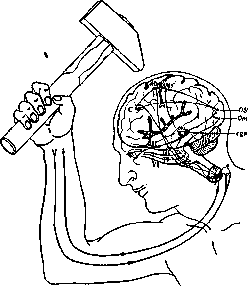
syncretic theories
This diagram clearly shows how complex the structural basis of the so-called voluntary movement is, i.e., what complex interaction of nerve excitations underlies the so-called voluntary action. From the physiological side, the basis of so-called voluntary actions consists of the processes of closing conditioned reflexes, conditioned inhibition, and dominance. The reaction process represents, as experimental research has shown, a complex form of conditioned reflex closed by means of verbal instruction; the reaction, in turn, is considered in psychology as an example of any voluntary movement. Likewise, the effect of motives on W. and the complex struggle of motives ultimately reduce to a complex interaction of synthetic stimuli. The motive leading to the implementation of this or that voluntary action is, from the physiological side, more or less a complex internal stimulus. Inhibition processes apparently also play an essential role in the physiological substrate of so-called voluntary actions. This is manifested in the typical delay of immediate impulses for this class of reactions, the suppression of a whole series of secondary and undesirable reactions, in what is usually called 'the ability to control oneself.' Finally, the dominance of voluntary reactions is manifested in the tendency of these reactions to dominate over other reactions, in the suppression of extraneous and interfering reactions, and mainly in the strengthening of the main reaction at the expense of extraneous and hindering stimuli; as experimental research has shown, this strengthening is a general rule to which voluntary reactions are subject. The key to the physiological explanation of 'voluntary' processes thus lies in the mechanism of conditioned reflexes. The most complex voluntary action is ultimately carried out through this mechanism, since there is no other means to evoke any reaction except by creating a conditional connection between stimulus and reaction. Experimental research on voluntary processes began with experiments on reactions developed mainly in Wundt's school. In these experiments, the subject reacted with a predetermined action in the instruction to some stimulus. The main significance of these experiments lies in the fact that they introduced precise measurement of the duration of psycho-physiological processes of varying complexity into psychology. With regard to W. itself, the most interesting problem touched upon by these experiments is the relationship between reaction, i.e., the so-called voluntary movement, and reflex, i.e., involuntary movement. As the reaction is repeated, its course approaches that of a simple reflex, i.e., its time falls to the magnitude observed in purely reflexive movement (Wundt). Another extremely important result of these researches is the establishment of the essentially associative nature of the connection between the conditioned stimulus and the responsive movement. This is particularly evident in experiments with complex choice reactions, in which the subject reacts with different movements to different stimuli. Titchener showed that this reaction, despite being much more complex than the reaction to a single stimulus, can equal the time of a simple sensory reaction if the coordination of stimulus and movement is sufficiently learned. 'In the choice reaction we can perform various operations, but we do not choose,' says this author. As experiments by Lehmann, Ach, and others have shown, in complex choice reactions the subject initially inserts between the stimulus and the reaction an intermediate, auxiliary member—the name of the stimulus, part of the instruction, etc. Then this intermediate member (Mittelglied) drops out, the reaction first takes the character of a simple sensory, then motor reaction; its time falls from 300ms to 240ms and then to 140ms. Experiments with reactions thus establish that 1) the course of the reaction depends, first of all, on the strength of the association between motive and action; 2) in complex choice reactions, the main operations reduce to establishing this associative connection by inserting intermediate linking members between the two moments of this reaction; 3) the development of voluntary processes in reaction completely coincides with the development of any association that strengthens with repetition and excludes intermediate links, which is essentially what the process of automation of voluntary acts amounts to; 4) therefore, the difference between reaction and reflex can be established only genetically: what separates them is the mode of origin and emergence, but not the mode of functioning. In the voluntary process, as it manifests itself in reaction experiments, there is a combined action of two mechanisms: on the one hand, the simple reflex mechanism that transmits sensory excitation to motor pathways, and on the other, the mechanism that closes the conditioned-reflex (associative) connection between stimulus and reaction. It is precisely this second mechanism that is characteristic of the reaction and distinguishes it from the reflex. It is well known what importance attention has in the operation of this mechanism in reaction, accelerating the course of the reaction; in the cultivation of a conditioned reflex, on the contrary, as Bechterev showed, distraction of concentration proves to be a factor favoring the development of the combinatory reflex. Obviously, the artificial method of establishing a conditioned connection by means of verbal instruction constitutes the most essential difference of the reaction. Ach, assuming for the explanation of voluntary processes the existence of special determining tendencies emanating from the representation of the goal or task, regulating and directing the entire course of thoughts and actions, proposed to measure the strength of a voluntary act by overcoming the obstacles opposing it. In the experiment, he confronted the 'determining tendency' (for example, the task of finding a rhyme to a meaningless syllable) with the reproductive tendency based on the previously established associative connection between the given syllable and another. The number of repetitions serves as a measure of the associative equivalent of the determining tendency.-With a more precise measurement of the reaction process, Kornilov approached, establishing on the basis of his experimental research the law of unipolar energy expenditure, stating that 'central and peripheral energy expenditure are in inverse relation to each other: the more complex and tense the central thinking process becomes, the less intense the external manifestation of movement becomes.' On the basis of his research, Kornilov concludes that the presence of an antithesis between intellect and will is undeniable. The intellect is considered here as 'an inhibited voluntary act that has not been transformed into action.'-For the experimental determination of the strength of the voluntary impulse, Rossolimo proposed 20 tests revealing the ability of the voluntary impulse to overcome, on the one hand, phenomena of automatism and imitation (10 tests), and on the other, suggestibility (10 tests). The results form part of the psychological profile (see). Hillgruber (A. Hillgruber) investigated the activity of will during prolonged work. On the basis of his experiments, he established a law stating that the difficulty of any activity is a motive for stronger tension of W. and concentration of attention, in the sense that as difficulty increases, so does voluntary tension. This phenomenon was long ago noted by psychologists (Ribot, James) as the most essential difference of will. Claparède (Claparède), on the basis of experimental research, established very recently that in a voluntary act the subject has the impression that the action is performed along the line of greatest resistance.-Ribot believes that this effort differs from muscular effort only in that its physiological conditions are less known. It is based on the struggle between lower, i.e., simple, organic, and higher, i.e., complex, social tendencies. 'The former are always strongest by nature; the latter can be so in some cases thanks to art,' he says. The domination of motives which in themselves are weaker is artificially ensured, and this is essentially the activity that has received the name of will. It goes without saying that 'art' in this case, as always, creates only a stronger, special combination of nerve excitations. W. as the highest stage in the development of psychological functions. Ribot was the first to express the thought that W. is not a product of natural development, but is the result of the historical development of human behavior. In this sense, he links the emergence of W. in the form of so-called voluntary attention with work. Work is also the cradle of W. In the classical description of the labor process, Marx points out that the historical development of behavior, directly stimulated by labor, is connected with W.: 'Man, by acting on external nature and changing it, at the same time changes his own nature.'
It develops the dormant abilities within her and subordinates the play of these forces to its own power. Purposeful will, expressed in attention, is necessary at all times during labor, and all the more so the less the labor attracts the worker with its content and method of execution, therefore, the less the worker enjoys labor as a play of physical and intellectual forces." From this point of view, the so-called freedom of will receives its scientific explanation. Subordination of behavior "to its own power," which constitutes the main function of W., is possible only by the same laws to which behavior is subject, "just as only by the laws of external nature can we constantly modify it and subordinate it to our purposes" (Heffding). Bacon's rule "Natura parendo vincitur" (we conquer nature by obeying its laws) is equally applicable to dominion over nature and to dominion over oneself. "Freedom consists," says Engels, "in mastery over oneself and over external nature, based on an understanding of natural necessity, and therefore it is necessarily a product of historical development. The first people who emerged from the animal kingdom were in every respect as unfree as the animals themselves, but every progress in culture was a step forward toward freedom." This dialectical understanding of W. leads with logical inevitability to determinism, i.e., to the doctrine of the complete causal conditioning of will. The will of man is determined with absolute necessity by the causes acting upon it. "Man, being in such a state of equilibrium," says Spinoza in his "Ethics" - (namely, a man who feels nothing but hunger and thirst, and has food and drink before him at equal distances), "will perish from hunger and thirst." If one accepts, along with some authors, that the natural development of behavior passes through three main stages (instinct, training, intelligence), then W. should be recognized as the fourth and highest stage, achieved only in the historical development of behavior. Mastery over behavior is the highest stage in its development, the stage at which, in the words of Engels, "the eternal laws of nature turn more and more into historical laws."
L. Vygotsky. Disorders of will. At different times, approaches to explaining the causes and mechanisms of the emergence of will disorders have varied, depending in part on how the concept of 'will' itself was defined. Here it is only necessary to note, without going into further details, the purely psychological and phenomenological approaches to resolving these issues. With the emergence and expansion of I. P. Pavlov's doctrine of conditioned reflexes and, on the basis of this doctrine, Bekhterev's creation of reflexology, attempts have been made to approach the study of will disorders from a purely reflexological point of view, i.e., from the standpoint of the combination, inhibition, and disinhibition of one reflex by others. Kretschmer approaches the resolution of this question from the standpoint of phylogenesis of the nervous system, distinguishing according to the time of origin: higher volitional will, hypobulic will, and simple reflexes. The latter are primarily associated with the spinal cord, hypobulica is related to the intermediate brain, and finally, volitional will is associated with the cerebral cortex. Under certain conditions, older phylogenetic mechanisms may emerge (e.g., hysterical seizures, negativism, etc.). In connection with the doctrine of epidemic encephalitis and with recent advances in the study of the anatomy of the brain, especially its extrapyramidal pathways and subcortical ganglia, purely anatomical views on will disorders have begun to be put forward. It is also undoubtedly true that the doctrine of temperaments and characters is closely linked to the study of the influence of the endocrine apparatus, the autonomic system, and in general, the entire physicochemical dynamics of the human organism on the psyche, depending on which, of course, the W. (will) also exists as a manifestation of a single and indivisible psyche. However, all the above-mentioned trends in science either do not give us an exact definition of the causes and mechanisms of will disorders or are not yet sufficiently perfect and precise to categorically use their indications on this matter, and therefore will disorders have to be described purely symptomatologically, as they are observed in the clinic and in life. The human psyche is essentially indivisible; it is therefore difficult to strictly separate disorders of W. (will) from disorders of intellect and emotions, but for the sake of schematic presentation, these disorders must be presented under separate headings (weakening of volitional impulses-see Abulia). - A manifestation of strengthening of volitional impulses is usually motor excitement. As an example of such strengthening, one can point to ordinary alcoholic intoxication. Strong restlessness is also observed in delirious patients, especially in alcoholic delirium, where the tendency of these patients to the so-called professional delirium indicates independent psychomotor excitement. Of other poisons, cocaine has the ability to strengthen volitional impulses, especially with prolonged abuse of it, when a state develops that is close to the manic states observed in manic-depressive psychosis, infectious psychoses, and in progressive paralysis. In the clinic, it is especially necessary to pay attention to the distinction between manic excitement in manic-depressive psychosis and catatonic excitement. In the former, there is always a matter of goal-oriented motor settings, and therefore one speaks of a tendency to action, to activity; in the latter, the movement itself seems to be an end in itself, and therefore only a tendency to movement is noted.-Every volitional impulse, before it turns into movement, must overcome some psychomotor resistance. In pathological conditions, this resistance can significantly increase; hence the difficulty in volitional manifestations. Such enhanced psychomotor inhibition, if not counting the initial states in epidemic encephalitis, is especially characteristic of depressive states in manic-depressive psychosis. It is very typical here that the patient strives to perform the required movement and achieves or does not achieve this, depending on the strength of the inhibition. Some of these patients are so inhibited that they cannot make any movement; then one speaks of circular stupor. The complete opposite of this is catatonic stupor, where the movements themselves are not disturbed, i.e., the patient can sometimes produce fairly strong and abrupt movements, but the impulses are not carried out, because immediately an anti-impulse appears, inhibiting the execution of the movement, and therefore here one speaks not of inhibition, but of delay of impulse. Sometimes, on the contrary, the volitional impulse easily passes into action, i.e., there is a kind of facilitation of volitional manifestations. Usually, strengthening of volitional impulses is accompanied by an easier transition of them into actions. Here it is especially necessary to dwell on the effect on our W. (will) of certain poisons, such as alcohol, cocaine, ether. As in acute states of intoxication, and especially in chronic abuse of them, a person loses the ability to volitional inhibitions and easily yields to a whole series of temptations, especially the temptation to repeated poisonings. Next come the disorders of W. (will), described on the one hand as increased submissibility of will, and on the other hand, as decreased submissibility of will. Of the phenomena of the first order, it is necessary to note 'waxy flexibility of the muscles', in which the limbs of the patient can be given any position, and this position is maintained by them for quite a long time (so-called phenomena of catalepsy). Such a state of muscles is observed in a very diverse range of diseases, but it is most characteristic of schizophrenia. Echopraxia and echolalia are also noted, when the patient repeats the movements of another or his words. Lange also includes palilalia, palikinesis, and palitrafia here, i.e., the repetition by the patient several times in a row of his own word or movement; this phenomenon is observed, besides schizophrenia, in organic lesions of the brain, especially in epidemic encephalitis. With weakening of the strength of impulses and with a decrease in their quantity, which is observed in various forms of dementia, instability of W. (will) develops, i.e., suggestibility. When increased submissibility of W. (will) coincides with facilitation of volitional impulses, distractibility of W. (will) is created (e.g., in manic states) and its variability, often observed in psychopaths. Decreased submissibility of will is described under the general name of negativism, i.e., impulsive resistance to all external influences, which sometimes goes as far as performing exactly the opposite of what is required, so-called induced negativism. Among the manifestations of negativism, one must mention stubborn refusal of food, retention of urine and feces, and mutism, when the patient does not want to say anything at all. Sometimes patients answer 'past' the question, giving intentionally false meaningless answers (paralogia, Vorbeireden). These phenomena in catatonics and in the Ganser symptom complex differ somewhat from each other. The catatonic gives simply absurd answers, sometimes completely irrelevant to the question; the answer of the patient with the Ganser symptom complex, however, shows that the question is understood by him, but he gives the answer as if intentionally false, as if artificially shielding his psyche from unpleasant external intrusions. Phenomena of submissibility of will and negativism are very often observed in the same patient, sometimes it is possible to translate phenomena of one order into another and back, which makes one think that the root of these disorders is common. Of the theories put forward to explain these phenomena, the most interesting is Bleuler's theory. Every our movement proceeds smoothly only with simultaneous tension of antagonists; according to the same pattern, our psychic movements also occur. The loss of opposite tendencies leads either to involuntary submissibility or stubborn resistance. Kraepelin speaks of a decrease in the guiding, regulating influence of a constant goal and of the readiness of will to action. Kretschmer's views are set forth above. In carrying out any action, to achieve the goal, the shortest path is taken with the least expenditure of time and energy. Under pathological conditions, most often in catatonia, the motor impulse is either aimlessly repeated or the movement is disturbed by side impulses, from which a certain angularity, affectation of movements and actions results. Here belong stereotypies, i.e. uniformity either in position or in movements, affectation in movements stereotypically repeated, rhythmic VOMITUS movements; sometimes patients perform their actions not simply, but affectively, by a roundabout way, with all sorts of complications and deviations, for example, they offer a hand, widely swinging it, touch the offered hand not with the palm, but with the back of the hand, etc. An interesting phenomenon described by Schttle under the name of 'slipping of will' is when the patient starts one movement and ends with another (e.g., takes a glass of water to drink and pours the water out in a circular motion on the floor). Here also belongs paramimia, i.e. the inconsistency of facial expression with the affect experienced by the patient at a given time (e.g., telling with a smile about strong sorrow).
The same phenomena of slippage are also observed in the speech of patients; then they are called fragmentation of speech, but these phenomena relate more to speech disorders, where they will be described. If we broadly understand disorders of will, then they can also include obsessive and impulsive actions, changes and perversions of drives, apraxic disorders, deviations in expressive movements, such as: facial expressions, speech, writing, drawing, and musical abilities.
Related articles
Cite this page
“Will and Its Disorders.” Soviet Medical Encyclopedia. English translation of Bolshaya Meditsinskaya Entsiklopediya, 1st ed. (Moscow, 1928–1936), ed. N. A. Semashko. https://sovietmedicalencyclopedia.pages.dev/article/will-and-its-disorders/