Docimasia and Vladimir Dolganov
Historical document, translated for reference. It reflects medical knowledge of the 1920s–30s and is not medical advice.
Summary
This article defines docimasia as a term introduced into forensic medicine for vital tests, such as pulmonary and gastrointestinal tests. It also provides a biographical sketch of Vladimir Nikolayevich Dolganov, a prominent Russian ophthalmologist and professor.
Encyclopedia article (1928–1936)
DOCIMASIA (from the French la docimasie—assaying art, test), a term introduced into medicine by French authors in relation to vital tests in forensic medical practice. Pulmonary or hydrostatic docimasia (la docimasie pulmonaire, ou hydrostatique), gastrointestinal (la docimasie gastro-intestinale), auricular (la docimasie otique), hepatic (la docimasie hepatique) (see Vital tests).
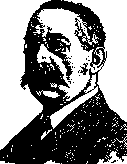
DOLGANOV, Vladimir Nikolayevich (born 1868), a prominent ophthalmologist, professor at the Military Medical Academy since 1925. After graduating from the Military Medical Academy in 1890, he was retained as an ordinarius at the academy's eye clinic under Professor Dobrovolsky. In 1893, he received the degree of Doctor of Medicine and was appointed assistant at the clinic of Professor Bellarminov, where he served as a privat-docent until 1906. He worked abroad under Professors Schweigger, Greeff, Günter, Leber, and others. From 1906 to 1925, he served as professor of the department of eye diseases at the Clinical Institute for the Advanced Training of Doctors in Leningrad (from 1909 to 1920 he was also the director of the institute). During Dolganov's administration, the institute was expanded: the number of departments increased from 7 to 21, a special laboratory building was constructed, the number of beds was increased from 140 to 350, a close connection was established between the institute and a number of city hospitals, the number of doctors sent to the institute for training significantly increased, and so on. In addition to his scientific and administrative activities, D. engaged in a great deal of public work. Before the revolution, D. was one of the most active members of the former Trusteeship for the Blind; in 1919 he served as a member of the Academic Committee of the People's Commissariat of Education, a member of the General Council of Medical Schools of Leningrad, and others. He edited the ophthalmology section of the journals «Meditsina» and «Vrachebnaya Gazeta». D. authored over 70 printed works in Russian and foreign languages. Major works: «On the influence of various locally applied substances on diffusion into the anterior chamber of the eye» (dissertation, St. Petersburg, 1893), followed by works on postoperative astigmatism, on pathological and anatomical changes in the retina during eclampsia in parturients, a series of works on the spread of blindness in Russia and on the activities of mobile eye detachments; a description of the author's protective glasses («A new type of protective glasses for workers», St. Petersburg, 1899), which are widely known; the only Russian-language, highly valuable and excellently compiled «Atlas of the Most Common Eye Operations» (St. Petersburg, 1908), and a number of other works. In addition, about 30 dissertations and over 200 scientific works were written on topics and under the guidance of D.
Related articles
Cite this page
“Docimasia and Vladimir Dolganov.” Soviet Medical Encyclopedia. English translation of Bolshaya Meditsinskaya Entsiklopediya, 1st ed. (Moscow, 1928–1936), ed. N. A. Semashko. https://sovietmedicalencyclopedia.pages.dev/article/docimasia-and-vladimir-dolganov/