The Blind
Historical document, translated for reference. It reflects medical knowledge of the 1920s–30s and is not medical advice.
Summary
This article examines statistics and causes of blindness globally and in Russia, emphasizing social and economic factors. It also discusses historical developments in education and support systems for blind individuals, highlighting the work of Valentin Haüy and Louis Braille.
Encyclopedia article (1928–1936)
The Blind. Precise data on the number of blind people in a country are a prerequisite for the most correct resolution of the problem of their labor and cultural organization and for work on the prevention of blindness. Despite attempts to give statistics on blindness an international character, there are still no uniform methods of accounting for blindness, and there are no precise data for scientific study. The only official data we currently have on the blind of the world were collected by the health section of the League of Nations in 1929 and consist mainly of materials from population censuses in individual countries (see table). These data can serve as a criterion for judging the distribution and condition of the blind within a given country and the conditions among which the population lives. The League of Nations material, comparing the results of one-day censuses conducted in different countries under extremely diverse conditions by various methods and with different interpretations of the very concept of blindness, consists of data unsuitable for either scientific generalizations or practical requests. At the Paris congress in 1928 on the prevention of blindness, a general figure of 6,000,000 blind people worldwide and 15,000,000 people on the verge of blindness was adopted. These figures must undoubtedly be considered underestimated due to the tendency of the bourgeoisie to limit the number of persons eligible for state and charitable support. Bourgeois statistics has long attempted to explain the large numbers of blind people in the East by the influence of the country's geographical location, climate, proximity to the sea, mountainous nature, etc. (Fuchs and others). The attempt by Zeine and Carreras Arago to establish a geographical regularity in the distribution of blindness with a progressive decrease from south to north proved untenable. In the League of Nations material, we find justifications for the dependence of blindness in India on the abundance of rainfall; statements of this kind have an a priori character and are not confirmed by scientific data. The enormous numbers of blind people in the East (China, India, Egypt) find their only explanation in the heavy socio-domestic conditions of the working people of these countries—as a result of the double oppression and exploitation by imperialists and their own bourgeoisie. This is also indicated by the low indicators of blindness in cultural countries, metropolises, and high indicators in colonies. Similarly, in tsarist Russia, there were significantly more blind people among oppressed national minorities than among the Russian population. These figures determine the scope of blindness, placing it in dependence on the existence of the capitalist class, exploitation, oppression, and the cultural level of the population. High exploitation in colonies, semi-colonies, as well as in tsarist Russia gives a high percentage of blindness. The October Revolution in Russia, which expropriated the means of production, destroyed the exploitation and oppression of the working masses, at the same time raised social health care, the cultural and material level of the working people, which led to a significant decrease in blindness. According to the 1886 census, there were 189,872 blind people of both sexes in Russia, with a blindness coefficient of 20. According to the 1897 census, there were 247,000 blind people with a coefficient of 19.7. Professor Golovin in 1910, on the basis of materials from these censuses and on the basis of the general average coefficient of 20, assumed that the total number of blind people in Russia—300,000—represents by no means a complete count of the blind in Russia. The population census in the USSR in 1926 revealed 234,833 blind people out of a population of 147,205,685, with a blindness coefficient of 15.97, i.e., 3.73 lower than in the 1897 census. This decrease is the result of the changed socio-economic conditions after the October Revolution, the increase in the cultural level, and mass health work. The view of the blind as an interclass group of people (Broni and others) has long stemmed from underestimation of the basic fact that blindness, like tuberculosis and other socio-pathological phenomena, recruits its victims primarily from the working class. Bourgeois legislation kept the blind in more or less strict guardianship, and deprivation of their civil rights was the rule in the Middle Ages. Nevertheless, history notes a number of famous blind people, especially in the 18th century: the author of "Paradise Lost" Milton, the blind-born Saunderson, professor at Cambridge University; the blind Weissenburg in Mannheim invented a machine for reading and writing, the blind girl Paradis in Vienna (1759-1824) invented devices for reading, writing, and setting musical notes. But these were exceptions—the mass of blind people remained ignorant and languished in poverty and disenfranchisement. True, attempts were also made at that time to give the blind the opportunity to study. Erasmus, for example, insisted on the possibility of alleviating their suffering by developing their remaining senses. In 1749, Diderot published his famous "Letter on the Blind," which played an enormous role in the history of their enlightenment. The idea expressed in this letter about the ability of the blind to mental development was taken up by Valentin Haüy (1745-1822), the son of a poor French weaver, who, having assimilated the new ideas of Diderot and others about the blind, developed a practical system of upbringing and education, vocational skills, reading, and writing with ordinary embossed type. The school for the blind he organized in 1774 later became a center for the blind of France as well as for other countries. At present, this is the National Institute for Young Blind People, which is primarily a school of music and tuning. In 1807, Haüy, at the invitation of Alexander I, went to Russia, where he encountered the routine and ill will of the bureaucracy, which considered the education of the blind an unnecessary undertaking, since "there are no blind people in Russia," as the tsarist officials stated. Nevertheless, Haüy managed to lay the foundation for the education of the blind in Russia (Skrebitsky). The initiative of Haüy was soon imitated in other countries. Indeed, in England the first school was opened in 1791, in Prussia in 1806 (in Berlin), in Vienna in 1808. The work begun by the sighted Haüy was continued by the blind Louis Braille (1809-52). Having lost his sight at the age of three, he was first a student and then a teacher in the school founded by Haüy. In 1826, Braille adapted a dot alphabet that makes it possible to create 63 signs from combinations within 6 embossed dots, which is quite sufficient for denoting letters of the alphabet, numbers, punctuation marks, mathematical and musical signs. The combination of these signs logically follows one from another: all letters of the alphabet are distributed in 4 lines: in the 1st line 10 signs corresponding to the first 10 letters. From these first signs he composed the next 10, adding only one dot at the bottom; adding another dot at the bottom, he obtained the third line, and so on. Each dot, according to its position, has a special numbering (Fig. 1).

e
. ' ', o . ш gefeteur
desnfmhres I234567890
-{
- X

Figure 1.
The distance between points is taken as 2*/g mmm, which corresponds to normally developed touch. However, this ability is extremely individual and decreases with age. The implementers of the ideas of Haüy and Braille and their conductors to the disadvantaged masses of the blind were in France Suzeran and in England Hermitage, who tried to give the problem of blindness a social character, demanding not only assistance but also work. But this propaganda could only lead to the development of a bourgeois-philanthropic movement: workshops are organized (brush-making, basket and chair weaving), national and international congresses are convened—in 1878, 1889, 1900 in Paris, 1902 in Brussels, 1905 in Liège, 1910 in Paris; in 1889 the Haüy Association is founded. Article I of its charter states: 'The Association of the Blind Haüy for the benefit of the blind aims to unite and assist persons and institutions engaged with them, to teach, disseminate, and apply everything that can contribute to the education and care of the blind and to popularize the cause of blindness prevention.' Nevertheless, the mass of blind people, in the absence of equal rights in work with the sighted and the inability to compete with them with their handicraft products, continued to suffer. The slogan of the blind at the end of the 19th century 'recognize us as people' is a vivid expression of their dire situation. From 1915, due to a shortage of workers, experiments were first carried out on using the labor of the blind in factory industry. This experience, begun by engineer Perl at the Siemens-Schuckert plant in Berlin with 70 blind people, soon spread to other countries (America—Ford). Several hundred blind people were allowed to perform auxiliary work (gluing, packaging), and later also more complex work on milling, planing, and other machines. After the world war, revolutionary ferment began among the war-blinded, which also spread to civilian blind people. The struggle of the blind intensified in the largest bourgeois countries and led to a number of gains. In 1920, in Germany, a law was enacted obliging employers to accept a certain percentage of war disabled, including the war-blinded. By the 1923 law, this provision was extended to all blind people. In England in 1920, a law on the blind was signed by the king, according to which a pension is provided for blind people over 50 years of age, and all care for the blind is transferred to municipal organizations. This law was the result of a 50-year struggle, completed by the march of English blind people to London in April 1920. From the materials of the League of Nations, it is evident that even at the moment of greatest well-being for the blind in the West (during the period of temporary stabilization of capitalism), their opportunities were extremely limited. Prof. Orlov, familiarizing himself with the situation of the blind in the West, as early as 1926 was convinced of the lack of prospects for them. We learn about the difficult situation of the blind in the era of economic crisis from the publications of the blind themselves, their letters in the USSR. In France, as a result of a 6-year struggle, the blind in 1930 obtained minimal assistance for 5,000 of the poorest blind people. In Germany in 1933, the fascist government issued a decree on the forced sterilization and castration of persons with hereditary diseases, including hereditary blindness and deaf-mutism. We learn about the situation of the blind in tsarist Russia and the role of the charitable-bureaucratic organization—the Mariinsky Care for the Blind—from the classical works of Skrebitsky and partly from the reports and works of the care organization itself. Latest data on this question (Belorukov) shed light on these pages of a dark past, characterized by a number of revolutionary outbreaks among the blind, especially after 1905. V. I. Lenin, speaking about the development of capitalism in Russia, notes the fact of the exploitation of the blind on some factories in place of mechanical motive power. The right of the blind to labor and culture was first fully realized in world history in the USSR after the October Revolution. In 1923, the All-Russian Society of the Blind (VOB) was organized, which developed its activities under the fighting slogan 'In step with the sighted.' The tasks of VOB include the political education, enlightenment, and vocational training of the blind in accordance with their peculiarities, as well as their employment in state and cooperative industry and other accessible sectors. The Society conducts accounting of the blind, their employment and vocational training, regulates their legal and cultural interests, and propagates the tasks of treatment and prevention of blindness. The rights of the blind in the USSR are regulated by a number of legislative enactments; political and civil equality for working blind people is provided for by the Soviet constitution. The budget of the VOB organization is compiled from budget allocations of SO, ONO bodies, from the income of the society's enterprises and the mobilization of funds from the population during the three-day campaigns. The main task of these annual campaigns is the propaganda of the tasks of VOB and the mobilization of public opinion to fight blindness. Members of VOB can be persons who have reached the age of 14, disabled persons of the first 2 groups by vision. In 1933, there were 729 cells and departments of the All-Russian Society of the Blind, with 27,160 members involved. In 1933, the number of employed blind people in various systems—special workshops, cooperatives for the disabled, general and handicraft industry, and agriculture—was 24,280 people. In the second five-year plan, it is planned to cover with employment all physically able-bodied blind people with complete and partial blindness; the number of such persons out of the total of 172,291 blind people of the RSFSS is approximately 67,000. Vocational training of the blind is conducted mainly in the educational-production workshops of VOB (UPM). VOB UPM have a 6-12 month program and turn out qualified blind workers of the 3rd-4th category. VOB has about 200 UPM; woodworking, felt-fur-dressing, knitwear, mattress-upholstery, paper-cardboard-binding, metalworking, and others. In 1933, UPM produced consumer goods to
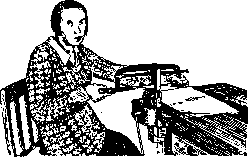
Fig. 2. A blind person milling metal on a special machine
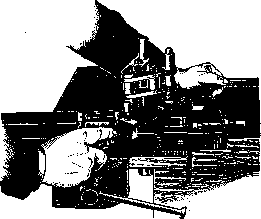
the amount of over 13 million rubles. Among the UPM of VOB, the Leningrad complex attracts attention: it employs 604 workers, of whom 394 are blind workers. The average monthly wage of a blind person is 139 rubles. The largest enterprise of VOB is the 'EMOS' plant in Moscow, numbering 432 workers, of whom 200 are blind. The plant manufactures electric fans and small-power motors. At the 'EMOS' plant, blind people perform highly skilled work as locksmiths, stampers, metal turners, winders, and assemblers of motors and others (figs. 2 and 3). The average wage of a blind worker is 141 rubles. In 1933, the plant produced products worth 2,453,000 rubles. On factories and plants of state industry, the labor of the blind is applied in groups, brigades, and shops with the organization of systematic instruction. The determination of types of labor and the organization of labor for the blind in the USSR are carried out on the basis of scientific study of these questions by the Central and Leningrad Scientific Institutes for the Study of Labor of the Disabled NKSO (TSITIN and LITIN). Experiments conducted by engineer L. S. Schultz at TSITIN on the application of blind labor in the pure processing of wood led to the conclusion that these works are accessible to the blind on a par with the sighted with proper organization of the workplace and the use of special equipment (templates, etc.). The following products are accessible to the blind for manufacture: simple furniture (stools, tables, cabinets, etc.), agricultural implements—rakes, beehives, cages, feeders, greenhouse frames, etc. Schultz also manufactured instruments to achieve precision and completeness in the work of the blind—vernier caliper, filing, etc. (figs. 4-8). Dr. Reich designed a number of signaling sound devices to facilitate
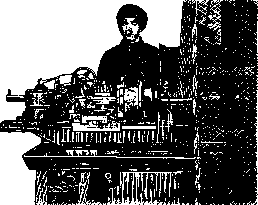
Figure 3. A blind person at a grinding machine.
teaching work for the Blind as in general industry as well as in special workshops: starting machines, obstacles on the way, calling for a master. Employment of the Blind in capitalist countries according to materials from the League of Nations follows three main channels: work in special workshops, in general enterprises with the sighted, and work at home. Special workshops are as a rule philanthropic and private enterprises and exist mainly in large cities. These enterprises have a state character in very few countries: in Denmark, Latvia, France. Municipal workshops exist: in Holland-2, in the USA-about 20, in England-4, in Scotland-1. Some workshops have dormitories for single persons with payment from earnings for maintenance. Most workshops have their own shops and warehouses for selling products to the local population, largely relying on 'public sympathy'. The following difficulties are noted in the work of workshops: inability to compete with mechanized and imported industry, which complicates the sale of finished products; frequent changes in work methods and sometimes inability for the Blind to master a new method; lack of work processes suitable for the Blind in a number of industries: foundry, mining, etc.; fear of accidents; implementation of special safety measures and increase in defects, leading to higher product prices; productivity of the Blind on average does not reach the productivity of the sighted and is 25-66% lower. All these reasons are often quite sufficient for rejection in hiring a blind worker. Work for the Blind at home as an independent artisan is associated with guardianship and dependence on various organizations, competition, difficulty in obtaining raw materials and selling products. It was possible to overcome all these difficulties only in the USSR on the basis of eliminating unemployment, a socialist economy of labor, its scientific organization, and the closest connection between labor and daily life. Cultural and mass political-educational and literacy work is carried out through the agencies of people's education and ODN. Universal education for adults who are Blind in the USSR is carried out through schools for illiterates, semi-literates, and political schools at educational-production workshops and enterprises. Over 400 people are studying in secondary and higher educational institutions, 133 clubs and red corners of VOS, 113 libraries. Braille writing devices, which were previously obtained from abroad, are now produced in VOS workshops; Braille typewriters are manufactured by blind inventors (Frolov and Barinov). Production of relief geographical maps (Sverdlov and Potanin) and globuses has been organized. Primers have been published in Mordovian and Uzbek languages, with preparations for publications in other national languages. Three magazines are published in Braille: in Moscow-"Life of the Blind" and "The Blind on Socialist Construction", in Leningrad-"The Path of a VOS Member". Among the Blind in the USSR there are a number of scientific workers: Kovalenko (typhlopedagogy), Pandyagin (mathematics), Matveev (political economy), Panin (philosophy), Bogorad (medicine), etc.; writers, poets, and journalists: Belorukov, Gilyarovsky, Dobzhinsky, Lepin, Ryazantsev, Popov, Shoyev; VOS activists: Viktorov, Glazykin, Galvin, Medvedev. The works of blind Professor Shcherbyna on typhlopedagogy are widely known abroad. Engineer Pototsky, being blind, directed complex hydraulic engineering works at oil fields, in the Caspian Sea. The fact of extremely weak physical development of blind children and adults, their increased morbidity (scrofula, heart defects, otitis, etc.), as well as increased mortality (Krogius, Billey) has been repeatedly noted. Observations made at the Brain Institute in Leningrad on 120 children from the Institute for the Blind showed that among all the Blind, 43% had a normal physical profile, 50% were hypotrophics, and 7% were hypertrophics. The fact of muscle inhibition in the Blind, the presence of stereotyped movements (prolonged swaying), limitation of large ranges, increased excitability of the autonomic nervous system, and disorders of the endocrine glands (20-35%) has been confirmed. At the same time, more intense work of the brain has been established (Osipova and others). Defects in the physical development of the Blind are undoubtedly connected with the extremely difficult conditions of their upbringing in the past and with the manifestation of complete carelessness and ignorance in caring for the Blind, especially children-prolonged confinement indoors, etc. The conditions for proper development of the Blind have fundamentally changed in the USSR. Soviet healthcare organizes proper medical supervision of the physical development of blind children and adults (through their dispensarization), conducts propaganda of sanitary-hygienic skills in work and in daily life. Experiments in applying physical education among the Blind in the USSR according to the Lesgaft method showed an increase in the chest circumference, lung capacity, height, improvement of health and labor productivity (Krasovsky, Krestovnikov). The plan of work included elementary movements, correct posture, breathing, walking, running, jumping, throwing, wrestling, and mobile games. Mass propaganda of physical education requires its approach to production and daily life, its application in rest homes and sanatoriums where the Blind are concentrated. The task of physical health improvement for the Blind also requires maximum proximity of physiotherapeutic help to the conditions of their labor and daily life. Various types of medical gymnastics-orthopedic, hygienic, Zander, vibrational massage, and other types of general strengthening treatment are very suitable and easily applicable to the Blind. The world of sensations, ideas, thoughts, feelings of the Blind has long attracted the attention of bourgeois psychology, which created the doctrine of a special psychology of the Blind. Most bourgeois authors are convinced of the deep originality of the psycho-physical and emo
Figure 8. Filing apparatus.
of the national way of life of the blind, in their ability only to synthetic, and not to analytical thinking, in the predominance among the blind of the contemplative type, helpless in practical matters, tending toward abstract thinking, etc. In the USSR, where the blind, like any invalid, are considered a person with relative work capacity and therefore occupy their place in socialist production, there is absolutely no need for a special doctrine about the peculiar psychology of the blind, and the usual discussions about the difference in the position of the blind who lost their sight in childhood and those who lost it later become unnecessary. The question can only be about the peculiarities of certain perceptions in the blind—auditory, tactile, muscular feeling, perception of space and the ability to orient oneself. Bürklen, summarizing the results of a series of studies on the presence in the blind of a physiological increase in the acuity of hearing as a vicarious function of vision, came to the conclusion that the physiological refinement of hearing in the blind, as well as the existence in them of a special musical ear and the ability to localize sound perceptions more perfectly, appear to be unproven. Osipova found normal hearing in 40% of the 120 schoolchildren she examined, above normal in 14%, musical in 10%, damage to both ears in 11%, to one ear in 12%. The ability of the blind to localize sound, according to the data of the TsITIN, is lower than in the sighted. The certain superiority of the blind over the sighted in relation to auditory perceptions should be attributed to attention and exercise. The physiological analysis conducted by a number of researchers on the question of the refinement of touch in the blind also led to the conclusion that there is hardly any difference between the blind and the sighted, that the greater delicacy of touch in the blind should rather be attributed to exercise and adaptation. The experiments of Fricke, Weisenburg and others have refuted the common opinion about the ability of the blind to determine the colors of objects by touch. The main components of touch are: external—sense of pressure, temperature and pain sensations, internal—sense of tension, position and movement. The latter plays the main role in constructing spatial representations in the blind. The muscular sense—the ability to determine the position of parts of the body in space and the resistance encountered during active movement—according to the data of Hochheiser, was found to be refined in the blind with a keen sense of touch. The ability of the blind to perceive space, denied by previous authors, is now considered inherent in the blind as a result of the synthetic activity of auditory and tactile perceptions. Spatial representations in the blind differ from those of the sighted in their lack of color, but possess sufficient flexibility to represent the shape of objects (Billey). The sense of obstacle, the ability to distinguish it at a distance, incorrectly called the 'sixth sense,' develops mainly in the blind from birth and with a long history of blindness. This sense is also inherent in the sighted and is masked by vision. The blind person uses abilities which the sighted person neglects. Bogorad and Shimes, having studied the ability to orient themselves in 180 adult blind workers of Moscow, confirmed independent movement to the place of work and back in 85%. It is extremely important in practice to develop orientation skills already in persons who are becoming blind while still in the walls of eye hospitals, by teaching walking with the help of a cane along the center line of the corridor, sidewalk, etc. Excursions, both near and far, are widely used among the blind in the USSR. Teaching blind children. According to the data of the League of Nations, there is not sufficient clarity abroad on the question of compulsory education for blind children: compulsory education is noted in 12 European states, 28 states of the USA and in some provinces of Canada. In some states, in the presence of universal education, the latter is not compulsory for the blind. Schools for the blind are maintained both at the expense of the state and by charitable institutions and the parents themselves. To this day, combined schools for the blind and deaf-mutes exist despite the unquestionable harm of such combination (USA, Belgium, Canada). Routine methods of upbringing and teaching are due to the desire to turn the school for the blind into a closed little world, isolated from the sighted and adapted to the defect of the blind. Great attention in the programs is paid to singing, music, tuning pianos, housekeeping and physical development. The education of blind children in the USSR is carried out by the People's Commissariat for Education in special schools and in general schools with the sighted. Instead of a handful of isolated, semi-philanthropic institutions of the shelter type, the country has a mass school for blind children, occupying an organic place in the system of public education. In the RSFSR there are 42 special schools with 3,630 students, or 39% of the school contingent of the blind. The schools have 723 teachers, 28% of them with special higher education. In our country, the entire system of upbringing and education for the blind sets the same goal and tasks as the system for sighted children, is built on the same basic principles and methods, but the methods of pedagogical work are different. Children who are absolutely blind and with partial vision (visus up to 0.05) are admitted to schools for the blind. Children with weak vision, from 0.05 to 0.2, are admitted to special groups in special or general schools, where the work is specialized—large-print sighted script is used, magnifying glasses, the method of writing without eyes, etc. Work with children with weak vision is carried out in Leningrad, Moscow, Kazan, Rostov-on-Don, Gorky, Voronezh and is widely propagated by the VOSS organs in regional centers and in national republics. Approximately 4,250,000 rubles are spent on schools for the blind from local budgets. The blind are taught to read and write in embossed script with the help of the Braille apparatus and in flat script according to Göbbold and in shorthand for communication with the sighted (fig. 9). Mathematical records, as well as special equipment for the pedagogical process and teaching aids in natural sciences, geography, physics and chemistry, are undoubtedly specific (figs. 10-12). Schools for the blind in the USSR are predominantly of the boarding type, but day students are also accepted. Along with the special school for blind children, their admission is regulated into general schools with the sighted for joint education both in preschool institutions and in secondary schools, workers' faculties and higher educational institutions. Joint education of the blind with the sighted is especially important in rural areas without separating children from their families; to organize such education, it is necessary to acquaint teachers of general schools with the Braille system of literacy. The huge cultural role of radio broadcasting for the blind has led to a number of concessions for them in various countries, especially in the USSR. The striving to find ways of reading books not by touch (Braille) but by hearing has led to a number of inventions, among which can be noted the device constructed in the USSR by Skvortsov, which makes it possible to transmit books, operas, etc. by sound by means of a sounding paper tape.
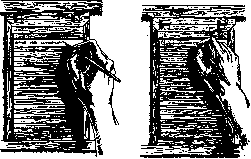
Figure 9.
all general education is not mandatory for the blind. Schools for the blind are maintained both at the expense of the state and by charitable institutions and the parents themselves. To this day, combined schools for the blind and deaf-mutes exist despite the unquestionable harm of such combination (USA, Belgium, Canada). Routine methods of upbringing and teaching are due to the desire to turn the school for the blind into a closed little world, isolated from the sighted and adapted to the defect of the blind. Great attention in the programs is paid to singing, music, tuning pianos, housekeeping and physical development. The education of blind children in the USSR is carried out by the People's Commissariat for Education in special schools and in general schools with the sighted. Instead of a handful of isolated, semi-philanthropic institutions of the shelter type, the country has a mass school for blind children, occupying an organic place in the system of public education. In the RSFSR there are 42 special schools with 3,630 students, or 39% of the school contingent of the blind. The schools have 723 teachers, 28% of them with special higher education. In our country, the entire system of upbringing and education for the blind sets the same goal and tasks as the system for sighted children, is built on the same basic principles and methods, but the methods of pedagogical work are different. Children who are absolutely blind and with partial vision (visus up to 0.05) are admitted to schools for the blind. Children with weak vision, from 0.05 to 0.2, are admitted to special groups in special or general schools, where the work is specialized—large-print sighted script is used, magnifying glasses, the method of writing without eyes, etc. Work with children with weak vision is carried out in Leningrad, Moscow, Kazan, Rostov-on-Don, Gorky, Voronezh and is widely propagated by the VOSS organs in regional centers and in national republics. Approximately 4,250,000 rubles are spent on schools for the blind from local budgets. The blind are taught to read and write in embossed script with the help of the Braille apparatus and in flat script according to Göbbold and in shorthand for communication with the sighted (fig. 9). Mathematical records, as well as special equipment for the pedagogical process and teaching aids in natural sciences, geography, physics and chemistry, are undoubtedly specific (figs. 10-12). Schools for the blind in the USSR are predominantly of the boarding type, but day students are also accepted. Along with the special school for blind children, their admission is regulated into general schools with the sighted for joint education both in preschool institutions and in secondary schools, workers' faculties and higher educational institutions. Joint education of the blind with the sighted is especially important in rural areas without separating children from their families; to organize such education, it is necessary to acquaint teachers of general schools with the Braille system of literacy. The huge cultural role of radio broadcasting for the blind has led to a number of concessions for them in various countries, especially in the USSR. The striving to find ways of reading books not by touch (Braille) but by hearing has led to a number of inventions, among which can be noted the device constructed in the USSR by Skvortsov, which makes it possible to transmit books, operas, etc. by sound by means of a sounding paper tape.
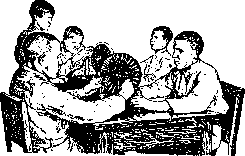
Figure 10. Physics lesson.
with the sighted. Instead of a handful of isolated, semi-philanthropic institutions of the shelter type, the country has a mass school for blind children, occupying an organic place in the system of public education. In the RSFSR there are 42 special schools with 3,630 students, or 39% of the school contingent of the blind. The schools have 723 teachers, 28% of them with special higher education. In our country, the entire system of upbringing and education for the blind sets the same goal and tasks as the system for sighted children, is built on the same basic principles and methods, but the methods of pedagogical work are different. Children who are absolutely blind and with partial vision (visus up to 0.05) are admitted to schools for the blind. Children with weak vision, from 0.05 to 0.2, are admitted to special groups in special or general schools, where the work is specialized—large-print sighted script is used, magnifying glasses, the method of writing without eyes, etc. Work with children with weak vision is carried out in Leningrad, Moscow, Kazan, Rostov-on-Don, Gorky, Voronezh and is widely propagated by the VOSS organs in regional centers and in national republics. Approximately 4,250,000 rubles are spent on schools for the blind from local budgets. The blind are taught to read and write in embossed script with the help of the Braille apparatus and in flat script according to Göbbold and in shorthand for communication with the sighted (fig. 9). Mathematical records, as well as special equipment for the pedagogical process and teaching aids in natural sciences, geography, physics and chemistry, are undoubtedly specific (figs. 10-12). Schools for the blind in the USSR are predominantly of the boarding type, but day students are also accepted. Along with the special school for blind children, their admission is regulated into general schools with the sighted for joint education both in preschool institutions and in secondary schools, workers' faculties and higher educational institutions. Joint education of the blind with the sighted is especially important in rural areas without separating children from their families; to organize such education, it is necessary to acquaint teachers of general schools with the Braille system of literacy. The huge cultural role of radio broadcasting for the blind has led to a number of concessions for them in various countries, especially in the USSR. The striving to find ways of reading books not by touch (Braille) but by hearing has led to a number of inventions, among which can be noted the device constructed in the USSR by Skvortsov, which makes it possible to transmit books, operas, etc. by sound by means of a sounding paper tape.
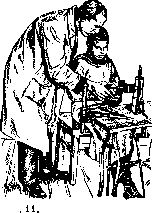
Teaching carpentry.
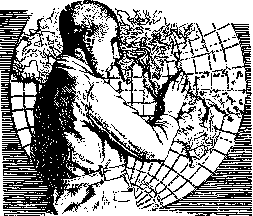
Figure 12. Geography lesson.
A special place is occupied by blind-deaf-mute children. The upbringing and education of blind-deaf-mutes is significantly more difficult than the upbringing of a blind or deaf-mute child. On the example of the deaf-blind E. Keller, one can see that education based exclusively on tactile and motor sensations can lead to the formation of highly developed thinking, feeling, will. Such children are present in the USSR in insignificant numbers. Some of them are in the Otophonetic Institute in Leningrad and the Defectological Institute in Kharkov. In bringing up the blind, the school first of all gives them the basics of sciences, cultural and domestic skills and orientation in space. All this is aimed at, through general education, physical education, development of the motor skills of the blind, the use of their hearing and touch, to increase their life tone, to organize their personality through play, labor, public behavior for direct and active participation in socialist construction. In a country building a classless socialist society, there are all prerequisites for eliminating the immediate causes of blindness—eye trauma, trachoma and other socio-domestic diseases that cause blindness. The VOSS carries out significant work on the prevention of blindness together with health authorities, ophthalmological societies and Soviet public opinion, by reading lectures and reports, film screenings, radio broadcasting, organizing trachoma detachments and expeditions and conducting examinations of the population, especially among seasonal workers and national minorities, as well as organizing special classes for children with weak vision and finally by observing the residual vision of those becoming blind.
Fig
Related articles
Mentioned in
Cite this page
“The Blind.” Soviet Medical Encyclopedia. English translation of Bolshaya Meditsinskaya Entsiklopediya, 1st ed. (Moscow, 1928–1936), ed. N. A. Semashko. https://sovietmedicalencyclopedia.pages.dev/article/the-blind/