Temperature
Historical document, translated for reference. It reflects medical knowledge of the 1920s–30s and is not medical advice.
Summary
This article examines temperature as a physical and biological phenomenon, discussing its effects on living organisms, including cellular processes, development, regeneration, and morphological variations. It explores the relationship between temperature and biological processes, citing various scientific studies and experiments conducted in the late 19th and early 20th centuries.
Encyclopedia article (1928–1936)
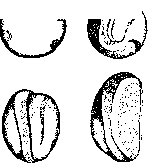
Temperature, a term used to denote the thermal state or degree of heating of a physical body. When two indifferent bodies in a chemical sense come into contact, one cools if its temperature is higher, while the other, with a lower temperature, heats up. All principles of thermometry are based on this property of bodies to reach thermal equilibrium or to equalize their temperature upon contact. The biological action of temperature has been repeatedly studied in various branches of biology. When deviating from the optimum temperature, changes in the course of biological processes are observed, which, when temperature limits are exceeded (see below), lead to death, the immediate cause of which is related to the coagulation of protoplasm colloids (upper limit) or the freezing of biological fluids (lower limit). In studying the effect of temperature on bacteria and protozoa, its influence on the intensity of reproduction is noted, and for motile forms, thermotaxis (movement toward the place of optimal temperature). There is a known dependence of the general state of plants and various processes occurring in them, such as bud formation, leaf development, flowering, fruit formation, etc., on the temperature of the environment. The latter can hardly be considered in isolation, independently of accompanying phenomena such as humidity, air currents, etc. Questions of the general influence of temperature on plants have high practical interest. As a general rule applicable to biological processes, the so-called van't Hoff law has significance, established by him for the rate of chemical reactions: "with an increase in temperature by 10°, the rate of the process doubles." This law, derived by van't Hoff on the basis of data on the effect of temperature on the respiration of lupine, undergoes numerous modifications for biological objects, often completely distorting its original meaning. The absolute value Q10, the temperature coefficient, i.e., the acceleration of a biological process with an increase in temperature by 10°, changes differently in various temperature intervals and decreases with increasing temperature. There is a certain correlation between the rate of such a process as embryo development, temperature limits, and Q10, which can be expressed by the following statement: the slower the development, the higher Q10 in any temperature interval, and the higher the temperature limits. When studying the effect of temperature on individual biological processes, it should be noted the change in the permeability of an animal cell with increasing temperature. This phenomenon, studied by Wertheimer, Gellhorn, and others, does not however entirely fit into van't Hoff's rule. Extensive works address the question of the effect of temperature on development. The first works in this field (Lillie and others) date back to 1897. Further research (Hertwig, Driesch, Loeb, Zavadovsky, and others) have brought a wealth of factual material. Basically, it can be stated that the rate of development is closely dependent on temperature, accelerating near the optimal point. Driesch's data on the effect of temperature on the cleavage and gastrulation of sea urchins are very interesting. When deviating from the optimal temperature of 19-20°, a reversible disturbance in the correctness of development (temperature 26-31°), the separation of blastomeres from each other, and other manifestations of abnormal development were noted. When gastrulating eggs were kept at 30°, a peculiar deformity-exogastrula-external formation of the primitive gut (Fig. 1), which normally divides into segments, occurred; the autonomy of such changes is demonstrated by the correct formation of other parts of the embryo-skeleton, limbs, etc. The effect of temperature on growth and development is very well shown in the old works of Lillie and Hertwig. Data concerning the effect of temperature on the rate of regenerative processes are also interesting. Thus, for planarians, the following temperature points have been established-3°, 33°, 29.7°, corresponding to the minimum, maximum, and optimum temperature for these processes. According to the data of Hertwig and Kushevich, there is a dependence between sex determination in frogs and temperature; when cooling, a sharp predominance of males is noted. Focht's data on the effect of different temperatures on the two halves of the same newt egg are also interesting. Using a simple apparatus, the author subjected the two halves of the egg to different temperatures (2-5° and 19-22°); by marking different parts of the egg, he was convinced of the significant lag of the half that was at a reduced temperature (Figs. 2 and 3). A large number of experiments have been devoted to the so-called thermomorphoses-the effect of temperature on morphogenesis. Data from Dorfmeister (1864) on the dependence of butterfly coloration (Vanessa) on temperature conditions (spring and summer forms) are already known. The classical research of Weismann, Standfuss, Fischer, and others established a direct dependence of coloration on temperature, the possibility of obtaining by experimental methods various geographical and seasonal variations normally found in nature (seasonal polymorphism). Thus, Standfuss, by raising pupae in different temperature conditions, managed to achieve changes in the color and pattern of butterfly wings. However, the interpretation of these data by the old authors cannot be accepted at present. Standfuss, for example, attributes the effect of moderate heat and cold the significance of a specific factor, which is unlikely. Fischer's considerations about the phylogenetic significance of his results are also unconvincing, especially considering the non-hereditary nature of thermomorphoses. The data of M. Linden, who studied thermomorphoses in butterflies from a physiological point of view, in particular in terms of the quantity, quality, and distribution of pigments, seem much more solid. She concludes that the basis of the phenomena studied lies both in the indirect effect of temperature by enhancing metabolism, which results in increased pigment deposition, and in the direct action in terms of darkening of the pigment; both series of causes lead to darkening of the pattern in butterflies, established with increasing temperature. With increasing temperature, a change in the shape of some organs in daphnia is noted, probably directly caused by the thickening of the medium with increasing temperature.
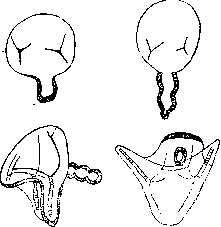
Figure 1. Effect of heat on the development of a sea urchin. Exogastrula, dividing into segments.
Apparatus for studying the course of development of eggs at different temperatures on both sides: S-silver plate dividing the vessel into two equal parts. Glass tubes are placed on the sides for replenishing water. Vertical glass tubes located near the central plate serve for draining water. In the center at the bottom in the cutout of the silver plate is an egg, washed by water on the right at temperature 19-22° and on the left-2-5°. (After Vogt.)

Data from 1864 already concern the so-called thermomorphoses-the effect of temperature on morphogenesis. Data from Dorfmeister (Dorf-meister) on the dependence of butterfly coloration (Vanessa) on temperature conditions (spring and summer forms) are already known. Classical research by Weismann, Standfuss, Fischer, and others established a direct dependence of coloration on temperature, the possibility of obtaining by experimental methods various geographical and seasonal variations normally found in nature (seasonal polymorphism). Thus, Standfuss, by raising pupae in different temperature
Figure 2. Apparatus for studying the course of development of eggs at different temperatures on both sides: S-silver plate dividing the vessel into two equal parts. Glass tubes are placed on the sides for replenishing water. Vertical glass tubes located near the central plate serve for draining water. In the center at the bottom in the cutout of the silver plate is an egg, washed by water on the right at temperature 19-22° and on the left-2-5°. (After Vogt.)
conditions, managed to achieve changes in the color and pattern of butterfly wings. However, the interpretation of these data by the old authors cannot be accepted at present. Standfuss, for example, attributes the effect of moderate heat and cold the significance of a specific factor, which is unlikely. Fischer's considerations about the phylogenetic significance of his results are also unconvincing, especially considering the non-hereditary nature of thermomorphoses. The data of M. Linden, who studied thermomorphoses in butterflies from a physiological point of view, in particular in terms of the quantity, quality, and distribution of pigments, seem much more solid. She concludes that the basis of the phenomena studied lies both in the indirect effect of temperature by enhancing metabolism, which results in increased pigment deposition, and in the direct action in terms of darkening of the pigment; both series of causes lead to darkening of the pattern in butterflies, established with increasing temperature.
Figure 3. Lag of the right half of the newt egg, which developed at a low temperature.
For mammals, thermal phases have been noted in the works of the school of Pribram (dependence of tail length in rats on environmental t°) and the appearance of dark patches on the fur of so-called ermine rabbits (Schulze, Ilyin). In both cases, the influence of external t° should be considered as acting indirectly through an increase in body t°, since the application of pharmacological antipyretics (antipyrine, quinine) and vasoconstrictors caused an effect similar to a decrease in t°. The influence of T. on cell growth in tissue cultures has been investigated repeatedly. These latter, being very sensitive to an increase in T., are quite tolerant of its decrease, so that growth is possible within the range of 20-49°; primarily, the migration of cells from the piece is delayed, while growth remains unchanged for a longer time. Mitoses, according to the data of the school of Levi, occur normally even at t° of 11-12e, only when this threshold is reached do they deviate from the norm, namely a delay in cytoplasmic division (formation of multinucleate cells). This delay has also been shown in the old works of Gerasimov on the cells of Spirogyra under the action of low t°. The influence of t° on the duration of mitosis as a whole and on its different stages has been studied by Bucciante, and it was possible to establish individual fluctuations of different stages and a significant deviation from the van't Hoff rule. The overall intensity of reproduction does not change with a decrease in t°, since after the delay there is an increase in the number of mitoses compared to the control culture. Morphological changes in living substance under the influence of various t° have been studied very little. According to Rumyantsev, in tissue cultures at t° above 45°, liquefaction of protoplasm can be noted, with a further increase in t°, fibrous structures appear in the plasma, and finally at 51° rapid coagulation occurs. The reaction of the bodies of higher animals and man to the effect of t° during medical procedures (compresses, hot wraps, partly diathermy, etc.) is insufficiently studied from both physiological and morphological points of view. Corresponding research is being conducted in recent years in a number of laboratories. On the influence of t° on hereditary variability-see Heredity. Temperature limits-the limits of t° within which life is possible. Usually, the upper temperature limit (maximum t°) is distinguished-the highest t° at which life is possible, the lower limit (minimum t°), and the optimum T.-the t° at which the studied biological processes are in the most favorable conditions. All three of these temperature points are subject to extremely large individual fluctuations not only for organic forms that are quite close to each other; to some extent, within one group, there are fluctuations in sensitivity to t° for different individuals. This sensitivity is to some extent determined by the general conditions of the environment, i.e., for example, animals of temperate and cold climates have lower temperature limits than organisms of hot climates. As a general rule, it can be accepted that the limits are determined: 1) the lower-by the freezing point of biological fluids (body juices), lying a few degrees below 0°; 2) the upper-by the point of reversible and irreversible coagulation of proteins of protoplasm, lying around 50°. Individual fluctuations of this upper point are determined to a large extent by the physicochemical properties of a given protoplasm, the amount of water in it, the quantity and quality of salts, the reaction of the medium, etc. It is especially necessary to take into account to what extent all the above factors affect the degree of dispersion of colloids and their denaturation. Depending on the sensitivity to violation of temperature limits, 3 groups of animals are distinguished: 1) stenothermal-animals whose life is possible only within relatively narrow temperature limits, and fluctuations in one direction or another quickly lead to the death of the animals (for example, planaria, trout); 2) eurythermal-forms very resistant to fluctuations in t° (Artemia, Daphnia), and finally 3) homoiothermal-animals possessing a constant body t° and, therefore, also largely independent of external fluctuations in t°, at least as long as the correctness of thermoregulation is not violated (see). As an exception to the above temperature limits, a number of cases can be mentioned when organisms are able to withstand both very low t° (bacteria, fungi, and some protozoa living on snow) and very high t°; for some animals, the optimum t° is around 40° (fauna of the surface layers of southern seas, hot springs, etc.). There are only isolated indications that a number of organisms (in particular microorganisms) can survive at t° above 100°; hence the importance of the boiling point of water as a sterilizing bactericidal agent. Usually, the high resistance of organisms to various external influences is associated with special morphological adaptations, in particular with the development of a dense shell (cysts) on the body surface (bacteria, protozoa). Violation of temperature limits, in the case of a slight and gradual change in t°, before death occurs, leads to a change and weakening of normal life processes. In this case, the usual coordination of biological processes often disappears, some are inhibited, while others proceed normally for some time (one can point to the data of Semper on the appearance of dwarf forms of the mollusk Limnea, which are however capable of reproduction). In particular, violation of the lower temperature limit for a fairly long time preserves the potential viability of the organism, transferring it to a state of hidden life, or anabiosis (see); only with a further decrease in t° does death occur. Temperature limits of development, studied for the eggs and embryos of a number of organisms, deserve special investigation. Depending on the individual characteristics of different species, there are significant fluctuations here, however, as a rule, the temperature limits for eggs are somewhat narrower than for adult organisms, and in general terms fluctuate between 3° and 40°. Crossing the upper limit for a certain interval (up to 50°) preserves the possibility of abnormal development, crossing the lower limit temporarily preserves the ability of eggs to develop, sometimes for a very long period (several months). Temperature limits, especially from the side of the Italian school of Levi, were specially studied in the cultivation of tissues outside the organism. Here, too, the special properties of a given species (cold-blooded and warm-blooded animals) are of essential importance; thus, for a number of tissues, the temperature limits are shown between 3-49°, with the optimum close to the upper limit. Crossing the upper limit initially leads to a cessation of development, and then at t° of 50°-to the irreversible coagulation of proteins. It is necessary to note the significant individual fluctuations in sensitivity to T. of individual tissues, so for example, the culture of fibroblasts is much more sensitive than nervous tissue, etc., as well as the dependence of temperature limits on the processes occurring in the culture, so for example, mitosis has narrower temperature limits lying between 21 and 45°.
E. Zalkind.
Related articles
Mentioned in
Cite this page
“Temperature.” Soviet Medical Encyclopedia. English translation of Bolshaya Meditsinskaya Entsiklopediya, 1st ed. (Moscow, 1928–1936), ed. N. A. Semashko. https://sovietmedicalencyclopedia.pages.dev/article/temperature/