Vladimir Alexandrovich Obukh
Historical document, translated for reference. It reflects medical knowledge of the 1920s–30s and is not medical advice.
Summary
A biography of Vladimir Alexandrovich Obukh (1870–?), a prominent Soviet public health organizer and Bolshevik. The article details his revolutionary activities and his leadership of the Moscow health department, while criticizing his "mechanistic" and "Lamarckian" approach to dispensary care.
Encyclopedia article (1928–1936)
OBUKH Vladimir Alexandrovich, born in 1870, a major organizer of Soviet public health. From 1892, he took part in Marxist circles, organized the transport of illegal foreign literature, and worked as a propagandist in workers' schools. In 1896, having been exiled from St. Petersburg, he was forced to continue his education in Kiev. There, in 1898, Obukh was arrested. In 1899, Obukh joined the local Social Democratic organization. After graduating from the medical faculty in 1901, Obukh moved to Moscow. In 1902, he became a member of the Moscow Committee of the Russian Social Democratic Labour Party. Upon the split of the party, he became a Bolshevik. In 1903, he was arrested again, after which he was exiled from Moscow.
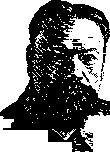
From 1905 to 1917, he worked as a physician at the 1st City Hospital in Moscow. Throughout these years, he conducted party work. He was an active participant in the October Revolution. From 1919 to 1929, he headed the Moscow Department of Health. For 10 years, the entire Moscow health organization was built under the direct ideological and practical leadership of Obukh. In his work, he was a major leader and proponent of the idea of dispensary care, which was a most important stage in the development of Soviet public health. In 1923, Obukh created the largest institute of occupational diseases in Moscow, which was named after him.
Being a mechanist and Lamarckian in his convictions, Obukh directed the "Leninism in Medicine" Society, of which he was the main ideological leader, along this false path and conducted printed propaganda of mechanistic ideas, in particular the ideas of the mechanist Lesgaft. His theoretically incorrect positions led to major errors in practical work as well. Thus, mechanistically believing that a unified dispensary, by virtue of its organizational structure alone, was already a "socialist form of health care," Obukh did not understand that only class content (serving workers, the toiling masses), and not just the organizational form, gives a socialist character to a unified dispensary under Soviet conditions. Hence, Obukh's reliance on the territorial principle in building the unified dispensary (which brought him closer to the "non-class" former zemstvo physicians like the well-known Moscow physician Kats, Obukh's closest assistant in the work on dispensary care), the emphasis on serving "the entire population of a given district," etc. Reliance on the territorial principle in building the unified dispensary system and the underestimation of the professional (industrial) principle is the main shortcoming of the dispensary work of the Moscow school during the time of Obukh's leadership.
Related articles
Cite this page
“Vladimir Alexandrovich Obukh.” Soviet Medical Encyclopedia. English translation of Bolshaya Meditsinskaya Entsiklopediya, 1st ed. (Moscow, 1928–1936), ed. N. A. Semashko. https://sovietmedicalencyclopedia.pages.dev/article/vladimir-alexandrovich-obukh/