Vladimir Ignatyevich Voyachek
Historical document, translated for reference. It reflects medical knowledge of the 1920s–30s and is not medical advice.
Summary
This article provides a biographical overview of Vladimir Ignatyevich Voyachek, a prominent Soviet otorhinolaryngologist and military medical administrator. It details his contributions to the field, his leadership at the Military Medical Academy, and his influence on the development of otolaryngology in the USSR.
Encyclopedia article (1928–1936)
VOYACHEK, Vladimir Ignatyevich, professor at the Military Medical Academy, a well-known otorhinolaryngologist (born in 1876); after completing his course at the Military Medical Academy in 1899, he pursued advanced training in the clinic of N. P. Simanovsky, and since 1918 has been his successor to the chair. Under the leadership of Voyachek, the teaching of otorhinolaryngology at the Military Medical Academy was reformed: a special office for the treatment of speech defects and an experimental laboratory were created at the throat diseases clinic, close contact was established with surdopedagogical institutes, and a student "educational-demonstration museum" was organized at Voyachek's own expense to facilitate the independent studies of students. Voyachek's school promotes the principle of rational surgical conservatism and a close connection between otorhinolaryngology and all borderline fields, especially eye, dental, and nervous diseases. Voyachek has developed a whole range of issues in the laryngo-otorhinolaryngological specialty, namely: the
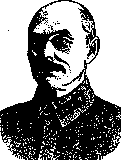
improvement of operative and diagnostic techniques, the introduction of new instruments and methods into use, the detailed investigation of the function of the inner ear, the description of new disease forms (e.g., "alimentary lymphadenitis"), the clarification of the influence of heredity and constitution on laryngo-otorhinolaryngological diseases, and the introduction of new tests for the examination of the semicircular canals and otolithic function. Voyachek's most famous major works are the manual "Ear, Nose, and Throat Diseases" and two monographs (1915 and 1927) on ear labyrinthology. Voyachek is also known as a public figure and organizer: Voyachek served as chairman of the Society of Physicians for Throat, Nose, and Ear Diseases in Leningrad, as a corresponding member of the Laryngological Society of Vienna, as an editor of several scientific journals, and participated in the work of the Leningrad Soviet and the regional executive committee. In 1919, Voyachek was elected vice-president of the Military Medical Academy and in the same year was appointed assistant head of the Military Medical Academy, and from 1925, head of this academy. The reorganization of the Military Medical Academy took place with the close participation of Voyachek. For his successful activities in the field of public health of the Red Army, Voyachek has received awards from the Revolutionary Military Council of the USSR and the People's Commissariat of Health of the RSFSR.
Related articles
Cite this page
“Vladimir Ignatyevich Voyachek.” Soviet Medical Encyclopedia. English translation of Bolshaya Meditsinskaya Entsiklopediya, 1st ed. (Moscow, 1928–1936), ed. N. A. Semashko. https://sovietmedicalencyclopedia.pages.dev/article/vladimir-ignatyevich-voyachek/