Vladimir Mikhailovich Bekhterev
Historical document, translated for reference. It reflects medical knowledge of the 1920s–30s and is not medical advice.
Summary
A biography of the renowned Russian neurologist and psychiatrist Vladimir Mikhailovich Bekhterev (1857–1927), detailing his academic career, his contributions to brain research and reflexology, and his influence on the development of Russian neurology.
Encyclopedia article (1928–1936)
BEKHTEREV, Vladimir Mikhailovich (1857–1927), a world-renowned neuropathologist and psychiatrist. He was born in the Vyatka Governorate. In 1878, he brilliantly graduated from the Medico-Surgical Academy and was retained there on the staff of institute physicians to prepare for a professorship. Here, Bekhterev dedicated himself to the study of mental and nervous diseases under the guidance of Prof. I. P. Merzheevsky. In 1881, he defended his dissertation for the degree of Doctor of Medicine ("An Attempt at a Clinical Study of Body Temperature in Certain Forms of Mental Illness") and at the same time received the title of privat-docent of the Academy. From 1884, Bekhterev studied methods for investigating the conduction pathways of the brain under Flechsig in Leipzig, engaged in experimental psychology under Wundt, worked in the clinic of C. Westphal, and then in Paris under Charcot. Upon returning from abroad in 1886, Bekhterev took the chair of psychiatry in Kazan, already being a scientist with a European reputation. In Kazan, his famous "Conduction Pathways of the Spinal Cord and Brain" was published in its first edition. From 1893 to 1913, Bekhterev held the chair of mental and nervous diseases in St. Petersburg at the Military Medical Academy. This time was the most vibrant in terms of activity and of immense significance for neuropathology and psychiatry; during this period, "Conduction Pathways" was released in a second edition (and was awarded the Baer Prize by the Academy of Sciences), and several works were published in multiple editions in a short time: "Doctrine of Brain Functions," "Objective Psychology," "Suggestion and Its Role in Social Life," "Psyche and Life," "Diagnostics of Nervous Diseases," and "Hypnosis, Suggestion, and Psychotherapy." From 1896, under the editorship of Bekhterev, the "Review of Psychiatry" began to be published. During this period, a new nervous clinic with 30 beds was built at the Academy, and the foundation for operative neurology was laid.
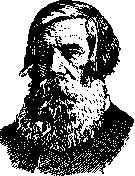
In 1907, Bekhterev created a private university in St. Petersburg under the name of the Psychoneurological Institute, which was soon followed by the construction of the Anti-Alcohol Institute and a psychiatric clinic. With the opening of the Women's Medical Institute, Bekhterev took the chair of nervous and mental diseases there, and subsequently the chair of reflexology, which he had created. The last years of Bekhterev's activity were devoted to the substantiation of this new branch of knowledge, when his works "Reflexology," "Collective Reflexology" were published, and "Pathological Reflexology" was prepared for print. For a long time, Bekhterev directed almost all specialized scientific societies in Leningrad; many societies of neuropathologists and psychiatrists, both in Russia and abroad, had him as an honorary member, and the Italian Academy of Sciences bestowed upon him the title of academician. No major public event passed without a response from Bekhterev. He often spoke at congresses of neuropathologists and psychiatrists and at ceremonial meetings. These speeches are remembered by everyone; for example, the speech in Kiev, where on the eve of 1905, Bekhterev demanded freedoms and ended the speech with the words: "Open the dungeon for me, give me the radiance of the day"; after the speech of Bekhterev and the speech of Serbsky in Moscow in 1911, the congress was closed by the police. On December 20, 1926, the 40th anniversary of Bekhterev's professorial activity was solemnly celebrated. Bekhterev left behind a huge school of students; almost all professors of neuropathology and psychiatry (with the exception of the Moscow chairs and the chairs of a few other cities) are his students and collaborators. Bekhterev infected his students with a boundless love for knowledge, for independent scientific thinking, and with devotion to the cause. The world-renowned name of Bekhterev belongs to that brilliant galaxy of scientists to whom the doctrine of nervous and mental diseases owes its current flourishing. Exceptional in talent and erudition, Bekhterev had no equal in work capacity; the complete list of his works comprises about 500 titles; his writings—"Conduction Pathways of the Brain," "Doctrine of Brain Functions," "Objective Psychology," "Psyche and Life," and "Reflexology"—have been translated into almost all foreign languages and have gone through several editions abroad. Bekhterev died, full of energy and strength, in December 1927, a few days after the All-Union Congress of Neuropathologists and Psychiatrists, in the work of which he had participated. The body of Bekhterev was cremated in Moscow, and the urn with his ashes and his brain were transported to Leningrad (to the Brain Institute).
Related articles
Cite this page
“Vladimir Mikhailovich Bekhterev.” Soviet Medical Encyclopedia. English translation of Bolshaya Meditsinskaya Entsiklopediya, 1st ed. (Moscow, 1928–1936), ed. N. A. Semashko. https://sovietmedicalencyclopedia.pages.dev/article/bekhterev/