Mental Illnesses
Historical document, translated for reference. It reflects medical knowledge of the 1920s–30s and is not medical advice.
Summary
A 1930s Soviet medical definition of mental illnesses as conditions where behavior becomes disorganized due to emotions or thoughts no longer reflecting reality. The article discusses organic, constitutional, and psychogenic causes while emphasizing the unity of mental and physical health.
Encyclopedia article (1928–1936)
Mental Illnesses, such a condition of a person in which the regularity of his behavior is disrupted due to the fact that his emotional state or thinking ceases to be a reflection of reality. Mental functions are a product of the human brain, and therefore mental illnesses are essentially diseases of the brain. However, if one takes such a definition narrowly in a morphological sense, it will be far from accurate. When speaking of the brain as the substrate of mental activity, one means that the main task of the nervous system is to regulate the relationships of the entire organism with the external world, that the nervous system regulates the internal connection between all organs; the activity of the brain is understood as a synthesis of general connections, the unity of all sides and functions of the organism; in the activity of the brain are united the activity of the endocrine-vegetative nervous system and peculiarities of metabolism, fluctuations in currents, movement of electrolytes, the condition of individual organs and their functions. From this side, it is completely correct to consider mental illnesses also as diseases of the entire organism as a whole. In connection with this, it is also correct and valuable to connect the peculiarities of mental illnesses with the peculiarities of the general physical habitus - body build; it is especially important to establish a close relationship between the physical and mental in one general unified regularity. Among brain diseases, mental illnesses and nervous diseases are usually distinguished. Historically, such a division undoubtedly developed under the influence of the dualistic view of soul and body. When speaking of nervous diseases, one mainly had in mind physio-anatomical changes in the sensorimotor arc, one always had in mind certain morphological sections of the brain, whereas under mental illnesses were understood changes in thinking and emotional life, the dependence of which on individual morphological elements is extremely complex. The division of brain diseases into nervous and mental led, on the one hand, to the dominance of crude mechanism in neurology, and on the other, to a great tendency toward metaphysical idealism in psychiatry. The former alternative, that a symptom can be either mental or somatic, should now find its resolution in the integrity of the personality, in the fact that the mental is not the opposite or parallel (but separate) to the physical, but a constitutive moment of the highest holistic structure, and under nervous diseases should be understood the disorder of individual lower apparatuses of the nervous system, and under mental illnesses - changes in the highest holistic structures of the entire organism in its relation to the environment, not forgetting at the same time that nervous and mental illnesses are only limiting terms and this division in no way removes the problem of psychophysical unity. It should also be pointed out that historically it has developed that mentally ill persons, or 'lunatics,' were called only those who sharply violated social life with their behavior, who needed guardianship, supervision, isolation for the safety of others or themselves, and psychiatric hospitals usually bore not the name of treatment facilities, but 'asylums' and contained in the overwhelming majority of incurable chronic patients, regarding whom it was practically confirmed by long-term experience that they could not properly manage their activities. Such a view, however, does not correspond to modern views of psychiatry and general concepts of disease in medicine, because, as with any other disease, the manifestations of mental illnesses can have various degrees and often, especially at the beginning of the disease, symptoms indicating mental illness are still only slightly developed. 'Psychiatry now, as Reichardt states, is by no means the doctrine of 'insanity' (Irrenheilkunde), but the doctrine of all pathological reactions of the human psyche (Seelenheilkunde) and has long since come out of the towers of insane asylums into everyday life.' The broad masses still have the habit of calling all slight changes in the psyche 'nervousness' and try to sharply distinguish the 'nervously ill' from the mentally ill, whereas from the point of view of modern psychiatry all morbid changes in the psyche, however small they may be, belong to the sphere of mental illnesses. From this point of view and in the modern classification, mental illnesses are distinguished not only by longer and more violently proceeding diseases - psychoses, but also by short-term psychotic reactions, reactive psychoses and psychopathies of various degrees. Etiology of mental illnesses. According to the main moments of their occurrence, the following types of mental illnesses are distinguished. Firstly, those mental illnesses which are the direct result of deep anatomical destruction of the brain - cells, conducting paths, constructing behavior, the psyche of man. These mental illnesses - organic, exogenous - are qualitatively different from the normal state; symptoms arising in organic mental illness do not have their expression in normal life, they intrude into normal life as something completely foreign to it. Here we have the so-called 'heteronomous' type of reaction (Kleist). But there are mental illnesses expressed in pictures which we observe, although in a less pronounced form, also in the normal psyche. Their symptoms are only a quantitative intensification (in strength or in duration) to pathological of those mental phenomena which we see also under normal conditions: fluctuations in mood, anxiety, melancholy, mental inhibition, excitement, tendency to suspicion, tendency to autism, reasoning, outbursts of irritability and others - all this is known to a normal person from his everyday experiences. Here we have, according to Kleist, the 'homonomous' type of reactions. These psychoses do not primarily in their basis have a gross destruction of the mechanisms of the brain, but even in these psychoses the main importance belongs to bodily peculiarities, above all peculiarities of interconnections, structure and development of the internal secretory and neuro-vegetative organs and systems, metabolism, the chemical composition of the organism. With the duration of action of these endogenous, deviating in strength from the norm and therefore toxic moments, anatomical changes in the structure of the brain also arise, finally the very tempo and type of development of individual organs and systems of the brain goes here in a peculiar way and often speaks of a more rapid wear of individual systems (Aufbrauchs-krankheiten of Edinger, abiotrophy of Gowers). But in 'organic' diseases we have circumstances which in their basis create completely new conditions for mental manifestations, whereas here we have only a pathological variant of the curve of ordinary individual peculiarities. Thus we approach the concept of constitutional psychoses (endogenous). It goes without saying that so-called extreme development of normal mental life already presupposes the presence of qualitative changes in it; these qualitative changes differ from similar changes acquired in the order of 'exogenesis' by their origin, the rate of development and the character of 'unfolding' from the structure of normal mental life. Finally there are mental illnesses which arise from experiencing excessively violent emotions, from the consciousness of the hopelessness of the situation, from the impossibility of changing a difficult life situation through reasoning influence, from conflicts in the life struggle between the established on the basis of production-existence of the person's worldview and the surrounding reality. These conflicts which occur in family, domestic and social life disrupt the direction of life required by consciousness, lead to 'heavy internal injuries,' make a purposeful, working life impossible and cause thereby 'psychogenic reactions' (see Psychogenies). And even in these mental illnesses we often have a whole series of bodily symptoms (trembling, cardiac anxiety, paralysis, convulsions, etc.), because emotions, the psyche are closely connected also with bodily manifestations, but whereas in organic and constitutional diseases the mental is mainly a reflection of the pains, weaknesses, paralysis of motor systems, peculiarities of metabolism coming from the body, and the course of mental illness is mainly determined by these bodily moments; here the bodily symptom is a symbol of the mental and the origin, course and content of mental illness are closely connected with the mental trauma and experiences that caused them. Bodily symptoms here often have meaning and purpose. Their meaning is that they in an understandable form show that the most important functions of the organism are under threat and resist this threat ('storm of movements' and 'feigned death' of Kretschmer as ancient protective reactions, reactive depression as inhibition of overstrained functions); their purpose among other things is to indicate to others the unendurability of their situation and thereby to evoke a change in the attitude of others and their sympathy. However, this division of mental illnesses is schematic and in real life the matter is complicated by the fact that organic, constitutional and psychogenic symptoms usually cross to one degree or another with each other in each mental illness. Organic disturbances determine only elementary pathological phenomena of irritation, excitement or inhibition, paralysis, dissociation and form only outlines, the basis of mental illnesses.
The most abundant pathological symptoms—content of hallucinations, content of all behavior, of consciousness—are conditioned in organic mental illnesses by constitutional factors, by experiences, by the content of consciousness, by the individual's worldview. These 'pathoplastic' (or facultative) symptoms, despite their secondary role in the genesis of psychosis, can be so pronounced that they obscure the main 'pathogenetic' (or obligatory) picture of the disease, and only in cases of severe, rapidly occurring organic lesions or intoxications do we have the so-called 'Bonhoeffer exogenous type of reaction,' independent of constitution and content of consciousness (with clouding of consciousness), expressed mainly in an amnestic, delirious, or twilight symptom complex. In constitutional psychoses, a significant number of psychiatric symptoms are also conditioned by the patient's experiences and content of consciousness, emotional complexes, and are amenable to psychotherapeutic influence, and thus belong to psychogenic rather than constitutional formations; finally, the very onset of a constitutionally conditioned process is often determined by organic brain disease ('organically provoked endogenous psychoses' according to Bostroem). Similarly, psychogenic reactions develop more readily in individuals weakened by physical illnesses, in individuals constitutionally unstable, and in their external expression are often colored by constitutional symptoms. The human psyche possesses in relation to harmful factors very great stability, developed through centuries of human historical development; man knows how to process and change the surrounding reality in his interests, and only very large shifts in the social experiences of the individual, only sharp biological changes in the mechanisms of nervous-psychic activity lead to mental illness. For the occurrence of such shifts, a whole series of predisposing factors to illness is needed. The main occasion for the occurrence of mental illness is the final, provoking cause of the disease, which: specifies in a certain direction; the development of other intersecting interacting moments, but, as Birnbaum believes, it is necessary to study the entire structure of mental illness, it is necessary to investigate in each case not only the pathogenetic but all pathoplastic moments in their construction ('polymenzional diagnosis' according to Kretschmer). As elements of the structure of psychosis participating in its organization, the following are usually described: a) biophysiological endogenous factors: heredity, age, sex; b) exogenous factors: acute and chronic infections, intoxications, injuries, physical illnesses in general, abnormalities in fetal development; c) psychogenic factors: mental agitation, experiences. Finally, all constitutional manifestations, all experiences, all methods of compensation by the organism for organic destruction are determined in their type and external expression by the patient's place in production relations. a) Heredity. As early as the 18th century, the English psychiatrist Perfect (1740-1789) considered hereditary predisposition the basic condition for the occurrence of mental illness, but the doctrine of the significance of heredity in the origin of mental illness was most clearly formulated by Morel (1853-59). Morel considered mental illness a consequence of progressive degeneration, the last stage of gradual weakening of viability in a series of generations. Fatigue, nervous diseases, severe physical illnesses (tuberculosis, syphilis, cancer, etc.), alcoholism, deprivations and excesses—all these factors, according to Morel, 'burden' the heredity of subsequent generations and lead from nervousness through psychopathies to mental illness, and then to idiocy and extinction (see Extinction). This view of Morel long dominated psychiatry, and in such 'progressive heredity' and degeneration they saw 'la cause des causes' of mental illness (Dejerine). For proof, tables of burdening of those suffering from mental illness were presented, from which it followed that 'burdened' were up to 96% of psychiatric patients. However, the work of Forel's pupil Jenny Keller, repeated then by numerous researchers (O. Dim, Post, Nekke, and on Russian material Sholomovich), revealed that among mentally healthy individuals, if counted according to Morel, there is almost the same degree of burdening (according to Sholomovich for mental illness—69.2%, for mentally healthy—59.9%). It became clear that the methods of mass statistics without differentiation and analysis of burdening factors and degrees of relationship, which were used by Morel's followers to prove burdening, are incorrect ('Origins of a statistical naivete'—in the expression of Luxenburger). At the present time, when speaking of heredity as one of the factors preparing the possibility of the occurrence of mental illness, we have in mind the peculiarities of the genotypic structure of the subject, transmitted in accordance with the established regularities of genetics and revealed depending on the specific environmental conditions (see Heredity). 'Modern genetic research has shown that the type and tempo of expression of emotions, instincts, temperament, peculiarities of structure of cortical analyzers depend on the genetic structure of the organism, and their development—on those possibilities which are given by the surrounding biological and economic environment of this particular individual (see Constitution, psychic constitution). Being extremely complex, the genetic structure of the human organism, and consequently of mental illness, has not yet been sufficiently accurately studied, however a series of investigations (Rüdin, Hoffmann, Kan, Kehrer, Yudin) has made it possible to preliminarily isolate a number of circles (types) of reactions corresponding to the main forms of psychoses. Thus, the schizoid circle of reactions according to Rüdin's research is determined by two pairs of recessive genes; with the complete set of these genes and with appropriate external influences in the subject, schizophrenia develops, with less strong influence or with the subject's heterozygosity, schizoid or schizothymic reactions arise. Manic-depressive psychosis is apparently connected with the cycloid genetic circle and its genetic formula includes a dominant cycloid and probably not less than two other recessive genes, in whose presence manic-depressive psychosis can arise. The basis of the epileptoid circle also lies not less than two pairs of recessive genes, although some (Davidenkov) accept here simple recessiveness. Speaking of genetic structure as a predisposing factor, we must remember that the genetic structure determines only widely varying potencies (breadth of the norm of reaction) and that the real phenotypic expression of these potencies is connected (especially in heterozygous individuals) with the environment. We should not also forget that in the area of the psyche we are dealing here only with the type of structure of psychical mechanisms and that the content of consciousness in psychosis is entirely determined by the being of the individual. With the biological organization is connected only the ability to think: 'Theoretical thinking is an innate property only in the form of ability. It must be developed, perfected... Theoretical thinking of each epoch, and thus of our epoch, is a historical product, taking in different times very different forms and therefore receiving very different content' (Engels, Dialectics of Nature, p. 89). In addition, the complexity of genetic formulas of psychoses is so great that, for example, the Rüdin school at present considers it impossible to speak of the exact determination of these formulas; their main research efforts the collaborators and pupils of Rüdin have now directed toward calculating the probabilities of illness in a series of generations suffering from one or another psychosis, finding the average illness in these generations by the usual statistical method (Luxenburger, Schwarz and others). These investigations clearly showed that the danger of illness, for example schizophrenia, for children of schizophrenic parents is significantly higher than the danger of illness with the same psychosis among the entire population. Thus, schizophrenia among children of schizophrenics occurs in 8.4% (and if both parents are schizophrenics, then in 80%), among brothers and sisters of schizophrenics—in 4.5%, and among the entire population schizophrenia occurs only in 0.44% (Constantini, Schwarz, Luxenburger). Epilepsy in children of epileptics occurs in 9.7%, among brothers and sisters of epileptics—in 3%, and among the entire population—in 0.8-0.28% (Luxenburger). Manic-depressive psychosis among children of manic-depressive parents occurs in 30-33% (dominant gene!), among brothers and sisters—in 10%, and among the entire population—in 0.18%. These figures, like any average figures, taken outside specific surrounding biological and social conditions, therefore have very relative real value and can hardly have significance in individual marriage counseling, but the striving of the Rüdin school to replace them with the search for genetic formulas clearly shows all the difficulty and the recognized by Rüdin inaccuracy of genetic research in man. b) Age. The second predisposing factor to certain mental illnesses is the peculiarities and perturbations of age.
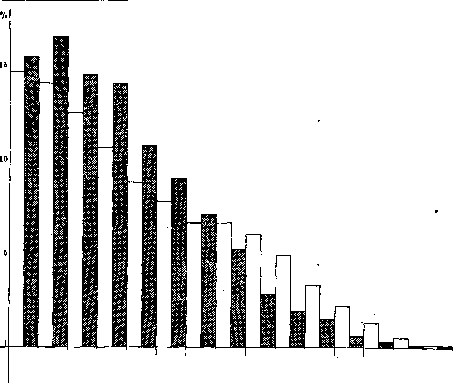
The child's psyche is characterized by less developed inhibitory influences of the cortex, and the child's brain in general is more susceptible to all kinds of harmful influences: in children, clouding of consciousness develops more easily during infections, intoxications, and various kinds of convulsive phenomena (epilepsy, chorea, hysteria) arise more easily. However, the developing child's brain also has a very great capacity for compensating for all these phenomena, which is why prolonged and pronounced mental illnesses are still observed in children comparatively rarely; moreover, the primitive child's psyche, in terms of the content of consciousness, cannot produce the florid forms of psychoses, and the faint, easily compensating pictures of M.I. often did not attract the attention of those around them and physicians, and only in recent years, with the study of microsymptoms, descriptions of psychoses in children are appearing more frequently. The periods of puberty, menopause, involution in general, fading, and periods of pregnancy, childbirth in women are periods when M.I. most frequently occur. Those perturbations in both the somatic and psychic areas that occur at this time undoubtedly increase the vulnerability of the organism and contribute to a more pronounced effect of all sorts of harmful factors. A large role in the frequent occurrence of M.I. during puberty is also played by the fact that at this time entry into independent working life begins, serious and complex requirements to adapt to life are presented for the first time, and insufficiently strong organisms fall at the first encounters with life's demands; generally, the largest number of M.I. falls on the most productive working age - from 17 to 40 years (see figure), which clearly confirms the great importance of social factors in the occurrence of M.I. However, the frequent occurrence of M.I. during pregnancy, childbirth indicates that the biological perturbations themselves also increase the predisposition to M.I. By the age of 40-50, the number of M.I. generally decreases somewhat, but during the climacteric period, the period of organismic fading, we again see some increase in their frequency: here again biological fading and life's failures due to a decline in strength for participation in the struggle for life create a basis for the easier influence of various harmful factors. From the age of 50, characteristic arteriosclerotic psychoses appear, and the decline in old age serves as the cause of the occurrence of characteristic senile psychoses (see Involutionary psychoses). c) Significance of sex. In previous psychiatric hospitals among patients, men sharply predominated: thus, in Russian psychiatric hospitals in 1911 there were 66,913 men and 36,574 women (64:36). On this basis, it was previously said about a stronger predisposition of men to M.I. However, the reason here was not a stronger psychic predisposition but the fact that men were more often subjected to harmful influences (war, alcoholism, syphilis, etc.). At present, the proportion has changed: in 1925 in the USSR, out of 100,000 mentally ill, 54,000 were men and 46,000 were women. The significance of sex is manifested in the fact that certain forms of M.I. occur predominantly in one sex or the other (see the respective articles).
are not sexual characteristics, but the difference in the social position of men and women. Man, more actively participating in life, was also subject to greater influence of domestic harmful factors; the external pictures of psychoses in women, who in former times were placed in conditions of very narrow domestic life and could therefore not develop their consciousness, were less bright, which more often made it possible to leave a mentally ill woman at home, all the more so since economically the family from a woman's illness fell into decline less often than from a man's illness, and could therefore provide both strength and means for home care. The more primitive forms of economy are destroyed, the more woman is drawn into production, the more the number of admissions of women to mental hospitals increases. Thus, in Prussia—an industrial country—in the same 1911 year, the number treated in mental hospitals was: men 76,949 and women 66,590 (ratio 54:46; in 1929 ratio 52.8:40.2); in England in 1931 there were even more women than men in mental hospitals: 44.1% of men and 55.9% of women. Thus, sex in itself has no significance for the occurrence of M.I. g) Acute infectious diseases serve, on the one hand, as the main cause of M.I. occurring in persons of the most diverse constitutions, on the other hand, they can serve as a trigger for the manifestation of pre-existing psychopathy. M.I. in infections proceed according to the type of focal organic psychoses and sometimes leave behind states of infectious feeble-mindedness (see Infectious psychoses). It should also be noted that after infections, a state of mental weakness often develops, sometimes lasting quite a long time. In cases where infection is only a trigger for already existing constitutional predisposition, the form of M.I. depends on this predisposition; however, the pictures of true infectious psychoses are partly colored by symptoms of constitutional peculiarities, which is why, as long as there are signs of exogenous reactions (for example, confusion of consciousness), it is never recommended to finally establish a diagnosis of endogenous psychosis (for example, schizophrenia). d) Among chronic infections, syphilis, due to its mass spread, is especially often a cause of M.I., and on the one hand, pictures of so-called organic psychoses with symptoms of loss depending on the location of brain tissue damage (gummata, endarteritis, etc.) are observed, on the other hand, syphilis often serves as a trigger for the manifestation of constitutional M.I. In its quaternary period, syphilis causes a special organic diffuse disease of the brain with a special clinical picture and course—progressive paralysis (see). Syphilis also plays a significant role in the origin of various kinds of abnormalities and delays in the development of the fetus in the mother's womb—syphilitic women—and thus is a cause of congenital feeble-mindedness—oligophrenia. Among other chronic infections, epidemic encephalitis should be especially noted, which not only occasionally, in acute periods, gives pictures of delirium (exogenous type of reaction), but is especially important in that it gives a change in the entire character of the person, with predominance of hypertonic-hypokinetic [parkinsonism (see)] phenomena being most often observed in adults, and hypotonic-hyperkinetic (excitability, aggressiveness, lying, etc.)—in children. The role of infections in the origin of M.I. in childhood is especially great. Associated with them exhaustion and intoxication generally have an inhibitory effect on general mental development, but in addition, more gross brain damage often lead here to significant feeble-mindedness. e) Intoxications play a major role in the origin of M.I., and above all, alcohol abuse (see Alcoholism, alcohol and health). Alcohol causes various psychopathological phenomena depending on the dose and duration of its use, starting from a decrease in higher mental and creative work when taking even small doses and states of pathological intoxication with the manifestation of constitutional peculiarities to violent hallucinatory exogenous reactions and chronic changes in the entire personality (alcoholic degeneration of personality). Chronic alcoholism contributes to the manifestation of both organic and constitutional diseases. Less widespread than alcoholism, but still significant, are other drug addictions, which also lead to M.I. (see Cocainism, Morphine - morphinism). Intoxication psychoses are also caused by various harmful impurities found in food substances (e.g. ergot).-It is also important to know about the significance in the origin of M.I. of various intoxications associated with occupational poisoning (gasoline, mercury, lead, hydrogen sulfide, carbon monoxide, etc.). Although here purely nervous phenomena (paralysis) are more often observed, states of hallucinosis (exogenous type of reactions) and mental phenomena associated with the fact that focal lesions occur in areas of the brain that are of great importance for mental activity, and outbreaks of constitutional psychoses caused by industrial poisons are also possible. z) Mechanical destruction of the brain is the result of both external injuries and hemorrhages on the basis of general intoxications, infections, arteriosclerosis, the result of scars in inflammatory processes, the result of brain tumors, etc. Destruction of the brain is the cause of loss or irritation and corresponding phenomena of disturbance in the area of sensations, perceptions and movements, on the one hand, and "represent here something more than complexes of individual signs of disease, they themselves are a kind of 'diseases', themselves carrying within them the laws of their manifestation, course, sequential development, their duration and their return to normal" (Kleist). On the other hand, in connection with constitutional peculiarities, they play a significant role in the symptomatology and manifestation of all kinds of M.I., including exogenous reactions (traumatic delirium). Finally, emotional shocks in trauma, the severity of the situation in which the trauma was received, can cause a whole series of psychogenic reactions, in strength often not corresponding at all to the severity of the mechanical damage. z) Somatic diseases, besides the general weakening effect on the body and its decreased resistance to all harmful factors in general, often serve as the cause of more or less definite M.I., although these interdependencies are not yet fully clarified, since in some cases these diseases are the main, causal factor in the occurrence of M.I., in others—only a reflection of the same constitutional factors that lead to mental illness, and finally in thirds—the result of those damages to the central nervous system that developed as a result of M.I. First of all in this respect have importance diseases of the sense organs: often in connection with ear disease and hearing impairment we observe auditory hallucinations, delusional ideas (Psychosen der Schwerhörigen Kraepelin); congenital hearing defects lead to speech defects, intellect, slowing of mental development in children, their school backwardness. A connection is noted between M.I. and adenoid growths of the nasopharynx, for example the so-called aprosexia nasali Guye, contributing to the inability to concentrate attention in children. Poor vision, especially if attention is not paid to it in time, is also often a cause of school failure. Well known are attacks of melancholy during anginal seizures and in general the connection of melancholic mood with peculiarities of blood circulation (mood swings in arteriosclerosis). The stomach has long been called the "father of sorrow" and various irregularities (especially constipation) of the gastrointestinal tract due to poisoning by toxins formed in the intestine lead to disturbance of mental well-being; cases are described in which on the basis of intestinal self-poisoning polyneuritis and Korsakov's psychosis developed. It is very probable that obesity and depression in manic-depressive psychosis are an expression of the same disorder: depression is to a certain extent a self-healing process from obesity—obesity disappears under the influence of depression, then after recovery fat accumulates again until a new attack of psychosis frees from it (J. Lange). Reiter (P. Reiter) connects the origin of schizophrenia with intestinal poisonings. The connection of the liver with Wilson's disease makes one think of the influence of the liver on the origin of paralysis agitans and epidemic encephalitis. Bostrem sees liver disease as the cause of delirium tremens, and Zimmerman and Lindner attach great importance to the liver and insufficiency of the adrenal glands in schizophrenia. Kidney disease leads to a whole series of uremic M.I. Diabetes often expresses itself, especially at the beginning of the disease, in an irritable-hypochondriacal state combined with neuralgias (Sioli) etc. All these observations are of very great interest, testifying to the interconnection of mental and somatic, to the fact that every bodily change is also reflected in the psyche (and vice versa), that constitutional mental peculiarities are closely connected with constitutional somatic peculiarities.
However, the elucidation of the regularities of these interconnections is only just beginning and there are very few definite data, yet it is necessary to note them. i) Irregularities in the development of the fetus in the mother's body due to chronic exhausting diseases (tuberculosis, syphilis) and poisons (alcohol, mercury) are often the cause of gross irregularities in the structure of the brain (see Hydrocephalus, Microgyria, Porencephaly, etc.), which lead to idiocy. However, defects in embryonic development are expressed not only in these sharp forms, but also lead to general weakness, to the accumulation of various small anatomical defects in structure (stigmata, degenerations of previous authors), to dysplastic physique, to mild forms of mental debility, which, with corresponding genetic predisposition and unfavorable external conditions, lead to the occurrence of mental illnesses. For example, it has been noted that epilepsy with feeble-mindedness is most often found in dysplastics, that dysplastic physique is also often found in schizophrenia, that schizophrenia often develops on the basis of debility (debile schizophrenia); primitive psychogenic reactions (hysterical) also easily develop on the basis of debility. Dupré speaks of a special constitution of motor (resp. organic) insufficiency of the nervous system, which is closely connected with general underdevelopment and leads to the easier occurrence of mental illnesses. k) The conditions in which the child's further development takes place, both domestic and social, are of great importance for the development of the psyche, as is the attention that the family and school pay to his development and upbringing. It is well known that children of alcoholics differ in physical frailty and do poorly in school, and often in later life they exhibit sharply psychopathic traits. The large number of psychopaths in the families of alcoholics is also explained by the fact that the very possibility of becoming a pronounced alcoholic is to some extent a consequence of genotypic psychopathy, and hence social instability, but in addition alcoholism undermines the economic power of the family; housing and food conditions in the families of alcoholics are extremely low, the mortality rate of children of alcoholics is much higher than that of non-drinkers: according to Sullivan, up to 2 years of age survive among non-drinkers - 55.2% of children, among alcoholics - 23.9%. But even the surviving children are subjected from early childhood to all kinds of injuries - both purely mechanical (beatings, lack of supervision over children) and purely psychological; lack of attention to the upbringing of children does not allow them to develop their intellectual powers, children are not taught by the family to systematic work - one of the main sources of mental development; restraining forces of cortical mechanisms do not develop in them and with a mass of heavy experiences, with physical weakness, defects of hereditary organization are revealed especially easily. But the example of alcoholic families is only the most striking; children of the entire poor class are also placed in difficult conditions of development. For a long time already the English commission for the study of degeneration has pointed out that 'the problem of degeneration comes down to the problem of food and housing'. Children of the poor are always placed in worse conditions of development than children of well-to-do parents. Many authors provide data that in bourgeois countries children of the poor study worse than children of the rich. For example, one of the most recent German works in this direction - the work of Hartnack - gives such figures: good school performance is noted in children of merchants in 26.3%, in children of artisans - in 15.3%, in children of factory workers - in 11.7%, in children of day laborers - in 8.3%. Improvement of living conditions for the working masses is the main basis for improving both physical and mental health of the population, reduction in the number not only of somatic, but also of mental diseases. l) Mental experiences (see Psychogenies) cause mental illnesses of three kinds: first of all, the so-called 'primitive reactions' (according to the terminology of K. Schneider intercharacterological reactions), where to the forefront comes not so much the human personality as the physical-vasomotor and motor manifestations inherent in the whole series of animals, protective instinctive ('unconscious' of Freud) manifestations. To this kind of manifestations belong first of all the 'vasomotor syndrome' of Bonhoeffer, especially sharply expressed in fright, in mass natural disasters, and more complex 'storms of motion' and 'feigned death' of Kretschmer and others. Freud, attaching great importance to emotions and desires in our life, wants to fill the whole life of man with such instinctive, primitive reactions (psychopathology of everyday life), which are the result of suppressed (mainly sexual) desires (see Psychoanalysis). Then among mental illnesses caused by mental experiences, mental illnesses are also distinguished, which arise in the case where action corresponding to consciousness is impossible, and there is a lack of both physical and conscious forces for readiness to fight. The most common type of mental illness in this case is reactive depression, as an expression of offense, self-pity, despair, anxiety, shame, embitterment. Finally, as a result of mental trauma, mental illnesses often arise, corresponding to the intensification of the features of the entire personality structure, characterological (constitutional) reactions, where the emphasis is on the features of temperament (reactive outbreaks of endogenous psychoses), and the experience is only a 'key' irritation (according to Kretschmer). Psychogenic primitive reactions also include in most cases psychopathic phenomena, developing immediately in many persons, so-called 'mental epidemics'. Usually such mass diseases arise on the basis of common religious and superstitious experiences for many, credulous fears, general primitiveness of the psyche and unreasoning following by persons in religious ecstasy, in most cases mentally ill (and therefore easily falling into ecstasy) persons. In Western Europe such epidemics were especially widespread in the Middle Ages - the epidemic of dancing in Aachen in 1374, in Strasbourg in 1418, etc. These epidemics do not affect at all all people, only the most primitive, suggestible people (folie imposee of the French). In tsarist Russia such epidemics were also often encountered, for example, malvanstchina in the Kiev province, described in 1892 by Sikorsky, the epidemic in the Tiraspol district, described by V. S. Yakovenko in 1911, mass self-immolations of sectarians, etc. Here also belong epidemics of hysterical convulsions, klikushestvo in villages, merianie in Siberia, mental epidemics in fear of poisoning in production (psychogenic mass poisonings). With the rise of the general cultural level of the masses, the possibility of such epidemics sharply decreases. Sometimes such diseases are not connected with superstitions and fears, but arise on the basis of unreasoning primitive respect and submission to a mentally ill person. When the husband, father is affected with delusional insanity, part of his pathological symptoms is transmitted to the wife, daughter. - Mass mental illnesses are however possible also in more mentally sound people, due to the simultaneous occurrence of really heavy experiences, real inevitable dangers, in catastrophes (earthquakes, shipwrecks) -folie simultanee of the French. Here there is no sharp impact from other persons. The French also distinguish folie communiquée, when the mental illness of one person causes a similar illness in another, and this new illness already proceeds independently. In most cases this is about the so-called 'family' psychoses, where with the same hereditary predisposition one after another or quickly several members of the family become ill. Such are the diverse moments determining the etiology, form, picture and course of mental illnesses. But above all one should remember that man is a producing, social and conscious being. Production relations and the political and legal superstructures arising on their basis have a decisive significance for human consciousness, for his entire existence. The spread of the main exogenous factors causing mental illnesses - syphilis, alcoholism, trauma - is determined by the peculiarities of production relations; housing and food conditions determining the spread of infectious diseases, peculiarities of consciousness, experiences, frequency and strength of conflicts - all this is determined by production being. Unemployment, heavy exhausting labor, class struggle - constant companions of capitalist exploitation, and therefore it is quite natural that the number of mental illnesses sharply increases in all capitalist countries. - It is interesting to note for example how capitalist exploitation and proletarianization of the population contribute to the development of mental illnesses among primitive peoples: thus, from the 70s to the 90s of the 19th century, the mental morbidity of negroes in America increased by 250%, while the morbidity in the entire population increased by 20%; about 40 years ago American psychiatrists claimed that they did not know of a single case of progressive paralysis in a pure-blooded negro, now with the spread of civilization, and along with it syphilis, it (among negroes in the USA) occurs more often than among whites.
The influence of capitalist 'culture' should also be attributed to the difference in the number of mental illnesses in the city and countryside, noted by all psychiatrists. Only under the conditions of socialist culture, under the conditions of socialist labor, can measures be created for the widespread prevention of mental illnesses. 'Overcoming the survivals of capitalism in the economy and in the consciousness of people, transforming the entire working population into conscious and active builders of a classless socialist society' - this is the decisive path in the struggle for mental health. Pathological anatomy of mental illnesses. During the period of enthusiasm for the successes of cellular pathology, there was thought about the possibility of establishing for each mental illness a strictly defined anatomical process in the cerebral cortex and thereby giving a criterion for establishing their essence. However, it was later found out that even purely morphologically, in the construction of mental life, not only the cortex but also the subcortical ganglia, the sympathetic nervous system, the endocrine apparatus, etc., participate. Even in those cases of mental illness where there is a definite anatomical substrate in the cerebral cortex or other corresponding organs (progressive paralysis, arteriosclerotic psychoses, senile dementia, some forms of oligophrenia), it cannot explain the entire clinical picture (see above the pathoplastic optional symptoms). One should also not forget that the anatomical disturbance is actually the final result of a long-standing disturbance of function; as yet little thought has been given, as Spielmeier points out, to what physiological disturbance of functions results in anatomical damage; meanwhile, the psyche reacts most sensitively to the slightest peculiarities of physiological functioning; the psyche is disturbed in these cases not because there are more or less gross changes in the brain, but as a result of disturbances in nutrition, metabolism, etc., as a result of disturbances in the processes of inhibition and excitation. The study of metabolism, the biochemical processes of the organism, physiological peculiarities for elucidating the genesis of mental illnesses has the same significance as do patho-anatomical changes. In general, in the study of mental illnesses, it is important to study not only the already completed patho-anatomical destruction, but the dynamics of the process, the development of disturbances of functions, and moreover of the functions of the entire organism. In addition, not only patho-anatomical destruction of the brain is of significance, but also the peculiarities of individual brain structure, architectonics (see Architectonics of the cerebral cortex). Thanks to the works of the Vogts, a new understanding is obtained in the light of topistics, patoclysis and pathoarchitectonics and the patho-anatomy of psychoses. We must remember that the cause of the process, even one leading to dementia, is often not brain or organic processes, but deviations from the norm of the life process due to congenital predisposition; it is possible that the entire pathological symptomatology turns out to be psychically conditioned, developing from slight quantitative deviations from the norm. As long as life has not created difficulties in the situation, mental illness remains unnoticed; under the influence of mental experiences, it passes from a latent state into phenomena which are perceived, because behavior turns out to be inappropriate to the environment. Finally, we often have in mental illnesses a process of early dying off, degeneration of individual systems due to life incapacity (Aufbrauchskrankheiten). (On patho-anatomical changes in individual diseases - see the respective words.) Classification of mental illnesses. To this day there is no single principle for the classification of mental illnesses. Until the middle of the 19th century, the so-called symptomatic classification was used: material of external expressions of psychopathological phenomena was collected without striving to penetrate into their genesis. Remnants of this symptomatic classification are also found in all modern classifications, especially among French authors. In the era of cellular pathology, Wernicke tried to build a purely anatomical classification, based on the concept of strict localization of mental functions in the brain. However, such a classification could not have success, since it is suitable only for determining individual syndromes, and not for understanding the unified integral structure of the personality. A representative of the modern cerebral-anatomical trend in psychiatry, Kleist, is fully aware that this trend can serve only general psychopathology - to clarify the significance of a psychotic symptom as an expressed disturbance of brain functions, but the question of what particular pathological process causes the disturbance of functions already lies outside its sphere, and therefore for the classification of diseases this principle is not suitable, and moreover the pathoplastic influences of the whole personality strongly change the picture and course of these syndromes. At the end of the 19th and beginning of the 20th century, the clinical-empirical classification of Kraepelin, built on the observation of the clinical course and outcome of psychoses, had great success, but later the one-sidedness of clinical-empirical diagnoses was revealed. The constitutional classification, by creating types of reactions, did not make it possible to speak of the course of the illness. That is why, as indicated above, the structural construction of the diagnosis most fully reflects modern psychiatric views, but due to the complexity of the structural formula for practical classification it is little suitable. The rapid growth of psychiatric knowledge did not allow in recent years the creation of a stable, generally accepted classification. Those classifications that were established earlier (e.g. the classification adopted at the 2nd Congress of Psychiatrists in Kiev in 1905) turned out to be outdated. For purely practical purposes in the USSR, according to a resolution of the People's Commissariat of Health, a classification close to the so-called small scheme of Kraepelin has been introduced. This classification has the following form: I. Mental illnesses due to traumatic brain injury; II. Mental illnesses in other organic brain diseases; III. Mental illnesses in intoxications; IV. Mental illnesses in infections; V. Syphilis of the brain, progressive paralysis, tabetic psychoses; VI. a) Arteriosclerosis, b) presenile and senile psychoses; VII. Epilepsy; VIII. Schizophrenia; IX. Manic-depressive psychosis; X. Psychopathies; XI. Psychogenic reactions; XII. Paranoia; XIII. Oligophrenia. The classification given by Bumke in the last edition (1929) of his textbook on psychiatry is as follows: I. Psychopathic predispositions, reactions and developments: a) nervous (psychasthenic) constitution, b) psychogenic reactions and hysterical predispositions, c) other psychopathic constitutions (excitable, unstable, etc.), d) manic-depressive psychoses, e) paranoid predispositions and development. II. Organic reactions and psychoses: a) psychoses in diseases of internal organs and in infections, b) psychoses in intoxications, c) psychoses in brain diseases, d) syphilitic psychoses, e) psychoses of involutional age and senile, f) epilepsy, g) schizophrenia, h) congenital and acquired in early childhood states of feeble-mindedness, i) cretinism and myxedema. Treatment of mental illnesses. The main cause of the spread of mental illnesses, as already indicated, is the capitalist system of production relations, the oppression of the masses, and therefore the first condition for preventing the development of mental illnesses is the elimination of the capitalist system, while the particular moments are the improvement of the economic well-being of the masses, the struggle with poverty and exploitation, the rationalization of labor and living conditions, the improvement of food and housing conditions, the protection of motherhood and infancy, the proper upbringing of youth, the struggle with infectious diseases, the struggle with alcoholism, prostitution and syphilis - in general the dissemination of psychogenic hygiene knowledge and culture. Directly eliminating the causal factors in individual cases of mental illnesses are the following types of treatment: 1) cessation of abuse of any poison (alcoholism, morphine, etc.), for which often as an auxiliary means placement in special institutions, psychotherapy, etc., is required; 2) elimination of toxic influence of professional poisons (protection of labor); 3) elimination of various auto-intoxications, the sources of which are extremely diverse: processes of suppuration (surgical intervention), absorption of poisonous products from the intestine (laxatives), diseases of the liver, kidneys (uremia), diseases of the endocrine glands (organotherapy, extirpation and transplantation of glands); in the very recent time there is here a tendency to more precise chemical investigation of the hormones of the glands, study of the metabolism of individual inorganic catalysts of endocrine exchange, and attempts are made to treat with small doses of iodine in hyperthyroidism, with small doses of bromine in manic-depressive psychosis (Zondek); 4) in infections - treatment of the basic infectious disease causing mental phenomena (specific treatment of syphilis, malaria, etc.); 5) surgical treatment (see.)
Surgery of the brain, brain surgery) to eliminate causal factors of mental illnesses in cases of trauma, scars, etc., removal of fragments of skull bones, raising them, closing defects, excision of scars, individual centers", puncture of the corpus callosum (Balkenstich) in epilepsy, hydrocephalus, meningitis serosa, in tumors, abscesses of the brain (removal of them); 6) general measures against severe nutritional disorders, treatment of individual somatic diseases causing and contributing to the manifestation of mental illnesses-In recent times, so-called pyrogenic therapy [vaccination with infections causing high tp-malaria, relapsing fever, injection of sulfur (Sulfo-sin and others), diathermy, etc.], which stimulates the body's strength in fighting harmful substances circulating in it, has acquired great importance in the treatment of mental illnesses. Pyrogenic therapy is especially successfully applied in general paresis, but some authors also saw success from it in schizophrenia. Some importance here is also attached to protein therapy, autogenous therapy, although very encouraging results have not yet been obtained. Treatment with cerebrotoxins (Lifshits, Khoroshko in schizophrenia), autolysates (Tushnov, Kazakov) is also used. However, this matter is still in the period of accumulating experience. In general, in recent times, efforts to find active therapy for mental illnesses, efforts to affect metabolism, to raise the body's protective forces, etc., have revived. However, even to this day, the main measures for treating mental illnesses are symptomatic measures. The entire surrounding environment and organization of care are of great importance for calming patients (see Mental Illnesses). For methods of treatment for individual mental illnesses-see in the description of these diseases. In terms of affecting the content of consciousness, mental experiences, psychotherapy (see) is of great importance, the application of individual types of which [suggestive (see Hypnotism), rational, psychoanalysis] depends on the peculiarities of the disease, the nature of the patient's experiences and his consciousness. Labor therapy is of enormous importance (see Mental Illnesses). Statistics of mental illnesses. More or less accurate statistical data exist only with regard to mental illness patients with a fully expressed incorrect attitude toward their surroundings, while the number of psychopathies and cases of psychogenic reactions, short-term psychopathic outbreaks can only be determined very approximately. In England, according to the law "no one suffering from psychosis should remain at home", private nursing homes, except those intended for the congenitally feeble-minded and epileptics without psychosis, are not permitted. Thus, the number of persons in psychiatric hospitals in England almost exactly determines the number of distinctly expressed mental illnesses in the population. On January 1, 1931, in England with a population of 39,947,931 people (47.8% men + 52.2% women), there were 144,161 patients in psychiatric hospitals (44.1% men + 55.9% women), i.e., 3.9 mentally ill per 1,000 inhabitants. In small, well-organized psychiatrically Swiss communities, an even larger number is found in psychiatric hospitals: in the canton of Bern, for example, 5.6 per 1,000 inhabitants were cared for, and in Zurich as many as 9.7 mentally ill per 1,000 inhabitants. Before the revolution, zemstvos repeatedly conducted censuses of mentally ill people in the population, carefully carried out by psychiatrists. These censuses gave the following number of mental illnesses: census of mentally ill of the Moscow province 1893-2.13 per 1,000 inhabitants, Moscow province 1911-3.21, St. Petersburg province 1895-2.4, St. Petersburg province 1908-2.9, Nizhny Novgorod province 1912-3.46 (4.3 men and 2.7 women), Ufa province 1913-2.9. After the revolution, no special censuses of mentally ill people were conducted in large areas. Calculations obtained by individual authors in small areas, due to the small number of people included in the census, do not give reliable figures. During the all-union census of 1926, however, the question of mental illness (congenital or acquired) was included in the "personal sheet", and thus we have a series of data on the statistics of mental illnesses from this census, although undoubtedly in the census only completely incapacitated chronic mentally ill are understood as mentally ill, and thus naturally the total number of them in the census is less than that obtained in special medical censuses conducted by doctors. Data on mentally ill from the 1926 census are given in Tables 1-3. Table 3. Distribution of mentally ill by nationality according to the 1926 census. The number of psychiatric beds in psychiatric institutions of the RSFSR in recent years is indicated in Table 5. Thus we see that the number of mentally ill in psychiatric hospitals in the RSFSR is very small. If we assume that there are 3 mentally ill per 1,000 inhabitants in the population, then with 0.32 psychiatric beds per 1,000 inhabitants in psychiatric hospitals, we have in the RSFSR hospitalized only a little more than 10% of all mentally ill. Psychiatric hospital care lags far behind other areas of health care, but Soviet psychiatry has developed great work in the field of outpatient care: since 1923, the beginning was laid for specialized psychiatric expeditions, censuses of mentally ill in the former Nizhny Novgorod province in 1927 should be noted. According to the data of A. I. Pisnyachevsky, the census covered 720,803 people in the following districts: g."
Nizhny (now Gorky), where there were 1,995 mental patients, besides those in the mental hospital, i.e., 10.6 patients per 1,000 inhabitants, Kanavino-1,817 mental patients, i.e., 3.7 per 1,000, Dzerzhinsky workers' district-180 mental patients, i.e., 4.9 per 1,000, Vetlyuzhsky district-1,019 mental patients, or 4.3 per 1,000, Krasno-Bakovsky district-833 mental patients, or 4.5 mental patients per 1,000, and Sormovo-5.9 per 1,000 inhabitants. Luxemburger and Schulz, based on research of genealogy in the average (unburdened) population, determine such a number of mental patients per 1,000 inhabitants by separate forms: dementia praecox-0.85, psych. man.-depressive-0.41, epilepsia-0.29, lues cerebri-0.41, par. progressiva-1.7, dementia senilis-:1.4, oligophrenia-0.55, hysteria-0.09, psychomthia-0.09, unclear cases-0.18; total 5.77. The number of psychiatric institutions, the number of admissions of mental patients, and the number under treatment as of January 1, 1929, of mental patients in mental hospitals of the main countries of the world can be seen in table 4. psychiatric dispensary assistance, organization of psycho-sanitary medical supervision at health posts of enterprises, organization of psycho-sanitary education (see Mental Hygiene). Here Soviet psychiatry creates qualitatively new forms of organization of mental assistance. In tab. 6 is indicated the distribution by forms of mental diseases, used in psychiatry-72» Table 4. Number of psychiatric institutions and mental patients in the main countries. Countries Number of psych. institutions Number of admitted patients per year Number of patients under treatment as of 1/1 1929 England .... Germany . . . France . . . . Belgium . . . . Italy . . . . Sweden .... Czechoslovakia Finland . . Canada..... ? 68 156 104 36 30 510 28 72 21 452 76 785 27 753 5 631 24 008 5 254 8 317 3 120 88 963 5 197 57 798 118 910 115 678 77 683 21307 66 831 19 239 15 292 11399 408 726 22 880 25 602 * With epileptics. ** With epileptics and mentally deficient. psycho-sanitary education (see Mental Hygiene). Here Soviet psychiatry creates qualitatively new forms of organization of mental assistance. In tab. 6 is indicated the distribution by forms of mental diseases, used in psychiatry-72» Table 5. Number of beds in psychiatric hospitals of RSFSR. Regions Northern edge..... Leningrad region . . Western region...... Moscow region..... Ivanovo region..... Gorky edge . . . Ural region..... Middle Volga region. Lower Volga edge . Northern Caucasus edge West Siberia ....... East Siberia...... Karelian ASSR . . . Chuvash » .... Crimean » .... Tatar » .... Dagestan » .... Kazan » .... German Volga ASSR Buryat-Mongolian » Bashkir » .... Yakut
Table 5. Number of beds in psychiatric hospitals of RSFSR. Regions Northern edge..... Leningrad region . . Western region...... Moscow region..... Ivanovo region..... Gorky edge . . . Ural region..... Middle Volga region. Lower Volga edge . Northern Caucasus edge West Siberia ....... East Siberia...... Karelian ASSR . . . Chuvash » .... Crimean » .... Tatar » .... Dagestan » .... Kazan » .... German Volga ASSR Buryat-Mongolian » Bashkir » .... Yakut
Northern edge..... Leningrad region . . Western region...... Moscow region..... Ivanovo region..... Gorky edge . . . Ural region..... Middle Volga region. Lower Volga edge . Northern Caucasus edge West Siberia ....... East Siberia...... Karelian ASSR . . . Chuvash » .... Crimean » .... Tatar » .... Dagestan » .... Kazan » .... German Volga ASSR Buryat-Mongolian » Bashkir » .... Yakut
Leningrad region . . Western region...... Moscow region..... Ivanovo region..... Gorky edge . . . Ural region..... Middle Volga region. Lower Volga edge . Northern Caucasus edge West Siberia ....... East Siberia...... Karelian ASSR . . . Chuvash » .... Crimean » .... Tatar » .... Dagestan » .... Kazan » .... German Volga ASSR Buryat-Mongolian » Bashkir » .... Yakut
Western region...... Moscow region..... Ivanovo region..... Gorky edge . . . Ural region..... Middle Volga region. Lower Volga edge . Northern Caucasus edge West Siberia ....... East Siberia...... Karelian ASSR . . . Chuvash » .... Crimean » .... Tatar » .... Dagestan » .... Kazan » .... German Volga ASSR Buryat-Mongolian » Bashkir » .... Yakut
Related articles
Mentioned in
Cite this page
“Mental Illnesses.” Soviet Medical Encyclopedia. English translation of Bolshaya Meditsinskaya Entsiklopediya, 1st ed. (Moscow, 1928–1936), ed. N. A. Semashko. https://sovietmedicalencyclopedia.pages.dev/article/mental-illnesses/