Cocainism
Historical document, translated for reference. It reflects medical knowledge of the 1920s–30s and is not medical advice.
Summary
This article from the 1928–1936 Soviet medical encyclopedia defines cocainism as the habitual use of cocaine to achieve a state of euphoria. It details the historical spread of the addiction, its prevalence in the USSR during the post-revolutionary period, and the clinical phases of intoxication, including the euphoric, hallucinatory, and depressive stages.
Encyclopedia article (1928–1936)
COCAINISM, the habitual use of cocaine for the purpose of achieving the peculiar state of elevated well-being (cocaine intoxication) that it provides. In the modern civilized world, cocainism is a relatively recent phenomenon, although among the natives of South America, the habit of chewing coca leaves existed even before the discovery of America by Europeans. The first reports of cases of pathological addiction to cocaine appeared in the medical press in the 1880s and referred to individuals to whom cocaine was injected under the skin for the purpose of facilitating withdrawal from morphine. Observations of such cases, which presented a very severe picture of the complication of one addiction by another, caused a rapid reaction in medical circles and led to the abandonment of the use of cocaine in the treatment of morphinists. As a result, from the beginning of the 1890s, the number of morphino-cocainists began to decrease sharply. In the first decade of the 20th century, cocainism was a relatively rare phenomenon; however, already in 1912–1913, new reports appeared in the French medical press about the spread in Paris among the Montmartre bohemians and prostitutes of a new method of using cocaine—sniffing. At the same time, similar cases were noted in the American army. To a slightly earlier period (1902) belongs the news about the spread of cocainism as a substitute for opiophagy; in India, cocaine was placed on the tongue, chewed with some additives, or taken internally. The World War brought with it a significant spread of the habit of sniffing cocaine; the latter spread almost epidemically, especially from 1916, in many states of Europe and America, both in armies and among the civilian population. The post-war economic depression favored cocainism, and the years 1918–1923 were, in all civilized countries, especially in Germany, the era of the greatest flourishing of cocainism. In the USSR, it was observed as a mass phenomenon also in the second half of the war, predominantly among officers of the tsarist army and speculators, and during the post-war devastation and the first years of the revolution, it spread strongly among the remnants of the bourgeoisie, especially the old nobility, the artistic bohemia, and also among various declassed elements of society, including homeless adolescents and children. A certain significance for the development of cocainism was the shortage or absence of alcohol, which pushed lovers of intoxication precisely to this portable narcotic, which was easily obtainable at that time (many, however, combined the simultaneous use of both of these poisons, and at one time, vodka mixed with cocaine was very popular in secret dens). The adoption of decisive measures against the trade in cocaine and, simultaneously with this, the lifting of the prohibition on alcoholic beverages deprived cocainism of its soil in the USSR, and from 1923 it began to decline sharply. There are no exact numerical data on the development of cocainism. According to the statistics of Bonhoeffer, per 1,000 admissions to the Berlin Psychiatric Clinic, there were cocainists: in 1913—1.75, in 1914 and 1915—0, in 1916—1.25, in 1917—1.5, in 1918—3, in 1920—7.5, in 1921—10.0, in 1922–1923—6.25–7.0, in 1924—13.0. Similar figures are provided by statistics of admissions to the Vienna clinic. In Paris, arrests for the secret trade in cocaine were made: in 1916—21, in 1917—52, in 1918—82, in 1919—69, in 1920—157, in 1921—212, in 1922 (only for 9 months)—187. In 1920, 70 kg of cocaine were confiscated there. Regarding the USSR, unfortunately, there is little even of such indirect data. The spread of cocainism among homeless children began in the USSR in 1919 and reached its apogee in 1924, when each of the special institutions for such children had no less than 2% habitual cocainists, while the number of casual users among them, according to various data, reached 8–15% of the total number of those interned. Then a rapid fall of this wave began, and in 1926–1927, child cocainists already represented a rare phenomenon (see also Intoxication Psychoses). Cocainists usually sniff cocaine together: most often, to take it, they gather in close groups in apartments, in night dens, and even (in 1920–1923) in the ruins of houses. Usually, the powder is poured in small portions onto the nail bed and inhaled into the nose. The picture of acute intoxication with cocaine in different individuals, depending on their individuality, as well as on the method of use, is quite diverse, although one can still isolate a number of typical features. Joel and Fraenkel divide the entire course of cocaine intoxication into 3 phases: 1) euphoric, 2) intoxication in the proper sense, and 3) depressive. The euphoric phase is characterized by increased activity, a feeling of an excess of strength, and an elevated, cheerful mood. In this phase, the cocainist feels the need to move and talk incessantly, and his excited behavior makes him at times very similar to someone who is tipsy. However, unlike alcoholic intoxication, here muscle strength, endurance, and working capacity prove to be objectively increased for some time, which can be explained by the weakening of unpleasant muscle sensations that usually signal the onset of fatigue. Some experience at this time a peculiar feeling of floating, an extraordinary lightness of their body, as if bodiless—a circumstance probably also connected with the weakening of muscle sense. The course of intellectual processes is characterized by the elimination of inhibitions acting in the normal state; hence, on the one hand, the ease of the flow of thoughts, and on the other, the weakening of attention and increased distractibility; the speech and writing of cocainists prove to be poorly connected, full of digressions and contradictions. Euphoria is intensified thanks to increased activity and imagination; visual images arising in the imagination easily take on a special brightness and convexity; this circumstance, in combination with the increased excitability of hearing, gives the cocainist a sensation of the sharpening of all his senses. There is no sharp boundary separating euphoria from the phase of intoxication that follows it, and the change from one to the other occurs gradually. Decisive here are: 1) a change in mood and 2) the appearance of hallucinations. The mood becomes tense and is colored by a growing affect of fear, which is fed by the ever-increasing excitability of the sensory apparatus and the tendency to transform actual perceptions into illusory ones: a slight creak turns into a roar, the horn of a passing car into military signals, a coat rack takes on human forms, etc. As a result, the entire affective attitude of the person intoxicated with cocaine in relation to the outside world changes: it seems to him that all eyes are turned on him, that people are whispering about him, that he is being ridiculed. While, being in euphoria, the cocainist strives to attract attention to himself, in the phase of intoxication he tries in every way to escape from human gazes. Hallucinations in cocainists can develop in all areas of the senses, but most often they have the character of auditory ones: sounds of footsteps, whistling, car horns, whispering, or loud voices uttering obscene words, threats, curses, etc. Visual hallucinations are also not rare, although they are not as frequent here as in delirium tremens. Erlenmeyer drew attention to the microscopic character and multiplicity often inherent in them; thus, for example, on a white background (for example, a sheet), cocainists predominantly see numerous moving black dots, usually taking them for small insects. Sometimes, however, they also see large objects, most often those that excite horror or have a voluptuous character: dead heads, naked women, the act of coitus, etc. Pathognomonic for cocainism are considered the tactile hallucinations known among the French under the name of Magnan's sign: the sensation of foreign bodies located under the skin, sometimes moving. Occasionally, olfactory and gustatory hallucinations are also observed. Usually, all these diverse deceptions of the senses quickly unite into unified and even more vivid and plastic perceptions, which intensify to the extreme limit the initially unaccountable and formless feeling of fear and fill the entire consciousness with rapidly growing and systematizing delusions of persecution. The horror excited by all these experiences and the continuous expectation of an attack, arrest, etc., sometimes lead the cocainist to dangerous violent actions: he may start shooting at apparent pursuers, strike the first person he meets, etc. Of course, in this period, intellectual processes already suffer significantly (attention and memory weaken sharply, thinking becomes poor and incoherent, etc.); however, it is interesting that, nevertheless, orientation in place and time rarely disappears completely, and traces of a critical attitude toward delusional experiences as something unreal, like a dream, almost always remain—something similar to schizophrenic double orientation. When the excitement is exhausted, the third and last phase of cocaine intoxication sets in—the depressive phase, according to Joel and Fraenkel (it would be more correct to call it the phase of exhaustion). It is characterized by a state of extreme fatigue and complete lack of will with the inability to fall asleep, and the decline of all activity can reach almost complete stupor: it is sometimes difficult for the cocainist even to throw a cigarette butt held in his hand onto the floor.
Intellectually, this period corresponds to a complete absence of thoughts and an inability to think. Only after a long time does this paradoxical combination of extreme exhaustion and insomnia finally give way to sleep. The mood corresponding to this phase varies individually among different cocainists: in some it is rather indifferent, in others it is deeply depressed—quite analogous to an alcoholic hangover—even to the point of attempted suicide. The symptoms of cocainism are quite diverse. On the part of the motor system, tremors and increased general muscular excitability are noted. Especially characteristic are peculiar movements in the facial musculature, predominantly in the masticatory muscles; a tendency to twitching and choreiform movements in various parts of the body is also observed, and sometimes even true epileptiform convulsions. Small doses of cocaine increase tendon reflexes, large ones weaken them; in chronic cocainists they are usually increased. As for sensitivity, it usually turns out to be weakened in relation to painful stimuli, especially in persons who inject cocaine—sometimes almost to complete analgesia. Paresthesias are very frequent, especially burning, crawling, and itching, predominantly in the fingers, tip of the nose, ears, and nape of the neck. Cocaine apparently somewhat sharpens auditory sensations; in relation to visual ones, on the contrary, it reduces the clarity and distinctness of peripheral vision and perhaps increases the duration of afterimages. Of the divisions of the vegetative nervous system, cocaine excites the sympathetic nerve system, causing dilation of the pupils, an increase in the palpebral fissure, and some exophthalmos. A very characteristic and diagnostically valuable symptom of cocaine intoxication is profuse cold sweat. The sexual drive in women is intensified under the influence of cocaine; in men, however, with increased excitability, sexual power turns out to be significantly reduced, up to complete inability to achieve an erection. In many cocainists in a state of intoxication, a tendency toward sexual perversions is observed, especially toward acts of homosexuality. It is unlikely that such a tendency is caused by cocaine itself; it is more probable that it simply removes psychic inhibitions to the manifestation of previously existing but hidden urges. Of other somatic symptoms, the necrotic changes of the mucous membrane and cartilaginous septum of the nose, often noted in cocaine sniffers, up to the point of deviation and perforation of the latter, have great diagnostic significance. Some connection can be made between this and the blunting of smell and taste observed in cocainists. Respiration and pulse in those poisoned by cocaine quicken somewhat; in some, palpitations also develop, accompanied by a sensation of constriction in the chest; blood pressure rises due to vasoconstriction; for the same reason, the skin becomes anemic: a pale face covered with sweat is especially striking. In a state of intoxication, diarrhea is not uncommon, alternating with constipation in chronic cocainists. Salivation and the secretion of gastric juice are reduced, which leads to a decrease and even complete destruction of the feeling of hunger, not only in a state of intoxication but also for quite a long time after it. Finally, sleep is usually disturbed for a long time and is difficult to treat with anything but strong hypnotics. Among pathological-anatomical findings, one can note the rapid onset of rigor mortis, edema and hyperemia of most internal organs, hemorrhages and thromboses, predominantly small, in the vessels of the lungs and especially the brain; degenerative changes in the ganglion cells of the brain, nerve fibers, and parenchymal cells of the liver and kidneys were also noted. Cocaine does not cause, like morphine, a chemical-physiological habituation of the organism to the poison, thanks to which abstinence from it is significantly easier than from morphine. The habit to cocaine is almost exclusively psychic and is caused on the one hand by a weakening of the will, and on the other by an ever-increasing craving for the already many times tested stimulant. Nevertheless, chronic consumption of cocaine has an extremely pernicious effect on the cocainist and leads his psyche to rapid decline. The cocainist becomes emotionally dull and morally degrades, as a result of which he quickly sinks, forgets his social and family duties, steals and sells his own and others' things indiscriminately, commits embezzlement, just to get the desired powder. Following moral degradation comes intellectual degradation: interests disappear, memory weakens, creative abilities and even elementary intelligence decrease. Sometimes true prolonged psychoses also develop: the mildest form is the persistence, even in the intervals between cocaine intakes, of an indefinite fear of people and thoughts of persecution; in some cocainists, acute hallucinatory states, characteristic of the above-described second phase, drag on for more or less long periods—up to 1-2 weeks; in individual cases, a full-blown, prolonged, more or less systematized delusion of persecution develops, usually accompanied by auditory hallucinations. Finally, pictures resembling Korsakoff's psychosis or progressive paralysis (cocaine pseudoparalysis) are occasionally observed. The prognosis must be considered poor if the cocainist has any sharply expressed psychopathic features, especially if, in addition, the consumption of cocaine began long ago and occurs without interruptions. Occasional cocainists who began to abuse the drug out of a desire for imitation and due to weakness of will often give up the habit, which has not yet had time to take root, without much difficulty. The fight against cocainism essentially boils down to the fight against drug addictions in general and must have a mainly social-preventive character. In addition to sanitary-educational measures, the absolute prohibition of the trade in cocaine, the fight against its smuggling and against dens used for sniffing, as well as against the unscrupulous use of the right to prescribe cocaine by prescription, must be placed in the first place here. Treatment of individual cases must necessarily be carried out in closed medical institutions of a psychiatric type. Since withdrawal from cocaine does not produce severe symptoms of abstinence, it is always stopped immediately. Usually, after just a few days, the cocainist begins to feel relatively well and becomes accessible to psychotherapeutic influence. Since even in mild cases of cocainism it usually owes its origin to the presence of certain psychopathic properties in the patient, further treatment, requiring on average 2-3, and sometimes more months, must boil down to the systematic re-education of the cocainist's personality, the stimulation of his intellectual and aesthetic interests, the strengthening of his will, and the instillation of healthy social and labor habits.
II. Zinovyev. COCCI, microbes having the shape of a sphere. Deviations from the typical spherical shape are not uncommon: sharpening of one of the poles up to the formation of lanceolate forms, elliptical forms, etc. (see figure). The size of cocci varies in a rather
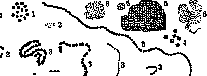
1- cocci; 2-diplococci; 3-streptococci; 4- tetracocci; 5-sarcinae; 6-staphylococci.
within wide limits, and the smallest representatives of bacteria belong to this class; the size of a staphylococcus is below 1 µ (diameter 0.6–1.2 µ), that of a pneumococcus is 0.5–1.0 µ x 0.5–1.5 µ; along with this, there are cocci reaching up to 5 µ in diameter. The reproduction of cocci occurs by means of division. If this division occurs only in one direction and the resulting cocci remain connected to each other, a chain of spheres in the form of a necklace is obtained. Such forms are known by the name of chain cocci or streptococci. Groups of two cocci are called diplococci. Upon division alternating in two mutually perpendicular directions, groups of cocci arise, bearing the name of tetracocci if combinations of four microbes are formed; groups consisting of many individuals are called merismopedia. With regular division in three mutually perpendicular planes, groups of cells are formed in the form of more or less voluminous packets; such forms are called sarcinae. Finally, dividing without any particular order in various directions, cocci form groups of individuals resembling bunches of grapes; such forms are called staphylo- or grape cocci. Cocci usually do not form spores; spores have been described only in very few species, e.g., in Sarcina ureae. Cocci are usually non-motile and, in accordance with this, are devoid of flagella; only in a few species are flagella present (Micrococcus agilis, Sarcina ureae). According to the classification of bacteria adopted by the Committee on Characterization and Classification of the Society of American Bacteriologists (Bergey), cocci are united into the family Coccaceae, consisting of the following genera: Neisseriae, Streptococcaceae, and Micrococcaceae. Neisseriae include Neisseria gonorrheae (gonococcus), N. intracellularis (meningococcus), and others; Streptococcaceae include Diplococcus (pneumococcus), Streptococcus (pyogenic streptococcus), and others; Micrococcaceae include Staphylococcus (St. aureus), Micrococcus (M. cerevis), and others. The most important pathogenic cocci are: pyogenic streptococci and staphylococci, pneumococcus, meningococcus, gonococcus, enterococcus, micrococcus, and others. Many cocci bear special names, some of which have only historical interest. Such are galactococci (cocci isolated from pus in mastitis), iodococci—large and small (normal inhabitants of the oral cavity, isolated from dental plaque and characterized by the special reaction of their colonies to a solution of iodine in potassium iodide), Pasteur's cocci (isolated by him in rabies), lactococci (white cocci isolated from milk and related to the pyogenic micrococcus), Dufougère's lymphococci, isolated by him in cases of elephantiasis, trachoma cocci, etc. Cocci that are similar to certain pathogenic cocci but do not possess pathogenicity deserve separate mention; such are gonococcus-like cocci (see Gonococcus), pseudomeningococci (see Meningococcus), etc.
Related articles
Mentioned in
Cite this page
“Cocainism.” Soviet Medical Encyclopedia. English translation of Bolshaya Meditsinskaya Entsiklopediya, 1st ed. (Moscow, 1928–1936), ed. N. A. Semashko. https://sovietmedicalencyclopedia.pages.dev/article/cocainism/