Abscess
Historical document, translated for reference. It reflects medical knowledge of the 1920s–30s and is not medical advice.
Summary
An abscess is a localized collection of pus in tissues or organs, resulting from suppurative inflammation with a tendency to become delimited. The article describes the pathological anatomy, formation process, characteristics of acute and chronic abscesses, and their microscopic features.
Encyclopedia article (1928–1936)
ABSCESS, nevus, or pyogenic focus, a limited collection of pus in tissues or organs. In other words, an abscess represents a cavity filled with pus in tissues and organs—in places where no cavity existed previously. Pathological anatomy. An abscess forms as a result of suppurative inflammation that has a tendency to become delimited. At a certain site in tissue or organ, inflammatory infiltration first develops. The number of leukocytes in it constantly increases, and finally they completely fill the usual tissue of the area affected by inflammation. This accumulation of leukocytes is caused by their continuous emigration from blood vessels and possibly by their formation in situ. The connection between elements of the main tissue is disrupted, they undergo compression, necrosis, and melting. The infiltration process at the periphery stops due to demarcation, while softening occurs in the center of the infiltrate; ultimately a cavity filled with pus (abscess) is formed. Macroscopically, the pus of an acutely forming abscess appears as a more dense or more liquid opaque mass of grayish-yellow, or yellow-green, or mucous-yellow appearance, in which fragments of dead tissue are contained to a greater or lesser degree. Under the microscope, pus consists mainly of polymorphonuclear neutrophilic leukocytes, living and dead, and of destroyed elements of local tissue (see Figure 1). In leukocytes with appropriate processing methods, droplets of fat and glycogen can be detected. The actual melting of tissue and formation of a cavity in it occurs due to disruption of blood circulation, mechanical separation of tissue elements, and the action on them of enzymes formed in the inflammatory focus. Tissue elements undergo degeneration and necrosis; then they are liquefied by the peptonizing action of enzymes released from the bodies of disintegrating leukocytes and dying cells of local tissue (autolytic enzymes). Some attribute importance in this respect to the vital activity of microorganisms, which are the usual cause of suppurative inflammation. The size of an abscess varies—from microscopic inclusion to a collection of pus of a liter or more. Between these extreme sizes are abscesses of all possible sizes. The growth of A.
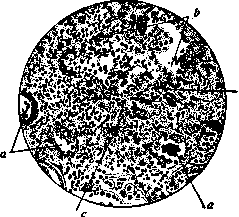
Figure 1. Pyogenic focus in the kidney in pyelonephritis: a-urinary tubules in the part of the kidney bordering the pyogenic focus, on the right—a cluster of pus corpuscles; b-pyogenic focus, part of whose contents has fallen out; c-pyogenic infiltration in the kidney tissue (Nikiforov and Abricosov, Fundamentals of Pathological Anatomy).
occurs by involving ever larger areas of surrounding tissue in the purulent process. The expansion of an abscess depends on many conditions. Here the looseness and resistance of the tissue, its ability or inability to form a demarcation barrier, the strength of the enzymatic action of pus, the general strength of the organism and the state of its protective forces are important. If an acute abscess is opened and its cavity examined, its walls appear covered with thickened pus and fragments of disintegrating tissue. The matter is somewhat different in this respect with A. that have a chronic course. These A. develop from acute abscesses due to weakening of the virulence of the causative agents or form after the death of bacteria around foreign bodies (brain abscesses, abscesses around bullets, shell fragments, sequestra, etc.). Around the pyogenic focus in these cases, granulation tissue develops from the primary demarcation capsule. This granulation membrane continues to secrete pus and is called the pyogenic membrane (membrana pyogeriica—see Figure 2). A similar pyogenic membrane has to be observed in the so-called cold A. These latter receive this name because they develop very slowly, are not accompanied by signs of acute inflammation, and in most cases do not themselves cause painful sensations. The pus of cold abscesses is usually liquid, serous, and flocculent. The development of these A. occurs, mainly, in carious tuberculous processes of bones. A microscopic feature of chronic pyogenic foci consists in a certain change in the cellular composition of the inflammatory exudate and infiltrate. Along with neutrophils
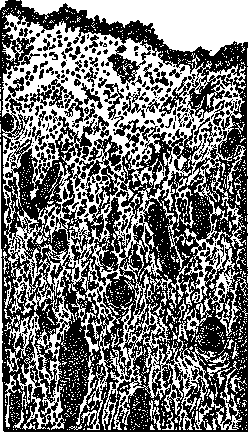
Figure 2. Granulation tissue from the membrane
an abscess in bone, the superficial layer (Leier, General Surgery). In the pus, an admixture of lymphocytes may be observed. In the infiltrate of the surrounding tissue, cells of lymphoid type predominate (small-celled infiltrate). - Abscesses can be localized in the most diverse tissues and organs of the body. Depending on the position of the abscess, its contents can sometimes acquire certain peculiarities, for example: in liver abscesses, the walls are often coated with bile; in central bone abscesses, small sequestra may be present on the inner surface of the walls; in abscesses located near the oral cavity or rectus, foul-smelling gases often develop; in abscesses around foreign bodies, fragments of clothing, bullets, shrapnel, pieces of dead bone, etc., are found. Etiology and mechanism of formation of abscesses. An abscess can be artificially caused by injecting certain chemical substances (turpentine, croton oil, etc.) into the tissues; true abscesses are obtained, i.e., cavities filled with pus. But these abscesses differ from those encountered in practice in that they do not have a tendency to progress and form metastases. In practice, one has to deal with abscesses caused by agents of suppuration-purulent microorganisms penetrating into the depths of tissues by one path or another. In some cases, suppuration is caused by microbes living in a healthy organism as saprophytes on the surface of the body, in various cavities - under changed conditions of their life they become pathogenic (endogenous infection); in other cases, they are brought from outside, mainly through contact with foci of suppuration or with various objects containing microorganisms (exogenous infection). Some microorganisms cause suppuration by their vital activity, others - by products of decay of their bodies. From the first group, staphylococcus (Staphylococcus albus, aureus, flavus, citreus) most frequently causes abscesses. More dangerous are those staphylococci that penetrate into the tissue from existing foci of suppuration. Staphylococcal infection generally has a tendency to produce limited suppurations, and the latter in the form of an abscess is characteristic of it. The second frequent cause of suppuration and formation of abscesses is streptococcus, which is often found in abscesses in symbiosis with staphylococcus. In its pure form, streptococcal infection has a more progressive character and more often leads to phlegmonous processes. From other causative agents of this group, pneumococcus and gonococcus should be mentioned. Pneumococcus (Pneumococcus Frankel) causes fibrinous inflammation of the lungs, but in a weakened state, when it gets into the tissues, it can give rise to suppuration. Gonococcus (Gonococcus Neisser) affects the mucous membrane of the urinary tract, but, getting into the surrounding tissues, it gives rise to suppuration. From the second group, the most important is the bacillus coli (Bacterium coli commune), which often leads to the formation of abscesses as a result of appendicitis, pericolitis, cholecystitis, etc. In a hot climate, the dysentery ameba also causes suppuration (abscesses of the liver). Finally, mention should be made of the blue pus bacillus (Bacillus pyocyaneus) and the typhoid bacillus (Bacillus typhosus). The former is found and causes suppuration in places where there is abundant sweat secretion, for example, in the axillary and inguinal regions; the latter causes suppurations in bones, in the gallbladder, etc. Different bacteria cause suppurations with their peculiar characteristics, so that from the properties of the pus of an abscess, one can sometimes conclude about the kind of microorganisms participating in its formation. For example, staphylococcal pus is mucoid-yellowish, streptococcal-yellow and liquid, the blue pus bacillus produces blue-green pus, the bacillus coli produces brownish and foul-smelling pus, typhoid-more bloody. The mechanism of development of abscesses in different parts and organs of the body is different, since the routes and methods of introduction of microorganisms are not the same. The pores of our body, openings of sweat glands, excretory ducts of other glands, various kinds of injuries and wounds of the coverings - all these are gates for the introduction of infection causing abscesses. Thus, for example, abscesses of sweat glands in the axillary fossae, abscesses of the mammary glands (purulent mastitis), developing on the basis of milk retention in the postpartum period and penetration of microorganisms through the milk ducts and periareolar cracks. From sources of existing suppuration, microorganisms penetrate along the lymphatic pathways into the lymphatic glands, where they are detained and often give rise to abscesses of the glands. Thus, in processes in the oral cavity, abscesses of the lymphatic glands of the neck are observed; even insignificant processes on the extremities can lead to infiltration and suppuration of the axillary and inguinal glands; abscesses specifically of the inguinal glands are observed in chancroid (ulcus molle) of the external genital organs and in gonorrhea. The purulent process in the glands is often accompanied by suppuration of the surrounding cellular tissue with the formation of extensive abscesses, in which the glands are already one of the elements of decay. Purulent parotitis develops not only metastatically but also by infection from the oral cavity through the excretory duct, especially in weakened persons, deprived for one reason or another of the possibility of chewing. In the oral cavity, one of the frequent suppurations is abscesses of the gums near the cavities of carious teeth (parulis). The crypts of the tonsils facilitate the penetration of infection into their tissue, where phlegmonous infiltration can develop with the formation of an abscess. From the region of the pharynx, infection can penetrate into the cellular tissue of the posterior wall of the pharynx and lead there to the formation of a retropharyngeal abscess. The latter can also develop on the basis of melting of the lymphatic glands lying under the pharyngeal mucosa (in scarlet fever); sometimes cold abscesses form here on the basis of carious processes of the upper cervical vertebrae or bones of the base of the skull. The formation of ulcers and cracks in the mucous membrane of the rectum and in the anus often leads to inflammation and development of abscesses in the perirectal cellular tissue. Gonorrheal inflammation of the urethra sometimes gives rise to the formation of abscesses around the urethra, in the prostate gland, in the appendages of the testicles, in the inguinal glands. In the development of abscesses of internal organs, metastases of purulent bacteria play an important role; these abscesses also develop on the basis of injuries and general infectious diseases. From the primary purulent focus, microorganisms enter the blood in greater or lesser numbers. In the blood, they are subjected to the action of the bactericidal forces of the serum, and many perish. However, some of them may settle in tissues or organs with weakened resistance and give rise to a new focus of suppuration (metastatic abscess). These same metastatic abscesses can also develop by an embolic pathway. In foci of inflammation, especially with a developed venous network, thrombosis of veins usually develops, and the thrombi become infected. These thrombi can give rise to emboli and lead to the development of abscesses in distant organs (see Figure 3). In this way, abscesses of the brain (in endocarditis, osteomyelitis), abscesses of the lungs and liver (in purulent appendicitis, amebic dysentery in hot countries), abscesses of the spleen, kidneys (hematogenous abscess of the kidney), paranephritides, osteomyelites, subdiaphragmatic abscesses, abscesses in the intermuscular tissue on the basis of transfer of pneumococcal infection from an inflamed lung, etc., can develop. A frequent cause of brain abscess is
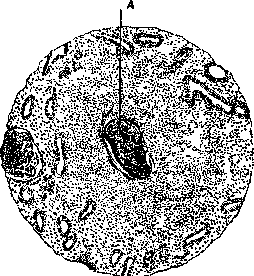
Figure 3. Embolic abscess of the kidney: L-occluded artery (A s c h o t f, Pathological Anatomy).
injuries to the skull. Abscesses of the brain are particularly often caused by purulent inflammation of the middle ear, suppuration in the orbit and in the accessory sinuses of the nose. General infectious diseases (influenza, erysipelas, etc.) can also lead to the development of brain abscesses. Abscesses of the lungs often arise as a complication of purulent inflammation of lobar or catarrhal pneumonia. In some cases, the cause of the development of an abscess is difficult to determine, for example, in acute osteomyelitis, the site of entry of microbes into the body remains unknown. Sometimes abscesses develop as a result of the spread of inflammation from neighboring organs, for example, in women, postpartum diseases can lead to the melting and formation of abscesses in the pelvic cellular tissue, purulent inflammation of the renal pelvis can lead to suppuration in the kidney (urogenic kidney abscess) and to purulent paranephritis. Even a minor injury to the skin cover can lead to the development of an abscess, let alone extensive injuries, for example, gunshot wounds and others, especially with retained foreign bodies. But even in operative wounds, despite all the surgical preventive measures used, suppurations and abscesses are sometimes observed. Air itself apparently does not contain pathogenic microorganisms, but through it, the so-called respiratory and droplet infection from persons participating in operations can be carried. It is more often carried by contact with the wound of hands, instruments, dressing materials, etc., that are not sufficiently disinfected. Finally, infection can enter the wound from the patient's skin, which cannot be completely disinfected before the operation. If there is a focus of suppuration anywhere in the body at the time of the operation, microbes can settle in the wound as in a locus minoris resisteniae. In this way, apparently, uncomplicated fractures, subcutaneous and deeper hematomas, etc., become infected and form abscesses. The body's forces and tissues, or the natural resistance to infection, counteract the development of infection in the wound, i.e., humoral and cellular forces act, but on the other hand, there are factors that predispose to infection, namely: general weakness of patients, cooling, large blood losses, trauma to tissues, disturbance of blood circulation. Under these conditions, suppurations in general and delimited abscesses in particular develop in wounds. Clinical course. Acute abscesses clinically vary depending on their size and localization (location in superficial tissues or in deeper parts or in organs). Every acute abscess begins with inflammatory infiltration, and if the focus is located near the surface of the body, all the signs of acute inflammation appear: rubor, calor, tumor, dolor. Then, depending on the location of the infiltrate, this or that functional disturbance may occur. Subsequently, the infiltrate expands peripherally until the moment of demarcation formation, and at the same time begins to protrude on the surface of the body in the form of a tumor (see Figure 4). The tumor increases and in the center undergoes purulent softening, at which time the skin becomes markedly tense. On examination, fluctuation is detected at this place. At this time, the skin at the site of softening is very thin, and a demarcation ridge is palpated around the periphery of the inflammatory focus. If such an abscess is left to itself, the thinned skin bursts, the pus pours out (the abscess opens), and thus the abscess may heal spontaneously. After the pus is discharged, if there is no subsequent retention of the secretion, the abscess cavity collapses, the inflammatory ridge resolves, and in its place granulation tissue appears as a result of regenerative proliferation of connective tissue cells and the endothelium of blood and lymphatic vessels. Granulation tissue fills the entire abscess cavity, and the site of abscess opening is covered with epidermis. Essentially, the same thing happens as in the surgical opening of such an abscess. It should only be noted that when an abscess melts parts of organs with special function, in most cases restoration of these parts does not occur. The normal structure and function of them perish forever, and the resulting defect is filled with connective tissue scar.
The matter is somewhat different if an abscess forms in deep tissues. In these cases, the tumor does not have a clearly defined shape, but appears as a diffuse swelling, the signs of acute inflammation are not so sharp, and pain and disturbance of function come to the forefront. The latter is particularly sharply manifested if subfascial or intermuscular abscesses are located in the popliteal fossa and elbow flexion or generally near large joints, since in this case they are accompanied by contractures. It is clear that a deep abscess does not open spontaneously as easily as one lying superficially. If the coverings over it are thick, then before it opens to the outside, pus may leak into the tissues. For example, if an abscess is located under the periosteum, then the periosteum, muscles, aponeurosis, subcutaneous tissue, and skin lie over it. Due to the different density of these tissues, their softening and the rupture of pus through them occur not at one level, and pus can stagnate and spread between the layers of these tissues. Abscesses of deep tissues usually reach large sizes, containing much pus. As they approach the surface, they also give fluctuation. The local symptoms are even less significant if abscesses lie in the depth of internal organs, or in places inaccessible to direct examination, for example, subdiaphragmatic abscesses, abscesses of the liver, lungs, brain, etc. Here, in addition to the existing local symptoms, indirect signs become important. For example, in lung abscesses - expectoration of pus, in liver abscesses - sometimes jaundice, in kidney abscesses - purulent urine, and in subdiaphragmatic abscesses - effusion in the pleura, etc. Abscesses of internal organs left to themselves can be dangerous to life either due to disturbance of vital functions or because when they open they can lead to fatal inflammation of neighboring parts. Thus, brain abscesses can open into the lateral ventricles, liver and spleen abscesses - into the abdominal cavity (peritonitis), abscesses from appendicitis cause peritonitis and retroperitoneal phlegmon, etc. Many abscesses lead to pyemia (see). Abscesses near large joints can open into them, abscesses near large vessels can lead to their erosion and fatal hemorrhage. Sometimes even non-life-threatening abscesses leave behind long-term functional disturbances after healing. For example,
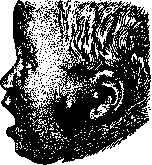
Figure 4. Abscess of the parotid
of the salivary gland (according to Kirschner-Nordmann). Periarticular abscesses can lead to stiffness of the corresponding joints or their contracture, abscesses near the anus lead to fistulas, etc. In addition to local symptoms, in abscesses, depending on their size and location, general symptoms appear. Among them, fever is important. High temperature with evening rises and morning remissions is characteristic of purulent processes in general and of abscesses in particular. From the point of view of general biology, fever is a beneficial factor as an expression of the body's reaction to the absorption of decay products and bacterial poisons from the purulent focus, but at the same time it is harmful due to its exhausting effect on the body due to its duration and other unfavorable phenomena accompanying it (chills, sweats, headaches, digestive disorders, vomiting, etc.). Fever depends on the acceleration of pulse and respiration. The phenomena of fever are especially great when metastases appear from the primary abscess in other organs and the signs of true pyemia appear. An important general symptom of abscesses is hyperleukocytosis of the blood with a predominance of neutrophilia. This is a constant symptom in any purulent infection as an expression of the body's general reaction to infection and the absorption of bacterial toxins. The absence of hyperleukocytosis of the blood in clearly purulent processes is a bad sign, as it indicates the body's inability to react to infection. The number of leukocytes in the blood can reach a high level - 20,000 or more per 1 cubic mm. However, it should be remembered that the number of leukocytes varies even in healthy people depending on their state at which the blood is taken for examination (state of rest, work, sleep, after eating, etc.). In general, importance should be attached to leukocytosis when the number of leukocytes significantly exceeds 10,000. In children, the number of leukocytes in the blood is higher than in adults, and 10,000 leukocytes in them is considered a normal number. In cold abscesses, the formation of which is associated with tuberculous bone lesions, the local reaction from the skin, characteristic of acute or hot abscesses, is absent. In most cases, cold abscesses in the initial stages of development are not easily accessible to direct examination, but if such an abscess manifests itself, it has the following signs: the tumor gives fluctuation, is covered with normal or almost normal skin, is painless or slightly painful, and does not have a demarcation ridge. In case of opening such an abscess, non-healing purulent fistulas remain. A special property of cold abscesses is their tendency to move through tissues and to form so-called migratory abscesses. The latter arise as a result of rupture of the capsule of a cold abscess and the movement of pus through the loose connective tissue along large blood vessels and aponeuroses. The movement of pus is influenced not only by gravity, but also by its digestive properties and the resistance of the tissues. The pus that accumulates somewhere in the lower parts is surrounded by a granulation membrane. In practice, migratory abscesses are most often encountered in tuberculosis of the spine. The localization of these abscesses in case of lesion of the same part of the spine can be different depending on the paths of pus movement. For example, in case of lesion of the lumbar part of the spine, a migratory abscess can be located in the groin, near the anterior superior spine, in the perineum and near the anus. The same can be said about migratory abscesses in case of lesion of large joints, for example, the hip joint. Treatment. The radical method of treating abscesses is their surgical opening. Incision of the abscess frees its cavity from contents, destroys the tension of tissues, eliminates the absorption of poisonous substances, weakens the intensity of general phenomena, and, by establishing a constant outflow for the discharge, leads to the filling of the cavity with granulations and healing. But the moments, conditions and methods of opening abscesses vary in different cases. In some cases, immediate opening of the abscess, as soon as diagnosis is established, is vital. Such are abscesses of the liver, spleen, lungs, brain, subphrenic and appendicular abscesses, abscesses containing urine and feces, etc. Abscesses near large joints, in acute osteomyelitis and periostitis should also be opened early. In the case of abscesses located closer to the surface of the body, still in the stage of infiltration and not yet fully formed, one should first bring them to complete softening and approach to the surface with warm compresses and fomentations. This causes acceleration of demarcation and softening. However, rapid demarcation of the abscess and possibly early opening leads to shortening of the painful process and less loss of functional activity of tissues. These preparatory measures are also necessary and useful in deeper locations of abscesses. In cases where the presence of pus cannot yet be proven, but the formation of an abscess can be expected, X-ray irradiation is used to accelerate its formation, which sometimes leads to rapid melting of the infiltrate and demarcation from healthy tissues. A 15-20% erythema skin dose is used for this, with a focal distance of 25 cm, with a 3 mm aluminum filter, and for deeply located foci - with a 0.5 mm zinc filter. Only in incisions of superficial abscesses can anesthesia by spraying chloroethyl be used. In general, when opening large and deeply located abscesses, general anesthesia should be resorted to. Correctly performed short intoxication with chloroethyl or ether can be considered safe, at the same time this ensures painlessness of the operation for patients, and the surgeon gets a certain confidence in his actions. Local anesthesia with novocaine in the presence of an infiltrate should not be used, as it increases the painful tension of tissues, can drive bacteria and products of inflammation into blood and lymphatic vessels and thus contribute to the spread of infection to healthy tissues. In deep abscesses of the extremities, it is sometimes useful to operate with Esmarch's tourniquet, as this makes it possible to make incisions in layers. Of course, the operation must be performed while observing all the rules prescribed by surgical prophylaxis. When opening an abscess, the incision should be even, not winding. Vessels and nerves should be spared, large vessels should be separated and pulled aside. It is good to make incisions along the direction of natural skin folds, but one should never, for cosmetic reasons, refuse incisions in other directions if they are advantageous in terms of inspection of the abscess cavity and for drainage of the discharge. On the extremities, longitudinal incisions should be made, especially in the area of natural bends, for example, in the popliteal and elbow. In some cases, when making incisions, upon reaching layers with many nerves, it is better to penetrate bluntly with a closed forceps and then, finding pus, expand the path by spreading the blades. Thus, for example, one can proceed with subfascial abscesses of the parotid gland, with submaxillary, subphrenic, perirenal abscesses, etc. Hemorrhage control during incisions of abscesses is achieved by the usual surgical methods, with bleeding blood vessels being ligated by infiltration. After removal of pus, the cavity is loosely tamponaded. Tamponade first of all stops bleeding, then absorbs infected substances and thus prevents the absorption of bacterial poisons into the blood. In abscesses in which there is putrefaction, for example, near the oral cavity, near the esophagus or near the anus, it is recommended to use iodoform gauze. However, if such is not available, simple hygroscopic gauze can be used successfully. Any squeezing, pressing out from the abscess cavity, wiping of the walls, syringing out or washing out is contraindicated for the reason that all this promotes the spread of infection through lymphatic and blood vessels. In cases where the discharge is abundant and should be given free drainage, rubber or glass drains are recommended, but they should not be left near large blood vessels and the peritoneum for fear of bedsores in the latter (appendicular abscesses, perirenal, abscesses in the pelvis, on the neck, etc.). When opening abscesses on the extremities, especially near large joints, splint bandages on straightened limbs should be used in order to provide them with the greatest possible rest. The extremities should be given a high position. Sometimes it is useful to apply wet bandages (without oilcloth or waxed paper) after opening the abscess, using physiological solution or 3% solution of boric acid. These bandages promote the liquefaction and absorption of wound secretions and favor the resolution of remaining infiltrates. In favorable course, one should not hurry to change the first bandage, and when changing it, one should spare the tissues and not cause bleeding. On the extremities, before changing the bandage, it is recommended to take warm soap baths, which help to remove the gauze and cleanse the skin from secretions; in other places where a local bath cannot be applied, the deep layers of the bandage and tampons can be loosened with hydrogen peroxide.
With the fall in temperature and the decrease in discharge, dressings should be changed even less frequently so as not to interfere with the healing of wounds.--The treatment of opened abscesses is carried out with or without tampons. Treatment without tampons has recently gained many supporters. In defense of their viewpoint, they present the following arguments: after several hours, the tampon loses its capillarity and thus becomes a plug for the wound; the tampon-free method provides complete rest for the developing granulations and allows them to manifest their bactericidal properties; prolonged tamponage and drainage cause irritation from the surrounding tissues and interfere with wound healing. It should be noted, however, that excessive enthusiasm for tampon-free treatment is not justified by reality. Undoubtedly, superficial abscesses after wide and properly positioned incisions can be treated without a tampon, but in the case of deep abscesses located under the aponeurosis and between muscles, it is hardly possible to do without a tampon and drainage. In such cases, a tampon is primarily needed to stop bleeding immediately after opening the abscess; tampons and drainage must also be used later if the condition of the wound requires it. There can be no rigid rule, and both methods can give good results within the proper scope of their application when used by an experienced hand. In any case, treatment without tampons, when applied mechanically by inexperienced hands, can sometimes be more harmful than treatment with a tampon.--Morison's method, so-called the Bipp method (see), is very attractive for the treatment of abscesses. The method of suctioning pus from the abscess cavity and replacing it with a solution (1.0:1,000.0) of rivanol (Morgenroth), which initially gained considerable popularity, is now losing its supporters, as weak solutions act little bactericidally in the abscess cavity, while stronger ones kill tissue cells as well.--Among the auxiliary methods that complement the treatment of abscesses on the extremities by incision, Virchow's congestion hyperemia can be applied, although it is more suitable for phlegmonous processes. The cavity of an opened abscess should not be tamponed, but should be kept open with the help of a rubber drain. An elastic rubber bandage should be applied centrally to the extremity so that the arteries are not compressed at all, while the veins are compressed just enough to cause only congestive edema. The bandage is applied for 10-20 hours. Congestive edema promotes the outflow of discharge from the wound and the accumulation of bactericidal substances in it. This method, however, should be applied with caution and by sufficiently experienced hands (see Virchow's method).--The method of Klapp deserves wider application in the treatment of abscesses--suctioning pus from an opened abscess with the help of glass bells with rarefied air (see Figure 5). This method has found particularly wide application in abscesses of the mammary gland (see Figure 6). To use this method, it is necessary to have a supply of bells of various sizes and a balloon or pump for rarefying the air in them. The edges of the bell should be greased before application. In acute purulent mastitis after the incision has been made, pus should be suctioned daily for up to 45 minutes. The bell is put into operation for 5 minutes, then removed for one to two minutes, suctioned again for 5 minutes, and so on. Klapp's method can be applied with equal success for limited abscesses on the entire body surface, but it should be avoided for abscesses on the face due to the possible presence of deep thrombophlebitis, disturbing the natural course of which is quite dangerous due to the proximity of the venous collectors of the brain.--Furthermore, non-specific and specific protein therapy should be mentioned. The parenteral administration of foreign protein causes both a general reaction in the body and a focal reaction in the inflamed area. The general phenomena are expressed as fever, shaking chills, sweating, an increase in the number of leukocytes, and acceleration of the pulse and respiration. Locally, in the area of infiltration, an increase in swelling, redness, and pain is noted. These phenomena lead to more rapid resolution or softening. Non-specific protein therapy (milk, neoprotein, caseosan) is successfully used in inflammatory processes in the female genital sphere, in surgery--for limited abscesses of a more chronic course, e.g., for abscesses of the sweat glands in the axilla, for abscesses of the inguinal glands, etc., with resolution sometimes occurring after only 3-4 injections of milk. Specific protein therapy--autovaccination--is of great importance in surgery, and particularly in the treatment of abscesses of a more chronic course, as it prompts the body to produce specific antibodies against the agents of suppuration. An autovaccine consists of weakened or killed cultures of bacteria taken from the patient's diseased focus, which are administered parenterally to the same patient. Autovaccination gives the body specific artificial immunization and, like non-specific protein therapy, activates all its cells. In general, autovaccination gives good results in paranephritis, in chronic osteomyelitis, in gonorrheal complications in general and in abscesses in particular, but it cannot replace surgery, e.g., in acute purulent osteomyelitis and generally in hot abscesses. In connection with autovaccination therapy, the method of autopyotherapy, introduced into practice by Makai and propagated by the Spasokukotsky clinic, should also be noted. The essence of this method is that pus from the patient's own abscess is injected into the subcutaneous tissue (for details on the technique of the method--see Autopyotherapy). As for cold and cold abscesses developing as a result of bone tuberculosis, the rule remains in force to this day--never to open them with an incision; after such an opening, ichorous inflammation of the pus cavity follows, often with a fatal outcome. The best treatment for such abscesses is to empty them by puncture and introduce an iodoform emulsion into the cavity. Repeated punctures often lead to the emptying of the cavity. When for one reason or another emptying the abscess by puncture is impossible, it can be emptied by operation, but with the capsule of the cavity and the surgical wound being sutured. Of course, main attention should be paid to the underlying disease in this case.

Figure 5. Method of applying suction bell (Bockenheimer, Allgemeine Chirurgie).
has gained wide application, especially in the treatment of abscesses of the mammary gland (see Figure 6). To use this method, it is necessary to have a supply of bells of various sizes and a balloon or pump for rarefying the air in them. The edges of the bell should be greased before application. In acute purulent mastitis after the incision has been made, pus should be suctioned daily for up to 45 minutes. The bell is put into operation for 5 minutes, then removed for one to two minutes, suctioned again for 5 minutes, and so on. Klapp's method can be applied with equal success for limited abscesses on the entire body surface, but it should be avoided for abscesses on the face due to the possible presence of deep thrombophlebitis, disturbing the natural course of which is quite dangerous due to the proximity of the venous collectors of the brain.--Furthermore, non-specific and specific protein therapy should be mentioned. The parenteral administration of foreign protein causes both a general reaction in the body and a focal reaction in the inflamed area. The general phenomena are expressed as fever, shaking chills, sweating, an increase in the number of leukocytes, and acceleration of the pulse and respiration. Locally, in the area of infiltration, an increase in swelling, redness, and pain is noted. These phenomena lead to more rapid resolution or softening. Non-specific protein therapy (milk, neoprotein, caseosan) is successfully used in inflammatory processes in the female genital sphere, in surgery--for limited abscesses of a more chronic course, e.g., for abscesses of the sweat glands in the axilla, for abscesses of the inguinal glands, etc., with resolution sometimes occurring after only 3-4 injections of milk. Specific protein therapy--autovaccination--is of great importance in surgery, and particularly in the treatment of abscesses of a more chronic course, as it prompts the body to produce specific antibodies against the agents of suppuration. An autovaccine consists of weakened or killed cultures of bacteria taken from the patient's diseased focus, which are administered parenterally to the same patient. Autovaccination gives the body specific artificial immunization and, like non-specific protein therapy, activates all its cells. In general, autovaccination gives good results in paranephritis, in chronic osteomyelitis, in gonorrheal complications in general and in abscesses in particular, but it cannot replace surgery, e.g., in acute purulent osteomyelitis and generally in hot abscesses. In connection with autovaccination therapy, the method of autopyotherapy, introduced into practice by Makai and propagated by the Spasokukotsky clinic, should also be noted. The essence of this method is that pus from the patient's own abscess is injected into the subcutaneous tissue (for details on the technique of the method--see Autopyotherapy). As for cold and cold abscesses developing as a result of bone tuberculosis, the rule remains in force to this day--never to open them with an incision; after such an opening, ichorous inflammation of the pus cavity follows, often with a fatal outcome. The best treatment for such abscesses is to empty them by puncture and introduce an iodoform emulsion into the cavity. Repeated punctures often lead to the emptying of the cavity. When for one reason or another emptying the abscess by puncture is impossible, it can be emptied by operation, but with the capsule of the cavity and the surgical wound being sutured. Of course, main attention should be paid to the underlying disease in this case.

Figure 6. Suction according to Klapp in purulent mastitis (Bockenheimer, Allgemeine Chirurgie).
As for cold and cold abscesses developing as a result of bone tuberculosis, the rule remains in force to this day--never to open them with an incision; after such an opening, ichorous inflammation of the pus cavity follows, often with a fatal outcome. The best treatment for such abscesses is to empty them by puncture and introduce an iodoform emulsion into the cavity. Repeated punctures often lead to the emptying of the cavity. When for one reason or another emptying the abscess by puncture is impossible, it can be emptied by operation, but with the capsule of the cavity and the surgical wound being sutured. Of course, main attention should be paid to the underlying disease in this case.
Related articles
Cite this page
“Abscess.” Soviet Medical Encyclopedia. English translation of Bolshaya Meditsinskaya Entsiklopediya, 1st ed. (Moscow, 1928–1936), ed. N. A. Semashko. https://sovietmedicalencyclopedia.pages.dev/article/abscess/