Absolute Stiffness Measurer for X-Rays
Historical document, translated for reference. It reflects medical knowledge of the 1920s–30s and is not medical advice.
Summary
The Absolute Stiffness Measurer for X-Rays, introduced by Christen, determines the hardness of X-rays by measuring the thickness of soft tissue that absorbs half of the emitted rays. This device uses a stepped bakelite block and a metal grid to find the half-value layer, with greater thickness indicating harder X-rays.
Encyclopedia article (1928–1936)
Absolute Stiffness Measurer for X-Rays, introduced into radiotherapy by Christen for determining the hardness of rays according to the layer of soft tissues which absorbs half of the rays emitted by the tube (according to the so-called half-value layer). It consists of a movable stepped block of bakelite, with the same ability to absorb rays as soft tissues, above which is placed a metal plate that does not allow rays to pass through; half of the surface of the plate is occupied by holes, so that half of the rays falling on it pass through them. The bakelite is moved until the fluorescence on the screen from it and the grid is the same; the thickness of the bakelite layer is judged by the half-value layer: the greater it is, the harder the X-rays.
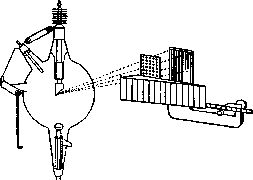
The bakelite is moved until the fluorescence on the screen from it and the grid is the same; the thickness of the bakelite layer is judged by the half-value layer: the greater it is, the harder the X-rays.
Related articles
Cite this page
“Absolute Stiffness Measurer for X-Rays.” Soviet Medical Encyclopedia. English translation of Bolshaya Meditsinskaya Entsiklopediya, 1st ed. (Moscow, 1928–1936), ed. N. A. Semashko. https://sovietmedicalencyclopedia.pages.dev/article/absolute-stiffness-measurer-for-x-rays/