Curie
Historical document, translated for reference. It reflects medical knowledge of the 1920s–30s and is not medical advice.
Summary
A biographical overview of Marie and Pierre Curie from the 1930s Soviet Medical Encyclopedia, detailing their pioneering research on radioactivity, the discovery of radium, and their major scientific honors.
Encyclopedia article (1928–1936)
CURIE, Marie and Pierre. Marie Curie, née Skłodowska (born in 1867). After completing gymnasium in Warsaw, she continued her studies in Paris at the Faculty of Physics and Mathematics. In 1895, following her marriage to Pierre Curie, she continued her work in the physical laboratory of the School of Physics and Chemistry, where Pierre Curie was a professor. Her first major work was an investigation of the magnetic properties of hardened steel. She then undertook investigations into radioactive substances, first alone and later together with her husband. She performed difficult experiments, important for physics, to obtain pure radium salts, and later, after her husband's death, Curie succeeded in obtaining pure metallic radium. Curie served as a professor at the Higher Normal School for Young Women in Sèvres starting in 1900. In 1903 she received the degree of Doctor from the University of Paris. From November 1904 she was the head of practical work in physics at the Sorbonne, and subsequently a professor at the same university. Curie is a member of the Paris Academy of Medicine. She received the Nobel Prize twice: the first time (in 1903) for research on radioactivity performed jointly with Pierre Curie, and the second time in 1911 for advances in the study of radioactive bodies and in particular for the isolation of metallic radium. Marie Curie authored the textbook Traité de radioactivité (Paris, 1910). Pierre Curie (Pierre Curie, 1859–1906), the famous French physicist who discovered radium and the phenomena of radioactivity together with his wife Marie Curie, thereby laying the foundation for one of the new branches of medicine: radiotherapy. After graduating from the Faculty of Physics and Mathematics of the Sorbonne, Curie served as a preparator in the physical laboratory of the Sorbonne (from 1878 to 1882), and then as head of practical work at the School of Industrial Physics and Chemistry of Paris. From 1895 he served as a professor at the same school. In 1900 he was entrusted with lecturing on a course at the Faculty of Physics and Mathematics, and
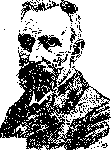
in 1904 a special chair was created for Curie at the Sorbonne. Curie's research concerned the following subjects: together with his brother Jacques, Pierre Curie discovered the phenomena of piezoelectricity, which had important applications in the study of radioactive phenomena. Furthermore, Curie published theoretical studies on symmetry in physical phenomena that were important for physics and crystallography. In his doctoral dissertation (1895), Curie described his research on the effect of temperature on the magnetization of bodies. He discovered the temperature, named the Curie point, at which iron ceases to be magnetized and attracted by a magnet. For his work, Curie constructed a number of instruments that received wide application in physical laboratories. Especially important are his aperiodic balance with an air damper, piezoelectric quartz for research in the field of radioactivity, and a balance for studying the magnetic properties of bodies.
The greatest credit of Curie is the discovery, together with his wife (Marie Curie), of the element radium and the study of its radioactive properties. For his work on radioactivity in 1903, Pierre Curie received the Nobel Prize in Physics together with Marie Curie. Curie's works are collected in a single volume published by the French Physical Society (Oeuvres de Pierre Curie, P., 1908).
Related articles
Mentioned in
Cite this page
“Curie.” Soviet Medical Encyclopedia. English translation of Bolshaya Meditsinskaya Entsiklopediya, 1st ed. (Moscow, 1928–1936), ed. N. A. Semashko. https://sovietmedicalencyclopedia.pages.dev/article/curie/