Carpathian Tea and Karpov, Vladimir Porfiryevich
Historical document, translated for reference. It reflects medical knowledge of the 1920s–30s and is not medical advice.
Summary
This entry describes 'Carpathian Tea,' a historical herbal cough remedy, and provides a biographical sketch of the Russian histologist Vladimir Porfiryevich Karpov. It details the composition of the tea and outlines Karpov's academic career, his philosophical works on vitalism, and his contributions to histology.
Encyclopedia article (1928–1936)
CARPATHIAN TEA (Species karpatiensis), a mixture of coarsely ground plant parts, which had significant prevalence in the pre-war period as a remedy for coughs, hoarseness, and throat and lung diseases. Composition of the mixture: 240 parts licorice root, 200 parts marshmallow root, 20 parts elecampane root, 10 parts mullein flowers, 130 parts sunflower flowers, 40 parts poppy heads. It was sold in original packaging, in round cardboard tubes covered with advertisements, in 75.0 gram portions. It is used by taking 2 tablespoons of the mixture per two glasses of boiling water to be drunk throughout the day. KARPOV Vladimir Porfiryevich (born in 1870), a well-known histologist, professor at the 2nd Moscow State University. Upon graduating from the medical faculty of the 1st Moscow University (1893), he served there as an assistant prosector at the Department of Histology; from 1897, he was an assistant in zoology at the Moscow Agricultural Institute; from 1906, he was a prosector of histology at Moscow University; and from 1914, he was a professor there. Simultaneously, he lectured at the philosophy department of the Moscow Higher Women's Courses.
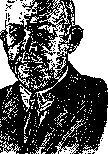
In 1917, Karpov moved to Dnepropetrovsk, where he took part in the organization of the university, and after its dissolution, the Medical Institute, serving as rector of these institutions from 1918 to 1925. From 1925, Karpov was a professor, and from 1925 to 1928, he was the dean of the medical faculty of the 2nd Moscow State University. Karpov belongs to the Moscow school of histologists founded by Babukhin and is a student of Ognev. The greater part of Karpov's writings belongs to the pre-revolutionary period and concerns natural philosophical problems; in particular, his works include: 'Vitalism and the Tasks of Scientific Biology in the Question of Life' (Questions of Philosophy and Psychology, books 98 and 99, 1909); 'Aristotle's Natural Philosophy and Its Significance at the Present Time' (ibid., books 109 and 110, 1911); and 'Basic Features of the Organic Understanding of Nature' (Moscow, 1913). In these works, Karpov develops the vitalistic and theological ideas of 'organic natural philosophy,' the founders of which he considers to be Plato and Aristotle, and their successors to be Stahl, Schelling, Fechner, and Driesch. Of his scientific works, the most well-known are: 'Studies on the Direct Division of Cells' (dissertation, Moscow, 1904); 'On the Intravital Structure of the Nucleus' (Yekaterinoslav Medical Journal, 1924, No. 10); and 'The X-chromosome in the Testes of the Beetle Cleonus punctiventris' (Russian Archive of Anatomy, Histology, and Embryology, vol. V, issue 1, 1926). Karpov wrote 'An Outline of the General Theory of the Microscope' (Moscow, 1907) and 'An Introductory Course in Histology' (6th ed., Moscow, 1929).
Related articles
Cite this page
“Carpathian Tea and Karpov, Vladimir Porfiryevich.” Soviet Medical Encyclopedia. English translation of Bolshaya Meditsinskaya Entsiklopediya, 1st ed. (Moscow, 1928–1936), ed. N. A. Semashko. https://sovietmedicalencyclopedia.pages.dev/article/carpathian-tea-and-karpov-vladimir-porfiryevich/