Erythema Dose
Historical document, translated for reference. It reflects medical knowledge of the 1920s–30s and is not medical advice.
Summary
The erythema dose (ED) is the amount of shortwave radiation (primarily X-rays and ultraviolet) that causes distinct reddening of the skin after 7-8 days, progressing to pigmentation after 2-3 weeks. This article explains the measurement challenges and biological variability of this dose unit used in early radiation therapy.
Encyclopedia article (1928–1936)
ERYTHEMA DOSE (ED), the dose of shortwave rays (primarily X-rays and ultraviolet), after which application, clearly expressed reddening of the skin appears on the irradiated areas after 7-8 days, which after 2-3 weeks turns into pigmentation from light to dark brown color; sometimes peeling of the skin occurs. As for X-rays, when they pass through the human body, only the portion absorbed by the tissues can act on them. Therefore, it would have been most natural to take the amount of rays absorbed by a unit volume of tissue as the dose. However, this idea had to be abandoned, as it proved impossible to measure such a dose of rays. The dose of X-rays is called the amount of radiant energy falling on the irradiated field during the entire irradiation time. The dose of rays (D), the amount of radiant energy per 1 cm2 in 1 second (I), and the irradiation time (t) are related by the following formula: D = I-t. I is otherwise called the intensity of irradiation, the second dose, etc. The value of I is determined by various dosimeters (mekashyun, rentgenofotometer, etc.). The dose D is not equivalent to the so-called surface dose. The latter includes both rays coming from the tube and secondary radiation emanating from the depth of the irradiated body. Thus, the surface dose is considered to be the amount of all X-rays (therefore including secondary radiation) passing through a unit surface. Finally, the deep dose is called the amount of radiant energy penetrating an area deep in the body. Both primary and secondary radiation are taken into account in this case. The deep dose is determined as a percentage of the surface dose. The rapid development of X-ray therapy created an urgent need for a dose unit. Like any other unit, it must be capable of precise definition and constant easy recovery. It seemed simplest to calculate the dose of rays according to the current strength in the tube and the applied voltage, because if these components are kept constant, the dose should change proportionally to time. This calculation led to many disappointments. This was explained, apart from the differences in the tubes themselves, by the fact that technology has not yet made it possible to obtain exactly constant voltage on the tube and has not manufactured simple and precise instruments for measurement. At the beginning of the X-ray era, there were many more or less arbitrarily chosen dose units, which were also difficult to compare with each other. Therefore, a great merit of Seitz and Wintz was to propose taking the HED as the unit of dose
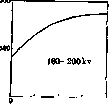
The amount of r, necessary to obtain an erythema dose with filters from 3 mm Al to 2 mm Zn + 3 mm Al. (Hauteinheitdosis, skin dose unit, skin E. d., skin dosimetric unit, etc.). It represents the amount of X-rays of a certain hardness, falling on the body at a focus-to-skin distance of 23 cm and a field size of 6x8 cm. Such a dose on normal human skin causes reddening after 8 days, a light brown coloration after 4 weeks, and after 6 weeks the pigmentation takes on a dense brown tint. The convenience of this unit is that it determines the biological effect on the body and is the maximum permissible dose of rays, because if it is increased, a reaction of II or even III degree occurs (see X-ray therapy). Among the disadvantages of this dose must be mentioned that the biological effect manifests itself after a long period of time, which delays control. Especially that for the same skin reaction in different people, different amounts of rays are needed. The variations reach 20% in both directions. In addition, it must be kept in mind that certain diseases (Basedow's disease, edema in nephritis, etc.) sharply increase the skin's sensitivity to rays. This 'biological' dose of rays was obtained by Seitz and Wintz not by chance. They noticed that their ionto-quantimeter (an apparatus for measuring doses of rays) usually had to lose its electrical charge 35 times in order for the indicated skin reaction to occur. Thus, from the very beginning, HED was based on the measurement of air ionization, i.e., on objective physical measurement. The inaccuracy and complexity of the first dosimetric instruments based on air ionization measurement, their high cost, etc., led to the spread and application of the Saburo-Noa-re dosimeters and their modifications proposed by Holtzknecht (see X-ray therapy, X-ray technique), the disadvantage of which is a large dependence on the hardness of the rays. Modern ionization meters differ in comparative accuracy. In addition, an international unit of the amount of rays has been established, called the 'Rontgen' and abbreviated by the letter r. The skin E. d., according to the calculations of various authors, is equal to 450 to 650 r. By measuring the amount of r needed to obtain a skin dose with different hardness of rays, Wintz obtained a curve (see figure). The hardness of the rays was changed by increasing the thickness of the zinc filter. To the 3 mm aluminum filter, a zinc filter was added. From the curve it can be seen that with only a 3 mm aluminum filter, 400 r were needed. For hard rays, i.e., with a filter of 2 mm Zn + 3 mm Al, almost 900 r are needed. Thus, to this day, a flawless method of measuring doses has not been found. HED remains in force. The measurements of the amount of rays are made with ionization chambers, which at present represent a physically justified method, practically sufficient for calculating and checking the doses used in X-ray therapy.
The erythema dose of ultraviolet rays, see Light therapy. A. Deputovich. Lit.-see the articles Radiology and X-ray therapy.
Related articles
Mentioned in
Cite this page
“Erythema Dose.” Soviet Medical Encyclopedia. English translation of Bolshaya Meditsinskaya Entsiklopediya, 1st ed. (Moscow, 1928–1936), ed. N. A. Semashko. https://sovietmedicalencyclopedia.pages.dev/article/erythema-dose/