GE
Historical document, translated for reference. It reflects medical knowledge of the 1920s–30s and is not medical advice.
Summary
This article provides biographical information on Alexander Genrikhovich Ge (1842-1907), a prominent Russian dermatologist, and Rudolf Hober (born 1873), a distinguished German physiologist. Ge was known for his work in dermatology and venereology, while Hober made significant contributions to the physical chemistry of cells and tissues.
Encyclopedia article (1928–1936)
GE, Alexander Genrikhovich (1842-1907), a renowned Russian dermatologist. He graduated in 1865 from the medical faculty of Kazan University, at which he was retained to study skin and venereal diseases. In 1868, he defended his dissertation for the degree of Doctor of Medicine: "On the physiological effect of quinine on the organism of higher animals" (Kazan, 1868), after which he was sent abroad for further improvement. In 1872, he was approved as a privat-docent and began teaching a course on skin and venereal diseases at Kazan University. In 1888, he received the title of ordinary professor, and from 1892 to 1896 he also served as dean. Ge established one of the first model Russian clinics for skin and venereal diseases, which became a scientific and treatment center for the entire Volga region. Being one of the first Russian clinical dermatologists, Ge also actively participated in the medical and public life; he was a participant in the Pirogov congresses, one of the chairmen of the dermatological-venereological section of these congresses, including the Pirogov congress disbanded by police in 1904. To Ge belongs a guide to venereal diseases ("Course of Venereal Diseases", 1st ed., Kazan, 1880), which went through 8 editions and brought the author wide popularity among doctors and students.
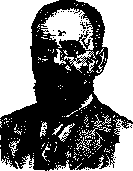
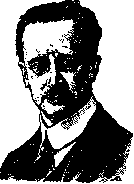
HOBER, Rudolf (Rudolf Hober, born 1873), an outstanding German physiologist; he studied at the universities of Freiburg, Berlin, and Erlangen. From 1898 to 1908, he worked as an assistant and privat-docent of physiology at the University of Zurich, then at the University of Kiel, where since 1915 he has held the chair of physiology. He has special merits in the study of the physicochemical structure and physicochemical processes of cells and tissues (osmosis, adsorption, permeability, the action of ions, etc.). His classical book on the physical chemistry of cells and tissues ("Die physikalische Chemie der Zelle u. d. Gewebe", 6th ed., Lpz., 1926) and his textbook of physiology ("Lehrbuch der Physiologie des Menschen", B., 1928; Russian ed.-M.-L., 1926) are widely known.
Related articles
Cite this page
“GE.” Soviet Medical Encyclopedia. English translation of Bolshaya Meditsinskaya Entsiklopediya, 1st ed. (Moscow, 1928–1936), ed. N. A. Semashko. https://sovietmedicalencyclopedia.pages.dev/article/ge/