Nikolai Petrov
Historical document, translated for reference. It reflects medical knowledge of the 1920s–30s and is not medical advice.
Summary
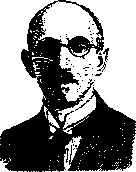
Nikolai Petrov (born 1876) was a prominent Russian clinical surgeon and one of the founders of experimental and clinical oncology in the USSR. He organized the Oncological Institute in Leningrad and made significant contributions to the study of tumors and the development of anti-cancer public health initiatives.
Encyclopedia article (1928–1936)
NIKOLAI PETROV Nikolayevich (born 1876), an outstanding clinical surgeon; upon graduating from the Military Medical Academy, he specialized in surgery at the department of Professor Subbotin. He worked in Metchnikoff's laboratory in Paris and with the most prominent surgeons of Western Europe. In 1912, he was elected to the chair of the hospital surgical clinic of Warsaw University, and a year later he took the chair of surgery at the Institute for the Advanced Training of Physicians in Leningrad. From 1921 to 1926, he simultaneously held the chair of the hospital surgical clinic at the Medical Institute, which he left in 1926 due to his transfer to the Oncological Institute of the Leningrad Regional Health Department, which he had organized. Petrov has been an honorary member of the Pirogov Russian Surgical Society since 1924 and has been repeatedly elected chairman of this society. He is also a member of the German Surgical Society, the German Urological Society, and a member of the central committee of the German Anti-Cancer Society. During his 32-year career, Petrov has conducted diverse public, organizational, teaching, popular-educational, and scientific work. More than 160 printed works have come from Petrov's pen, including the classic dissertation "Experimental Data on the Question of Joint Tuberculosis in Connection with Injuries" (St. Petersburg, 1902), "Free Bone Grafting" (St. Petersburg, 1913), "Treatment of Infected Wounds" (Petrograd, 1916; 3rd ed., Leningrad, 1926), articles on rhinoplasty, in particular with a description of an original method for restoring a sunken nose, and a whole series of other major experimental and clinical works on urology, abdominal surgery, etc. Petrov's main works are devoted to the study of tumors; these include "The Essence of Cancer from the Point of View of Morphology and Physical Chemistry" (Journal for the Advanced Training of Physicians, 1924, No. 3), "The Problem of Blastomatous Growth in the Light of Experimental Facts" (Kharkov, 1929)
and many others. As early as 1910, Petrov published the "General Doctrine of Tumors" (St. Petersburg, 1910; latest ed., Moscow-Leningrad, 1926), which was awarded a prize by the Military Medical Academy and justly earned wide renown. Being one of the founders of Russian experimental and clinical oncology, Petrov, with the broad support of the People's Commissariat of Health and the Leningrad Regional Health Department, organized a scientific-practical Oncological Institute at the Metchnikoff Hospital in Leningrad in 1926. Having now dedicated himself exclusively to the study of neoplasms and the anti-cancer struggle, Petrov, in connection with the founding of the Oncological Institute, introduced for the first time in the USSR a special course in oncology for physicians undergoing advanced training and launched a major anti-cancer campaign among the broad masses of the population. Petrov's organizational work on the front of the anti-cancer struggle manifested itself particularly energetically from 1929, from which time he served as chairman of the Permanent Anti-Cancer Conference in Leningrad.
Related articles
Cite this page
“Nikolai Petrov.” Soviet Medical Encyclopedia. English translation of Bolshaya Meditsinskaya Entsiklopediya, 1st ed. (Moscow, 1928–1936), ed. N. A. Semashko. https://sovietmedicalencyclopedia.pages.dev/article/nikolai-petrov/