Nikolai Strazhesko
Historical document, translated for reference. It reflects medical knowledge of the 1920s–30s and is not medical advice.
Summary
A biography of Nikolai Dmitrievich Strazhesko (born 1876), a prominent Soviet clinical therapist, academician, and pioneer in the pathophysiological school of internal medicine who made fundamental contributions to cardiology and gastroenterology.
Encyclopedia article (1928–1936)
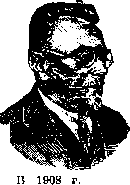
STRAZHESKO, Nikolai Dmitrievich (born 1876), academician, an outstanding clinician and therapist. Upon graduating from the medical faculty of Kiev University in 1899, he worked under the guidance of V. P. Obraztsov, became his successor in the clinic of internal diseases, and created a clinical school of a pathophysiological orientation. Strazhesko deepened his medical education under the leading clinicians of the West (Potain, Leyden, Müller) and theorists of the Union (Academician I. P. Pavlov, Ladenburg, Vysokovich). In 1904, Strazhesko defended his dissertation on the physiology of the intestines, carried out in the laboratory of I. P. Pavlov, and received the degree of Doctor of Medicine; private docent in 1904, in 1910 professor at the chair of special pathology and therapy of the Kiev Women's Medical Institute, and in 1917 of medical diagnostics and head of the therapeutic department of the former Alexandrovsk Hospital; in 1919 elected director of the therapeutic faculty clinic of Novorossiysk University, in 1922 of the propaedeutic clinic of the Kiev Medical Institute; since 1927 he has headed the hospital therapeutic clinic, and since 1929 simultaneously the faculty therapeutic clinic of the same institute. Since 1931, he has headed the clinical department of the Institute of Experimental Biology and Pathology in Kiev. In 1934, he was elected an academician of the All-Ukrainian Academy of Sciences at the chair of clinical medicine. Throughout his entire activity, Strazhesko has conducted extensive educational, scientific, organizational, and public work. Strazhesko is deputy chairman of the All-Ukrainian and All-Union Association of Therapists, a member of the Scientific Medical Council of the People's Commissariat of Health of Ukraine, an active participant and leader of scientific medical organizations in Kiev, a member of the Rheumatism Committee and many other organizations, and editor of a number of medical journals of the Union. Under his editorship and with his direct participation, a number of manuals on the clinic of gastrointestinal diseases (with V. P. Obraztsov, in the manual edited by Lang and Pletnev, in the course of special pathology in the Ukrainian language) and the monograph "Fundamentals of Physical Diagnostics of Abdominal Diseases" (Kiev, 1924) have been published. Strazhesko has published over 60 scientific papers. His experimental works on the physiology of digestion and the cardiovascular system retain outstanding significance to the present time: "On the Physiology of the Intestines" (dissertation, St. Petersburg, 1904); "Strophanthine as a Cardiac Remedy" (Kiev, 1910); on fluctuations in arterial blood pressure of cardiac origin; on the effect of cardiac remedies on the peripheral endings of the vagus nerve. In clinical works, Strazhesko described a number of clinical syndromes that have become classical. Together with V. P. Obraztsov, and subsequently independently, he developed the clinical picture of coronary artery occlusion (1910); he developed the topics: on the splitting of heart sounds, venous pulse, and heart failure in neuroses, on the splitting of the 2nd sound in aortic insufficiency, on coecum mobile, on the melody of the heart in Adams-Stokes syndrome, on the syndrome of thrombosis of the right branch of the portal vein, etc. The latest period of Strazhesko's scientific work is characterized by a synthetic approach to the study of major clinical problems based on a clinical and experimental study of the dynamics of pathological processes. The main works of this stage are dedicated to angina pectoris and cardiac asthma (1926), problems of sepsis, rheumatism, and endocarditis. In the latter, Strazhesko substantiated the theory of the unity of sepsis, endocarditis, and rheumatism.
elected
tute and many other organizations, editor of a number of medical journals of the Union. Under his editorship and with his direct participation, a number of manuals on the clinic of gastrointestinal diseases (with V. P. Obraztsov, in the manual edited by Lang and Pletnev, in the course of special pathology in the Ukrainian language) and the monograph "Fundamentals of Physical Diagnostics of Abdominal Diseases" (Kiev, 1924). Strazhesko published more than 60 scientific works. His experimental works on the physiology of digestion and the cardiovascular system retain outstanding significance to the present time: "On the Physiology of the Intestines" (dissertation, St. Petersburg, 1904); "Strophanthine as a Cardiac Remedy" (Kiev, 1910); on fluctuations in arterial blood pressure of cardiac origin; on the effect of cardiac remedies on the peripheral endings of the vagus nerve. In clinical works, Strazhesko described a number of clinical syndromes that have become classical. Together with V. P. Obraztsov, and then independently, he developed the clinic of occlusion of the coronary arteries of the heart (1910); he developed the topics: on the splitting of tones, venous pulse, and heart failure in neuroses, on the splitting of the 2nd tone in aortic insufficiency, on coecum mobile, on the heart melody in Adams-Stokes syndrome, on the syndrome of occlusion of the right branch of the portal vein, and others. The last period of Strazhesko's scientific work is characterized by a synthetic approach to the study of major clinical problems based on the clinical and experimental study of the dynamics of pathological processes. The main works of this stage are devoted to angina pectoris and cardiac asthma (1926), problems of sepsis and rheumatism, and endocarditis. In the latter, Strazhesko substantiated the theory of the unity of sepsis, endocarditis, and rheumatism.
Related articles
Cite this page
“Nikolai Strazhesko.” Soviet Medical Encyclopedia. English translation of Bolshaya Meditsinskaya Entsiklopediya, 1st ed. (Moscow, 1928–1936), ed. N. A. Semashko. https://sovietmedicalencyclopedia.pages.dev/article/nikolai-strazhesko/