Cardiovascular System
Historical document, translated for reference. It reflects medical knowledge of the 1920s–30s and is not medical advice.
Summary
This article from the 1928–1936 Soviet Great Medical Encyclopedia provides a statistical overview of cardiovascular diseases in the USSR and Europe during the late 1920s and early 1930s. It details mortality rates, age-related morbidity, and the impact of these conditions on labor disability across different industries.
Encyclopedia article (1928–1936)
CARDIOVASCULAR SYSTEM. For anatomy, comparative anatomy, physiology, and pathology, see Lymphatic system, Circulatory system, Blood vessels, Blood circulation, Heart. Statistics of diseases of the circulatory organs. According to the nomenclature of diseases and causes of death, the section on diseases of the circulatory organs includes: inflammation of the pericardial sac (pericarditis), acute endocarditis, chronic endocarditis and valvular defects, myocarditis, sclerosis of the heart vessels, angina pectoris, other heart diseases; furthermore—aneurysms, general arteriosclerosis, other arterial diseases, venous diseases, and finally diseases of the lymphatic system and other diseases of the circulatory organs (including gangrene). The provided list of diseases and causes of death was approved at the International Conference for the Revision of the Nomenclature of Diseases and Causes of Death in Paris in 1929 and adopted in the USSR by Gosplan starting in 1931. Mortality from diseases of the circulatory organs in various European states (Table 1) constitutes approximately 12–16% of mortality from all diseases, i.e., it exceeds mortality from diseases of the digestive organs by almost two times and is higher than mortality from diseases of the nervous system.
Table 1. Mortality from diseases of the circulatory organs (per 10,000 population). Examining Table 1, it should be borne in mind that the figures for Germany and Austria include causes of death from all forms of diseases of the circulatory organs, whereas the figures for the other states provide mortality only from organic heart diseases. Tracing the figures by year, one can note in all states a certain tendency toward an increase in mortality from diseases of the circulatory organs. There is no noticeable difference in mortality from diseases of the circulatory organs between men and women. The distribution of mortality from diseases of the circulatory organs by age in Germany (per 10,000 population of the corresponding age group) is given in Table 2. About 90% of mortality falls on the senile age of 60 years and older, 8% is distributed almost equally between infants under 1 year and the age group of 30–60 years, and only approximately 2% falls on childhood, adolescence, and young ages from 1 to 30 years. Consequently, people die from diseases of the circulatory organs mainly at a senile age.
In the cities of the Byelorussian SSR, about 8 deaths per 100 deceased were due to heart disease, in the cities of the Ukrainian SSR—about 9, and in Moscow—about 10. The mortality rate in Moscow in 1928 was 14.5 per 10,000 population, with heart diseases accounting for 13.1; in 1929 it decreased slightly to 13.2, of which the mortality rate from heart diseases was 11.6. In the elderly age group of 50–59 years in Moscow in 1926, death from diseases of the circulatory organs accounted for 23.5% of all deaths, in the senile age group—41.4%, totaling 64.9% for both groups, i.e., almost 2/3 of all mortality. The young age group under 20 years accounted for only 5.5%, and the middle age group—from 20 to 50 years—about 30.0%. The distribution of diseases of the circulatory organs by individual forms is best illustrated by the morbidity materials of the city of Moscow and the Moscow Governorate for 1926, since a detailed analysis of morbidity cards was timed to this year (the year of the population census) (Table 3; ratio per 1,000 population of the corresponding sex group). In the city, an excess of indicators is observed among the male sex, with the exception of heart diseases, which predominate in women; in the governorate, however, the majority of diseases show a preponderance among women.
Heart diseases, gradually increasing with each age group, reach their maximum in elderly ages over 50 years; angina pectoris is mainly a disease of elderly and senile age; the same applies to arteriosclerosis, which manifests itself mainly after 40 years and reaches its maximum in the last age group. Varicose veins affect middle and elderly ages to the greatest extent, with a preponderance among women in the governorate, while in the city, men significantly prevail. Cardiac dilation is observed in the city in middle and elderly ages and in men begins to manifest noticeably even from 15 years of age, while in the governorate it is distributed quite evenly among both young and elderly persons. Cardiac neuroses in men are concentrated primarily in the age groups of 20–39 years, in the city even somewhat earlier—from 15 years, and in women in the groups of 20–49 years (Table 4). Of the number of patients discharged from Moscow city hospitals in 1931, 5.4% were treated for diseases of the circulatory organs. The lethality rate per 100 patients of this group of diseases was 11.1. Morbidity of the circulatory organs with temporary loss of working capacity throughout the industry of Moscow and the Moscow Region in the period 1925–1928 yielded 3.8 cases per 100 insured persons, with the indicators being almost identical for both men and women (3.7 and 3.9). The indicator of days of loss of working capacity was expressed by the number 56.5, also identical for men and women. The average duration of a case of loss of working capacity from diseases of the circulatory organs (for the same period) is calculated at 15.3 days. Higher than average are arteriosclerosis (22.4), valvular defects (20.1), and myocarditis. Thus, for almost half of disabled women and a quarter of men, the cause of disability is diseases of the circulatory system. Among the branches of industry, the highest figures are given by textile workers, woodworkers, and chemical workers.
R. Munikheye. Occupational diseases of the circulatory organs. It is difficult to isolate a group of occupational diseases of the cardiovascular system, because it is not always possible to isolate the occupational factor from other multiple influences. Table 5. Morbidity with temporary loss of working capacity by selected industries of the RSFSR (ratio per 100 insured) for 1930 and 1932 (1-number of cases, 2-number of days). Age Heart diseases Heart neurosis Heart dilation Arteriosclerosis Varicose veins. Up to 1 year 1-4 years 5-9 years 10-14 years 15-19 years 20-29 years 30-39 years 40-49 years 50-59 years 60 years and older 0.5 0.7 1.9 3.0 11.6 14.9 20.3 37.2 58.6 74.8 0.6 0.9 2.0 4.5 7.8 13.1 22.7 47.5 71.5 69.4 0.1 0.2 0.8 9.3 13.1 8.6 4.4 2.0 0.8 0.1 0.1 1.0 5.0 10.3 10.4 8.2 3.3 1.2 0.2 1.4 1.8 1.9 2.2 2.3 1.6 0.2 0.5 0.9 1.9 2.5 1.9 0.9 0.2 0.6 2.2 10.9 28.6 42.0 0.1 0.3 0.8 5.9 20.2 26.6 0.1 0.2 0.2 0.2 1.7 7.9 11.8 12.0 9.5 6.1 0.2 0.1 0.1 0.3 1.1 5.9 7.3 7.9 7.8 5.4 (17.0); the duration of a case of varicose veins is 14.2 days and other heart diseases 12.1. The connection of diseases of the circulatory organs with production is illustrated in Table 5. On morbidity with loss of working capacity by some detailed professions...
From the developments conducted by the Institute of Social Insurance of the RSFSR, materials indicate that in 1932 in machine building, male workers at machines gave 4.1 cases of diseases of the circulatory organs per 100 insured of this group with 80.7 days of loss of working capacity; electric welding workers gave an indicator of 1.6 cases with 22.1 days. In the textile industry—women: winders had an indicator of 4.6 cases with 51.2 days, roving frame operators 3.6 with 49.2 days, water frame spinners 4.1 with 59.8 days, twisters 3.2 with 67.1 days, weavers 3.6 with 57.1 days, and doffers 2.1 cases with 23.2 days of loss of working capacity. From Table 5, one can see a decrease in cardiovascular morbidity in almost all professions over the last 2 years. The highest place among the causes of disability is occupied by diseases of the circulatory system. In Moscow in 1924, among men, 25.6% of all conditions were infections, alcohol, nicotine, and other factors to which the cardiovascular system usually reacts sensitively. Great attention is deserved by the influence of heavy muscular labor on the cardiovascular system. This question has been the subject of many experimental, clinical, and pathological-anatomical studies; nevertheless, the question of the size of the heart in workers of heavy physical labor remains unresolved to this day. Most researchers believe that in persons of heavy physical labor, the heart is larger in diameter than in representatives of mental labor, because along with the increase in the total mass of striated musculature, the mass of the heart muscle also increases, although this increase in the heart has its physiological limit. Of particular pathogenetic importance in the occupational increase of heart size is, on the one hand, heavy physical work immediately after a suffered infection (rheumatism, typhus, scarlet fever, diphtheria), and on the other hand, many studies confirm the enormous role played in this regard by early heavy muscular labor of children and adolescents. However, pathologists (Dibbelt) do not confirm a regular increase in heart mass in connection with heavy muscular labor. Hirsch points out that he never encountered, when weighing the hearts of athletes, butchers, and blacksmiths, a single case where the weight of the heart relative to body weight was higher than the relative weight of the entire musculature. Nevertheless, one can list a number of professions that undoubtedly predispose to a relative increase in heart mass—blacksmiths, sledgehammer operators, stonemasons, butchers, porters, acrobats. Among the strictly occupational diseases of the cardiovascular system, it is necessary to point out chronic lead poisoning, in which sclerosis of the coronary vessels is very often observed, as well as diseases of the peripheral vessels, e.g., obliterating lead endarteritis. In workers of hot shops, as well as in workers of heavy muscular labor, certain organic changes of the cardiovascular system of an arteriosclerotic nature have been identified by a number of researchers, occurring apparently as a result of chronic traumatization and intoxication of the vascular bed. In caisson workers, along with other symptoms of 'caisson disease,' one can observe cardiac weakness and bradycardia, which often reaches 40 beats per minute. In pilots, vegetative neuroses of the heart are often observed, which are apparently an expression of their general increased excitability. There is a multitude of observations about the high prevalence of arteriosclerosis among persons of heavy muscular and intense mental labor, however, these data are not sufficiently convincing because it is difficult to isolate, in the elderly persons on whom these observations were conducted, the influence of age, infections, alcohol, and other factors that could also cause the development of arteriosclerosis. Even less convincing are the data on the development of local arteriosclerosis in a working organ, such as, for example, the lesion of the vessels of the upper limbs in laundresses, milkmaids (Lowy), of the lower limbs in field workers (Wandel), and the development of sclerosis of cerebral vessels in persons subjected to prolonged mental overstrain. Observations on the dilation of veins of the forearms in boilermakers (Geinats) and of the lower limbs—predominantly in so-called standing professions (see Varicose veins)—speak of the undoubted connection of vascular changes in the limbs with the influence of the occupational factor. M. Kogan.
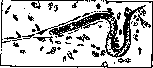
Parasites. The cardiovascular system is used by parasites in a twofold degree: 1) it is a channel in which blood circulates, containing one or another parasite, and 2) parasites are localized in the thickness of the tissues of the vascular walls themselves. Parasites penetrate the cardiovascular system either actively or passively. In the first case, parasites burrow through the integumentary tissues or mucous membranes and enter the blood vessels. This is how the larvae of hookworms, necator, Strongyloides stercoralis, and some other worms act, as well as the cercariae of Schistosomum haematobium, Sch. japonicum, Sch. Mansoni, larvae of filariae (Wuchereria Bancrofti and others). From parasitic protozoa, some trypanosomes penetrate into the cardiovascular system through the undamaged mucous membranes of the digestive organs, e.g., Trypanosoma grayi of crocodiles (C. Hoare). Spirochetes of cosmopolitan and tick-borne relapsing fever can also penetrate the cardiovascular system through normal mucous membranes (nose, conjunctiva of the eyelid, etc.). Passive penetration of parasites into the cardiovascular system is ensured by animal vectors (see) of invasions, e.g., anopheles, when sucking blood, injects into human skin saliva with which, in infected mosquitoes, sporozoites of the malaria plasmodium are introduced into human blood. Through the oral piercing apparatus of the tsetse fly, metacyclic forms of the trypanosome of sleeping sickness are introduced into the cardiovascular system, etc. In all such cases, parts of the cardiovascular system are subjected to certain influences—of a mechanical and biochemical nature. The oral organs of the parasites pierce or tear the walls of the blood vessels, or the parasite moves with its entire body into the vessel (Fig. 1, 2), causing its dilation or blockage. The result of rough mechanical action is the effusion of blood into the surrounding tissues. However, at the same time, mechanical action is combined with the biochemical influence of saliva introduced by the parasite during the process of blood sucking. Under the influence of these substances, in some cases, mechanically undamaged
The wall of the cardiovascular system becomes easily permeable to erythrocytes, and the phenomena of diapedesis can locally reach large proportions. Under the influence of lytic enzymes of the dysentery amoeba, ulceration of the wall of the large intestine occurs with the opening of vessels, the consequence of which is bloody diarrhea. At the same time, access is opened for the amoebae into the bloodstream of the cardiovascular system. The result of their entry into the vessels is the metastasis of amoebae to the liver, and more rarely to other organs. In a number of cases, parasites enter the cardiovascular system from the lymphatic system. A significant circumstance is also the moment of the exit of migrating parasites from the cardiovascular system into other parts of organs. During such an active exit, for example, of ascarid larvae, abundant extravasates occur in the lungs, which can lead (in experimental animals) to the saturation of the lung tissue with blood, due to which the lungs take on the appearance of liver tissue. Such ascarid extravasation (G. Smirnov) leads to the death of the animal. The sometimes observed presence of trypanosomes (for example, in sleeping sickness) in the thickness of organ tissues (for example, the brain) depends
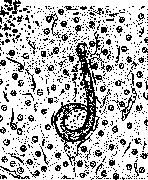
Figure 2. Ascarid larva in the liver capillary of a mouse. Strong dilation of the capillary. (According to G. G. Smirnov.) on the exit of trypanosomes from small vessels. The wall of the latter becomes permeable to trypanosomes due to the prolonged toxic effect of these parasites. During the migration of parasites directly into the thickness of tissues, the cardiovascular system is affected in passing, which leads to the rupture of vessels and changes in the blood (e.g., during the migration of liver flukes into liver tissue). It should also be noted that there is a possibility of the penetration of various parasites from the cardiovascular system of the mother into the cardiovascular system of the fetus, which entails intrauterine invasion of the fetus. Such parasites as ascarid larvae can actively pass from one cardiovascular system to another (at the place of their contact, i.e., in the placenta); a similar transition of the malaria plasmodium is possible in the presence of pathological changes in the placenta. It is important to note that some parasites exhibit a "selective action" in relation to one or another part of the cardiovascular system. Thus, the process of schizogony of the tropical malaria plasmodium takes place in the vessels of internal organs, therefore only small rings and crescents of the plasmodium are found in the peripheral blood of a patient with tropical malaria. Cercariae of dioecious flukes—Schistosomum—that have penetrated into the cardiovascular system settle in the veins of known organs: the liver, bladder, and rectum. Larvae of filariae—Wuchereria bancrofti—appear in peripheral vessels only at night (Microfilaria nocturna), while Loa-loa, on the contrary, appear during the day (Microfilaria diurna). Such a "selective" attitude of parasites toward known parts of the cardiovascular system depends not on the latter, but on those influences to which the corresponding part of the cardiovascular system is subjected. Thus, in the veins of the liver, bladder, and rectum, Schistosomum cercariae settle under the influence of chemotactic effects conditioned by the vital activity of the corresponding organs. Into the peripheral vessels, microfilariae of filariae are attracted by the chemotactic action of the saliva of mosquitoes sucking human blood, etc. With significant accumulations of parasites, some parts of the cardiovascular system become blocked; thus, for example, in malaria, there are cases of huge accumulation in the capillaries of the brain of erythrocytes affected by malaria plasmodia. Parasites, which are in essence inhabitants of the cavity of the cardiovascular system, can affect the walls of vessels, causing pathological changes in them and the surrounding tissues of the corresponding organ. Dioecious flukes (Schistosomum) lay eggs in the vessels, which, due to the presence of a spine on their shell, penetrate through the wall of the cardiovascular system into the connective tissue of the bladder or rectum, the wall of which subsequently forms polypous growths. A number of parasites as a rule localize in the wall of the cardiovascular system. In the endothelium of vessels during typhus, inclusions are found, considered to be Rickettsia prowazekii. In kala-azar, the presence of Leishmania is also noted in the endothelium of the vessels of the spleen, intestines, and other organs. Some parasitic worms inhabit the thickness of vessel walls; e.g., Strongylus vulgaris with its
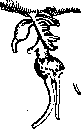
Figure 3. Aneurysm of the cranial mesenteric artery of a horse, caused by migrating
migrating larvae often causes aneurysms of the mesenteric arteries in horses (Fig. 3), according to Roll and Bollinger—in 90-95% of horses. Upon the implantation of parasites into the vessel wall (e.g., the aorta), an inflammatory process develops with the formation of fibrous changes and decay masses, which to a certain extent simulates atherosclerosis. Subsequently, the middle coat of the vessel becomes necrotic and calcified due to sharp changes in the vasa vasorum and the disruption of the nutrition of the vascular wall. In dogs, the roundworm Spirocerca sanguinolenta is often found in the wall of the aorta, the presence of which is associated with tumor-like growths that disrupt the regularity of blood circulation and can lead to the rupture of the aorta. In humans, the parasitism of such nematodes has not been established. In very rare cases, an echinococcus can develop in the walls of large vessels, in particular in the thoracic cavity.
Related articles
Mentioned in
Cite this page
“Cardiovascular System.” Soviet Medical Encyclopedia. English translation of Bolshaya Meditsinskaya Entsiklopediya, 1st ed. (Moscow, 1928–1936), ed. N. A. Semashko. https://sovietmedicalencyclopedia.pages.dev/article/cardiovascular-system/