Caries
Historical document, translated for reference. It reflects medical knowledge of the 1920s–30s and is not medical advice.
Summary
Caries refers to the progressive destruction of hard tissues in bone or teeth. The article distinguishes between bone caries, an inflammatory process, and dental caries, a direct chemical-bacterial destruction of enamel and dentin.
Encyclopedia article (1928–1936)
CARIES. Contents. Etiology and pathogenesis of dental caries........333 Pathological anatomy of dental caries......342 Clinical picture of dental caries................344 Statistics of dental caries..............345 Therapy and prevention of dental caries......347 Caries (from the Latin caries-rot), or osteomyelitis, terms used in bone pathology and odontology to denote the progressively progressive destruction of dense bone or tooth tissue. It should be noted that bone caries and dental caries are essentially completely different processes. Whereas bone caries is a change based on inflammatory damage to the bone marrow or periosteum, dental caries represents the direct chemical-bacterial destruction of enamel and dentin (see below). In bone pathology, the term caries is not used uniformly by all, i.e., it does not refer to the same bone changes. For example, Billroth considered that caries could only be called that destruction of bone tissue which proceeds according to the type of lacunar absorption of bone substance and is based on the proliferation of granulation tissue in the bone; suppuration and necroses (caries necrotica), if observed, occur only as secondary, complicating phenomena. In contrast to this, Volk-mann and many others consider suppuration with molecular necroses of bone substance to be typical for caries. Most modern pathoanatomists adhere to Billroth's view and consider that typical bone caries is dry osteomyelitis (caries sicca), expressed in the picture of rachitic osteitis (transformation of the bone marrow into proliferating granulation tissue and lacunar absorption of both spongy and compact bone). The underlying proliferation of granulation tissue can be non-specific (caries simplex) or relate to specific infection: tuberculosis, syphilis, actinomycosis (caries specifica: tuberculosa, syphilitica, actinomycotica). Thus, caries represents a change in bone, the etiology of which can be very different; from this it follows that it is completely incorrect to apply the term caries only in relation to tuberculous bone lesions, as is sometimes done. If caries affects the bone from the surface, subperiosteally, it is called peripheral; spread from inside the bone outward characterizes central caries. The macroscopic picture of caries can vary depending on the nature of the underlying disease; constant signs are softness, brittleness of the bone and the fact that it is easily cut with a knife. The loss of bone substance is especially well seen in macerated bone preparations (for details on bone caries, see Osteomyelitis).
A. A. Orivosev. Caries of the teeth (caries dentium, osteitis of the teeth) is the most common of all dental diseases and consists in the dissolution of the inorganic lime salts of the tooth with the subsequent breakdown of its organic base. Etiology and pathogenesis of caries of the teeth. There are a large number of theories regarding the origin of caries of the teeth. According to the most ancient of them, belonging to Hippocrates, toothache arises from stagnation of blood and from the fact that mucus penetrates to the roots of the teeth. Hippocrates associates the destruction of the tooth with diseases of the liver, stomach, spleen, female genital organs, etc.; thus, although in a very primitive form, he was the first to recognize the reflection of diseases of other parts of the body on the teeth. A significant step forward is the teaching of Galen, the founder of the 'inflammatory theory' of caries of the teeth, which dominated medicine until the 1870s. According to his theory, teeth are supplied with soft nerves that nourish them. As a result of a disturbance in nutrition in the teeth, inflammation occurs, as a result of which the dental tissue is destroyed. The theory of Scribonius (who lived at the beginning of the Christian era), which is as it were a predecessor of the modern parasitic theory of caries of the teeth, sees the cause of tooth decay in the worms nesting in them. This theory continued to dominate not only in folk legends but also in the minds of researchers. Even the famous Fauchard (Pierre Fauchard), the founder of scientific dentistry, continued to diligently search for worms in the teeth. But not finding them either in carious cavities or in dental plaque, he began to look for the cause of caries in a number of other factors: in developmental defects, in chemical, thermal, mechanical factors, in pregnancy, in 'abnormal juices' of the body, etc. In the second half of the 18th century and at the beginning of the 19th century, a whole series of new theories arose, connecting caries of the teeth with chemical processes in the oral cavity. Pfaff was one of the first to draw attention to the increased decay of teeth in workers in the confectionery industry. According to his theory, sugary and starchy substances, getting stuck between the teeth, undergo a series of chemical transformations and involve the substance of the teeth in this process; Pfaff, naturally, does not give a precise chemical analysis of this process. Later, a number of authors developed in detail the chemical theory of the origin of caries. Berdmore proved experimentally the corrosive effect of nitric, hydrochloric, and sulfuric acids on enamel and thereby laid the scientific foundation for the chemical theory of caries of the teeth, which dominated for a whole century. Westcott proved that various organic and inorganic acids—acetic, citric, hydrochloric—as well as acids arising during fermentation dissolve dental enamel and cause caries of the teeth. He explained the harmful effect of sugar on teeth by the formation of lactic and acetic acids as a result of fermentation. Magitot gave a very detailed chemical theory of caries of the teeth, seeking the main cause of the occurrence of caries not so much in acids introduced into the mouth with food as in the sour fermentation of saliva. To this group of researchers should also be added Bridgeman, who put forward his electrochemical theory of caries, according to which teeth are considered as small electric batteries acting electrolytically on the fluids of the oral cavity, releasing acids from the lime compounds of the tooth crown, which cause the molecular breakdown of the tissue, i.e., caries of the teeth. Subsequently, a number of authors developed Galen's theory further. Bell attributed the occurrence of caries of the teeth to internal causes—disturbance of nutrition and inflammation of the dentin at the border with the enamel. Thus arose the doctrine of internal caries (caries interna), which found a number of followers, including Ad. Witzel, who considered caries a consequence of gangrene of the pulp. By the middle of the 19th century, a completely new doctrine of the origin of caries of the teeth arose—the parasitic theory. The presence in dental plaque of microorganisms resembling Leptothrix buccalis was discovered by the famous Dutch naturalist Leeuwenhoek. However, the systematic development of the parasitic theory began only in the second half of the 19th century. The most outstanding defenders of the parasitic theory are Leber and Rottenstein, who explained the occurrence of caries of the teeth by the action of acids on the one hand and a vegetable fungus, Leptothrix buccalis, on the other. Underwood and Miles developed this theory more broadly, pointing not only to Leptothrix but also to various other types of microorganisms (cocci, oval bacteria, and short bacilli). However, according to the views of all these authors, acids are not associated with the life activity of these microorganisms, but by acting to dissolve the enamel they promote the penetration of microorganisms into the dentinal tubules and the further destruction of all dental substance.—Based on the works of the above-mentioned authors, Miller published in 1881 his classic chemical-parasitic theory of caries of the teeth, which has not lost its significance to this day. His work on the microorganisms of the oral cavity (published in 1889 in the German language) opened a new era in scientific dentistry. Basically, Miller's theory of caries of the teeth comes down to the following two points. 1. Softening under the influence of acids of the hard tissues of the teeth, and these acids arise as a result of lactic acid fermentation of food debris stuck between the teeth, mainly carbohydrates. This fermentation occurs under the influence of specific bacteria; besides lactic acid, other acids are also formed in the oral cavity—butyric, acetic, formic, etc. 2. Destruction by bacteria of the organic substance of the tooth, deprived of lime, which is dissolved by a pepsin-like enzyme of microorganisms.—In the most recent works (Pickerill, Lohmann, Tiirkheim, Gottlieb, Koneffke, Head, Lukomsky, Entin, etc.), the process of caries is studied on a much broader basis. According to Tiirkheim, the origin of caries consists of a whole series of elements: direct, most harmful to dental tissue factors, to which he refers carbohydrates and bacteria of the oral cavity; accompanying factors, to which he refers retention points—cavities, fissures, roughnesses, arising from mechanical or pathological causes or caused by improper treatment; histological and physico-chemical structure of the enamel and enamel surface; dependence on profession; general diseases or physiological changes in the body, such as the period of sexual maturity, pregnancy; geographical environment, climate, heredity, nutrition, social status. Tiirkheim does not put forward his own theory of caries of the teeth. In these new inquiries, two central questions are of particular interest: 1) the question of the significance of saliva as a biological medium in the etiology of caries, and 2) the question of the biological properties of enamel. In the further development of theories of the origin of caries of the teeth, both of these factors play an exceptionally important role.—One of the first to put forward the role of saliva as a primary factor in the etiology of caries of the teeth is Pickerill. According to him, the surface of the enamel needs a certain degree of irrigation with saliva. Insufficient amount of the latter causes pathological processes. Saliva is necessary 1) for the mechanical cleansing of the teeth and oral cavity, 2) for the neutralization of the acid fermentation of carbohydrates, constantly occurring in the oral cavity under the influence of microorganisms. Besides its irrigating and cleansing role, saliva has important significance for the prevention of caries due to the lime salts dissolved in it, which, due to the osmotic properties of enamel, penetrate into it, strengthening and immunizing it against caries. For such a process of remineralization of decalcified enamel to occur, a dietary regime is necessary that sufficiently stimulates salivation and ensures the saliva contains a sufficient amount of phosphates and other lime salts. Pickeril also considers it necessary to study the significance of each component part of saliva: water, alkaline salts, calcium and sodium, magnesium phosphate, ptyalin, potassium thiocyanate, sodium chloride, and mucus. It is also necessary to study the reaction of the saliva. Pickeril does not attach importance to the percentage ratio of individual ingredients of saliva. A number of authors share Pickeril's theory (remineralization of enamel).—The second decisive factor, both for the etiology and for the prevention of caries of the teeth, is the question of the biological properties of enamel, in particular the existence of metabolism in it. The most ardent opponent of the vitality of enamel is Walkhoff. In numerous works he tries to prove that enamel after the completion of the eruption of teeth represents dead tissue. For the process of nutrition in enamel to occur, a structure similar to the structure of dentin is required first of all. According to him, enamel possesses such a structure only until the moment of eruption of the tooth. 'The further consolidation of the enamel tissue,' he says, 'can take place only as long as the enamel-forming cells of the given tooth are functioning.' From this he draws the following simplified conclusions for the etiology of caries of the teeth: 'Caries of the teeth occurs only when substances coming from the outside can chemically influence the enamel.'
A favorable condition for this is the presence of various retention points that hold food particles; without this, microorganisms cannot have a destructive effect on the enamel. Retention points are the basic prerequisite for the carious process. Where food particles are removed by vigorous chewing, caries does not occur. Therefore, according to Walkhoff, all therapy and prevention of caries of the teeth comes down to vigorous cleaning and polishing of the teeth. The diet, in his opinion, has significance for the teeth exclusively as a mechanical factor. Vigorous chewing of hard substances polishes the teeth, while soft, sticky food adheres to retention points and undergoes fermentation. The viewpoint of Walkhoff is shared by Kantorowicz, Türkhaim, Friedberg, and others. An intermediate position between the adherents of the lifelessness and vitality of enamel is occupied by Fürst, Dirks, and others. Being inclined to recognize the vitality of enamel, these authors in their experimental works could not achieve permeability of enamel by generally accepted methods of staining. Among the latest theories of caries of the teeth, it is necessary to briefly dwell on the theories of Konnefke, Loman, and on two theories of Soviet authors—Lukomsky and Entin. Konnefke's theory is as follows: he considers the enamel shell as an osmotic membrane, and saliva as a solution containing about 2.2% salts, which are deposited in the enamel tissue. Based on his observations, Konnefke comes to the conclusion that absolute immunity to caries occurs with normal secretion (2.5 g in the first minute and 40.0 g in 3/4 of an hour) of saliva of medium acidity, while with increased secretion of saliva (ptyalism), as well as with decreased secretion (xerostomia), the incidence of caries increases proportionately. As for the process of the origin of caries of the teeth itself, according to Konnefke, it is not lactic acid, the formation of which in the mouth is a physiological process, that is the culprit of caries of the teeth. He represents the carious process as follows: 'Pieces of starch, impregnated with ptyalin, adhere to the tooth thanks to mucus. In the process of fermentation, lactic acid, or rather oxypropionic acid, is formed from these food residues. Penetrating osmotically into the enamel, it splits calcium phosphate and forms calcium lactate and free phosphoric acid. The latter, penetrating by the same osmotic path to the surface of the tooth, prevents further splitting of starch residues. Lactic acid is formed again, which in turn penetrates through the enamel, where it splits calcium fluoride, forms calcium lactate and releases hydrofluoric acid—the strongest of acids, which even in the weakest concentration destroys the enamel.' This theory of a three-phase chemical-physical process, which in the author's opinion exhausts the entire picture of the origin of caries without the participation of bacteria and with complete disregard for constitutional peculiarities, should be considered not very convincing. - Loman's mucus theory is as follows. In case of violation of the function of internal secretion organs, mainly epithelial bodies, in connection with an improper diet, especially with increased consumption of sugar, there occurs increased production of mucus in saliva with decreased production of rhodanide, calcium, and phosphorus. Saliva becomes very viscous, denatured, and greatly contributes to the adhesion of food residues to the teeth, in which microorganisms find a favorable soil. But mucus itself, according to Loman, represents an acid that acts in excess directly on the enamel. The theory of caries of the teeth of Lukomsky is built on the recognition of the unconditional vitality of enamel. Considering the teeth genetically as modified and calcified papillae of the oral mucosa, the author characterizes the teeth as an ectodermal derivative, similar to the skin and its appendages. The enamel is vital. Not only dentin, but also enamel exhibit a certain ability to regenerate, as evidenced by the ability of enamel to remineralization indicated by Pickerill, Andresen, and others. In enamel, as in dentin, metabolism occurs. Lukomsky comes to the conclusions that 1) the cause of the origin of caries of the teeth can be a violation of lime metabolism in the hard parts of the tooth and 2) the violation can be caused both by pathological changes and by physiological fluctuations of the general lime metabolism in the body. The author pays great attention to questions of constitution, dividing the latter into general and special constitution of the teeth. The emphasis on the significance for the etiology of caries of the teeth of both general constitution and constitution of the teeth cannot be objected to. However, there are no grounds to consider the endogenous moment as the only determining factor and to deny the significance of external factors. It is known that poorly calcified teeth cannot yet be called carious until they have been subjected to the destructive action of acids and microflora. Caries of the teeth represents a specific process consisting of endogenous and exogenous moments, and there is no caries of the teeth without the presence of bacteria and without softening of the enamel surface by external factors.-Finally, Entin treats caries of the teeth 'as a chronic latent avitaminosis, caused by permanent 'light starvation' of the huge masses of modern humanity.' His theory is as follows. The hard tissues of the tooth are living tissues, representing a semipermeable membrane, passable on one side for blood transudate and on the other side for saliva. The ionic composition and reaction of blood are more constant than the composition of saliva. The optimal physicochemical composition of the latter, i.e., the optimal ratio of electrolytes K, Ca, and P, guarantees the maximum resistance of teeth to caries. Violation of the correlation of the ingredients of saliva predisposes teeth to caries. The physicochemical structure of saliva and the microstructure of the hard tissues of the tooth depend on the state of the neuroglandular system and on the general chemical nature of metabolism. On the basis of abnormal nutrition, abnormal calcification of the hard parts of the tooth and denaturation of saliva occur. Denatured saliva in turn acts on acidophilic microorganisms, promoting their invasion into the organic framework of enamel and dentin. Entin graphically depicts the etiology of caries of the teeth in the following scheme (Fig. 1): 1) tooth tissues, 2) genotypical factors, 3) phenotypical factors, 4) neuroglandular system, 5) nutrition (chemical nature of metabolism), 6) biochemistry of saliva, 7) pregnancy, 8) infancy, 9) childhood, 10) microflora.-Extremely valuable data on the question of the etiology of caries of the teeth is provided by the study of twins. According to the data of Siemens on this question, the role of the genotype in this is almost imperceptible (see Teeth, heredity of anomalies); the cause of caries should therefore be sought mainly in exogenous factors. Recently, caries of the teeth has come to be viewed as a social disease (Pickerill, Kiese, Entin, as well as Daugé, who was the first to come out with a categorical demand for the inclusion of caries of the teeth in the category of social diseases).-The bio-social concept of caries of the teeth takes into account three main etiological moments: 1) the moment causing caries (chemical and bacterial agents); 2) the moment predisposing to caries (the constitution of a given individual and pathological factors—hereditary or acquired); 3) the entire complex of socially conditioning moments
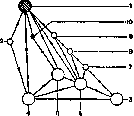
Figure 1. Entin's scheme: 1-tooth tissues; 2-genotypical factors; 3-phenotypical factors; 4-neuroglandular system; 5-nutrition (chemical nature of metabolism); 6-biochemistry of saliva; 7-pregnancy; 8-infancy; 9-childhood; 10-microflora.
(dietary regimen, working and living conditions, general level of hygienic culture, etc.).- I. The moment causing caries of teeth. This refers to the sum of all purely local factors in the oral cavity that contribute to the development of caries of teeth (fluids of the oral cavity, food substances during their stay in the oral cavity, microflora, thermal, mechanical and chemical insults).-1. Regarding the influence of the composition of saliva, changes in the concentration of H-ions, a decrease in the calcium index, an increase in the amount of mucin, etc. are significant.-2. The direct action of food substances on the occurrence of caries of teeth. Do acidic substances-fruits, acidic wines and waters-have a dissolving effect on teeth? Pickeril asserts that acidic fruits, by stimulating abundant saliva secretion, even have preventive properties. The temporary feeling of roughness, as is known, quickly disappears thanks to the neutralizing power of saliva. But in the etiology of caries of teeth, carbohydrates undoubtedly play a role. Finely ground products of the 'civilized kitchen' (various kinds of biscuits, chocolate, etc.) form a sticky mass with mucin that adheres to irregularities of the tooth surface and causes lactic acid fermentation. Monosaccharides break down under the influence of bacteria into two molecules of lactic acid and other organic acids. Disaccharides under the influence of inverting enzymes also break down into their components and undergo fermentation. Polysaccharides are converted under the influence of saliva into disaccharides and thus also undergo the process of fermentation. This harmful effect of sugar (starchy substances) can be paralyzed by the consumption of sufficiently coarse solid food that mechanically cleans the teeth (see below).- 3. Microflora of the oral cavity. Of the large number of bacteria in the oral cavity, among which there are both saprophytes and pathogenic ones, only certain types participate in the process of the occurrence of caries of teeth. The bacterial flora is extremely diverse in different layers of the carious focus. It is particularly diverse on the surface of the tooth, where it finds a rich nutrient medium in food residues mixed with mucin. It becomes less diverse in the deeper layers of the focus. According to Goadby, the following types of bacteria participate in the carious process. Acid-forming Dentin-dissolving Streptococcus necrodentalis Bact. necrodentalis Staphylococcus albus, aureus et citreus Sarcina lutea, aurantiaca et alba Bac. subtilis Bac. mesentericus ruber, vulgatus, fuscum Bac. liquefaciens fluorescens Bac. proteus Zenkeri Bac. plexiformis Bac. pyogenes gingivalis No specific type of microorganism for caries of teeth has yet been established, although recently some authors mention Bac. acidophilus, Streptococcus viridans and lacticus, Myxamoeba buccalis, etc.- 4. Thermal moments, i.e., too sharp transitions from high temperature of food to low or thermal influences associated with profession, can cause cracks in the enamel, which according to some authors serve as the starting point for caries of teeth.-5. Mechanical injuries play a more important role in the etiology of caries of teeth: professional injuries, wearing away of enamel by removable prostheses (clambers, edges of plates), etc.-6. Chemical insults, which may be important with careless and prolonged intake of acids (HCl), but harmful effects of chemical substances on tooth tissue are mainly observed in a number of industries (chemical, confectionery, etc.-see below). II. The moment predisposing to caries of teeth: constitution of teeth and general constitution of the individual, as well as the state of the endocrine system, general diseases, anatomical and racial factors, individual hygiene.-1. Immunity or predisposition to caries of teeth depends primarily on the genotypic features of the individual. Black established that very often in children caries affects the same teeth as in the parents. Various anomalies in the position of teeth are often inherited, which contribute to the development of caries.-Very important role for the development of tooth tissues is played by disturbances in the functions of the endocrine system. While purely local, exogenous causes cause limited partial caries of teeth with a specific localization, pathological processes of the endocrine system, causing metabolic disorders, mainly of lime, cause general diffuse caries. In the works of a number of authors, a detailed picture is presented of the effect on the development of teeth of individual types of endocrine glands. The influence of the endocrine system is especially strongly manifested during pregnancy, when an increased tendency to caries of teeth is observed. 2. General diseases and caries of teeth. The connection between caries of teeth and general diseases cannot always be established, as very sick people with impeccable teeth are often found and vice versa. Nevertheless, this connection apparently exists, mainly in the period of tooth development, i.e., in intrauterine life and early childhood. The connection between rickets and caries of teeth is probable, as both diseases are caused by a disturbance of lime metabolism. Congenital syphilis leaves its mark on the development of enamel (Hutchinson's teeth) and makes the latter less resistant to caries of teeth. Intensified caries of teeth is observed in diabetics. This is explained in part by the increased acidity of saliva. In addition, in such patients, due to the loosening and recession of the gum at the necks of the teeth, cervical circular caries can often be observed. A connection is also said to exist between caries of teeth and anemia, tuberculosis, etc., however, exact evidence of this is absent.-3. Anatomical and racial factors. In the process of civilization, which has led to the gradual departure of man from prehistoric hard, coarse, raw food, his tooth-jaw apparatus gradually deteriorates. The anatomical structure undergoes significant changes: the masticatory muscles weaken, the vascularization of the jaw worsens, the bony substance becomes more porous. As a result of this evolution, the dental arch decreases, individual types of teeth (wisdom teeth, small incisors) disappear, and cases of anomalies in position, form, and structure of teeth become more frequent. These anomalies create very favorable prerequisites for the development of caries. As for the racial moment in the etiology of caries of teeth, there is great confusion in the statistics on this question due to the mixing of races with nationalities or purely biological features of individual races with factors determining their cultural level. In general, Europe gives about 40% of cases, and Asia about 15%. While among English and Americans the morbidity reaches 70-80%, among Eskimos it does not exceed 2-3%. This difference is of course due to the dietary regimen, which individual races or peoples have observed for centuries.-4. Individual hygiene and caries of teeth. That lack of care for teeth should contribute to the occurrence and worsening of caries of teeth is clear from all the foregoing. On this main point, many authors (Miller, Valkhof, Kantorovich, etc.) have built their system of preventive measures against caries of teeth. III. Socially conditioning moments of caries of teeth. These include the dietary regimen and working and living conditions.-1. Caries of teeth and dietary regimen. General metabolism and specifically lime metabolism play the most essential role in the development of teeth. Among salts, compounds of lime and magnesia, potassium and sodium, iron and manganese in combination with sulfuric and phosphoric acids, chlorine and CO2, iodine and fluorine play the most important role for normal development of teeth. Since tooth enamel contains 88.5% lime phosphate, 0.29-4% lime fluoride, 8.0% lime carbonate, 1.5% magnesium phosphate and only 2.8% organic substances, it becomes clear what importance nutritional salts have for the construction of enamel. In dentin and cement, the amount of inorganic salts is somewhat lower: in dentin-72% and in cement-65%. The amount of lime in the skeleton of a newborn child with normal weight averages 28.5 g. During intrauterine life, the child needs 0.33 g of lime daily. The construction of the skeleton depends, however, not only on the amount of lime but also on its absorbability. The latter depends on the correct ratio in food between lime and other nutritional salts. On the richest material covering more than 87,000 students of public schools in 164 different localities in Germany, he established an undeniable dependence of immunity to caries on the amount of lime contained in drinking water. According to his research, it appears that with average hardness of drinking water, according to the standards of hardness accepted in Germany, the ratio of completely healthy teeth is: Hardness WATER (in %) Number of healthy teeth Hardness of water (in %) Number of healthy teeth Below 2 . . . 2 0-4.9 . . . 6 0-9.9 . . . 10 0-14.9. . . 5.0- 14.9. . . 1.3 3.4 4.3 6.5 6.4 20 0-24.9 . . 25 0-29.9 . . 30 0-37.9 . . 38.0% and above 9.5 14.5 14.9 20.2 It should also be taken into account that in localities with lime-poor soil not only water but also plants used for food suffer from a reduced lime balance.
Breastfeeding plays an exceptional role in the development of the masticatory apparatus; this is proven by research covering approximately 157,000 school-age children and 6,744 recruits, with precise surveys establishing that the percentage of dental disease is significantly lower among persons breastfed than among those artificially fed. 2. The connection of dental caries with working and living conditions. The dietary regime constitutes one of the most important living moments, playing a particularly important role in the lives of working women during pregnancy and lactation. Calcium and to no lesser degree light malnutrition of the nursing mother, which has a direct connection with capitalist exploitation, is of great importance in the etiology of dental caries. Another category of living conditions connected with dental caries consists of specific professional hazards to the teeth. There is quite a rich literature on the latter. Of greatest importance for the etiology of dental caries are: a) damage to teeth from high or low temperatures, observed in bakers and confectioners, stokers, glassblowers and smelters of various ores, foundry workers, persons working in refrigerators, etc.; b) the effect of dust on dental tissues; most professions associated with dust affect the soft tissues of the oral cavity rather than the teeth themselves, but flour and sugar dust have a specific effect on the development of dental caries, which explains the prevalence of dental caries among confectioners, gingerbread makers, workers in chocolate factories, etc.; c) damage from professional poisons, mainly inorganic acids, sulfuric, hydrochloric, nitric, phosphoric and other acids during their manufacture or work with them. Pathological anatomy of dental caries. Localization of caries. In general, dental caries begins in those places where food residues are given the opportunity to be retained and to undergo fermentation under the influence of bacteria. According to Black, such favorite places are: 1) grooves and pits on the masticatory and buccal, less frequently - lingual, surfaces of molars and premolars; 2) approximal surfaces of all teeth; 3) the free surface of teeth at the gingival margin; 4) areas below the enamel margin when the gum is retracted; 5) Port-Euler also includes anomalies of position; 6) an example of such localization can also be considered the so-called circular caries, which apparently has a connection with rachitic relaxation of a certain zone of enamel and dentin (Fig. 2).-Caries of enamel. In its initial stage of development, dental caries is characterized by damage to the enamel cuticle and the appearance of a whitish or slightly pigmented cloudiness on the enamel surface. On probing, a roughness is felt. Subsequently, a defect develops which follows the direction of the enamel prisms. On the exposed surfaces of the tooth, caries spreads either uniformly in depth or takes a conical shape; in fissures and pits, however, it usually spreads in a transverse direction, undermining the enamel at its border with dentin. In caries of enamel, the intermediate substance between the enamel prisms is first dissolved. Cross striations appear on them corresponding to the complex deposition of enamel. Subsequently, the separated prisms disintegrate, leaving a surface defect.-Caries of dentin. Upon reaching the border of dentin, caries initially spreads over its surface (due to the abundance of interglobular spaces) and only later begins to cone-shapedly penetrate inward. But even before caries penetrates to the enamel-dentin border, dentin exhibits a protective reaction. It consists in the formation of so-called transparent dentin, which is very characteristic of this stage (see). According to Port-Euler, the process of caries of dentin consists of a disturbance of metabolism in the canals as a distant reaction to invading bacteria, then in the destruction of Tom's fibers due to their penetration by bacteria, followed by decalcification and softening of the dentin substance, which makes it more accessible to bacteria. The final stage of the process is the dissolution of the remaining dentinal substance.-The macroscopic picture in a longitudinal section of a carious tooth appears as follows. The carious focus consists of 4 belts differing in structure and content. 1. The upper layer, or the decay belt, represents a brownish rotting mass consisting of disintegrated food particles, remains of the organic framework of dentin, and a large number of bacteria (mainly saprophytes). 2. The belt of beginning softening; it is harder than the upper layer, brownish in color, with softened but not yet dissolved dentin; but it is so soft that a dental probe easily penetrates it. Under this belt is 3) the belt of cloudiness, light brownish in color, representing a stage of dentin softening; the dentinal canals contain a significant number of bacteria. The transparent belt, extraordinarily hard, whitish or light brownish in color, separating healthy dentin from carious cement, is also found because it must pre
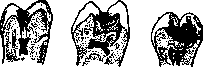
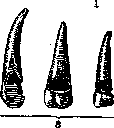

Fig. 2. 1-beginning of caries in grooves; 2-beginning on approximal surface; 3-beginning at the neck ('baker's caries'); 4-caries below the enamel margin; 5-caries on the exposed root; 6-circular caries.
damage to the enamel cuticle and the appearance of a whitish or slightly pigmented cloudiness on the enamel surface. On probing, a roughness is felt. In further development, a defect already forms which follows the direction of the enamel prisms. On the exposed surfaces of the tooth, caries spreads either uniformly in depth or takes a conical shape; in fissures and pits, however, it usually spreads in a transverse direction, undermining the enamel at its border with dentin. In caries of enamel, the intermediate substance between the enamel prisms is first dissolved. Cross striations appear on them corresponding to the complex deposition of enamel. Subsequently, the separated prisms disintegrate, leaving a surface defect.-Caries of dentin. Upon reaching the border of dentin, caries initially spreads over its surface (due to the abundance of interglobular spaces) and only later begins to cone-shapedly penetrate inward. But even before caries penetrates to the enamel-dentin border, dentin exhibits a protective reaction. It consists in the formation of so-called transparent dentin, which is very characteristic of this stage (see). According to Port-Euler, the process of caries of dentin consists of a disturbance of metabolism in the canals as a distant reaction to invading bacteria, then in the destruction of Tom's fibers due to their penetration by bacteria, followed by decalcification and softening of the dentin substance, which makes it more accessible to bacteria. The final stage of the process is the dissolution of the remaining dentinal substance.-The macroscopic picture in a longitudinal section of a carious tooth appears as follows. The carious focus consists of 4 belts differing in structure and content. 1. The upper layer, or the decay belt, represents a brownish rotting mass consisting of disintegrated food particles, remains of the organic framework of dentin, and a large number of bacteria (mainly saprophytes). 2. The belt of beginning softening; it is harder than the upper layer, brownish in color, with softened but not yet dissolved dentin; but it is so soft that a dental probe easily penetrates it. Under this belt is 3) the belt of cloudiness, light brownish in color, representing a stage of dentin softening; the dentinal canals contain a significant number of bacteria. The transparent belt, extraordinarily hard, whitish or light brownish in color, separating healthy dentin from carious cement, is also found because it must pre
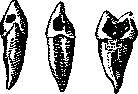


Fig. 3. Diagram of carious belts (according to Furrer).
of the root (Fig. 3). Caries much more often leads to pathological exposure of the root of the tooth. In the fibrous layer of cement, decalcification begins first in the endings of Sharpey's fibers, from where bacteria penetrate deep into the osteocement along the cement canals and ultimately destroy the cement substance. Clinical picture of dental caries. Clinically, caries is divided into 1) caries superficialis, s. adamantinae, 2) caries media propria et provecta, 3) caries profunda, 4) caries totalis. 1. Under caries superficialis is meant the lesion of the enamel and partly of the superficial layers of dentin. The probe detects roughness. The chronic (pigmented) form proceeds without subjective complaints; in the acute form there is often quite marked sensitivity (especially in cases of cervical caries) when brushing, as well as from chemical irritations (sweet, salty, sour). Treatment. Sensitive areas are cauterized, where cosmetic considerations permit, with a concentrated solution of silver nitrate; for front teeth, Albargin, silver nitrate iodide, zinc chlorate, etc. are used. Sometimes it is possible to arrest superficial caries by grinding and polishing the affected surface. In other cases, timely filling is required. In the chronic course of caries, pigmented areas can be left untouched if they are accessible for control. 2. Caries media propria et provecta. Under the first form are meant those cases when between the floor of the carious cavity and the pulp there is a fairly thick layer of normal dentin; under the second form are meant those cases when the pulp is separated only by a very thin but dense layer. In both cases there are pains from sweet, sour, as well as from thermal and mechanical irritations; in caries provecta also from pressure. The pain quickly passes after removal of the cause of irritation (rinsing with lukewarm water, removal of food debris from the cavity). Treatment: mechanical cleaning of the cavity; in case of sensitive dentin - application of tampons from carbolic acid, thymol, eugenol, etc.; drying the cavity with heated air; filling. In cases of pulp hyperemia - a disinfecting dressing and a temporary filling of zinc oxide with clove oil or eugenol. After the disappearance of irritation - application of a permanent filling. The absence of any sensitivity of the tooth in caries media indicates pathological changes in the pulp (gangrene). In view of this, treatment of caries media must be carried out with careful examination of the condition of the pulp. 3. Caries profunda. In this form of caries, the pulp is either covered with a layer of softened dentin or is exposed. When food enters the cavity or from thermal irritations - sharp pain, especially from cold water. Treatment depends on the condition of the pulp. In most cases the pulp is infected and must be removed, as in pulpitis of various degrees. In cases of intact pulp or when attempting to preserve a slightly infected pulp, part of the softened dentin is left at the bottom of the cavity, but is subjected to thorough disinfection with substances that do not cauterize the pulp, for example, thymol alcohol, trypaflavin, Lugol's solution, etc. A layer of fletcher with the addition of thymol or iodoform is placed at the bottom, and in the absence of complications the cavity is closed with a permanent filling after thorough treatment. 4. Caries totalis. Under this term is meant caries that has affected the entire crown of the tooth. Some authors (Evdokimov and others) have excluded it from the nomenclature of caries. The remaining roots in cases of absence of complications and sufficient strength can be preserved, in other cases they are removed. Statistics of dental caries. In the literature there are a large number of attempts at statistical research on the prevalence of dental caries; these researches concern the most diverse points: increase in dental caries in connection with the historical evolution of the chewing apparatus; dental caries in connection with subsoil water; dental caries and sex; dental caries and age; ratio between caries of different types of teeth; caries of deciduous and permanent teeth; dental caries and profession. That dental caries is a direct product of historical living conditions is clear from the foregoing. In skulls of prehistoric man, teeth with heavily worn crowns but without signs of caries have been found. How much dental caries progresses in the era of civilization is shown by the statistical table of Lenhossek, according to which of a huge number of examined skulls of different centuries it turned out: skulls from the 4th-5th centuries - 70.3% with carious teeth, skulls from the 11th-13th centuries - 75.8% with carious teeth, skulls from the 18th century - 82.78% with carious teeth.
MEN
WOMEN
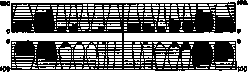
At present, according to Türckheim, caries of the teeth affects up to 95% of all civilized humanity. The dependence of caries of the teeth on the amount of lime in the soil water has already been discussed above. As for the connection of caries of the teeth with sex, the statistical material relates mainly to students of urban schools. The largest work belongs to K. Kloser, who collected material from different countries: Sweden, England, Scotland, Switzerland, etc., with a total number of children of both sexes examined of 407,268; of this number, caries was found in 380,483, i.e., 94.12%. The average number of affected teeth in boys is 7.25, in girls 7.20. According to Petrova-Gorelova and Panteleimonova, from the examined and sanitized children in the dental department of the State Institute of Public Health of the People's Commissariat of Health (10,732 children), the percentage of caries is 3.1 in boys, 3.3 in girls. From these data it is clear that fluctuations in the coefficient of caries between boys and girls are not real. The dependence of caries of the teeth on age is self-evident. The visual material is presented in the following table by Petrova-Gorelova (see pp. 347-348). In the present table, the decrease in the number of carious teeth between the ages of 8 and 13 years is striking. This is explained by the gradual loss of carious milk teeth and the eruption from the 7th year of fresh, untouched by caries permanent teeth. In the future, caries progresses with age. A very interesting moment is the enormous fluctuation in the incidence of caries of individual types of teeth. For example, the lower central incisors and canines are affected the least, while the large molar teeth are most often affected (Figure 4). As for the statistics of caries of the teeth in connection with the professional and domestic conditions of certain harmful to the oral cavity industries, in the West European literature there are numerous works on Caries of the teeth and age. Age Total children Total boys Total number of teeth Total number of carious teeth Number of carious teeth per boy on average Total girls Total number of teeth Total number of carious teeth Number of carious teeth per girl on average 3 years........ 4 years....... 6 years....... 7 years....... 8 years....... 10 years....... 11 years....... 12 years....... 13 years....... 14 years....... 15 years....... 16 years....... 17 years....... 18 years and above. . . 69 194 301 336 389 808 788 766 789 956 925 1,083 1,050 937 594 747 92 156 175 186 424 386 373 390 540 480 632 491 436 230 462 4,179 1,271 1,190 1,614 2.1 2.4 3.1 2.9 3.2 4.2 4.2 3.4 2.9 2.7 2.5 2.9 3.3 3.4 4.0 4.1 37 102 145 203 384 402 393 399 416 445 551 559 501 364 285 2,925 4,648 9,281 12,282 1,130 1,191 1,514 1.7 2.1 2.9 3.4 3.3 3.4 2.8 2.7 2.5 2.7 2.7 2.9 3.4 3.6 m Total . . . 136,621 17,743 3.3 3.1 on this question. However, most of them suffer from the defect that they are composed mostly from materials that cover too small groups of workers. Thus, in one of the best statistics, the number of examined groups ranges between 35 and 615, and in the table by Bruk given by Kelin-between 1 and 746. With such small numbers, no comparison is possible. Below is given the table of Opitz, who examined a significant number of persons of different professions of conscription age, suffering from absence of teeth or caries of the teeth. The average cariousness in them is 5.3 per 100. Morbidity of persons of conscription age by profession. 1,6 Merchants...... Glassblowers.... Tailors....... Office clerks.... Carpenters..... Miners....... Barbers . . . 3.9 3.8 3.2 3.1 3.0 2.7 2.6 2.5 1.2 1.1 Officials....... Butchers....... Farmers . . . Construction workers 7.2 7.7 7.6 7.0 6.8 6.7 5.9 5.6 5.3 Metalworkers..... At present, systematic examination of various professions is being conducted in the State Institute of Stomatology and Odontology. For example, 3,593 workers and employees of the food industry have been examined, with exact accounting of age and sex, length of service in production, belonging to a specific shop, etc. The data of the examination established the following average incidence of caries: in confectioners-15.2 carious or missing teeth per person, in bakers-10.9, while in the mixed population of corresponding ages the average number of carious teeth is 11.9 per person. On the basis of general conclusions, it has been established with certainty that there is a significantly higher incidence of caries among confectioners than among mixed population groups. Therapy and prevention of caries of the teeth. In view of the fact that the hard parts of the tooth do not possess regenerative ability, there can be no question of healing caries of enamel or dentin in the full sense of the word. At present, only one method of eliminating carious defects is known - restoration of the lost substance of the tooth by means of filling. Therefore, first place in the fight against caries of the teeth is occupied by prevention, covering a whole system of hygienic measures. Modern social hygiene of the oral cavity consists of two main factors: individual hygiene of the oral cavity and teeth, as well as the whole organism, and a series of public and state measures aimed at improving the working and living conditions of the working population. 1. Individual hygiene of the oral cavity and teeth. For teeth to be healthy, it is necessary that the chewing apparatus fully performs its physiological function. Therefore, from an early age, it is necessary to ensure that teeth thoroughly chew food and that it is sufficiently mixed with saliva. It is useful to eat black bread with bran containing vitamins, unground meat, raw fruits and vegetables (carrots, turnips, rutabagas, shredded cabbage). Bread crusts, raw fruits and vegetables also contribute to the cleaning of teeth ('biological' cleaning). Individual local hygiene of the mouth also includes mechanical cleaning of teeth with a brush and powder or paste, and rinsing the mouth with lukewarm water after each meal. Addition of various chemical ingredients to paste, powder or water is permissible only in very small doses and should pursue exclusively taste purposes. According to Soviet legislation, mouthwashes and means for aromatizing the oral cavity must not contain formaldehyde, phenol, cresol, and free mineral acids. The use of borax, soda, soap, salol, and harmless vegetable extracts is permitted. Tooth powders and pastes must consist of the finest precipitated chalk and must not contain sodium perborate, magnesium and calcium peroxide, free acids, pumice, calcium oxide, and potassium chlorate above 2% (see Tooth powder). Teeth should be brushed with a brush 2 times a day, especially in the evening before going to bed. Followers of 'biological' cleaning reject the toothbrush altogether (Dubrovin, Travin, and others). Proper nutrition and hygiene of the growing organism are of great importance. Hygienic rules of the intrauterine period follow from what has been said in the section on caries of the teeth and diet. They reduce to proper nutrition of the pregnant mother with special consideration of the need for enhanced lime, vitamin, iron-phosphorus, and light nutrition. In the infant period, breastfeeding plays the most important role, and the mother's diet has significant importance. In case of forced refusal of breastfeeding due to illness, prolonged boiling of cow's milk should be avoided. From the moment of eruption of milk teeth, they should be given the physiologically intended work. A great mistake is feeding children only with minced food. One should give more fresh fruits, berries, carrots, turnips, spinach, crackers, etc., and ensure thorough chewing of food. The latter applies no less to the third period. Care of the teeth should be closely linked with care of the whole body. Hygiene of the whole body, cleanliness, and exercise (physical culture) in the fresh air are the best guarantee of normal development of the entire skeleton, including the jaw. 2. Public (state) hygiene of the oral cavity and teeth. Conscious intervention of society and the state in the sense of prevention of caries should be directed against the very root of the evil, i.e., to establishing a proper, healthy, biologically normal way of life. When developing issues of reform of public nutrition, all this should be taken into account. Mass prevention requires involving the broadest masses in the work of improving the oral cavity by organizing a broad sanitary-educational campaign, setting up dental cells and corners for oral hygiene and teeth in clinics and hospitals, factories and schools, reading huts, etc. Sanitary-educational work in the field of dental hygiene should be an obligatory part of the general sanitary education. At the center of the state preventive struggle against caries of the teeth should be the development of the broadest network of school-preventive dental clinics for constant coverage of all organized childhood of preschool and school age, Komsomol members, and factory school students for systematic sanitation. Sanitation should also be extended to organized groups of the adult population, and first of all-to workers in industries harmful to the oral cavity and teeth. For the latter, in addition to purely therapeutic and sanitary work, a number of legislative measures are needed to protect the oral cavity from the influence of harmful substances and to establish a special hygienic regime depending on the conditions of a particular profession.
Related articles
Mentioned in
Cite this page
“Caries.” Soviet Medical Encyclopedia. English translation of Bolshaya Meditsinskaya Entsiklopediya, 1st ed. (Moscow, 1928–1936), ed. N. A. Semashko. https://sovietmedicalencyclopedia.pages.dev/article/caries/