Granular Bodies
Historical document, translated for reference. It reflects medical knowledge of the 1920s–30s and is not medical advice.
Summary
This article describes granular bodies (Fettkörnchenkugeln), which are spherical cells containing numerous fat droplets, often found in areas of tissue decay or inflammation. It also provides a biographical account of a prominent Russian anatomist, likely Zernov, detailing his academic career, contributions to neuroanatomy, and his role in the development of the Moscow University Anatomical Institute.
Encyclopedia article (1928–1936)
GRANULAR BODIES (German: Fettkörnchenkugeln), spherical cells containing an abundant quantity of small fat droplets in their protoplasm; the quantity of the latter is often so great that the cell nucleus becomes invisible and the cell appears as a small sphere packed with fat-droplet granules; these granules give reactions corresponding to fat; for example, when staining a preparation with Sudan dyes [see separate table (cols. 523-524), figure 5] and scarlet red, they turn red, and with osmium solution, they turn black. Granular bodies are discovered in tissues wherever there are foci of fat decay, fatty, or fatty-degenerated tissue elements, but they are present with particular constancy in foci of both inflammatory and non-inflammatory softening of the central nervous system, which always contain an abundant quantity of lipoid substances. In all these cases, granular bodies are nothing other than wandering cells exhibiting phagocytic activity in relation to fatty decay, i.e., adsorbing small particles of fat and consequently presenting the picture of so-called resorptive fatty degeneration. With the exception of the central nervous system, in which granular bodies represent predominantly mobile elements of the neuroglia, in all other organs and tissues the genesis of granular bodies is the same as that of wandering cells in general (see). Accumulating first near the focus of fatty decay, granular bodies subsequently move to the sides via the lymph flow and are discovered in the lymph pathways along the vessels among the adjacent normal tissue, serving as an indication of the decay occurring in the tissue. There is data suggesting that the fat droplets in granular bodies are eventually processed and assimilated.
faculty in 1865, Zernov defended his dissertation 2 years later, "On the Microscopic Structure of the Lens in Humans and Vertebrate Animals" (diss., Moscow, 1867), which was carried out in Babukhin's histological laboratory. At the suggestion of the latter, in 1868, Zernov went abroad and worked in Trieste on the investigation of the olfactory organ of cephalopods, and a year later was elected docent of anatomy. Sent abroad to familiarize himself with the teaching of macroscopic anatomy, Zernov then quickly advanced (thanks to his energy and solid scientific training) as a scientist and as an excellent lecturer. In 1873, Zernov became an extraordinary professor, and in 1881, an ordinary professor; in 1894, he became an emeritus professor. Until 1914, Zernov remained the director of the Anatomical Institute of Moscow University. In 1898, Zernov served as rector of the university, and from 1906 to 1913,
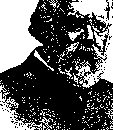
dean of the medical faculty. Zernov published 16 scientific works, mainly on the anatomy of the central nervous system ("Individual Types of Cerebral Convolutions in Humans," Moscow, 1877; "On the Question of the Limits of Individual and Tribal Variations of Typical Sulci and Convolutions of the Brain," Moscow, 1883; "On the Question of the Anatomical Features of the Brain of Intelligent People," Moscow, 1889; "On Encephalometers," Moscow, 1892; "On the Question of the Position and Form of the Mesenteric Part of the Small Intestine and its Mesentery," Moscow, 1894; "A Critical Review of the Anatomical Foundations of Lombroso's Criminal Theory"—ceremonial speech, Moscow, 1896). His well-known manual on anatomy, which appeared in 1891, went through 11 editions until 1917; in 1893, it was awarded a prize (the Zagorsky prize of 2,000 rubles); in 1924-26, the 13th posthumous edition was published ("Manual of Descriptive Human Anatomy," parts 1-3, Moscow-Leningrad). Zernov served as chairman of the Physico-Medical Society from 1885, as an honorary member of Yuryev University, the Military Medical Academy, Saratov and Moscow Universities (1916), and as a full member of a number of scientific societies. Zernov was a member of the initiative group to whose efforts the Higher Women's Medical Courses owe their origin (1906), which were subsequently transformed into the medical faculty of the 2nd Moscow State University, where he served as a professor until the end of his life. The Anatomical Theater of Moscow University was built in 1876 according to Zernov's plans. Its museum owes many models and casts to Zernov.
Related articles
Cite this page
“Granular Bodies.” Soviet Medical Encyclopedia. English translation of Bolshaya Meditsinskaya Entsiklopediya, 1st ed. (Moscow, 1928–1936), ed. N. A. Semashko. https://sovietmedicalencyclopedia.pages.dev/article/granular-bodies/