Howard
Historical document, translated for reference. It reflects medical knowledge of the 1920s–30s and is not medical advice.
Summary
Howard was an English social reformer and advocate of garden cities who authored the influential book 'Garden Cities of To-morrow' (1902). His ideas about planned communities combining urban amenities with rural living conditions gained international recognition and influenced urban planning worldwide.
Encyclopedia article (1928–1936)
HOWARD, Ebenezer (1850-1928; more correctly Goward), English social activist, author of the book 'To-morrow' (1898) which gained worldwide fame and was devoted to the problem of the future ideal city. H. was at the same time the leader, organizer, and energetic propagandist of the movement in favor of building garden cities (see). By profession, H. was a parliamentary stenographer who worked in the so-called royal commissions that studied the condition of workers in England and other social issues in the late 19th century, during which H. had direct contact with trade unions and the life of the proletariat. Howard worked in the U.S.A. (Chicago) in 1872-75, where, while working as a stenographer, he studied the social conditions of America. H.'s main literary work, devoted to developing the problem of the future city (or garden city), although it was published 2 years later than a similar work by F. Fritsch, written in Germany on the same topic 'Die Stadt der Zukunft', is nevertheless a completely original work. Only the third edition of H.'s book, published in 1902 under the title 'Garden-cities of to-morrow', owes the idea of garden cities its worldwide fame. At first the book caused a skeptical attitude, but soon achieved success, as it found a certain support and justification in the existing practice of building factories and workers' housing outside the city. H. conducted successful propaganda for the idea of garden cities, traveling around England with public lectures and holding rallies. On July 10, 1899, the first association for spreading the idea of garden cities was founded by H. Howard lived in the first garden city of Letchworth, founded on his initiative, in a collective cottage-phalanster, and despite his advanced age, continued to conduct intensive agitation in all countries in favor of the idea of garden cities, using for this purpose, among other things, the international language Esperanto.
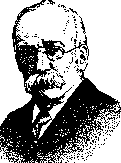

Figure 1. Cross-section of the spinal cord (cervical segment). In the lateral columns, the degenerated bundles of Govers (f.G.) and Flexig (/. F.). (Data from specimens stained by Marchi.)
Related articles
Cite this page
“Howard.” Soviet Medical Encyclopedia. English translation of Bolshaya Meditsinskaya Entsiklopediya, 1st ed. (Moscow, 1928–1936), ed. N. A. Semashko. https://sovietmedicalencyclopedia.pages.dev/article/howard/