Lecture
Historical document, translated for reference. It reflects medical knowledge of the 1920s–30s and is not medical advice.
Summary
This article from the 1930s Soviet medical encyclopedia examines the lecture as a teaching method, analyzing its advantages and disadvantages in educational settings, particularly in the context of Soviet mass education campaigns.
Encyclopedia article (1928–1936)
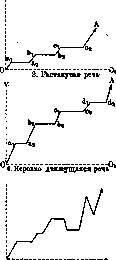
LECTURE (from Latin lectio-reading), a form of presenting knowledge through a connected, more or less lengthy speech by the lecturer (in former times delivered from a prepared text). The lecture form of instruction predominated in pre-revolutionary Russian higher education. From the beginning of the 20th century, lectures were widely used in mass propaganda and educational-sanitary work. The lecture form of work in the classroom received particular spread in the first years of our revolution, when the masses eagerly demanded knowledge, readily accepting it in any form. Lectures belong to forms of living speech, which has enormous significance, especially in work among the masses. Under the conditions of the USSR, which was only just eliminating illiteracy, living speech is often the only possible form of work among the masses. The methodology of lectures is applicable in large part to other forms of living speech. Positive aspects of the lecture form of instruction: the possibility of covering a large audience, transmitting in a condensed form a significant body of knowledge, its economy, the relative ease of controlling the audience, accustoming the audience through the lecturer's thought to logical development of thought and through his speech-to proper construction of their speech, the emotional impact on the audience from an inspired lecturer who infects them with his conviction and sincerity, the possibility of suggestive influence on the audience. However, lectures have their greatest shortcomings. It orients itself toward the auditory type of perception and memory, represented in only a small part of the audience. The limitation, monotony of its stimuli (auditory) lead to rapid fatigue of the audience. It is organically characterized by dogmatism, authoritarianism, unapologetic assertion on the one hand, and passive reception by the audience, lacking initiative, on the other. The comparative difficulty for the lecturer to follow the thought, reactions of the audience, and their assimilation of the lecture's content causes a break in contact between the lecturer and the audience. Lecture instruction cannot cultivate practical skills in the audience. Between the lecturer's speech and his audience there often exists a deep gap, which makes this speech little or completely incomprehensible to the audience, devalues the work, and deprives it of interest. The lecturer's detachment from the audience, the dogmatism of lectures naturally turn the lecturer into a preacher standing above the audience, instructing it. The usual orientation of the lecturer toward the 'average' audience deepens these shortcomings of lectures. All this makes lectures in their pure form little suitable for a mass audience. The lecture form as such is organically alien to the modern school with its orientation toward cultivating in students activity, initiative, critical thinking, independent analysis, pragmatism, and polytechnical education. The shortcomings of lectures have caused an extremely negative attitude toward them. The reaction against lectures reached a particularly acute degree in higher education, where lectures now occupy an absolutely subordinate position, constituting only 10-15% of instructional activities. However, the unconditional rejection of lectures cannot be considered correct. It is necessary to utilize the positive aspects of lectures, possibly weakening or eliminating the negative ones. As a rule, it is necessary to eliminate lectures as the main dominant form of instruction, leaving them in cases where their application is required by the nature of the matter. In a mass audience, these will be cases: a) when the question cannot be actively worked through by the audience itself due to its complexity, or b) when it is so clear and accessible to the audience that it should be covered lecture-style for economy of time, or c) when the lecturer's speech must produce a certain emotional impact on the audience. In school work, occasional lectures will find application - introductory, central (nodal), and summary. In higher education, it is difficult to do without lectures in cases when the topic is insufficiently covered in existing or accessible literature for the audience, when there exists significant diversity of opinions on the given question, in which the audience cannot sort itself out, etc. A distinction is made between occasional and cyclical or systematic lectures. Occasional lectures are usually delivered to a one-time, more or less random audience, on separate, unrelated topics. 'Through an occasional lecture, one can give only a fragment of knowledge, one can only slightly illuminate some questiong extracting it from the series related to it' (Medynsky). Satisfying the interests and needs of the audience or the current moment, they lead the audience to a deeper working through of the question. Occasional lectures are one of the common forms of educational-sanitary work in a mass audience. In school work, occasional lectures introduce the question, lead into it (introductory lectures), illuminate the main points of the topic, conclude other forms of work, and summarize the material covered (concluding, summary, generalizing lectures).-Cyclical, or systematic lectures cover a larger or smaller circle of questions, logically connected among themselves into a single topic (the sexual question, social diseases, protection of labor). These lectures are presented to a more permanent and homogeneous audience. Each lecture in a cycle more or less deeply illuminates one question or another of the topic, representing to a certain degree a finished whole. This makes it possible for a one-time listener to follow cyclical lectures. A cycle includes 4-6 lectures depending on the volume of the topic, its importance, the interest, preparation, and possibilities of the audience. Cyclical lectures are the usual form of propaganda work in a more qualified audience. They permit wide use of visual aids, demonstration of experiments, etc., which weakens the defects of lecture dogmatism. A distinction is made between stepwise and concentric construction (architecture) of lectures. Stepwise-gradual, sequential unfolding of questions as they are worked through. Concentric construction of lectures-illumination of the topic in a series of concenters, each of which expands and deepens the questions of the topic, approaching them from new sides and viewpoints. In the first center, the question is usually presented in general terms, schematically, more elementarily; in the following ones-more broadly, in the final one-in the form of conclusions, summaries.-Various types of lecture construction are possible in terms of presentation of material. In synthetic construction, the lecturer proceeds from the presentation of individual facts, observations and leads the audience to a conclusion based on their corresponding generalizations and conclusions. In analytical construction, the lecturer gives the audience these general propositions, which are subsequently illustrated and proven by individual facts. A combined analytical-synthetic type of lecture construction is possible (see speech construction diagram, fig. 1).-According to the nature of speech, we can outline 6 types of it: normal speech, during which the lecture develops, gradually increasing; extended speech, unevenly extended; unevenly moving speech, when there is an increase but it does not proceed evenly; ornate speech; and finally, disorderly speech (fig. 2). If the first diagram gave the construction of a lecture according to the method of presenting material and illuminating the topic, then in relation to the construction of the speech itself, here we can outline 10 types, which are clearly shown in the accompanying diagram (fig. 3).-In all cases of applying the lecture form, it is necessary to avoid a continuous monologue by the lecturer, to introduce other teaching methods and forms into the presentation of the topic. They should be calculated for auditory, visual, and motor perception by the audience. These are-demonstration of visual aids, natural objects, experiments. To weaken the dogmatism of lectures, their questions should be posed for discussion, in the possible diversity of opinions, to involve the audience in their discussion. It is necessary to establish live contact with the audience, directing questions to it, answering its questions, in every way involving it in conversation, etc., in order to determine the degree of assimilation of the material by the audience, to promptly notice signs of audience fatigue (decreased interest, distraction by external stimuli, dull gaze, yawning, conversation with neighbors, etc.). To prevent audience fatigue, it is necessary to present topics interesting to them, close, vital, accessible. They should be presented in language understandable to the audience, and to use diverse stimuli in the work. One should not allow continuous monological exposition for more than 10 minutes at a time. It is useful to permit in lectures the so-called internal excursions-a case from practice, a joke, a witticism, an anecdote, thematically related to the questions of the lecture and at the same time not violating the dominance it has created. It is necessary to rationally distribute the questions of the topic in time: simpler ones should be placed at the beginning of the work and toward the end of the session, when the audience is less attentive and receptive. One should strive for a comprehensive illumination of the topic, its illumination from the point of view of the interests and tasks of the present. It is necessary to achieve firm assimilation by the audience of the main ideas of the lecture, for which they should be particularly highlighted, emphasized, attention to them sharpened, substantiated by firm proofs, formulated in clear propositions-theses, which may be dictated or distributed to the audience. It is useful to distribute these theses to the audience before the lecture, so that the audience can familiarize themselves with them in advance and think them through. The correctness of their assimilation can be checked through appropriate questions to the audience, conducting an analysis of assimilation through mass tests.
Since a lecture usually does not exhaust the question, it should be concluded with a recommendation of appropriate literature for a more serious study of the topic. The modern audience—mass and school—dislikes the tone of the dogmatist, doctrinaire, preacher, who speaks and instructs, placing himself above the audience. The lecturer must assimilate with it, feel himself a part of it, infect it and be infected by it, do one common work with it. This requires ideological and organizational closeness of the lecturer to the audience, participation with it in the common construction. By introducing all these amendments into the lecture form, it will still find its place in both teaching and agitation and propaganda work. The methodology of L. requires the lecturer to be thoroughly prepared for each performance. This preparation consists of the following elements: studying the topic of L. according to basic guides, modern journals, encyclopedias, etc., outlining the specific material that should be introduced into L. in accordance with its tasks and the characteristics of the audience, compiling a plan and outlining the material, formulating the main theses of the lecture, methodical development of the topic as a whole and its individual questions, selecting visual and other materials for it, selecting literature on the topic for recommendation to the audience. The plan is as it were a table of contents of the lecture. It determines the scope of the topic, the sequence in the development of its ideas, the connection between them. The presence of a plan ensures the logical structure of the lecture, prevents the possibility of repetition of questions, getting ahead or falling behind, the introduction of extraneous material into the lecture. It helps to highlight the main thing in the lecture. Since the plan is used, so to speak, on the fly, by a quick glance, it should be formulated briefly, concisely, but accurately. For convenience of using the plan, it should be written with a large number of red lines, with highlighting underlining with conventional symbols of the main points. There are two types of plans: fixed and movable. In the movable plan, its questions are written on small separate sheets, which allows combining them and thus restructuring the plan in various ways to suit the characteristics of the audience. The disadvantages of this type of plan: the lecturer has before him a prompt for the next idea, the nearest thought, not seeing the whole logic of the topic, the sequential presentation of it as a whole. The disadvantages of the fixed type of plan (usually printed, i.e., not taking into account the local peculiarities and requests of this
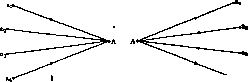
Simple synthetic speech ' 3 "^**4 Simple analytical speech
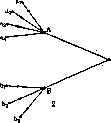
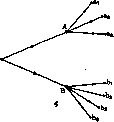
Complex-synthetic speech Complex - analytical speech
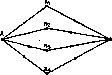
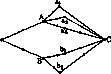
Simple Complex Analytical - synthetic speech Figure 1. Construction of speech. ensures the logical structure of the lecture, prevents the possibility of repetition of questions, getting ahead or falling behind, the introduction of extraneous material into the lecture. It helps to highlight the main thing in the lecture. Since the plan is used, so to speak, on the fly, by a quick glance, it should be formulated briefly, concisely, but accurately. For convenience of using the plan, it should be written with a large number of red lines, with highlighting underlining with conventional symbols of the main points. There are two types of plans: fixed and movable. In the movable plan, its questions are written on small separate sheets, which allows combining them and thus restructuring the plan in various ways to suit the characteristics of the audience. The disadvantages of this type of plan: the lecturer has before him a prompt for the next idea, the nearest thought, not seeing the whole logic of the topic, the sequential presentation of it as a whole. The disadvantages of the fixed type of plan (usually printed, i.e., not taking into account the local peculiarities and requests of this
A.
y Ml

1. Normal speech ^ 3. Unevenly stretched' V
Rspeech
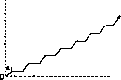
5. Ornate speech,
6. Disordered speech
........ I------------------------x----------------------------X-----------------------------► 7. Speech not: on the topic 1-EG '-"--------................. 8. Incoherent speech i-------------------------------------------------------X--------X----- ..........-------- 9. Unevenly constructed speech with a "scrambled net" i--------------------------X---------------------X---------------------------------------------......... 10. Speech with an elongated ending. The lecturer does not know how to finish * Figure 3. Speech patterns. жания ee. This makes the synopsis, which contains an extremely concise presentation of the topic, necessary formulations, terms, statistical materials, quotes, dates, etc. Here, indications on the methodology of presenting the topic, designation of the time allocated for working through individual questions of the topic, etc., may also be given. The synopsis is compiled in accordance with the plan, although it should not answer all its questions. This is the "first aid in the case of a lecturer's misfortune," when he forgets a date, fact, formula, etc. Like the plan, the synopsis is compiled extremely concisely, in telegraphic language, using conventional notations, underlining the main points, etc. In practice, a synopsis of 3 vertical columns is useful. In the first, the lecture plan is written; in the second, the synopsis proper in relation to it; in the third, prompting factual material, methodological instructions, etc. During the conduct of L., it is extremely important to enliven it with the help of visual aids [models, mannequins, diagrams (see.), slides, etc.]. See also Visual method. A necessary condition for L. is the study by the lecturer of the specific audience in which he has to conduct his work. To study the audience, it is necessary to determine its socio-class, professional, national, age and gender composition, its everyday peculiarities, level of education and development, general and sa-nit. culture, public mood, language, familiarity with the topic, etc. It is extremely useful to study the psychological peculiarities of the audience: its perception (active, passive, accuracy), memory (auditory, visual, motor, combined), attention (stability, its volume), thinking (in words and images^ by analogy, contrast, cause-and-effect), observation, resourcefulness, assimilability, performance, fatigue, interests and needs, etc. Familiarization with these peculiarities of the audience will help the lecturer build his work in the most expedient way, prevent the possibility of gross errors that devalue the lecture. Methods for studying the audience are diverse: a) direct study of the audience (ratio of sexes and ages, national composition, sometimes social status); b) observation of the audience during the process of working with it (behavior, culture, interest, assimilation); c) conducting so-called live surveys ("raise hands, literate, those who have finished school, workers, familiar with the topic of the question" etc.); d) filling out by the audience right after the lecture a small questionnaire of 4-5 relevant questions; e) conversation before the lecture with individual participants of the audience and organizers of the work; f) studying official materials characterizing the audience, etc. To study the psychological peculiarities of the audience at the present time, tests and other methods of psychotechnology are used (see Psychotechnology, Tests).- The primary primitive form of lecture work can be considered reading. In the prerevolutionary period of educational work, this form predominated, because purely lecture work in the true sense of the word, i.e., built on the improvisation of the lecturer's speech and free presentation of one or another topic, was subjected to police persecution due to the fears of the tsarist government about the introduction of politics. Therefore, broad mass audiences were allowed so-called popular readings (sometimes with vague pictures), i.e., reading from a ready, pre-approved text. At the present time, this form of work under the name of loud readings has limited application, e.g., in san.-educational work of sisters in a hospital ward, in the work of an izbach in an izba-reading room, of a teacher in school, i.e., persons not possessing sufficient training for independently illuminating one or another topic. In particular, readings of excerpts from fiction touching on health problems, organization of literary evenings with corresponding explanations are highly recommended. In its pure form, L. at the present time has limited application. Usually it is combined with other forms of living speech. Often it is connected with elements of conversation. The introduction of the latter to a greater extent turns such a lecture into a L.-conversation. It is livelier, more interesting, more accessible to the audience. It is less dogmatic, provides room for the audience's initiative. It facilitates assimilation of the material, allows for greater adaptation to the audience, makes it possible to control this assimilation, creates a more intimate contact between the lecturer and the audience. L.-conversation is applicable in a small audience. Elements of L. enter into a debate (L. -debate). Its task is to bring into the audience one or another, usually controversial question in the variety of existing opinions, to illuminate them before the audience, to outline ways to resolve the question (struggle with alcoholism in the USSR, allopathy or homeopathy, the modern crisis in medicine, etc.). In the debate, the main speaker, co-speaker, opponents participate. The main speaker gives the basic presentation of the question, the co-speaker illuminates it from other sides. These speeches in essence have the character of a lecture, but more lively, with elements of dispute, attack and defense, with the desire to win the audience over to one's side.-Г л y- ' б и н a setting and illumination of questions is determined by the peculiarities of the audience.- Elements of L. also enter into san. meetings. The task of such a meeting is to attract the audience's attention to a pressing issue, usually of san.-epid. moment, to prompt the audience to actions dictated by the needs of this moment ("shock campaigns" of struggle with epid. and soc. diseases, etc.). The lecturer should illuminate the scientific side of the question here. In accordance with the peculiarities of this type of work and the audience of the meeting, this speech should be brief, convincing, not overloaded with scientific content, should illuminate the question from a socio-hyg. and socio-political side. The speech of the lecturer-orator should be bright, emotive. He should set practical tasks before the audience, urge their implementation. A variety of L. are so-called film-lectures, preceding the demonstration of a film (scientific-medical or everyday with med.-san. content) or accompanying it. These L. are connected with the film, accentuate in it one or another moments. They are concise, concrete, pronounced in short phrases, adapted to the peculiarities of the film. Preparation for them requires preliminary familiarization with the film on a rewinder or screen. For a lecture accompanying a film, the lecturer should rehearse his speech with the mechanic operating the film.-K film-L. are close L. before a play concerning sanitary questions. They introduce the audience to the play, fix the attention of the viewers on the corresponding moments of the play, help to reveal the characters of the characters, prepare the audience for the perception of the play. Such L. should be connected with the content of the play, colored in its tone, imbued with its mood, so as not to create a dissonance with it. The lecturer should not reveal to the viewers the entire content of the play, should not replace it with a lecture and thereby make it less interesting. At the present time, radio-L. on various medico-san. questions are significantly widespread. Their advantage is the simultaneous coverage of a huge audience. Their negative sides and difficulties are the diversity of the audience, the lack of contact with it, the impossibility of observing its reactions to the lecture, its assimilation, the brevity of the lecture (usually 15-20 minutes). The differentiation of modern broadcasting according to different categories of listeners (broadcast for workers, peasants, housewives, mothers, schoolchildren, Komsomol, medical workers) somewhat smooths over these defects and difficulties of radio-L. The latter should be oriented towards a specific audience, adapted to it. They should be strictly maintained in scientific, ideological and organizational respects, impeccably constructed and thought out from the language point of view. They should be read from a recorded text. Their transmission is done in a loud voice, unhurriedly, clearly, distinctly, without pronunciation defects, as much as possible approaching the type of conversational speech, as if directing this speech to an invisible audience. Radio-L. can be episodic and cyclical. In the latter case, each L. of the cycle should have the character of a finished whole.
D. Lukashevich. The organization of lecture work is one of the main and most important tasks of sanitary educational work. Understanding it as all forms of living speech listed above, it can be noted that after the revolution, lecture work received the widest scope. Having received the first impetus in connection with the epidemics of 1918-20, lecture work continued to develop successfully in the following years, changing forms and content, moving from episodic to systematic lectures, from epidemiological topics to general health improvement topics. Unfortunately, we do not have any accurate accounting of the total number of lectures given during these years in workers' clubs and in rural areas. Data on the scale of lecture work can be characterized by the number of lectures in the Red Army, where on average over 200 thousand lectures and conversations are conducted annually with 7-9 million listeners. Throughout the Union, these figures are many times greater. According to data from the cultural departments of trade unions, sanitary lectures occupy a dominant place in club work (see Club, House of Sanitary Education). Lecture work can be organized by the local health department, House of Sanitary Education, trade unions, political enlightenment departments, and area doctors. For the purpose of controlling lecture work, improving the methodological preparedness of lecturers, and studying the results of their work, lecturers are united at the local sanitary educational organization (usually at the House of Sanitary Education) in a methodological seminar that regularly works through both new topics and the methodology itself, the study of the audience, etc. The technique of organizing lecture work itself requires preliminary preparation, just as was indicated above with respect to the lecturer. Since at present all club work has a strictly planned character, it is necessary to include sanitary lectures (performances, sessions, sanitary films, etc.) in the club work plans in advance. Directly before the lecture (no later than 5-7 days), it is necessary to properly inform the enterprises served by the club (villages included in the area of the reading hut) by posting posters or sending out invitation tickets. In passing, it should also be noted the importance of the lecture title. A dry, academic title can scare away visitors and ruin the lecture. Titles in an appeal or question form are preferable. For all forms of living speech, whether it is a pure lecture or a combined form, the personality of the lecturer is of great importance. His authority and popularity are decisive factors for the audience's interest and the success of the lecture. An important moment is also the talent of the lecturer. If for a conversation this has relatively less importance (although here it is also important to be able to quickly establish contact with the audience, activate it, and involve it in the conversation), then for performances in a large audience with a lecture or report, this is especially essential. Monotony of speech, a hoarse voice, a lisp—all this can empty the audience long before the lecture is over. In this regard, in addition to the formally correct methodology of lecture work, as mentioned above, the lecturer's work on himself is important (development of vocal means, correction of speech clarity, exercise in oratory). The question of the professional harmfulness of lecture labor and the hygiene of the lecturer is still little developed. Only the general problems of workload, fatigue, and rest should be noted. Among the harmfulness of public performances, it is necessary to emphasize the frequent nervousness before a performance, which can contribute to increasing general excitability of the nervous system. Regarding the performance itself from the point of view of preventing professional harmfulness, the duration of the performance is important. The usual norm is determined to be up to two hours with a ten-minute break. A longer duration is tiring for the lecturer (not to mention the fatigue of the audience, which is methodologically undesirable). The main harmfulness is expressed by various lesions of the vocal apparatus. Excessive tension of the vocal cords, leading to hyperemia, fatigue, and subsequently to laryngitis, is the greatest danger for the lecturer. Many orators believe that the louder they speak, the better they are heard in the hall, and therefore immediately switch to shouting. The result of this is catarrhs of the larynx, which often turn into chronic ones with repeated multiple injuries. To prevent this, it is important for the lecturer to correctly assess his vocal means and to correctly set his BREATHING.
Related articles
Mentioned in
Cite this page
“Lecture.” Soviet Medical Encyclopedia. English translation of Bolshaya Meditsinskaya Entsiklopediya, 1st ed. (Moscow, 1928–1936), ed. N. A. Semashko. https://sovietmedicalencyclopedia.pages.dev/article/lecture/