Poster
Historical document, translated for reference. It reflects medical knowledge of the 1920s–30s and is not medical advice.
Summary
This article from the 1928–1936 Soviet Great Medical Encyclopedia defines the 'poster' as a mass visual agitation and propaganda tool for socialist healthcare. It details the types of posters—agitational and propagandist—and provides detailed instructions for creating them, including content guidelines, composition, and methods of production.
Encyclopedia article (1928–1936)
POSTER (health-educational), a means of mass visual agitation and propaganda on questions of the organization of socialist healthcare and the improvement of working and living conditions, representing a combination of visual elements and printed word on an open plane of a printed material sheet. By their target objectives, health-educational P. are divided into agitational, propagandist, and educational; Agitational health-educational P. is distinguished by the scantiness of the text, reduced to a brief, expressive slogan, sometimes in verse form, with an acute dynamic drawing, sharp contrasting colors, bright tones, and changing type. The center of gravity of it is the drawing, which must arrest the viewer's attention, instill in him the thought and slogan pursued by the author of the P. Propagandist P. is distinguished by a calm narrative text (however, never excessively expanded, sometimes only a caption to the drawing); a drawing approaching an illustration, close to nature; even, identical type; soft transitional colors, even tones. Here the text and drawing are equal and, mutually complementing each other, facilitate the viewer's assimilation through independent logical reasoning of the information, which is the content of the P. More often, a poster is understood only as the agitational type of it. P. is one of the most important means of health-educational work, conducting it as a means of mass use and so on. Health-educational P. finds wide application especially during the conduct of episodic or periodic agitational campaigns. Although agitational P. by the topicality of its slogan has universal significance, and propagandist P. by the completeness of the exhaustion of a given topic (for example, 'Malaria', 'Flies', 'Wells') also finds application everywhere, the need for a local agitational P. is extremely great. The widely developed mass work of medical workers at enterprises, in state farms, in cities at new constructions, and the activity of the public in the matter of healthcare (public sanitary inspectors, health activists, health cells) require a local agitational P. for a shock campaign, for a sanitary march, a propagandist poster on a theme put forward by the conditions of the moment (for example, 'How to maintain a barrack'), or on a theme for which no printed P. has yet been issued. A local P. must be built, proceeding first of all from the setting that one should never take an isolated moment of healthcare as such (naked case of alcoholism, unsanitary state of a dormitory), it must be linked with the whole life of the enterprise (fulfillment of the industrial plan and so on.), with the healthcare of the collective (possibility of the spread of infection in the dormitory, loss of health, labor productivity and so on.); it is necessary to bring an individual fact into the nearest relationship and interaction with the struggle and activity of the collective. In a local agitational P., classically held and party, one must throw out slogans not in general, but it is necessary to sharpen both the drawing and the text on local needs so that the viewer feels that the P. concerns exactly his conditions of labor and life. The content of a local propagandist P. must answer the modern level of scientific knowledge in the question illuminated in the P. on the basis of Marxist-Leninist methodology, and it is necessary to strictly eradicate any elements of idealism, mechanism, vulgar biological mechanization; in form one should avoid any affectation. When developing the content and composition of the P., it is recommended to use the method of comparisons. This method shows phenomena in dialectical development. The showing of summarizing negative moments from Soviet reality in a Soviet P. should not be practiced. The exception consists of photographs of specific negative objects in a sanitary relation (canteens, stores, etc.), as well as photographs of specific enemies of sanitation and hygiene. Such material must necessarily be contained in a local health-educational P., but also in connection with moments of overcoming deficiencies or contrasting the worse with the better. The method of frightening and terrifying should not be applied in a health-educational P. without the indication of measures of struggle, advice, and directions aimed at eliminating a given phenomenon or disease. It is necessary to widely practice the method of showing positive facts to reveal the achievements of various organizations in the field of socialist sanitary culture. In a local health-educational P., the illustrative part most often has to be obtained by photographs. Sources for obtaining photographs: Union-Photo, illustrated journals, photographs of one's own making, photographs from photo-clubs. The texts of health-educational P. must be popular, understandable, and as short as possible. In a local P., it is best to write the text in normal type. Proceeding to the arrangement of texts and selection of drawings, one proceeds to their arrangement on a sheet of paper, cardboard, plywood. A preliminary small pencil sketch (approximate arrangement and ratio of all parts of the P.) is necessary. The arrangement of material on the sheet can be the most diverse: composition by diagonal, horizontal, oval, circular, triangular, mixed, composition around a central spot, chessboard composition, and so on. Whatever the composition, one must watch that the poster is not overloaded, that it is bright, attracting attention and not tiring. Harmonious combination of colors attracts attention, creates positive emotions. Colors highlight the important. In a local poster, colored paper (matte, glossy, binding) is usually used; it can be used for backgrounds, cutting out silhouettes, stripes, arrows, and finally for creating the drawing. Colors and colored paper must be used according to the laws of color combinations, using the Oswald table. The final making of an independent health-educational P. consists in pasting the background, writing the texts, and pasting in photos and drawings. After pasting, one must place the plywood and cardboard under press from the back and cover with paper (it will not warp). If there is a need for making several P. on one theme, it is necessary to prepare as many drawings, photographs, texts as are required for the P. To facilitate work, texts can be reproduced by stencil, photolithography (on the type of drawings on tracing paper) or by photograph: In addition, one can entirely photograph the P. on a photographic plate and make enlargements of the required size with subsequent coloring. One can also use local lithography. Medical workers need to monitor the P. issued, getting acquainted with them in OGIZ stores, guided by reviews placed in the Bulletin of the Critico-Bibliographic Institute of OGIZ 'Product of the Visual Arts' (subscription price for 36 numbers 7 rubles per year).
Figure 2. Figure 1 and 2. The first health-educational posters in Russia—lithographic pictures of an unknown master, issued at the end of the 18th century for the purpose of propagating the smallpox vaccinations then introduced for the first time (from the collection of D. A. Rovinsky 'Russian folk pictures').
Full in consultations-HEALTHYTOONCHILDRENCONDITIONSOFCEMETERIES
Labor'
ofe emshmiti edorov.я
Йй, and ROZGORSHMO M*-- 'I. . "."-VI..... oesitim 1"'(км, рПШЫЯ И'Я"....."ON iijnoh -
Figure 3.
Fig. 4.
Figure 3 and 4. Agitational posters of the period of the civil war. Despite the primitiveness of the drawing and the naivety of the artistic conception, the posters are politically sharpened and linked with the basic tasks of the moment. Acquired P. must be recorded in an inventory book, visual aids and propagandist P. pasted onto plywood, cardboard, cloth. Store in an unfolded form. Outdated agitational posters should not be destroyed, but it is recommended to store them as material for montages. Posters should be hung in places corresponding to their content, on specially adapted boards, showcases, glazed as far as possible and illuminated. They must be hung at the height of a human eye, but not higher than 180 cm from the floor. A distance of 20 st. must be left between P. One should avoid hanging in narrow corridors. If several P. are hung, they must be given a generalizing text and supplemented with local material, as well as other visual aids.
tai vovdno!!!
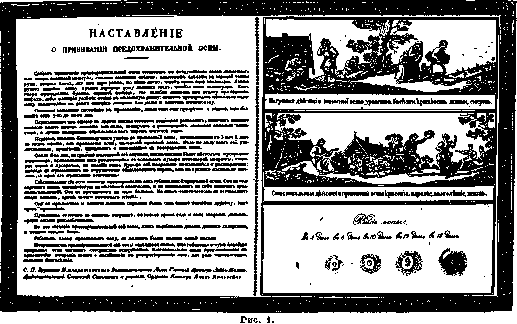
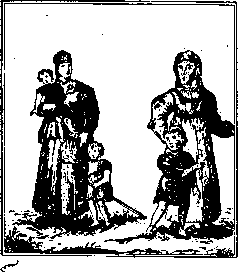
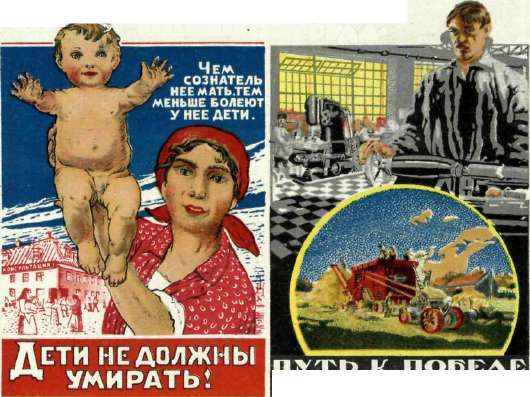

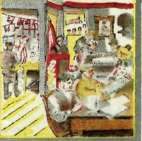
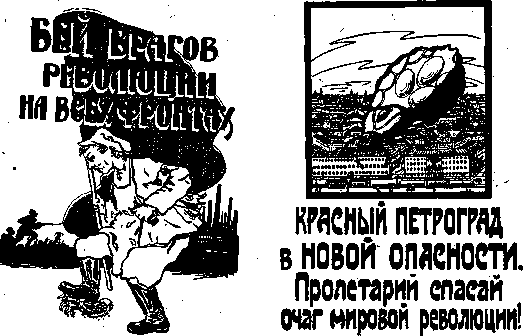
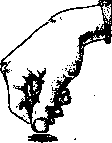
Figure 5. A subsidy poster of the civil war period, devoid of any political content, showing (mockups, MOCKUPS) an incorrect sanitary installation at the P. exhibition place and source of publication are not to hang box for questions with a pencil and paper and a board for answers, at appointed hours and days give explanations. Work on deepening the impact of P. should consist of the following moments: discussion with the hospital and outpatient clinic staff on newly purchased P. to identify deficiencies, discrepancies with local conditions, etc., subsequent correction of P.; organization of a poster exhibition on specific issues with discussion of this exhibition, questionnaire and debate; organization of a contest on the memorability of P. These forms of work with P. will give the possibility of good agitation and propaganda on this issue through P., will give working criticism of P. and raise the artistic education of the working masses. In schools, contests are desirable for the composition of amateur sanitary-educational posters with subsequent discussion and prizes for projects of new posters.
Related articles
Mentioned in
Cite this page
“Poster.” Soviet Medical Encyclopedia. English translation of Bolshaya Meditsinskaya Entsiklopediya, 1st ed. (Moscow, 1928–1936), ed. N. A. Semashko. https://sovietmedicalencyclopedia.pages.dev/article/poster/