House of Sanitary Enlightenment
Historical document, translated for reference. It reflects medical knowledge of the 1920s–30s and is not medical advice.
Summary
The House of Sanitary Enlightenment is a Soviet institution that combines educational, exhibition, and organizational functions to promote health education among the population. Established after the October Revolution, these institutions serve as bases for organizing sanitary enlightenment work through lectures, exhibitions, courses, and various educational activities.
Encyclopedia article (1928–1936)
HOUSE OF SANITARY ENLIGHTENMENT, an institution (or rather a complex of institutions) which is the direct place for implementation and realization of various forms of sanitary enlightenment (see) and plays the role of the main base for organizing, in the broad sense of the word, and directing sanitary-enlightenment work in a particular area (region, district, city, etc.). The House of Sanitary Enlightenment represents a variety of people's house, combining in itself elements of a club (auditorium, stage, rooms for circles, sometimes a buffet), a museum-exhibition institution (permanent exhibition, base for mobile exhibitions, fund of visual aids), as well as an organizational-instructor and scientific-methodological center (instructors, lecturer conferences and seminars, book base, consultation). Houses of Sanitary Enlightenment are a new type of institution in the field of healthcare, created by the October Revolution, having no analogues either in prerevolutionary reality or abroad. Their development and growth are entirely determined by the role which sanitary enlightenment plays in the system of Soviet medicine as the basic method of arousing the initiative of the working people.-The first Houses of Sanitary Enlightenment appeared almost simultaneously at the end of 1920 and at the beginning of 1921 in Yaroslavl, Rostov-on-Don and Odessa in connection with the need for the most productive use of the material resources available to sanitary-enlightenment organizations. Since then, Houses of Sanitary Enlightenment have continuously deepened the character of their activities, creating new forms of work (hygienic consultations), but the process of fully determining the structure of Houses of Sanitary Enlightenment is far from complete.-Houses of Sanitary Enlightenment are organized as an independent institution, or in case of insufficient material resources, they are included as a special department in the local local history museum, or are attached to a medical institution, more often a polyclinic, hospital. Sometimes for Houses of Sanitary Enlightenment several exhibition rooms are allocated in a large central workers' club. In all these latter cases, the functions of Houses of Sanitary Enlightenment are significantly curtailed, and they are mostly reduced to a permanent exhibition (see). If we exclude from the total number of Houses of Sanitary Enlightenment institutions of the latter type, then in the RSFSR there were 42 independent Houses of Sanitary Enlightenment (not counting Moscow and Leningrad) in 1927-28; according to the five-year health plan, the number of Houses of Sanitary Enlightenment in the RSFSR by 1932-33 should be increased to 69. For the Ukrainian SSR the corresponding data: 24 at the beginning and 41 district Houses of Sanitary Enlightenment by the end of the five-year plan. The most developed and large Houses of Sanitary Enlightenment have: 1) an auditorium with a stage, film installation and auxiliary facilities (buffet, foyer, etc.), 2) exhibition space for permanent and temporary exhibitions, 3) museum storage, 4) a mobile fund of visual aids, 5) a library-reading room, 6) rooms for circle activities, 7) scientific offices, 8) workshops and 9) office premises (see Figure 1-3 - plan of a typical House of Sanitary Enlightenment, developed by the People's Commissariat of Health of the RSFSR).- In the House of Sanitary Enlightenment as such, lectures (cyclical and episodic, reports) are held, conferences of medical and cultural-enlightenment workers working in the field of sanitary enlightenment are convened; preliminary sanitary performances, sanitary courts are staged here, sanitary-enlightenment film screenings are arranged. Circles and courses on various issues of health protection (improvement of labor and living conditions, care for the child, nutrition hygiene, communal sanitation and home care, etc.) are organized at the House of Sanitary Enlightenment. The participants in these circles and courses are primarily members of the health section, commissions for improving labor and living conditions, labor protection commissions, members of health groups, sanitary representatives. Usually, first aid courses for members of the ROCK, agitation courses for cells of the Society for the Fight against Alcoholism are conducted in the House of Sanitary Enlightenment. Some circles are designed for a special audience, such as housewives, counter workers (cooperatives), barbers, etc. At some Houses of Sanitary Enlightenment, circles of sanitary worker correspondents are organized, which publish an independent sanitary wall newspaper and prepare to cover issues of improving labor and living conditions in factory wall newspapers, as well as in the local press. All these measures contribute to the creation of an active core of grassroots workers, grouping around the House of Sanitary Enlightenment and then helping in the organization of sanitary-enlightenment work at the enterprise, in the club, where they set up health corners, distribute literature, attract listeners to lectures, recruit new members of sanitary circles, etc. In addition to such in-depth dissemination of hygienic knowledge through circles, the House of Sanitary Enlightenment seeks to meet the growing demands of the working people in the field of their hygienic lifestyle by organizing the issuance of information through a question and answer box located at the House of Sanitary Enlightenment. A more developed form in this direction are the hygienic consultations recently organized at Houses of Sanitary Enlightenment, where visitors are given advice on personal hygiene, care for the sick, care for children, nutrition, etc. They also serve as bases for sending mobile teams (eye, smallpox vaccination, venereal, malaria, etc.) to rural areas, workers' settlements outside cities, compose small display cases - sets of visual aids - for medical institutions (outpatient clinics, dispensaries, consultations), schools, peasant houses, summer workers' gardens, etc., have a mobile fund of visual aids (tables, diagrams, models, mannequins, magic lanterns, slides, etc.) for supplying lectures, conversations and other performances in factories, plants, in the red barracks, hostels, schools and other places where sanitary-enlightenment work is carried out. The House of Sanitary Enlightenment groups around it the cadres of lecturers, whom it sends to enterprises, peasant houses, etc. On the other hand, it, through the doctors of grassroots medical-sanitary institutions serving a particular enterprise, organizes the systematic conduct of sanitary-enlightenment work there. Not limiting itself to the organization
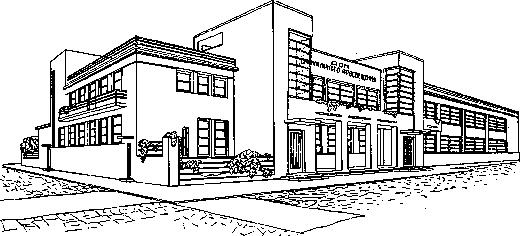
Figure 1. Plan of a typical House of Sanitary Enlightenment (exterior view of the House of Sanitary Enlightenment).
advice on all questions of health protection (daily routine, organization of work and rest, etc.). Sometimes these consultations specialize in particular questions, for example: on the hygiene of sexual life, on nutrition hygiene, on housing hygiene. A prominent place in the work of the House of Sanitary Enlightenment is occupied by a permanent exhibition covering a wide range of health protection issues (see Exhibitions). Great attention is paid at these exhibitions to highlighting local features and the activities of the local health organization. Regular explanations are given to organized excursions of visitors, primarily schoolchildren and workers, physiological and hygiene experiments are demonstrated. The exhibition is open to individual visitors as well. - However, the main task of the House of Sanitary Enlightenment lies in organizing sanitary-educational work in the periphery. For this purpose, the House of Sanitary Enlightenment first of all organizes mobile exhibitions (multi-thematic or on a special question) for workers' clubs, for service centers of central libraries-reading rooms, the House of Sanitary Enlightenment organizes book kiosks for the distribution of sanitary-educational literature, sets up book displays (timed to the topics of lectures being conducted, agitation campaigns, etc.) and promotes literature on health protection issues by systematically, periodically sending recommendation lists to public and club libraries, compiling annotations to health books available in these libraries, conducting special work with librarians, allocating mobile libraries. Finally, the House of Sanitary Enlightenment unites and directs the activities of all medical workers conducting sanitary-educational work by organizing instructional-methodological conferences, individual consultations on sanitary-educational work in various fields (in medical-preventive institutions, in school, at first aid posts, etc.). For this purpose, the House of Sanitary Enlightenment creates a lecture bureau, a seminar for lecturers, methodological commissions, as well as a scientific-methodological office containing methodological literature, aids, samples of methodological developments on individual topics, examples of health corners, etc. The House of Sanitary Enlightenment also organizes scientific research work in the field of sanitary education, for example, checking the perception of various forms of sanitary-educational work, the assimilation of sanitary knowledge and skills. In university centers, the House of Sanitary Enlightenment serves as a place for practical training of students of medical higher educational institutions in the organization and methodology of sanitary education; other Houses of Sanitary Enlightenment participate in the training and retraining of cultural and political educational workers by conducting cycles for them on health protection issues, as well as on the organization of sanitary education. To carry out this latter work, the Houses of Sanitary Enlightenment establish close ties with the cultural work offices of the cultural department of the local trade union council and with political education. The entire organizational and practical activity of the Houses of Sanitary Enlightenment takes place in the closest connection and interaction with party organizations, with the Komsomol, the women's department, the pioneers' bureau, cultural departments of trade unions, as well as voluntary societies, especially those close to the tasks of sanitary-educational work, such as the Red Cross and Red Crescent Society, the Society for the Fight Against Alcoholism, the Union of the Godless. To coordinate work with all the listed organizations, to develop a work plan for the House of Sanitary Enlightenment and to assist in its implementation, a council is organized at the House of Sanitary Enlightenment, which includes representatives of the health department, health sections, the Medical-Labor Union, sanitary education of military-sanitary departments and transport, representatives of societies, organizations, etc. In turn, representatives of Houses of Sanitary Enlightenment are members of the conference at the political education department, at the cultural department of the trade union council, at the agitation department of the Komsomol and etc.
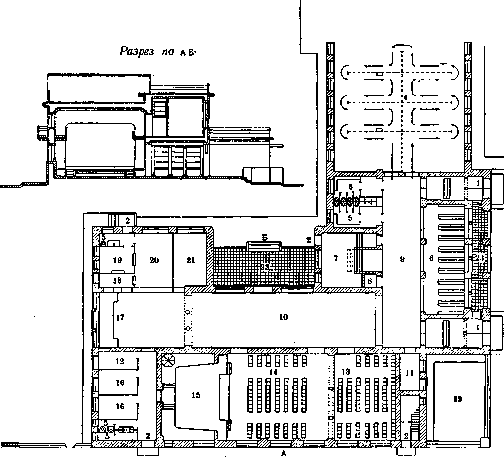
Figure 2. Plan of the 1st floor: 1-main entrance; 2-service entrances; 3-storage room; 4-exhibition hall; 5-restrooms; 6-cloakroom; 7-stairs to 2nd floor; 8-phone booth; 9-corridor; 10-room for special and temporary exhibitions (foyer); 11-reception; 12-storage room; 13 and 14-auditorium for 87 and 138 seats; 15-stage; 16-lecture rooms; 17-cafeteria; 18-serving room; 19-dishwashing room; 20-kitchen; 21-smoking room; 22-garden; 23-verandas. Section along sa
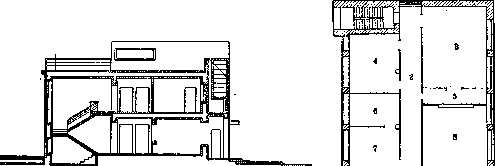
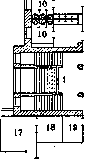

Figure 3. Plan of the 2nd floor: 1-staircase; 2-corridor; 3-book storage; 4-fund of visual aids; 5-book lending; 6-director's office; 7-office; 8-reading room; 9-museum; 10-restrooms; 11-access to the roof; 12-duty room; 13-film booth; 14-balcony; 15-offices for scientific work and clubs; 16-reserve museum; 17-graphic and photographic room; 18-dark room; 19-storage room; 20-roof terrace. On Houses of Sanitary Enlightenment, Vopr. Zdravookhr., 1929, No. 19; Theory and Practice of Sanitary Education (Collection of materials of sanitary education of the Moscow Health Department, vols. 1-6, Moscow, 1919-29).
Related articles
Cite this page
“House of Sanitary Enlightenment.” Soviet Medical Encyclopedia. English translation of Bolshaya Meditsinskaya Entsiklopediya, 1st ed. (Moscow, 1928–1936), ed. N. A. Semashko. https://sovietmedicalencyclopedia.pages.dev/article/house-of-sanitary-enlightenment/