Contraceptives
Historical document, translated for reference. It reflects medical knowledge of the 1920s–30s and is not medical advice.
Summary
This article from the 1928–1936 Soviet Great Medical Encyclopedia provides a historical overview of contraception, tracing its use from ancient times to the early 20th century. It details the shift in social and medical attitudes, the rise of the Neo-Malthusian movement, and the post-revolutionary Soviet policy of legalizing and scientifically studying contraceptives to promote maternal health and reduce reliance on abortion.
Encyclopedia article (1928–1936)
CONTRACEPTIVES, protective agents against pregnancy (preventing pregnancy, conception—contraceptiva), were known even in ancient times and were quite widespread among some peoples alongside infanticide and abortion. Thus, references to contraceptives are found in the Talmud (insertion of cotton into the vagina), but the use of contraceptives was permitted only in extreme cases under the strictest indications: 1) if the woman was under 12 years old and threatened by difficult labor, 2) during breastfeeding, so that the onset of pregnancy would not spoil the milk, 3) during pregnancy. Since ancient times, coitus interruptus was also known: we find a reference to its use in the Bible. Ancient Greek myth says that the daughter of Helios, Pasiphae, did not have children by Minos because she inserted a goat's bladder into her vagina. Castration, used on girls in the Malay Archipelago, undoubtedly also has deep antiquity. The question of the admissibility of contraceptives. From deep antiquity to the era we are experiencing, views on the admissibility of using contraceptives varied among different peoples and were directly dependent on living conditions, superstitious customs and beliefs, sometimes social considerations, and primarily on the influence of religion and the church. Medical and eugenic indications arose only in modern times. Due to the undoubted influence of the church in various countries, in connection with the spread of contraceptives, corresponding articles of law began to appear, punishing (with monetary fines and even imprisonment) persons prescribing or distributing contraceptives (articles that are in effect even to the present time). Under such conditions, despite the fact that contraceptives became quite widespread in everyday life among almost all civilized peoples, there was no scientific approach to them, nor could there be any scientific study of them, and their clandestine use in practice created the possibility of various abuses, up to the castration of women used in some countries. For the first time in print, Condorcet spoke out in favor of the admissibility of contraceptives during the Great French Revolution. But a turn in Western European public opinion toward the admissibility of contraceptives emerged only in the 19th century, at first only in literature (e.g., the book published under the pseudonym Hans Ferdy, which gained wide circulation, titled: "Artificial Limitation of Births as a Moral Duty"), and then under the influence of Neo-Malthusianism (see Malthusianism) and in the social movement. In England and other countries, societies and circles began to organize, striving to propagate the new doctrine through lectures, discussions, the publication of brochures, popular books about contraceptives, and the giving of advice on preventing pregnancy (all this was carried out with the active participation of major public figures and the first women doctors). The new movement gained the greatest spread in Holland, where in a number of cities (e.g., Amsterdam, Rotterdam, etc.) similar societies began to arise, free familiarization of women with contraceptives was conducted, as well as the recommendation of the most harmless and effective agents, and in fact, the first consultations on birth regulation were organized. Of all these societies, the Amsterdam one acquired special fame due to the energetic work of one of its main representatives, the woman doctor Aletta Jacobs (this is the only society that was approved by the government in 1895). By the end of the 19th century, similar societies began to arise in Germany, where, for example, in Stuttgart, the Society for Social Harmony was created (1895), which pursued the same goals and carried out the same work as the Dutch societies. In the same year, 1885, Mensinga (pseudonym of C. Hasse) was the first to speak out in German literature on the question of the right and duty of a physician to prescribe contraceptives in certain cases, and at the beginning of the 20th century, a special journal, "Neue Generation," was founded. Corresponding literature also began to appear, among which the book by the great expert on the sexual question, G. Rohleder, deserves special mention; it went through several editions, was translated into other languages, including Russian, and has not lost its significance and interest to the present time. Along with Rohleder, other major scientists (e.g., Kehrer, Hegar, Forel, etc.) began to recognize contraceptives. Krönig was the first to speak out for the possibility of their use for social indications. The eugenic ideas that spread in the 19th century provided new arguments in favor of birth limitation. By the beginning of the 20th century, the use of contraceptives in Western Europe and America had already become universally widespread, not only in cities but also in villages, both among the privileged classes and among the broadest strata of the working and peasant population. This is best evidenced by birth rate statistics, which have annually recorded a decline in the birth rate in all civilized countries since the end of the 19th century, especially among the urban population. Conservative politicians tried to fight this phenomenon, but unsuccessfully. However, even the conservative German government, when discussing the issue of birth limitation in the Reichstag in 1914, had to admit that from the point of view of sound policy, it is not the number of newly born children that is important, but the number of surviving, normally developing, and productive citizens. Nevertheless, contraceptives have not been legalized in most countries to the present time, although de facto they are spreading unhindered on a massive scale, and have also received full recognition in the medical world. Contraceptives, of course, also found application in old Russia, but they were under a ban, and it was not customary to speak about them aloud even in medical circles. Okintchits was the first to speak out openly in favor of their use at the IV Congress of Gynecologists. There was no scientific literature, with the exception of a few brochures that were of an advertising nature and far from scientific in content. A decisive shift in the question of contraceptives, their justification, understanding, and implementation occurred after the October Revolution. The People's Commissariat of Health, formed shortly after the revolution, legalized contraceptives in the near future and subsequently created a commission for their study. The establishment of this commission had the goal of identifying the expediency, effectiveness, as well as the harm of certain contraceptives and placing the entire complex and serious question about them on a strictly clinical and scientific basis. The legalization of contraceptives, therefore, not only formally provided the opportunity to use them but also pursued the goal of providing women with the opportunity to use them under medical supervision for the greatest expediency of choice, both for the sake of effectiveness and for the sake of preventing harmful consequences. In addition, the rational use of contraceptives aimed at a planned fight against artificial abortion, which acquired special significance in cases where the onset of pregnancy is contraindicated for medical reasons, since in such cases the operation of artificial abortion is usually accompanied by more frequent complications of a local nature, and often can also adversely affect the disease that served as the indication for the artificial termination of pregnancy. The Scientific Commission for the Study of Contraceptives gained fame abroad in its first years, and in the Union, it became the central and guiding body for the scientific study of the use of contraceptives. Simultaneously with the research work, a polyclinic was created (at the Clinic of Obstetrics and Women's Diseases of the State Scientific Institute for the Protection of Motherhood and Infancy in Moscow), where not only advice on preventing pregnancy began to be given (subsequently, women began to receive such advice in other consultations), but also scientific-practical study of contraceptives was conducted. Teaching was also conducted here (with doctors, midwives, and students of the technical school), and in general, contraceptives were introduced into the curriculum of courses for the improvement of medical workers in the field of maternity and infant protection. The commission began to publish scientific works—special issues titled: "New Data in the Field of Contraceptives," and in the first years, it released 11 collections devoted to the most diverse questions related to contraceptives; it published, with the participation of prominent specialists, a manual for doctors on contraceptives ("Contraceptives in Modern Scientific Illumination"), which went through 4 editions in a short time. In addition, the commission conducted a number of expanded and all-Union scientific conferences for the collective resolution of the most pressing topics (for example, on X-ray sterilization, intrauterine injections, surgical sterilization of women). Some questions were also submitted for resolution to the Scientific Medical Council; the work and conclusions of the commission served as the basis for the issuance of relevant circular orders of the People's Commissariat of Health (e.g., on intrauterine injections). Classification, description, and application of contraceptives. All currently available agents are divided into two completely separate groups: the group of contraceptives used by the woman and the group of agents used by the man.
The first group appears significantly more diverse; the agents of this group can be chemical, mechanical, or chemical-mechanical, and depending on where they are applied, they are divided into vaginal, vaginal-cervical, intracervical, and intrauterine agents. Besides these highly diverse chemical and mechanical agents, methods of temporary sterilization of the woman by biological, hormonal, and physical means (X-rays, rays) have recently emerged. Agents used by the man include the condom (see Condom) and X-rays. A number of agents, accompanied by one or another disturbance of the sexual act and which, contrary to the widespread incorrect name of 'physiological agents,' should rather be called 'unnatural,' must be set completely apart [these include the so-called interrupted sexual intercourse - coitus interruptus, s. reservatus (see Coitus)]. Roleder divides all contraceptives, regardless of whether they are used by the man or the woman, into two groups: natural and artificial; Magnus Hirschfeld and Linsert divide them into agents: 1) physiological, 2) operative, 3) radiant energy, 4) immunizing, 5) chemical, 6) chemical-mechanical, and 7) mechanical. All these agents are far from equivalent both in their effectiveness and in the sense of the possibility of the occurrence of one or another harmful consequence. There are more or less effective agents, harmless agents, and finally, harmful and even dangerous agents for the woman's health. Harmless agents include those which do not affect physiological functions, do not exert influence on the sexual sphere, and do not entail permanent infertility. However, this harmlessness is relative, since in fact there are no absolutely harmless agents, and any, even the most harmless agent, upon prolonged use, can become harmful, i.e., can lead to one or another disorder in the sexual sphere or even of a general nature. In clinical practice, this must always be taken into account, and the harmfulness of prolonged use of contraceptives and long abstinence from motherhood must be pointed out. In protecting the woman from possible undesirable consequences associated with frequent or prolonged use of contraceptives, periodic abstinence from the use of any agents by the woman and the taking of precautionary measures during these periods by the man can undoubtedly play a certain role. Among the most harmless agents are various vaginal agents, which are in fact the primary agents used at the present time; nevertheless, intrauterine agents, of whatever nature they may be, are classified as the most harmful and are completely rejected by the overwhelming majority of modern gynecologists. In view of the exceptional importance that contraceptives have for the woman's sexual sphere, and in order to avoid complications that may arise, the prescription of one or another contraceptive must be carried out only after a preliminary interview and internal examination. The prescription of contraceptives must be based on data on the physiology of the sexual act, consideration of the woman's constitution and individual anatomical features of the sexual organs, and strict weighing of contraindications (e.g., severe leukorrhea, inflammatory processes, past gonorrhea, etc.), especially when prescribing mechanical agents. Attention must also be paid to the cultural level and the domestic side (e.g., housing conditions, etc.). By virtue of this, the prescription and especially (if there are indications for their use) the selection of mechanical

Figure 1. 1-position of the sexual organs when the woman is lying on her back; 2-first moment of insertion of the Mensinga cap; 3-the cap has straightened out in the vagina and is being pushed deeper with a finger into the anterior fornix; 4-correctly placed cap; 5-short anterior fornix, due to which an incorrectly prescribed cap is positioned parallel to the axis of the vagina and does not serve as an obstacle for the penetration of sperm into the uterus; 6-first moment of insertion of the Kafka cap: the cap is placed on the finger like a thimble and pressed with its dorsal surface against the posterior commissure; 7-the cap, together with the finger, slides along the posterior wall of the vagina until the moment its edge touches the cervix; 8-the finger is removed, the cap attaches itself by virtue of the negative pressure between it and the cervix.
agents cannot be carried out by non-specialist doctors, midwives, and even less so by any 'other experienced persons.' When choosing contraceptives, one must in general terms take into account the structure of the vagina, its width, the depth of the fornices, the position of the uterus, the direction, size, and condition of the cervix (e.g., tears, erosions). Thus, for example, the prescription of chemical agents will be rational where, with the cervix turned downward, there is a shallow posterior fornix and a relatively small width of the vagina itself; the prescription of caps, for example of the Mensinga type, is indicated when the cervix is turned anteriorly; when the cervix is directed downward or posteriorly, or in the presence of a narrow anterior or posterior fornix, their use is irrational and may even prove completely useless. The necessity of taking anatomical features into account is also confirmed by certain physiological data concerning the sexual act. Thus, it is known that at the moment of orgasm, the uterus, under the influence of increased abdominal pressure, descends lower; simultaneously with its descent, an erection of the cervix occurs and the opening of the cervix conditioned by it, with subsequent expulsion of the Kristeller plug (see Uterus-anatomy). Clinical practice (e.g., data from the polyclinic of the State Scientific Institute of Okhmatmad) (figures 1-4) also with sufficient

A
BC
Figure 2. A-anteversio, deep anterior and posterior fornix, cervix turned anteriorly (woman lying on her back); B-correctly placed Mensinga cap, its anterior edge is located behind the pubic symphysis; C-incorrect prescription of a ball, paste, and other chemical substances in such a position of the fornices and cervix (the ball dissolves, fills the posterior fornix, leaving the cervix of the uterus free).

Figure 3. A-anteversio, collum conicum, small posterior fornix, cervix looks downward; B-correct prescription of chemical substances in such a position (chemical substances, dissolving, envelop the cervix, creating a mechanical obstacle for the penetration of the spermatozoon into the uterus); C-incorrect prescription in such cases of a Kafka or Misp cap (sperm remains on the anterior surface of the cervix and can easily penetrate into the uterus).
Some believe that if mechanical agents (caps) are used, their application should be performed by a doctor, while others (basing themselves on clinical material, also taking into account the domestic side—the inconvenience of frequent visits to the consultation) allow the possibility of the woman using them herself (which, of course, does not exclude periodic gynecological examination). Directly connected with this is the question of wearing the cap. The overwhelming majority of gynecologists believe (this point of view was defended from the very beginning by the Central Commission) that the constant wearing of any caps whatsoever is inexpedient, and that in general, the cap should not remain in the vagina for more than 24 hours. Wearing a cap from menstruation to menstruation, its presence in the vagina for shorter periods is harmful and should not take place in practical life (this especially applies to the tightly attaching Kafka caps, which even when removed immediately after coitus give the most complications and with which, in general, circulation in the tissues of the cervix is disturbed, metabolism is impaired, and there is a greater predisposition to leukorrhea, congestive phenomena, and erosions—Fraenkel, Selitsky, and others). The question of which agents to give preference to—chemical or mechanical—must undoubtedly be decided in favor of the former. Chemical agents are the most convenient, more harmless, their application is simpler (since they do not require special training of the woman), and besides, as clinically conducted cases show, fewer complications are observed with them with no less a percentage of positive results compared to mechanical agents. Contraindications to the prescription of chemical agents are encountered significantly less frequently and perhaps even

Figure 4. A-retroversio, large posterior fornix, shortened anterior, cervix looks upward; B-correct prescription of a Kafka or Misp cap; C-incorrect prescription of balls, pastes, and chemical substances.
but to consider that there are no absolute contraindications to their use, since according to available observations (Ginodman), some chemical agents (e.g., "Preconsol" paste) can also have a therapeutic effect (e.g., for erosions). Recently, both in the USSR and abroad, many willingly resort to combining chemical agents with mechanical ones. Vaginal agents are divided into mechanical and chemical (such a division is, however, artificial, since chemical agents are in fact at the same time mechanical, and mechanical ones, in turn, can be manufactured from various kinds of chemical substances). These agents, as indicated above, can be used in combination for greater effectiveness and are considered in such cases as chemical-mechanical agents. Mechanical vaginal agents (so-called "occlusive": pessaries, or caps, sponges, and tampons) aim to cover the cervix during sexual intercourse and thereby prevent the penetration of spermatozoa into the cervical canal. The main vaginal mechanical agents are pessaries; they are prepared from rubber (for the most part), caoutchouc, aluminum, gold, silver, and bone. Vaginal caps are divided into 1) cervical caps (worn directly on the cervix and tightly enclosing it) and 2) vaginal caps (aiming to isolate the vaginal part of the cervix from the lower part of the vagina). Cervical caps, in turn, can be divided into caps worn directly on the cervix and caps resting on the walls of the vagina. The vaginal pessary was first proposed and introduced into practice in 1881 by the German physician Mensinga. Subsequently, new modifications and improvements arose; at the present time, many of them are known under the name of "Mensinga-type" caps (or "Occlusiv-Pessar" by foreign authors). Pessaries of this type are one of the most common contraceptives now both in the USSR and in Europe (especially in England and Denmark) and in America. A significantly smaller part of gynecologists uses metal caps worn directly on the cervix; the main type of them is the Kafka cap, introduced into practice in Moscow by Rakhmanov back in 1913. Vaginal pessaries. The originally proposed Mensinga pessary

Figure 5.
The Mensinga pessary: a—original and b—later type. (Figure 5) has a hemispherical shape with a watch spring on the rim. A woman must be pre-trained in putting on this "spring pessary" (as well as all others in general). It is put on preferably in a lying position (it is possible to do so standing and in a squatting position), it must be inserted slowly, it is usually inserted by hand; the special inductors proposed for this purpose (Fig. 6) have not received much distribution. The pessary is removed
in a folded state (Fig. 7); in order for the cervix to be completely covered by the cap, it must be inserted deep into the posterior fornix towards the sacrum. Figure 6. Inductor for inserting pessaries.
so that the cervix is completely covered by the cap, it must be inserted deep into the posterior fornix towards the sacrum. There are several sizes of this type, their selection is quite difficult. An incorrectly selected cap (too small or, conversely, too large) may not only prove useless as a contraceptive agent but may cause, especially in more sensitive women, a number of unpleasant painful sensations and pathological symptoms. Before removing the pessary (as well as after removing it), vaginal douching with warm water is recommended by some. The cap must be removed shortly after sexual intercourse. Mensinga's advice to wear the pessary constantly is incorrect. Although some authors have not seen harm from this, it must still be admitted that even when taking the most careful precautions, the constant presence of the cap

Figure 7. Insertion of the pessary by hand in a folded state.
in the vagina can cause various kinds of deviations in the genital sphere. Okintchits believes that constant wearing of the cap is undoubtedly dangerous. Wearing the cap for several days is also irrational, since the cap, when walking, even with non-abrupt movements, and during work, can undoubtedly shift and by this alone cause awkward,


Figure 8. Matrisalus cap.
Figure 9. Ramses cap. painful sensations. Among other modifications of "Mensinga-type" caps, the most well-known are the Matrisalus (Fig. 8), Haire, Leunbach, and Ramses (Fig. 9) pessaries. Vaginal mechanical agents also include the female condom and the "Sterilitas" contraceptive recently invented by Bakaleynikov. The female condom, known as the "English hood" (capote anglaise), has either the appearance of a pessary used for incorrect positions of the uterus (see Uterine rings), or the appearance of an ordinary male condom (Figure 10). The first type is called "Graziella" (Petersen's) (Fig. 11) here and is willingly recommended by some gynecologists. A great proponent of it is Okintchits, who believes that its use is extremely convenient for a woman, as it is easily inserted and removed (douching with warm water is additionally recommended). "Graziella" is also selected according to the width of the vagina; it is inserted with the blind end deep into the posterior fornix, covering the cervix, while its other part lies against the entrance to the vagina. Sperm during sexual intercourse,

Figure 10. Female condom.

Figure 11. "Graziella" cap.
enters the blind end of the cap, which is removed after the end of coitus. Another type of female condom has the appearance of a rubber pouch with an oval rubber rim. The Bakaleynikov "Sterilitas" contraceptive (Figures 12 and 13) has the appearance of a small ball with thin rubber walls, filled with a mixture of gases occupying 2/3 of its volume. There are several


Figure 12. Bakaleynikov's ball.
Figure 13. Position of Bakaleynikov's ball in the vagina. sizes of the ball; they are also selected according to the structure of the vagina. After removing the ball after sexual intercourse, it is recommended

to douche. It is rational to use it (as with other caps in general) with chemical agents, e.g., chinozol paste or gelatin cylinders. Its action is based on the fact that under the influence of the increase in temperature in the vagina during sexual intercourse, the gases in the ball expand, it adheres to the fornices, and hermetically closes the cervix. Observations by the polyclinic of the State Scientific Institute for the Protection of Motherhood and Infancy named after Lebedeva, conducted by Kamenetsky (1929-30), showed that "Sterilitas" cannot be elevated to a panacea, that it, like other agents, cannot be a universal agent, and that when using it, one must also take into account the anatomical features of the genital sphere. Thus, its prescription is not entirely rational with a deep posterior fornix, with retroversio, and its use in nulliparous women can cause painful sensations. It must be kept in mind that over time, the ball may change its shape due to the diffusion of the gases contained in it.
Cervical pessaries, as already indicated, are worn directly on the cervix. They can be of two types—either tightly enclosing the cervix at its base and on the sides (the cervix itself must lie freely in the cap) or tightly adhering to it. The first type includes Mispah caps (Fig. 14 and 15), Frensch (Fig. 15), "Ideal" Fig. 14 Mispah cap


Figure 15. Mispah cap with paste (a) and Frensch (b) in the vagina. (Fig. 16) and others. All of them are rubber pouches with a more or less thick rim, either of solid or inflated rubber (for better absorption of chemical reagents, in some of them the rim is made of sponge rubber). There are also several sizes of them; the principles of their prescription are the same as for vaginal caps. The use of another type of cervical cap is based on their suction ability. Caps of this kind—of the Kafka type (Fig. 17)—find fewer supporters, as they cause more complications than


Figure 16. Cap
Figure 17. "Ideal" cap.
Kafka. all other caps, there are also more contraindications for them, and negative results are not uncommon. They are selected in the same way as other caps, according to the size of the cervix. Their prescription is irrational in cases of anteversio; the main contraindications are one or another pathological condition of the cervix, leukorrhea, latent infection, and inflammatory processes of the genital sphere in general. In view of the indicated features of the Kafka cap, prolonged wearing of it or even leaving it for several days should be considered absolutely harmful and significantly more harmful than with any other caps (constant irritation, accumulation and decomposition of secretions, circulatory disturbance, etc.). Among other types of caps, chemical caps proposed by Rabinovich and some American authors (Fig. 18 and 19) deserve attention, which represent, just like sponges and tampons, a combination of me- Figure 18. Rabinovich's chemical cap.

Figure 19. Chemical caps.
mechanical principle in the use of contraceptives with chemical ones. Rabinovich succeeded, through experiments with various compositions and forms, in obtaining a chemical cap (Kafka type, but only with a wide rim and deeper) made of gelatin, glycerin, and a small amount of bactericidal substances. These caps are available in several sizes and are selected according to the structure of the genital organs; they are inserted before sexual intercourse and dissolve completely in 4-8 hours. Their initial use yielded very good results. Sponges used for contraceptive purposes are ordinary sea sponges or are prepared from rubber (Fig. 20). In view of the fact that it is difficult to keep sponges clean, it is better to replace them with gauze or cotton tampons of various sizes. They are inserted deep into the vagina, having been previously moistened with some chemical substance,

Figure 20. Contraceptive sponge.
for example, alum or some acid (10% acetic). At one time, the Central Commission began to produce such tampons in a ready-to-use form (impregnated with a chemical substance), suitable for one-time use. Chemical vaginal agents are extremely diverse and, in fact, represent the main contraceptives used in practice. They are used either independently or in combination with mechanical agents, both for the purpose of achieving greater effectiveness and for mitigating those complications that can be observed with mechanical agents, especially during their prolonged use. The action of most chemical agents, which have one or another acidic principle in their composition, pursuing the goal of paralyzing the viability of the spermatozoon, is also based on the combination of the dissolved mass of the chemical substance with the Kristeller plug, which thereby changes its alkaline reaction. Thus, the purpose of chemical agents is to prevent the advancement of spermatozoa and their union with the female egg cell. But, while acting destructively on spermatozoa, chemical agents should not have any harmful effect on the female sexual sphere or on the male genital organs. Therefore, all chemical agents introduced into the vagina should not contain in their composition strongly acting chemical substances that harmfully affect and irritate the mucous membrane of the vagina. A whole series of experiments with various kinds of chemical substances has proven that there are agents (for example, quinine) that possess the ability (especially in combination with fats) to paralyze the motility of the spermatozoon without at the same time affecting the female sexual sphere harmfully (these agents bear the general collective name of spermatocides). Chemical agents are manufactured in the form of globules (or suppositories), cylinders, dry tablets, paste (or ointment), and in the form of powders introduced with the help of special sprayers. Vaginal douches also belong to chemical agents. In addition, chemical agents are a necessary ingredient of some mechanical agents (sponges, tampons). Vaginal globules are made from cocoa butter and some medicinal substance - quinine, tannin, boric acid, etc. (some also introduce disinfectants into the composition of the globule, e.g., thymol). The globules are inserted deep into the vagina shortly before sexual intercourse; due to the increased temperature in the vagina, the cocoa butter melts, and the entire molten mass of the introduced substance is evenly distributed in the vagina and covers the external os of the uterus. In view of the fact that cocoa butter has an odor, stains linen, and is difficult to remove from the vagina, recently, globules having the shape of a cylinder and prepared from gelatin and glycerin ("Contraceptin") have become more widely used; their main advantages are that they are odorless, cost less, possess the ability to dissolve in water, due to which they are easier to remove and stain linen significantly less; furthermore, they also possess a therapeutic effect (they are not contraindicated in cases of leukorrhea or cervical erosions). Contrary to the opinion about the unreliability of globules and their harmfulness, they should be recognized as one of the most reliable and harmless agents when prescribed correctly and with prior consideration of possible complications. Thus, undoubtedly, complications can arise more readily with globules that have corrosive sublimate in their composition, especially with their frequent and prolonged use. One should also not forget that quinine is not always well tolerated by individual women, that idiosyncrasy to it is observed, due to which the prescriptions for the globules must be varied. Chemical agents are also prepared in the form of dry pressed lozenges, or tablets, containing one or another medicinal substance. They dissolve significantly more slowly in the vagina, due to which they must be introduced at least five minutes before the sexual act. There are also indications that they are not very reliable and cause unpleasant sensations and dryness of the vagina, but, being prepared with proper care, taking into account all the necessary conditions for chemical contraceptives, they
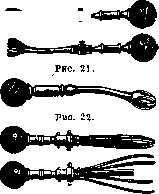
Figure 23.
can undoubtedly prove to be effective, while at the same time being more harmless than any other agents. Observations by Lurie showed that they are convenient for use, give a definite positive result, are cheap, and should occupy one of the first places among chemical contraceptives. Another dry method of using contraceptives, namely the insufflation of powders containing quinine or some other chemical substance, is rarely used. This is due to the inconveniences of application (mostly with the help of special sprayers, powder blowers) (Figs. 21-23), as well as unreliability, since the distribution of the powder in the vagina cannot always be carried out properly. Consequently, the introduction of powder is not so simple, and the high cost of the sprayers makes them unsuitable for mass use, due to which they are not manufactured at all in the USSR. The introduction of powders enclosed in capsules has also not justified its purpose. Recently, contraceptive pastes of various compositions have become particularly widespread both in our Union and abroad. The paste released in our country under the name "Preconsol" (containing chinozol, glycerin, boric acid, and tragacanth) should be recognized as one of the best modern agents. It gives good results, is odorless, is easily washed out of the vagina, and does not stain linen. It is used either independently or in combination with mechanical agents. No special changes were detected on the normal mucous membrane after its use. In addition, it has a therapeutic effect and has no contraindications for its prescription. Vaginal douches should be classified as chemical agents; they, like many other contraceptives, can be used independently or performed in conjunction with the use of some other agent, both mechanical and chemical (for example, caps, globules, and others). For douching, one usually uses one or another agent that acts destructively on the spermatozoon (such as a 2% solution of potassium permanganate, acetic, lactic, salicylic acids, table salt, quinine, and many others). Douching should be performed with an Esmarch irrigator (the various kinds of rubber bulbs available can hardly be recommended for widespread use and, furthermore, can hardly be considered sufficiently hygienic). The water should be warm (not above 29-30°); cold and hot douches are undoubtedly harmful. It is better to perform douches while lying down or, in extreme cases, on a bidet. Although douches as a contraceptive are quite widespread, in everyday life they are often ineffective. Besides this, they cannot
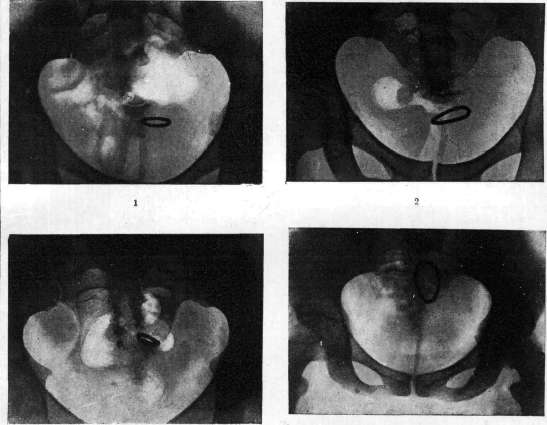
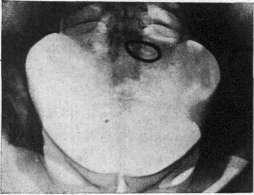
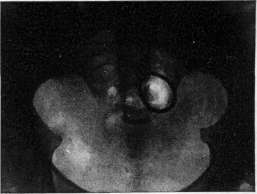
Figure 1. Protection with a ring from 1929 to 1933; repeated exchange of the ring; ring is free in the cavity; no changes either subjectively or upon objective examination. Fig. 2. Protection with a ring for 8 months; ring is free in the cavity; no changes. Figure 3. Protection with a ring from 1929 to 1933; four-time insertion of the ring; ring is free in the uterine cavity; no changes. Figure 4. Ring from 1929 to 1933; one month after insertion. Figure 5. The same; 1 year and 5 months after insertion of the ring; ring is free in the cavity; changes in position on the image. Figure 6. Nulliparous (22 years old); two-time insertion of the ring with a break of 2 1/2 years; during the break - one birth of a healthy child and one abortion. (According to Rabinovich.)
to be recognized as completely indifferent to the woman's organism, especially with frequent use. A disadvantage of douching is also that it must be performed immediately after sexual intercourse—at a moment when the woman is in particular need of rest. A clear comparative evaluation of vaginal agents is provided in the table below.


should be kept in a cool, dark, and dry place and used if possible in a fresh state, no later than a 2-week period. Intrauterine agents can be mechanical and chemical. Mechanical agents. Pessaria intrauterina have several models, but in general, they all represent a mushroom, the stem of which is directed into the cervical canal (by virtue of which they are considered by some as intracervical agents) and protrudes into the uterine cavity, while the cap covers the cervix from the vaginal side (they are given by some the name of studs, occlusive, spring pessaries, since their stem, placed in the uterine cavity, usually has a spring). Pessaries of this type are made of gold, silver, aluminum, and ivory. They are usually inserted with the help of special inductors (Figs. 24-28, 31, 33). To avoid complete occlusion and to leave free space for the drainage of secretions from the uterus, another modification of intrauterine pessaries has been proposed, so-called obturators. The most primitive type of pessaria intrauterina is a glass rod (Fig. 29): it is inserted into the uterine cavity (without reaching its fundus) and is attached to the cervix with a suture for retention. Individual authors have also recommended the simple application of a suture to the cervix directly below its internal os (Fig. 30). Recently, agents prepared from silkworm gut (Pust) of various sizes and shapes, and silver elastic rings (Gräfenberg) have begun to be used (Figs. 32, 34-35). Pessaries made of silkworm gut have the appearance of a rosette, a star, or are equipped at the end with a glass rod placed on the vaginal part of the cervix. Insertion
Practical results of the use of contraceptives according to data from the State Scientific Institute of Motherhood and Infancy Protection (Okhmatmlad) in Moscow for 1926-28.
Table: Practical results of the use of contraceptives according to data from the State Scientific Institute of Motherhood and Infancy Protection (Okhmatmlad) in Moscow for 1926-28. Number of those who discontinued contraception or switched to coitus interruptus. Number of pregnancies. Number of refusals from the prescribed agent. Number of complications. Name of the agent. Character of complications.
1. Kafka cap. 2. The same and Chinosol paste. 3. Mensinga cap. 4. The same and Chinosol paste. 5. Mensinga cap and Chinosol paste. 6. Cocoa butter and Chinosol suppositories (or gelatin and Chinosol). 7. Chinosol.

Speaking of vaginal contraceptives, one must also point out a new vaginal agent proposed by Dubinchik. A biological preparation, called by Dubinchik "biolactin," is prepared by fermenting skimmed sterile milk with a culture of the Bulgarian bacillus of a mucous race. Biolactin is a light, cream-like liquid which, when introduced into the woman's vagina in an amount of 5-6 cm3, covers the surface of the entire mucous membrane, all its crypts, with a thin layer, and covers the cervix; at the same time, the Bulgarian bacillus continues to produce lactic acid, reaching a strength of pH = 3.4, at which the movement of spermatozoa is instantly paralyzed. The beneficial side effect of biolactin consists in the fact that it acts as a cleansing agent on the walls of the vagina, and therefore it is successfully used for various kinds of colpitis and endocervicitis; thanks to this property, when using it as a contraceptive, the woman is freed from the need to douche post coitum, which is mandatory when using various chemical contraceptives and which is very burdensome for the woman. Biolactin is prepared in special glass cylindrical tubes, which are inserted by the woman into the vagina before intercourse; the biolactin is squeezed inside with the help of a glass piston rod.



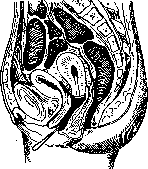
Figure 24. Metal pessary.
Figure 25. Metal pessary on a wire handle.
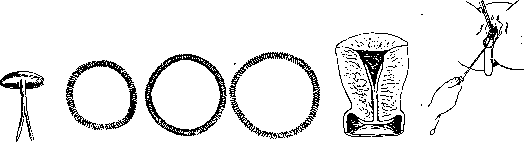
Figure 26. Insertion of a metal uterine pessary.
Figure 27. "Sterilet" pessary.
Figure 28. Inductor for the "Sterilet" pessary. Figure 29. Glass rod. Figure 30. Application of a suture to the cervix.



Figure 31. Uterine pessary.
Figure 32. Gräfenberg's silver ring. Figure 33. Uterine pessary in the uterus. Figure 34. Insertion of the ring.


Figure 35. Removal of the ring. Figure 36. Silkworm gut pessary. Figure 37. Obturator. Figure 38. Silkworm gut with a cap.
Figure 39. Silkworm rosette. They are inserted using a special probe after exposing the cervix with specula and grasping it with Museux forceps (Figs. 36-39). The insertion of both these devices and, in general, all intrauterine pessaries must be performed only by a physician (under no circumstances by the woman herself, as is permitted by some authors), since difficulties or injuries are possible even in the hands of an experienced specialist. All the listed intrauterine pessaries must be recognized as the most harmful of all existing contraceptives, and their use not only cannot be recommended but should be prohibited. From the very beginning of its activity, the Central Commission for the Study of Contraceptives held the point of view that extreme caution must be observed with all intrauterine manipulations undertaken for contraceptive purposes and that they should generally be removed from practice. Gubarev and Selitsky pointed out that there is already sufficient data eloquently speaking about how disastrously all intrauterine contraceptive interventions affect the sexual sphere. Intrauterine devices are condemned by the overwhelming majority of gynecologists. They were also condemned at one of the recent congresses of German gynecologists (Frankfurt am Main, 1930), where these devices were classified as highly dangerous (including silkworm and metal rings) due to the serious consequences that quite often occur with their use. Thus, severe forms of metritis, endometritis, inflammation of the ovaries and tubes with threatening septic phenomena, erosions, leukorrhea, perimetric pains, the onset of ectopic pregnancy, the disappearance of the inserted ring, etc., have been described. Individual authors also point out that all these devices are not contraceptive, but abortive. Furthermore, contrary to popular belief, pessaries of this type are far from always effective; the onset of pregnancy is not an exception. It is also difficult to speak about maintaining the sterility of these devices and excluding the introduction of infection. Everything said, of course, applies equally to new proposals, to new types of intrauterine pessaries—to silkworm rosettes and to metal rings. Despite the rather categorical statements of proponents of new modifications (Pust, Gräfenberg, and others) and persons who have resorted to them, one cannot consider these new devices indifferent, due to which the question of the possibility of using them in everyday practice as contraceptives naturally falls away. For now, one can only speak of their use in a clinical institution for the purpose of further verification. (See separate table, pp. 463-464.) Particularly indicative in this regard is the report of the Central Commission by Stefko-Rechmensky-Lurie (1926). Observations by these authors clearly showed that the introduction of silkworm has an effect on the physical-chemical processes in the uterus, on increasing the alkalinity of the uterine secretion; the noted deep changes in the mucous membrane of the uterus can also affect the development of the fetus. Silkworm, therefore, is not an indifferent agent for the uterus and consequently is not suitable as a contraceptive. To qualify the described changes as physiological and attribute them to specific changes in the normal ovarian-uterine cycle, as Gräfenberg does, is hardly correct. Clinical results with the use of silkworm also proved disappointing. Thus, from the comparative data of the polyclinic of the State Scientific Institute for the Protection of Motherhood and Childhood named after Lebedeva for the first years of its existence, it is evident that complications were most often noted with silkworm. Such were observed in 100% of cases; among them, erosions, bleeding, leukorrhea, and menorrhagia were noted. Among the disadvantages, it is necessary to include the difficulty of removing the silkworm (which is also noted by proponents of its use). Although some authors (e.g., Gräfenberg) believe that the dangers of silkworm are significantly exaggerated, that with strict adherence to contraindications (gonorrhea, inflammatory processes, pathogenic microorganisms in secretions, etc.) they can be avoided, and that in certain cases (hypoplasia, ovarian hypofunction) an inserted intrauterine pessary can even have a therapeutic effect, there is no reason to share such a point of view, and with silkworm, one must observe the same caution as with other intrauterine devices, and it is better to refrain from using it altogether. Chemical intrauterine agents consist of introducing various types of antiseptic substances into the uterine cavity: Tinctura Iodi, iodine + glycerin, carbolic acid, etc.; most often, iodine alcoholic tincture is used. These substances can be used in the form of swabbing, infusions, or injections (injectiones intrauterinae). Swabbing is performed using a Playfair probe, while infusions are performed with a Braun syringe with a long tip. In a number of cases, a necessary condition is preliminary sounding of the uterus and dilation of the cervix. Swabbing or infusions are performed 1 or 2 times a month, while some (e.g., Mironov) advise introducing Tinctura Iodi every 8-10 days for greater effectiveness. This method initially became particularly widespread in Siberia and the Volga region due to the significant revival of the question of intrauterine therapy in general and its detailed development by Grammatikati. In the last decade, intrauterine injections have begun to be used almost everywhere and not only by doctors but also by midwives and even persons without medical qualifications. These agents have become the most common method of preventing pregnancy, receiving the names 'lubricants,' 'iodine injection,' etc. The spread of these agents can be explained by the improvement and simplification of the technique of intrauterine therapy, the incorrect interpretation of them as completely harmless and almost absolutely reliable means, and mainly by the fact that intrauterine infusions seemed most acceptable to women, as well as to men, as a method that least of all disturbs the harmony of the sexual act and the complex psychological experiences associated with it. With this method, the woman is, as it were, freed from the obsessive idea—the fear of pregnancy occurring—which undoubtedly must positively affect psychosexual emotional experiences both during the sexual act and in the period of sexual arousal preceding it. But these, admittedly, significant advantages of intrauterine swabbing and infusions are far from being offset by the serious disorders of physiological functions and pathological processes that arise on the basis of their use. Complications occur both after infusions and injections, as well as after swabbing, since in their basic features they do not present a substantial difference (contrary to the opinion of some that swabbing, when performed skillfully, is safer); if one can speak of any difference, it is only in relation to the immediate short-term consequences, which perhaps may not be as serious with swabbing, but the long-term results, both with them and with infusions, appear equivalent and more or less uniform. Neither any individual characteristics of the person resorting to it, nor any subtleties in the performance of this 'prophylactic' intervention can guarantee the safety of the method or mitigate the ensuing disorders. The possibility of various kinds of complications was pointed out at one time even when using intrauterine devices for therapeutic purposes. All these immediate consequences were summarized by Fischer—the possibility of fluid penetrating through the tubes into the abdominal cavity, the danger of fluid penetrating into the vessels and veins of the uterus in the presence of inflammatory diseases, the danger of infection, the chemical effect of the introduced fluid, shock—and were confirmed by many gynecologists. And the proponents of the method themselves (e.g., Grammatikati) admitted the possibility of fluid penetrating into the tubes, although they considered this complication exceptional and capable of arising only under appropriate conditions. By virtue of all this, many gynecologists do not resort to intrauterine agents even for therapeutic purposes, and the Moscow school (Gubarev, Pobedinsky, Snegirev, Ivanov N. Z., Selitsky, and others) was and is especially negative towards them. Clinical data show that intrauterine injections undertaken for contraceptive purposes can not only lead to various female diseases but also cause disorders of the entire organism. An immediate harmful consequence of intrauterine injections can be the introduction of infection, bleeding, and shock; more distant consequences can be menstrual disorders, inflammatory diseases of the uterus and its appendages, infertility, early menopause, endocrine disorders, as well as various harmful effects on subsequent pregnancy and the fetus. The reality of these complications and consequences has been confirmed by quite numerous observations; among other things, Pobedinsky (the son) in his report to the Central Commission (1929) pointed out that among his patients, both immediate and long-term consequences were often noted. The harmfulness of 'prophylactic' swabbing and infusions is also confirmed by experimental data and histological studies. Most indicative in this regard are the observations of Grammatikati himself.
He established two facts as a consequence of the beneficial effect of intrauterine injections on the diseased genital sphere: 1) changes in the mucous membrane of the uterus and, in connection with them, changes in physiological functions (cessation of menstruation) and 2) cessation of ovulatory activity (proven microscopically as well). He qualifies the changes that occur as a 'temporary climacteric,' manifesting itself in a complete rest of sexual activity, which is necessary for greater success of the treatment. It is undoubted that similar changes can also take place with intrauterine injections used for a 'prophylactic' purpose; they must be expressed more sharply in a healthy organism due to its greater reaction to the irritation produced and due to the greater ability of the mucous membrane to absorb the introduced substance. The term 'temporary climacteric' can with full right be applied also to injections undertaken for contraceptive purposes, by virtue of which everything that Grammatikati cited to prove the benefit and validity of the method he developed is at the same time proof of its harm as a method for preventing pregnancy. This method, undertaken in the prime of a woman's life, with the complete well-being of her genital sphere and the entire organism, can lead not only to a 'temporary climacteric' but also to a more persistent one, which can already be considered an early climacteric period, caused by the reduced activity of the internal secretory apparatus of the ovary and the premature extinction of all the basic physiological functions of the woman under the influence of the 'prophylactic' manipulations performed. The latest studies by Chertok (1926) and Levinsky (1928) are also indicative. On the basis of a number of cases of cauterization of the uterine mucosa in patients for whom the uterus had to be removed for one reason or another, Chertok came to the conclusion that tincture of iodine causes necrosis and shedding of the mucous membrane and that these processes can occur unevenly, both in the sense of deeper penetration into the tissues and in the sense of spreading over the surface. Levinsky cauterized the uterine mucosa in rabbits with the aim of studying its relationship in such cases with the ovary and, on the basis of his research, came to the conclusion that cauterizations with a weak solution of tincture of iodine cause not only atrophic processes in the uterus but also similar fibrous and atrophic changes in the ovary. The harmful effect of iodine was also proven in another way. Thus, Braude and Shvartsman, upon its parenteral administration to sexually mature female rabbits, noted degenerative phenomena in the ovaries, the death of the follicular apparatus, and, along with this, infertility. Selitsky pointed out, on the basis of histological studies of the fetal egg (artificial abortion due to sharply pronounced pulmonary tuberculosis after three unsuccessfully performed intrauterine infusions), that after these 'prophylactic' infusions, certain changes occur in the fetal egg, mainly on the part of the epithelium of the villi. Thus, for example, fibrosis of the villi, melting of the normal epithelial layer, obliteration of the villous vessels, and ingrowth of the syncytium are noted. In many villi, Langhans cells are found in small quantities and in an atrophic state. On the basis of these data, intrauterine lubrications and infusions can also be considered as embryotoxic agents (see below). All this taken together shows that intrauterine lubrications, infusions, and injections produce gross disturbances in the genital sphere, disorders of basic physiological functions, and also have a detrimental effect on the entire organism as a whole, by virtue of which their use as contraceptives is unacceptable. This point of view is held by the majority of authoritative gynecologists of the USSR; the Leningrad and Moscow commissions, which evaluated all currently available contraceptives, qualified them in the same way in their decisions. The opinion of Mironov and some others should be set completely apart. On the basis of his many years of observations, he believes that 'periodically repeated, every 8-10 days, intrauterine injections of iodine tincture' are a completely reliable contraceptive, that they 'act in a destructive manner on the fertilized egg' and 'liquidate pregnancy in such a period when it cannot yet be detected clinically.' Mironov also does not believe that these injections have a harmful effect on the mucous membrane of the uterus. With his conclusions, Mironov partly confirms the point of view of some other authors that these agents are not contraceptives but abortifacients, fetal-expelling agents, which speaks even more for the irrationality of their use. Their reliability can also be easily disputed, since every gynecologist has had to observe the onset of pregnancy after even multiple infusions (cases of subsequent normal course of pregnancy, normal labor, and the birth of healthy children have also been described). In view of the existing disagreements and the widespread use of the method, the Central Commission held a special All-Union Conference (1929) on intrauterine injections with the participation of prominent authorities. The conference, which took place with the participation of about 300 doctors, condemned them as contraceptives and adopted a resolution that 1) intrauterine iodine injections ('lubrications') are permissible to use as a therapeutic agent, 2) in the presence of any signs of pregnancy, intrauterine injections ('lubrications') should be qualified as the performance of an abortion, 3) the outpatient performance of intrauterine injections ('lubrications') as a means of preventing conception is not recommended. The issue was subsequently discussed in the Scientific Medical Council of the People's Commissariat of Health, which unanimously joined the conference's resolution. On the basis of this, the People's Commissariat of Justice and the People's Commissariat of Health issued a circular order ('Problems of Healthcare,' 1930, No. 4), stating that the performance of intrauterine injections (lubrications) of iodine and other substances in the presence of any signs of pregnancy should be considered as the performance of an abortion, and their commission in violation of the conditions provided for by Article 140 of the Criminal Code should be prosecuted under the specified article. Various other intrauterine methods, such as, for example, cauterizing the uterus with steam (Snegirev's vaporization), electric current (Apostoli), and finally electrocoagulation according to Prudnikov, represent methods of permanent sterilization of women.
Contraceptives
women (see Sterilization) and therefore cannot be considered as contraceptives. Unnatural contraceptives. Here, in the first place, one should name coitus interruptus (see Coitus). Of all contraceptives, coitus interruptus is perhaps the most widely used in all strata of the population, and in all countries, including the USSR; its widespread use has been noted both in cities (Leningrad) and even in villages. Such widespread use is explained primarily by the longevity of its application—it has been practiced for centuries at a time when other effective and at least relatively safe means did not exist at all, and then by its simplicity and the possibility of using it without consulting a doctor. Unfortunately, the spread of this method has been facilitated until recently by an erroneous view of its complete harmlessness, shared even by some doctors; thus, some (e.g., Rakhmanov) consider coitus interruptus a 'very humane,' 'extremely simple' method, while others (e.g., Lichkus), pointing to its extreme prevalence in Leningrad, say on the basis of personal observations that they know of cases where it was successfully used for a number of years without any harmful consequences. Such a point of view can hardly be considered correct. The majority of authors, based on a whole series of clinical observations, hold the opposite point of view and believe that coitus interruptus is one of the most harmful methods for both men and women, and that it should not be recommended and should not have a place in practical life. Observations of recent years (e.g., Dickinson, Magnus Hirschfeld and Linsert, et al.) to a significant extent refute the prevailing opinion about the reliability of coitus interruptus (for example, failures are noted in 70%). Coitus interruptus was the subject of discussion in special initial commissions for the study of contraceptives in Moscow (1923) and Leningrad and was unanimously condemned. The Central Commission for the Study of Contraceptives has always held the view of the harmfulness and inadmissibility of using coitus interruptus as a contraceptive. The harm of coitus interruptus for both women and men can be very diverse. In women, a connection has been noted between coitus interruptus and a number of diseases of the genital sphere (endometritis, metrorrhagia, chronic perimetritis, parametritis posterior, salpingitis, oophoritis, erosions, elongation of the cervix, increased growth of existing tumors, retroflexio uteri). In addition, coitus interruptus causes disorders of the nervous system in women (neurasthenia, hysteria, neuralgia, palpitations). In men, the harmful consequences of coitus interruptus often manifest in sexual neurasthenia, a decline in potency, pollutions, and spermatorrhea. How often all these harmful consequences occur with long-term use of coitus interruptus is a question to which no answer can be given, since only an insignificant part of those people who practice this method consult doctors, and it is impossible to conduct any statistical survey here for very understandable reasons. All pathological phenomena caused by coitus interruptus find their explanation, on the one hand, in a gross violation of the physiology of the sexual act, and on the other, in congestive phenomena in the pelvic cavity. Moriz Porosz (1911) points out that the rush of blood observed during coitus is not fully equalized, as a result of which hyperemia arises, and the remaining local congestion acts as a source of irritation (it is natural that with long-term and frequent use of coitus interruptus, all this is more pronounced, and painful symptoms and sensations manifest more sharply). Porosz also attaches no less importance to subsequent sexual neurasthenia; he (as well as others) links its emergence to a violation of the rhythm, tempo, and character of the sexual act, and then to easy excitability, the desire for new coitus (on the basis of dissatisfaction), and sexual excesses. Kurdinovsky explains menstrual anomalies by increased ovarian activity (due to an increased rush of blood to them) and increased production of hormones that sensitize the uterine mucosa, in connection with congestive hyperemia in the small pelvis. The increase in the volume of the uterus occurring for the same reasons contributes to changes in its position and causes painful sensations both in the genital sphere and outside it. The opinion expressed at one time by Lapinsky regarding the significance (in the sense of the possibility of nervous and psychic deviations) of a constantly existing source of irritation in the genital sphere is shared by the majority of authors, and in recent years has been confirmed by Khomyakova-Buslova from an anatomical and physiological point of view. Noting the direct connection of the genital sphere (thanks to the significant network of nerves and nerve plexuses contained within it) with the autonomic nervous system, Khomyakova-Buslova says that all deviations in the genital organs caused by coitus interruptus are reflected in the autonomic nervous system and the endocrine system closely connected with it. Besides all this, in the opinion of some authors, the harmful influence of coitus interruptus may also be caused by the lack of intake of seminal fluid and prostate secretion into the female organism during it. Other rather diverse unnatural means for preventing pregnancy also deserve deep condemnation. All of them undoubtedly can in one way or another influence the sexual act, violate its physiological character, lead to a number of local disorders, affect the entire organism, and therefore cannot be recommended under any circumstances. These include coitus incompletus (see Coitus), extra-vaginal sexual intercourse, and other methods that are already on the border of sexual perversions. Physiological contraceptives are few in number. These include temporary, during certain periods, sexual abstinence and prolonged breastfeeding. The so-called coitus intermenstruus proposed by Kapelman (abstinence from sexual life for three to four days before menstruation and two weeks after its end) as an effective means against pregnancy, in addition to the difficulty of implementing it, proved to be untenable (thus, subsequent observations established the onset of pregnancy in the presence of sexual life at times when, according to the indications, conception should not occur). The so-called 'seasonal sexual abstinence' in certain months (mainly May, June) also has no basis whatsoever. The opinion that has existed for centuries about the role of breastfeeding and the significance of prolonged breastfeeding in the occurrence of infertility is essentially incorrect. Prolonged, long-term breastfeeding brings nothing but harm to both mother and child, and therefore cannot be recommended as a contraceptive; moreover, it does not always achieve its goal: the onset of a new pregnancy is observed quite often. Hence it is clear that its value as a contraceptive is minimal. Biological methods (humoral and hormonal) of temporary sterilization of women arose relatively recently and are directly related to the development of the doctrine of immunity and internal secretion. The experiments conducted in 1899 by Landsteiner with the introduction of bull spermatozoa into a guinea pig (cessation of the motility of bull spermatozoa when mixed with the serum of an immunized guinea pig), Metchnikoff's observations (1900) on the introduction of human spermatozoa into animals, the works of Moxter (1900) and London (1902) on spermolysins, Adler on heterospermatoxins, the obtaining of ovariotoxic serum by Skrobansky (1904), and further research by Alekseev on ovariotoxins are effectively the fundamental works that laid the foundation for the scientific development of the doctrine of biological sterilization and served for its further development and subsequent practical application on women. The introduction of ovariotoxins to obtain artificial infertility was first used by Leslie in 1901, while the first fundamental studies on sperm immunity belong to Tushnov (1911-1924); the research of Savini and Castano (1911) also belongs to the number of the first observations. Observations on sperm immunization continued throughout the subsequent decades of the 20th century, and along with the detailing of the theoretical side of the issue, the study of questions of fertilization and the biology of the spermatozoon, experiments were undertaken with the introduction of other substances into the organism to obtain sterility. Although at the present time this issue appears far from resolved, nevertheless, observations on animals and the results achieved have allowed the application of the biological method to humans as well. Of all the available methods, the most studied and developed is sperm immunization. All authors who worked experimentally on this issue, with the exception of individual researchers (Mikhailov, 1915), noted the possibility of obtaining artificial infertility under the influence of sperm immunization. The mechanism of its occurrence is not yet sufficiently clear.
Sperm immunization can be performed with an iso- or heterogeneous antigen, with live or dead spermatozoa; active immunization is most frequently used. Material for obtaining isogenic sperm is collected via masturbation, coitus interruptus, or coitus condomatus (in cases where sperm is taken from an unrelated man, it is necessary to perform a Wassermann reaction beforehand and exclude the presence of tuberculosis and gonorrhea). The obtained sperm (with the adoption of appropriate precautions) is mixed with physiological saline solution (according to Kolpikov 1:7, while Lyalin diluted the entire ejaculate in 20 cm3; Naidich and Zaitseva-Kalinovskaya diluted the ejaculate 10-fold for the first injection, and for subsequent ones only up to 5 cm3). The antigen is usually administered subcutaneously or intramuscularly (its intravenous and intraperitoneal administration has been almost completely abandoned). The dosage of individual injections and the total amount of administered antigen also do not appear to be the same among different authors. Thus, Kolpikov conducted immunization in 6 injections, with injections made every 4 days of 10 cm3, while Lyalin limited himself to 3-4 injections of 0.5-5 cm3 at intervals of 7 days (Levin adhered to approximately the same methodology). Andreev and Kostromin used a standard serum for clarification (a bacterial emulsion was taken for the standard, containing 2 billion bacterial bodies in 1 cm3 and equal to 35 million spermatozoa; Kartashev and Kostromin adhered to the same standardization in their experiments on animals) and from the initial standard established 4 more standards of 70, 175, 350, and 500 million spermatozoa in 1 cm3. Andreev and Kostromin performed injections 2 times a week (the entire course lasted 2-4 weeks), with a gradual increase in the doses of the administered emulsion (from 0.5-1 to 5 cm3). Heterogeneous sperm immunization was performed with bull and ram spermatozoa. Ram sperm vaccine was administered by Kolpikov in the same way as human, while bull sperm was used in a formalin emulsion (500 million spermatozoa in 1 cm3) 2 times a week (the entire course consisted of 8-10 injections—Naidich); in general, some believe that multiple injections are necessary to obtain a positive effect, while a single administration of spermatozoa is ineffective. The reaction to the administration of antigen (both iso- and heterogeneous sperm) can be different. Although individual authors note a complete absence of both general and local reactions, such can undoubtedly be observed and may be caused by certain characteristics of the organism, the nature, and the quantity of the doses of the administered antigen. And indeed, observations show that along with a weak local reaction with generally good well-being, other reactive phenomena can take place, sometimes quite sharply expressed: slight pain at the injection site, small infiltrates; there may also be a stronger reaction—elevated temperature, formation of infiltrates with an inflammatory reaction (up to an abscess), weakening of vision, and poor well-being. Prosolupov in his cases almost as a rule observed sharp soreness at the injection site (regardless of the amount of administered antigen), complaints of dizziness, darkening in the eyes, general weakness, and sometimes difficulty breathing; he also noted infiltrates that resolved only by the end of the second week. The reaction is not equivalent for individual injections; it is most strongly expressed after the 4th injection, during which sharp soreness was noted for 2-3 days, a semi-fainting state, severe dizziness, increased blood pressure, slight arrhythmia, loss of ability to work, etc. Along with all the indicated reactive phenomena, Andreev and Kostromin noted cramping pains in the lower abdomen on the day of the injection and bloody discharge from the uterus; they view this peculiar reaction as a hormonal effect under the influence of sperm immunization. No changes in urine and blood are noted after the injection. Along with preliminary and subsequent analyses of urine and blood (and sometimes feces), as a rule, the erythrocyte sedimentation reaction and an investigation of the strength of the spermotoxic serum using the agglutination reaction are performed. Libido is preserved (only some have described a slight decrease), and in general, during the course of immunization, many prohibit sexual intercourse. There is very little information about more distant results so far. There are individual indications that following the end of sperm immunization, there is a tendency toward increased menstruation, some apathy, psychic instability, and slight irritability. Sperm immunization has no effect on pregnancy or fetal development; when the antigen was administered in the presence of an unrecognized pregnancy, it proceeded completely normally, there was no premature termination, and fetuses were born of normal weight, without any deviations from the norm. When examining embryos (Prosolupov) in cases of artificial abortion, it was also not possible to note any changes in them. The main contraindications for the use of sperm immunization are tuberculosis, kidney diseases, and inflammatory diseases of the genital sphere. The results of sperm immunization, both iso- and heterogeneous, appear far from uniform. For various authors, efficacy ranged from 42% to 100%. The difference in the percentage of positive results can apparently be caused not only by the imperfection of our knowledge in this matter, the type of sperm immunization, its methodology, and the unequal doses used, but also by the difference in the contingent of women (e.g., constitution, age, nature of menstruation, number of previous births, abortions, etc.) who were subjected to sperm immunization, the difference in the timeframes in which it was performed, and also apparently the unequal interpretation of the term of actual onset of artificial infertility under the influence of the administered antigen and the exclusion of the possibility of natural infertility. Thus, for example, some consider it possible to speak of a positive effect already 3 months after the start of sperm immunization, while for others this period seems far from sufficient—in their opinion, results can only be judged after a year, since a delay in pregnancy of 3 to 6 months can be accidental. I. N. Alexandrov considers those published cases in which sperm immunization was started shortly after an artificial abortion to be especially doubtful in this regard, since after it, a natural pause of 3-7 months can be observed, and sometimes even longer, there may also be amenorrhea, and finally, more prolonged infertility. The duration of sterility and the question of repeated immunization also remain unclear. Existing assumptions (Kartashev and Kostromin) that repeated immunization after a certain time provides sterility for a longer period still need significant verification, and for now, one must approach it with special caution in view of the possibility of a cumulative effect of the repeatedly administered antigen and the harmful effect on the ovary and especially on its follicular apparatus. The question of which type of sperm immunity should be given preference at this time remains open in view of the small number of observations and rather contradictory opinions about iso- and heterogeneous sperm. Thus, some believe that they differ little in results, while others give clear preference to heterogeneous sperm and believe that it is easier to obtain, that it does not transmit diseases characteristic of humans (Naidich), that isogenic sperm cannot be obtained in a sterile form, and that in general, the human spermatozoon does not possess any advantages over animal spermatozoa (along with this, it must be clarified in the future which spermatozoa—live or dead—are more expedient to introduce as an antigen). On the other hand, Rozanov's observations to a significant extent undermine the significance of heterogeneous sperm immunization. Rozanov in his experiments showed that spermotoxic serum against bull spermatozoa is not valid in relation to human spermatozoa and noted a complete absence of the effect of anti-bull and anti-ram serum obtained from a woman on human sperm for 4 or more hours. Based on these observations, Rozanov is skeptical about all kinds of attempts to immunize a woman with spermatozoa of various animals and believes that heterogeneous sperm immunization does not differ in any way from parenterally administered proteins (some others, e.g., Levin, look at it the same way) and that the biological equivalent of human sperm is only the monkey spermatozoon (Rozanov's opinion is shared by others, and, among other things, Sakharov points out that these experiments to a significant extent devalue attempts at heteroimmunization). All modern data show that much in the question of sperm immunization still requires further experimental development, by virtue of which there can be no talk of its mass application, and in each individual case, it must be performed with definite caution.
Sperm immunization of a woman can take place only after a thorough preliminary clinical examination, consideration of contraindications, and only in women who already have children, since there are no guarantees that the sterility caused by sperm immunization is temporary and not permanent.
Additionally, it is necessary to remember the degenerative changes occurring in the ovary (Savini and Castano, Gudim-Levkovich) and to take into account that the resulting infertility may owe its origin not to spermotoxins, but to changes in the woman's genital apparatus arising under the influence of sperm.
The emergence of hormonal sterilization is due to the latest achievements in the field of internal secretion; it was first conducted experimentally on animals by Haberlandt, who, in order to influence the ovulation process and thereby obtain sterility in females, performed transplantation of ovaries from pregnant animals (in the second half of pregnancy) into rabbits and guinea pigs.
Haberlandt explained the positive results obtained in the initial experiments—the resulting infertility—by the hormonal restructuring occurring in the organism under the influence of the internal secretion of the interstitial gland (histologically, significant proliferation of the interstitial gland and degenerative changes in the follicles were noted) and believed that the same results could be obtained in women not only by subcutaneous administration of ovary preparations from pregnant animals, but also by their administration per os.
In his subsequent research, Haberlandt confirmed his assumptions and proved that hormonal sterilization can indeed be caused by both internal and subcutaneous administration of extracts and that, depending on their quantity, infertility can be more or less prolonged; it is caused by "Hyperfeminierung" of the female organism (recently he has also proposed a special preparation, "Infecundin").
Haberlandt's studies, which opened the era of hormonal sterilization, were soon verified by a number of authors. Observations were also undertaken with the administration of other organotherapeutic preparations (e.g., insulin—Vogt, 1929, Krupennikov, et al.) and, for control purposes, non-specific substances (Kohler).
All these and subsequent experiments allow one to come to a definite conclusion that the possibility of achieving hormonal sterilization in women is not excluded, but its practical application is premature for now.
The harmful effect of hormonal sterilization on the internal secretory activity of the ovary also cannot be entirely excluded. There are many experimental works indicating the possibility of causing deep changes in the follicular apparatus through such sterilization.
Stoeckel (1931), in one of his "32 theses" on contraceptives, pointed out that temporary hormonal sterilization is still in the stage of a working hypothesis; in general, it is doubtful that "luteinization" produced in this way would not harm the function of the ovary; this, in turn, confirms the idea expressed by Sakharov and Pavlenko back in 1928 that the necessity of "prolonged, almost permanent" administration of extracts is sufficient "to reduce this method of sterilization in human practice to zero."
Altaev (1930), on the basis of his research, came to the conclusion that sterilization obtained in this way is inconsistent, weakly expressed, and cannot even be considered hormonal. Contrary to Haberlandt, the author did not observe proliferation of the interstitial gland, and he tentatively attributed the mechanism of the resulting infertility to possible intoxication of the organism by the transplanted ovaries of pregnant animals.
It is also necessary to take into account the microscopic picture, and those authors are quite right who, like, for example, Gudim-Levkovich, believe that when studying the mechanism of artificially induced sterilization, one must consider, along with other factors, the role that changes in the ovary, and in particular in its follicular apparatus, can play in this mechanism.
Research shows that such changes take place with various methods of inducing artificial sterilization by hormonal means. When using extracts of corpora lutea from pregnant cows, Sakharov and Pavlenko noted cystic enlargement of follicles in guinea pigs, in some places wrinkling of the eggs, and in rats, disintegration, atrophy of the follicles, and delayed maturation.
Pavlenko, after the administration of ovary extracts from pregnant cows, described depression of the follicular layer, delayed maturation of follicles, and other degenerative changes; Gudim-Levkovich observed degenerative changes in the follicular apparatus and in the egg in rabbits upon the administration of placentin, testicular emulsion, and milk; changes in the ovaries of white mice—an extreme degree of their irritation—were described by Ulezko-Stroganova and Klyukov upon the administration of placental emulsion from early stages of pregnancy; similar disturbances in the development of the Graafian follicle were discovered by Krupennikov in experiments with subcutaneous administration of insulin, etc.
All this clearly shows that the last word has not yet been said on the question of hormonal sterilization and that for a final resolution of the question regarding the admissibility of its use in humans, further experiments and a more precise clarification of the nature of the changes occurring in the ovaries and the possibility of restitutio ad integrum after the cessation of the administration of these or other extracts are necessary.
X-rays began to be used as contraceptives relatively recently. The basis for this was successfully conducted cases of temporary X-ray sterilization for various types of diseases of the female genital sphere (e.g., chronic inflammatory processes, juvenile bleeding, metropathies, etc.).
But even with these indications, the overwhelming majority of gynecologists and radiologists recommend not to immediately proceed to treatment with X-rays, to use them primarily in such cases (gonorrheal, tubercular processes) where the possibility of pregnancy is excluded, and, in addition, to observe special caution (especially in girls and women of childbearing age) to avoid deeper damage to the ovarian tissue, the possible transition of temporary X-ray menostasis into a more prolonged or even permanent one, and the possibility of the birth of inferior offspring in the future.
All these considerations make one treat the use of X-rays in healthy women with even greater caution, especially for the purpose of obtaining temporary artificial infertility. Clinical and experimental data confirm this with sufficient conviction and indicate that X-rays as contraceptives should not have a place in practical life.
Porkhovnik pointed out in 1927 at the 1st All-Ukrainian Congress of Gynecologists and Obstetricians that not a single "at all prominent foreign or Russian radiologist" resorts to them at all for this indication. And indeed, all authors who have touched upon this question speak negatively about X-rays as contraceptives.
This is due to the fact that it is difficult to perform temporary X-ray sterilization, since, in view of the insufficient study of the dosage problem, it is difficult (and according to some, almost impossible) to choose the necessary dose, by virtue of which the possibility of more persistent damage to the ovarian tissue, its functional disorders, and harmful influence on the fetus cannot be absolutely excluded.
One must not forget about individual biological characteristics and the unequal reaction associated with them in individual women, and that the dose achieved on the basis of physical changes cannot always be an indicator of the subsequent biological effect (Frenkel).
Standing apart is the opinion of Borman, who, being an ardent supporter of X-rays for the purpose of preventing pregnancy, repeatedly pointed out in his public speeches and in a specially published booklet ("A New Method of Preventing Pregnancy") that in the hands of a good specialist, this method as a contraceptive is "harmless, completely reliable, painless, and convenient, since it protects for any period and, if necessary, forever" and is applied to either a man or a woman.
He spoke about the desirability of their wider use, proposed to the government the establishment of special offices, and advised applying this method more widely for the rural population.
It is completely natural that all these statements by Borman provoked a corresponding reaction from the gynecologists and radiologists of the USSR, and his light attitude toward X-rays as contraceptives provoked unanimous condemnation. Thus, in 1926, the Leningrad Obstetrical-Gynecological Society, after a special report on this topic, passed a resolution that "this method cannot yet be recommended for the purpose of preventing pregnancy." Such was also the opinion of the Central Commission for the Study of Contraceptives.
Based on the reports read (including that of Borman himself) and the review by the Central Commission, the following resolution was drafted and submitted to the People's Commissariat of Health: 1) in view of the existing tendency in some places to resort to X-rays as contraceptives for social indications based on insufficiently substantiated literary reports, it is necessary to emphasize that X-rays are a means that acts strongly on the sex glands, that their dosage is insufficiently developed, that temporary sterilization may under certain conditions become permanent, and that sexual changes may occur in persons of both sexes, and therefore one should not resort to conducting such experiments; 2) based on the available data, the overwhelming majority of foreign and Russian clinics permit the use of X-rays for temporary sterilization only for medical indications, for strictly established diseases, and taking into account all possible contraindications; 3) the use of X-rays in both healthy women and healthy men for the purpose of temporary and permanent sterilization is at the present time in no way permissible and must be prohibited. Later, the question was discussed at a joint meeting of the congresses of radiologists and gynecologists-obstetricians (Kiev, 1928), and the use of X-rays as contraceptives was also recognized as impermissible. Contraceptives and embryofthoria. In view of the fact that individual contraceptives are not always effective and the possibility of pregnancy occurring during their use is not excluded (their use, on the other hand, may also take place in the presence of an early, not yet recognized pregnancy), the thought of researchers turned to whether the agents used might affect the fetus, whether any disturbances in its intrauterine development might occur in connection with this, and whether contraceptives are in general embryofthoric factors. Studies (Shtefko) have shown that contraceptives should indeed be classified as embryofthoric and partly as blastofthoric factors and that under the influence of individual contraceptives (study of embryos after the use of silkworm, quinine, and quinine-silkworm) the development of the fetus in the stage of blastogenesis and organogenesis can be disturbed. Shtefko explains this harmful effect of contraceptives by the deep physical-chemical changes occurring in the uterus, toxic effects, and the nutrition of the embryo being disturbed in connection with this (especially salt metabolism), with subsequent deviation in the development of individual organs and systems (up to complete degeneration and resorption). To clarify this question, which has not only theoretical interest but also practical significance, further studies are necessary; these studies, both with silkworm and quinine, as well as with other contraceptives, must show which of them are embryofthoric factors, to what degree, and whether in individual cases they can, for preventive reasons, also be a means for the artificial termination of pregnancy. Bibliography: Blumenau F., Abortion and measures for its prevention. Contraceptives, their use from the point of view of modern science, Minsk, 1928; Gubarev A. and Selitsky S., Contraceptives in modern scientific light, 4th ed., Moscow, 1930 (lit.); Dembskaya V., Means and measures against pregnancy, Odessa, 1929; Drexler K., Preventive means in modern marriage, Minsk, 1929; Lebedeva V., Passed stages, Moscow, 1927; Levi M., Contraceptives as a measure of combating abortion, Moscow, 1930; New data in the field of contraceptives, ed. by S. Selitsky, issue 1-II, Moscow, 1927-1931; Okinchits L., Miscarriage and preventive means against pregnancy, Leningrad, 1924; Osky A., Contraception (prevention of pregnancy) and contraceptives, Odessa, 1927; Prudnikov Yu., On the question of artificial sterilization of women by means of electrocoagulation, dissertation, St. Petersburg, 1912; Rohleder H., How to prevent pregnancy, Moscow, 1913; Hirsch-feld M., Empfängnisverhütung, Mittel und Methoden, Berlin, 1928; Geburt-Regelung, Vorträge und Verhandlungen des Ärztekurses vom 28-30 Dezember, 1928, Berlin, 1929; Marcuse M., Der Präventivverkehr in der medizinischen Lehre und ärztlichen Praxis, Stuttgart, 1931; Sexual Reform Congress-W.L.S.R., Copenhagen 1-15-VII, 1928, Copenhagen-Leipzig, 1929.
Related articles
Mentioned in
Cite this page
“Contraceptives.” Soviet Medical Encyclopedia. English translation of Bolshaya Meditsinskaya Entsiklopediya, 1st ed. (Moscow, 1928–1936), ed. N. A. Semashko. https://sovietmedicalencyclopedia.pages.dev/article/contraceptives/