Alexey Dobroslavin
Historical document, translated for reference. It reflects medical knowledge of the 1920s–30s and is not medical advice.
Summary
Alexey Petrovich Dobroslavin (1842–1889) was a prominent Russian hygienist and professor at the Military Medical Academy, recognized as the pioneer of scientific hygiene in Russia. He established the first independent department and laboratory of hygiene in Russia, trained numerous leading hygienists, and authored foundational textbooks on public and military health.
Encyclopedia article (1928–1936)
DOBROSLAVIN, Alexey Petrovich (1842–1889), professor at the Military Medical Academy, a well-known hygienist, the first in point of time in Russia. Born in the village of Dyadkovo, Oryol Governorate, in the family of a physician. He received his education at the Kaluga Gymnasium and the Medico-Surgical Academy. In 1866 Dobroslavin passed his doctoral examination, and in 1868 he presented his dissertation "Materials for the Physiology of Metamorphosis" (St. Petersburg, 1868). In 1869 he was sent abroad for two years to specialize in physiological chemistry. Dobroslavin worked under the physiologist Rollett and the chemist Pebal (in Graz) and published the study: "Beitrage zur Physiologie des Darmsaftes" (Untersuchungen aus dem Institut fur Physiologie und Histologie, hrsg. v. A. Rollett, Heft 1, Leipzig, 1870–73). He worked in Paris under the chemist Wurtz and attended lectures by professors of hygiene Bouchard and Willems, who delivered their courses without laboratory sessions, since there was no laboratory at the department of hygiene at that time. In 1870 Dobroslavin received an offer to head the newly organized department of hygiene at the Medico-Surgical Academy. From Wurtz's laboratory, Dobroslavin published the work "Sur les graisses du chyle" (Comptes rendus des seances de l'Academie des sciences, t. LXXI, 1870). To study experimental hygiene, Dobroslavin worked at the Munich Hygienic Institute under Pettenkofer. In Germany and France, Dobroslavin familiarized himself with sanitary installations and institutions.
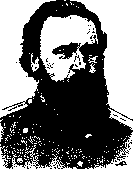
In 1871 Dobroslavin was elected privat-docent and, having begun a course of lectures to fourth-year students of the Medico-Surgical Academy, laid the foundation for independent teaching of hygiene in Russia. In 1872 Dobroslavin was approved as adjunct professor in the department of hygiene at the Medico-Surgical Academy. Possessing an active character, a love for his work, and a good background in chemistry and physics, Dobroslavin quickly organized the department, established a hygienic laboratory for practical student work and special research, and laid the foundation for an educational hygiene museum. At the same time, through his substantive lectures and skillful guidance of his students' and later physicians' work, Dobroslavin won their sympathies. From 1871 to 1889, up to 150 research papers came out of Dobroslavin's laboratory, many of which belonged to Dobroslavin himself. Dobroslavin's experimental works pertain mostly to nutritional hygiene and metabolism.
Of his other works, two capital lecture courses deserve special attention: "Hygiene, a Course in Public Health" (parts 1–2, St. Petersburg, 1882–84) and "Course in Military Hygiene" (vols. I–II, St. Petersburg, 1885–87). These were the first original courses on hygiene in Russia based on experimental research. While engaged in scientific and pedagogical activities at the academy and the Higher Women's Courses, Dobroslavin at the same time widely deployed his activities beyond them: he worked as a consulting specialist in the St. Petersburg City Administration and the provincial Zemsky government, in the prison department, and in the Russian Society for the Protection of Public Health, in which Dobroslavin was the first chairman and organizer of the section for the improvement of housing and populated areas. Dobroslavin founded the popular science journal Zdorovye (St. Petersburg, 1874–84). Everywhere Dobroslavin brought his initiative, energy, and organizational talent. Death interrupted his vigorous activity in the prime of his life. Dobroslavin left behind a scientific school of early hygienists (Prof. Shidlovsky at the Military Medical Academy, Kovalkovsky at Warsaw University, Malchevsky at the Women's Medical Institute in St. Petersburg, Kapustin at the universities of Kharkov and Kazan, Sudakov at Tomsk University); Dobroslavin also trained many students with a hygienic orientation among physicians.
Related articles
Cite this page
“Alexey Dobroslavin.” Soviet Medical Encyclopedia. English translation of Bolshaya Meditsinskaya Entsiklopediya, 1st ed. (Moscow, 1928–1936), ed. N. A. Semashko. https://sovietmedicalencyclopedia.pages.dev/article/alexey-dobroslavin/