Museum
Historical document, translated for reference. It reflects medical knowledge of the 1920s–30s and is not medical advice.
Summary
This article discusses the role of medical and hygiene museums in the Soviet Union and abroad during the early 1930s. It emphasizes the transition from static, academic collections to dynamic, socially engaged institutions that support public health education and socialist construction.
Encyclopedia article (1928–1936)
MUSEUM, medical, an institution with the goal of providing visual aids for teaching in medical universities. The most common are anatomical museums, containing collections of anatomical specimens; museums of dermatological and syphilidological wax models (for example, the museum created by A. I. Pospelov at the skin clinic of the former Moscow University); neurological museums (e.g., the one created by A. Ya. Kozhevnikov at the nervous clinic of the same university); and those at other departments (psychiatry, hygiene, etc.). In German universities, there are museums for the history of medicine; the best of them is at the University of Leipzig, created by Professor Sudhoff. Despite the general visual nature of medical education, especially clinical education, which takes place on living subjects, these museums represent an important auxiliary institution in the system of higher medical education. Hygiene museums, just like hygiene exhibitions (see), are institutions with the goal of sanitary education and the mass dissemination of sanitary culture. Unlike exhibitions, which are primarily temporary institutions, usually set up for a short period, museums as a rule are distinguished by their more stationary, permanent character, although it should be noted that there is a lack of precise terminology. Along with exhibitions, museums are the most important means of sanitary education. Among individual museums, one should mention the largest institution in the world—the German Hygiene Museum in Dresden, which arose as a result of the International Hygiene Exhibition of 1911. In 1930, a specially equipped building was opened for it, where the museum was set up in a new exhibition (Figs. 1 and 2). It is divided into the following departments: "Man" (Der Mensch), a department first created at the 1911 exhibition and which enjoyed great success at that time; it contains an excellent collection of anatomical specimens; its center is the so-called "durchsichtiger Mensch" (transparent man), an excellently executed skeleton preparation with the circulatory and nervous systems and internal organs dissected. Next come the departments: maternity and infancy, heredity and eugenics, sanitary education, nutrition, health and disease, tuberculosis, venereal diseases, infectious diseases, nursing and first aid, cancer and the fight against it, animal parasites of man, and the historical department (hygiene of primitive peoples). Some of these departments are interchangeable, are temporary in nature, and will be gradually replaced by other departments not yet set up due to the presence of special pavilions at the International Hygiene Exhibition of 1930, which took place simultaneously with the opening of the museum (such as: physical culture, psychohygiene, personal hygiene, occupational hygiene, etc.). In general, the museum is distinguished by significant academicism, despite good, although not very new, technique. The museum is not only a place for collecting and exhibiting materials but also an organizational center, conducting extensive work both in supplying all of Germany and neighboring countries with visual aids, in creating numerous traveling exhibitions, and in developing methods of hygiene propaganda. Among German museums, one can also mention the museums for labor protection and occupational hygiene in Berlin, Munich, and Düsseldorf. Among other museums, one should mention the Wellcome Museum of Medical Science in London, which contains extensive collections. According to available information, a number of medical museums (primarily Anglo-American) are united in an international association of medical museums, existing since 1908, the center of which is located in Washington, and which publishes its annual bulletin (Bulletin of the International Association of Medical Museums). Unfortunately, we lack more detailed information about this interesting association. In the USSR, a more or less complete type of museum is the Central Museum of Labor Protection in Moscow, covering all issues of occupational hygiene, labor protection, and social insurance (Figure 4); the Museum-Exhibition for Health Protection of the People's Commissariat of Health, which grew out of the Museum of Social Hygiene, is currently outdated and in need of radical reconstruction. The organization of such museums, both central and local, constitutes the content of museum-exhibition work, which is, along with the organization of oral propaganda through methods of the living word (see Lecture) and printed propaganda, the most important form of sanitary education.
A. Edelstein. Museum-exhibition work. In accordance with the general development of museum-exhibition work in the USSR (in the RSFSR alone, 18 million people visited museums in 1928/29 compared to 13 million in 1927/28), museum-exhibition work in the field of health protection has also received enormous dissemination. The first congress of museum workers of the RSFSR, which took place in Moscow from December 1–5, 1930, summarized the accumulated experience in the field of museum-exhibition work and outlined new tasks for museum-exhibition work in the reconstruction period. The new tasks put forward by the reconstruction period relate primarily to the content of museum-exhibition work. In connection with the tasks of public health in the reconstruction period—to turn all public health work toward production issues, to make it an organic part of the country's industrialization, to take part in collective farm construction, in raising labor productivity, in reducing morbidity, and in ensuring the greatest efficiency in the development of the productive forces of the country—the requirement is placed on museum-exhibition work in the field of health protection not only for a Marxist-Leninist interpretation of the demonstrated phenomena, their accessibility to the understanding of the broad masses, etc., but also the requirement to respond quickly to all urgent issues of socialist construction and to decisively turn "face to socialist construction" is brought to the fore. This requirement raises two problems in relation to museum-exhibition work in the field of health protection. On the one hand, issues of health protection must find their reflection to a greater extent than before in technical-economic, polytechnic, and local history museums, highlighting issues of rationalization of production processes, improvement of working conditions, etc., and on the other hand, in museums and exhibitions on health protection, production issues and the current tasks of socialist construction (tasks of the five-year plan, the industrial-financial plan in individual branches closest to the industrial groups of workers served by the exhibition or museum, continuous work, the 7-hour working day, etc.) must find greater reflection than before. Of particular importance in the content of museum-exhibition work in the field of health protection at the present moment is also the propaganda of the reconstruction of everyday life, since old, backward forms of everyday life hinder the fulfillment of the five-year plan, do not allow for the reduction of morbidity, which depends on abnormal living conditions, etc. Organizational issues of the reconstruction of everyday life must become one of the core themes of museums and exhibitions on health protection, which must not only highlight the influence of everyday life on health, not only conduct propaganda for new forms of everyday life, highlighting the activities of nurseries, public canteens, etc., bringing up for discussion projects for the reconstruction of workers' everyday life (projects and models of new workers' housing construction, construction of clubs, nurseries, kindergartens, etc.), but must also reveal the attitude of workers to individual issues of the reconstruction of everyday life and transmit these materials to operational bodies (everyday life sections of councils, cooperatives, etc.) for use in the practical activities of these bodies. All this requires great flexibility and mobility from modern museums, a readiness to constantly respond to new problems raised by life and to reflect them in the museum exhibition, thereby joining the active struggle for socialist construction. The old method of museum work, when a museum once created was subsequently almost not subjected to significant changes, has outlived its usefulness. Only a museum that keeps pace with life, reflecting the demands of the day, can meet the most important tasks of political-educational work in the reconstruction period; such is the modern Soviet museum. Even one of the most vital museums—the Museum of Labor Protection—has not avoided lagging behind and is currently being radically reorganized. The task of creating a central museum of health protection, built on the indicated principles, continues to remain an urgent task of the day.
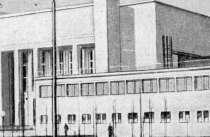

Figure 1. Hygiene Museum in Dresden (new building, opened in May 1930).
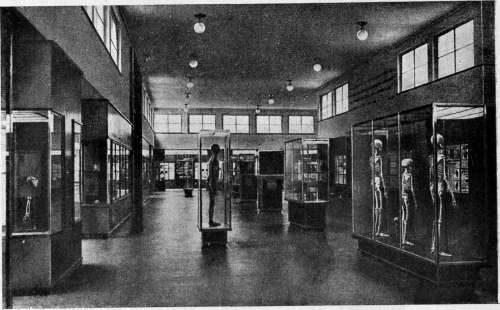
Fig. 2. Hygiene Museum in Dresden. Hall "Der Mensch".
To the article Museum.
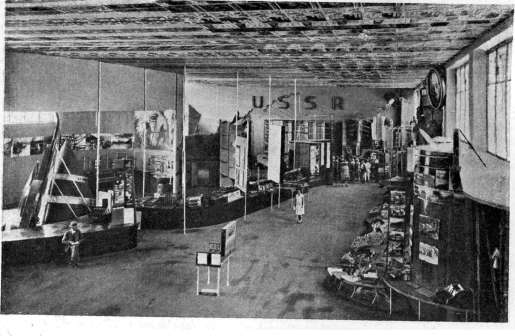
Figure 3. Soviet pavilion at the International Hygiene Exhibition in Dresden (1930).
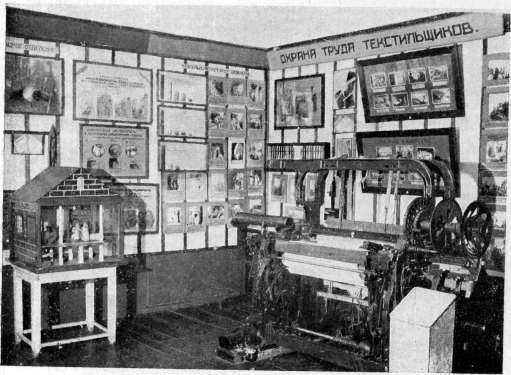
^Figure 4. One of the departments of the Museum of Labor Protection and Social Insurance in Moscow.
To the article Museum.
Enormous achievements have been made in recent years regarding the technique and methodology of museum and exhibition work. They are explained not only by the improvement of technical means used in the organization of museums and exhibitions, but also by the use in museum and exhibition work of the vast experience of advertising work, the principles of psychotechnics, pedagogy, and finally, the accumulation of special experience in museum and exhibition work in the field of health protection. A review of achievements in the technique and methodology of museum and exhibition work in the field of health protection was the International Hygiene Exhibition in Dresden in 1930. The enormous success of the Soviet pavilion at this exhibition is explained not only by the interest that its content aroused, but to a significant degree also by the technique of presenting the exhibition material, the variety and skillful combination of individual forms of the visual method (the dynamism of the exhibits and their groups, the joint creativity of the doctor and the artist in creating the exhibition, etc.) (see figure 3). - The main trends that have emerged in the use of individual forms of the visual method in museum and exhibition work boil down to the following. 1) The greatest possible variety of exhibits in terms of their character, with the choice, however, each time of the forms most appropriate to the content of the given exhibit or group of them. The old rule—variatio delectat—fully retains its validity and to this day must be used in the organization of museums and exhibitions. 2) Limitation of the number of graphic images (see) and in particular diagrams (see), and the greatest possible simplicity in their construction; the use of local material in the content of the diagrams. 3) Wide use of photographs as the best form of documentation of the phenomena being demonstrated. 4) Transition from planar images to volumetric (spatial, stereometric) ones; the first step in this regard is the frequently practiced cutting out of parts from posters or charts and pasting these parts onto cardboard or plywood, thanks to which a certain relief is obtained; the gradual strengthening of the use of the third dimension leads, in the end, to the production of dioramas or models (see Visual method). 5) Wide use of object exhibits. 6) Use and manufacture of instruments and apparatuses that make it possible to illustrate various phenomena in their dynamics, and not in statics, for which various devices are arranged that operate automatically or are set in motion by the visitor. The simplest and very common type of exhibit where the principles of dynamics are applied are various kinds of electrified 'boards' and 'boxes,' where the visitor is given the opportunity, by pressing a button and turning a handle, to trigger the illumination of various parts of the exhibit that provide an answer to one question or another, etc. More complex instruments are arranged for the purpose of demonstrating, for example, various physiological processes. A significant portion of the success that the 'der Mensch' [Man] department of the German Hygiene Museum has is explained precisely by the wide use in this department of such exhibits, as well as instruments that give the visitor the opportunity to observe various physiological processes on themselves (spirometry, pupil constriction under the influence of light, pulse measurement, X-ray screening, etc.). This principle reached its greatest expression in the construction of the Munich Deutsches Museum, where it is possible to see most of the exhibits in action. This principle is also receiving wide dissemination in Soviet technical-economic museums, which strive to replace the inscription 'do not touch with hands,' which has existed until now on very many exhibits, in many cases with the inscription 'touching with hands is mandatory.' This principle must also receive wide dissemination in museums and exhibitions on health protection. A further development of it is the demonstration at health protection exhibitions of physiological experiments on animals, which, for example, the popular health protection exhibition (see Exhibitions) began long ago and with great success. - Along with the use and variety of forms of the visual method in the organization of museums and exhibitions, increasing attention is being paid to text, which in the design of an exhibition and museum becomes just as important an element as a drawing, illustration, or object to which the given text relates. Here it is necessary to pay attention first of all to the choice of font (simple, easily digestible, without any decorations), and to the careful formulation of the text (brevity, conciseness, clarity), which requires no small amount of labor. Finally, the arrangement of material is of enormous importance—its clear segmentation, which facilitates memorization, the presence of generalizing slogans, careful labeling, etc. All of the above shows that for the success of an exhibition or museum, the joint work of a doctor and an artist is required in order to find the forms most suitable for the given content. Regarding the organization of museum and exhibition work, it was emphasized by the museum congress that museums and exhibitions cannot be viewed in isolation from other forms of political education work and that a museum must be part of a political education combine, which also includes the use of forms of the spoken and printed word, cinema, libraries, etc. It should be noted, however, that while for many old museums (art, historical, etc.) this position is new and requires the organization of their work on new foundations, museums and exhibitions in the field of health protection, as born of the October Revolution, have all the time developed their activity as one of the links of sanitary education work in inseparable connection with its other forms. Therefore, at the present moment, regarding the organization of museum and exhibition work in the field of health protection, one should put forward only the requirement for even more active deployment of mass work both inside the museum and exhibition (lectures, reports, excursions, consultations) and outside their walls, by taking the work to factories, plants, workers' clubs, dormitories, rest homes, parks of culture, public canteens, etc. (lectures, reports, traveling corners, etc.). The organization of museum and exhibition work in the field of health protection is carried out by the bodies of the People's Commissariat of Health, and in part by the bodies of the People's Commissariat of Labor (museums and exhibitions on labor protection and social insurance, etc.). The network of museum and exhibition institutions of the bodies of the People's Commissariat of Health is outlined in the five-year plan as follows. In all regional and provincial cities, in the centers of autonomous republics, as well as in large industrial centers, exhibitions are being created independently or at houses of sanitary education, using both visual materials manufactured in the center and organizing the independent manufacture of visual aids for museum and exhibition work, especially materials reflecting local, regional, and provincial peculiarities (everyday life, epidemiological, etc.). In the districts, it is planned to create museum and exhibition bases in the form of permanent, as well as traveling, exhibitions to serve the populated areas of the district. In addition, permanent exhibitions are being designed in all links of the medical-sanitary network (at unified dispensaries, rest homes, sanatoriums, outpatient clinics, etc.), as well as independent exhibitions in large collective farms and state farms. - Museum and exhibition work in the field of health protection also includes the accumulation, systematization, evaluation, storage, and use of various kinds of materials having historical or scientific-practical interest for the cause of public health (documents, reports, and photographs illustrating the activity of medical-preventive institutions, illustrations of the population's self-activity in the field of health protection, photographs of newly built medical-sanitary institutions, etc.). Insufficient attention has been paid to this last function of museum and exhibition work until now, meanwhile it is of enormous importance for the accumulation of experience in the organization of public health, the exchange of this experience, etc. N. Tenenboym.
Related articles
Mentioned in
Cite this page
“Museum.” Soviet Medical Encyclopedia. English translation of Bolshaya Meditsinskaya Entsiklopediya, 1st ed. (Moscow, 1928–1936), ed. N. A. Semashko. https://sovietmedicalencyclopedia.pages.dev/article/museum/