Lamarck
Historical document, translated for reference. It reflects medical knowledge of the 1920s–30s and is not medical advice.
Summary
Jean Baptiste Lamarck (1744-1829) was a prominent French naturalist and evolutionist who began his career in the military before turning to botany and later becoming a leading figure in the development of evolutionary theory.
Encyclopedia article (1928–1936)
LAMARCK Jean Baptiste (Jean Baptiste Pierre Antoine de Monet, Chevalier de Lamarck, 1744-1829), an outstanding French naturalist and evolutionist. L. was born in the village of Bazentin-le-Petit in Picardy in northern France, in an impoverished noble family, and died in Paris. Almost all of L.'s male ancestors, including his father, were military men. L. was the eleventh child in the family; there were insufficient funds for his upbringing, and his parents placed him in a Jesuit school in the city of Amiens to prepare for the priesthood. The study of dead languages, scholasticism, and logic did not attract L. In 1761, he left school, entered the army, and participated in the 'Seven Years' War'. In the battle at Fillinghausen, he distinguished himself with his composure and cool-headedness and was soon promoted to officer. In 1768, L. left military service and in 1770 settled in Paris, where he earned a living as an accountant. From 1772 to 1776, L. was a student at the medical faculty. While still a student, L. became interested in botany, began to work on herbariums, and finally devoted himself to science. Even at this time, L. connected with the famous Paris Museum of Natural History and the so-called 'Royal Garden', which was headed by the famous naturalist Buffon. L.'s first major work, which immediately placed him in the front rank of scientists, was his three-volume work 'Flora of France' (1778). This work, which was reprinted many times, is a practical guide to determining the French flora; plants receive a brief and precise characterization, and a dichotomous key is introduced, which significantly facilitated the identification of plants. In L.'s system, a number of elements from the systems of Linnaeus, Tournefort, and Jussieu are combined, and if his system cannot yet be called natural, then at any rate it represents an approach to such. 'Flora of France', which went through several editions (the 3rd edition was revised by De Candolle), brought L. well-deserved fame, and in 1779 he was confirmed in the position of adjunct-botanist of the Paris Academy of Sciences. From 1781 to 1782, Lamarck, accompanying Buffon's son, traveled through Europe, getting acquainted with universities, museums, botanical gardens, and mines, and established connections with a number of scientists. Upon returning to Paris, L. became the editor of the botanical part of the famous 'Encyclopedia' published by Diderot and d'Alembert, and compiled a botanical dictionary for it. In this work, all plants known at that time are described in alphabetical order. Later, L. published tables 'Determination of Genera', which contained illustrations for the botanical dictionary.
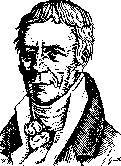
In 1788, L. was appointed to the position of keeper of the herbarium of the Royal Garden, and after its reorganization into the Museum of Natural History in 1793, he became a professor of botany. In this position, L. was engaged in the classification of plants, but soon became interested in zoology, especially in the study of invertebrates. In 1801, L. published his work 'Système des animaux sans vertèbres' (System of Invertebrate Animals), in which he proposed a new classification of invertebrates. In 1802, L. published his work 'Recherches sur l'organisation des corps vivants' (Research on the Organization of Living Bodies), in which he first formulated his theory of evolution. In 1809, L. published his main work 'Philosophie zoologique' (Zoological Philosophy), in which he presented his theory of evolution in detail. In this work, L. proposed the theory of the inheritance of acquired characteristics, which later became known as Lamarckism. According to this theory, organisms change during their lifetime in response to environmental influences, and these changes are passed on to their offspring. L. also proposed the theory of the gradual development of living organisms from simple to complex forms. In 1815, L. published his work 'Histoire naturelle des animaux sans vertèbres' (Natural History of Invertebrate Animals), in which he further developed his ideas about evolution. L. was a tireless worker, but his last years were marked by poverty and blindness. He died in Paris on December 28, 1829. L.'s theory of evolution was not accepted by his contemporaries, but it had a significant influence on the development of evolutionary theory in the 19th century. L.'s ideas were further developed by Charles Darwin and other scientists.
By 1789, L. was already known as a major scientist. Nevertheless, he had to appeal to the National Assembly to defend his position, which was to be abolished for financial reasons. At the same time, the staff of the garden and natural history museum submitted a project to the National Assembly for the reorganization of the museum. This project was approved by the Convention in 1793, and in the reorganized museum, L. was offered the chair of invertebrate zoology. L. took on this field, which at that time was extremely chaotic. L. boldly set about bringing order to this "chaos," which other scientists feared to approach, and after a year, he delivered a course of lectures on invertebrate zoology. From 1795, L. was also elected to the "chair of botany" at the National Institute of Sciences and Arts. For approximately 10 years, L. worked simultaneously in zoology, physics, chemistry, meteorology, geology, and paleontology. However, these works were not of equal value. In the field of physics and chemistry, L. took a position against Lavoisier and engaged in insignificant natural-philosophical speculations. More interesting were his works in the field of meteorology. He studied phenomena occurring in the atmosphere, attempted to establish weather prediction on a scientific basis, and until 1810, he published the "Meteorological Annual." In the field of geology (in the book "Hydrogeology"), L. expressed a number of interesting hypotheses about the gradual evolution of the earth's crust, about the factors of this evolution, about the inadequacy of the catastrophe theory, etc. L. made great contributions to paleontology: he gave a valuable study of fossil mollusks, insisted on combining fossil forms and living ones into a single system, introduced the comparative method, correctly assessed the role of fossils in stratigraphy, and thus can be considered one of the founders of invertebrate paleontology. The last work by L. on botany was the "Natural History of Plants" (1803), written in collaboration with Mirbel. By this time, L.'s evolutionary views had already formed, and he tried to build plant taxonomy on the degrees of perfection achieved by various types of plants, drawing a certain analogy with the animal world. From 1798, a series of zoological works by L. began, which brought him the fame he deserved. L. also introduced the terms "biology" and "invertebrates."-L. divided the entire animal world into 14 classes, which were distributed as follows. "Insentient animals": 1) infusorians, 2) polyps, 3) radiates, 4) worms. "Sentient animals": 5) insects, 6) arachnids, 7) crustaceans, 8) annelids, 9) barnacles, 10) mollusks. "Rational animals": 11) fishes, 12) reptiles, 13) birds, 14) mammals. Later, L. separated ascidians into a separate class; reptiles and amphibians were combined into one class. L. based his division mainly on the development of the nervous system.-His system, not being entirely natural, nevertheless represented great scientific interest. L. described a huge number of new species, brought clarity to the then taxonomy of invertebrates, and used "genealogical trees" that graphically depicted the genetic relationship of various animal groups. Starting from 1801, L. appeared as a decisive supporter of evolutionary theory: his views on this question are set forth in the "Introduction to the Course of Zoology" (1801), his famous "Philosophy of Zoology" (1809), and the "Introduction to the Natural History of Invertebrates" (1815). Like a number of predecessors and contemporaries, L. defended the theory of evolution, relying on the characteristic idea of the 18th century about the ladder of beings. However, his evolutionary theory was based neither on his own rich research in zoology, botany, and paleontology nor on that of other naturalists. It remained entirely within the framework of natural-philosophical constructions, very common in the early 19th century, but stood out among them for the moderation of its fantasies. In this respect, L. advantageously differed not only from the natural philosophers of the first half of the 19th century like Carus and Oken, but also from his current followers like R. France and K. Schneider, who distorted his teaching to genuine mysticism.-All these years, L. continued to work intensively in the museum, enriching its collections, delivering lecture courses, and carrying out extensive organizational work. With full right, L. can be considered one of the founders of the museum. Around him and under his leadership worked a number of young scientists, whom he managed to unite into a school and attract to the development of little-studied problems. In 1820, L. became blind, and even blind, with the selfless devotion of his daughters, he wrote the last volumes of the "Natural History of Invertebrates" and his last work, "Analytical System of Positive Knowledge of Man" (1820), in which he set forth his views. L.'s philosophical views to a greater extent adhered to the views of Voltaire, Rousseau, Buffon, and Bonne than to the worldview of radical French materialists. L. was a deist. His understanding of life and psyche contained, along with materialistic-mechanistic concepts, also some idealistic positions. Among L.'s merits should be included the fact that he extended his evolutionary theory to the question of the origin of man. In addition, he clearly realized that living things must have once arisen spontaneously from non-living things, but at the same time remained at the point of view, already surpassed by the end of the 17th century, of the possibility (not only earlier but also at present) of spontaneous generation from mud not only of the simplest organisms but even of polyps, worms, and other lower invertebrates. Overall, Lamarckism was not an isolated phenomenon; it undoubtedly reflected that great enlightening movement that prepared the ideological ground for the triumph of the Great French Revolution. L. had to work under very difficult conditions. A large family, constant struggle with poverty, the hostile attitude of post-revolutionary governments and a number of colleagues hindered the flourishing of his scientific activity. Undoubtedly, not only certain scientific defects of the "Philosophy of Zoology" made his evolutionary views unrecognized. The reactionary moods of the post-revolutionary era also hindered the development of his ideas. Strong will and clear purposefulness, deep devotion to science, extreme caution in specialized works, and at the same time a tendency for the broadest generalizations—characteristic features of the tireless worker L. (see also Lamarckism). L.'s main works: "Flore francaise" (v. I-III, P., 1778); "Systeme des animaux sans vertebres" (P., 1801); "Hydrogeologie" (P., 1802); "Philosophie zoologique" (v. I-II, P., 1809; Russian ed.-M., 1911); "Histoire naturelle des animaux sans vertebres" (t. I-VII, P., 1815-22); "Systeme analytique des connaissances positives de l'homme" (P., 1820; Russian translation in the Works of the Biological Laboratory named after Lesgaft, SPB, 1897, 1898, 1900).
Related articles
Mentioned in
Cite this page
“Lamarck.” Soviet Medical Encyclopedia. English translation of Bolshaya Meditsinskaya Entsiklopediya, 1st ed. (Moscow, 1928–1936), ed. N. A. Semashko. https://sovietmedicalencyclopedia.pages.dev/article/lamarck/