Linnaeus
Historical document, translated for reference. It reflects medical knowledge of the 1920s–30s and is not medical advice.
Summary
This article is a historical biography of Carl Linnaeus, the 18th-century Swedish naturalist and physician. It details his life, his major scientific works including the 'Systema Naturae', his role in founding the Swedish Academy of Sciences, and his contributions to taxonomy and medicine.
Encyclopedia article (1928–1936)
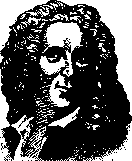
Linnaeus Carl (1707-78), the famous Swedish naturalist and physician of the first half of the 18th century; born in Rosshult (Sweden). His father was a village Protestant pastor. L. studied natural science and medicine at the universities in Lund and Uppsala. In 1735 he went to the Netherlands, where he received the title of Doctor of Medicine. In the Netherlands he worked as a botanist and there published the first edition of his famous work 'Systema naturae' (v. I- VII, Lugdunum, 1735), as well as 'Fundamenta botanica' (Amstelodami, 1736) and others. After visiting England and Paris (1738) L. worked again in Sweden—first as a practical physician in Stockholm, then as a professor of medicine, and finally as a professor of botany and natural sciences at the University of Uppsala. In 1739, at L.'s initiative, the Swedish Academy of Sciences was founded. Linnaeus was its first president. Linnaeus reorganized the botanical garden in Uppsala, organized a natural history museum and a whole series of natural science expeditions to all countries. Linnaeus created the largest botanical school of his time. Linnaeus died in Uppsala.
The significance of L. (an exceptionally versatile, active, purposeful organizer, and in matters of politics and religion a strict conservative) for natural science is enormous. His scientific activity played an exceptional role in the development of zoology and botany, especially in systematics, faunistics, and floristics. His ideas in the field of classification of animals and plants dominated until the beginning of the 19th century, and in England—even after Darwin. L. completed the work done by his predecessors (Cesalpino, Bauhin, Morison, Ray, Rivinus, Tournefort) on establishing such a system of animals and plants which would serve not only as a convenient key in determining organisms, but at the same time would also reflect the natural kinship of organisms. L.'s characteristic metaphysical-rationalistic thinking, however, often gave way to spontaneous-evolutionary views, thanks to which his biology as a whole turns into an eclectic system of the transitional epoch in the development of biology, already foreshadowing that great turning point which reached its apogee in the person of C. Darwin. L.'s metaphysical rationalism is especially clearly manifested in his position, according to which not objectively indeterminate features create the concept of a genus, but, on the contrary, the concept of a genus creates objective features. In other words: for L. being does not determine consciousness, but consciousness determines being. This, however, did not prevent him from considering species as an objective reality. Linnaeus was interested not in the causes of phenomena, but in the order of their occurrence. The influence of scholastic philosophy, traditional Christian metaphysics, and class political attitudes imbued with absolutist ideas hindered L. from turning his system into a lever for overthrowing the formally logical and metaphysical understanding of nature and for taking the path of dialectical thinking. The fact that L. did not engage in physiology and did not use a microscope was also a significant brake on the development of the first glimmerings of dialectical understanding of systematic categories that were emerging in L. His views in the field of anatomy and physiology of animals and plants were still entirely in the captivity of late medieval conceptions.
The name L. is usually associated with the idea of the classical formulation of the constancy of species. This includes his famous maxim 'Species sunt constantissimae' ('species are characterized by perfect constancy') or the most frequently repeated 'Species tot numeramus quot creavit Infinitum Ens' ('we count as many species as an infinite being created'). However, the blanket definition of L. as a supporter of the immutability of species does not give a correct picture of L. himself nor of the contradictions in the science of his epoch. Just as in biology itself, so in L.'s life, two tendencies fought: metaphysical, scholastic, idealistic conceptions with spontaneous-materialistic and dialectical ones. The latter includes a number of positions advanced by L. in the process of refining his system. Defending the immutability of species at the beginning of his scientific activity, L. subsequently repeatedly pointed out the variability of species and even the transformation of one species into another. He saw the cause of such transformation of species in external conditions, in 'clima et sol' ('climate and soil') on the one hand, and in crossing on the other. We also encounter in L. an indication of the action of natural selection, but he was unable to draw an evolutionary conclusion from it. The significance of hybridization for obtaining new forms was already fully appreciated by L., who himself conducted experiments on crossing plants and in 1759 wrote that hybridization 'opens new possibilities for botanists, allowing attempts to create new species of plants'. But if in Linnaeus's theory of crossing a progressive role was played, pushing thought in the direction of evolutionary theory, then the attempts to replace the evolutionary theory with the theory of crossing (Kerner, Lotsy, Hagedoorn, etc.) which are reviving at the end of the 19th century and at present are clearly reactionary, directed at restoring the theory of the immutability of species and leading to a distortion of the achievements of modern genetics. The main merit of L. lies in the creation of a clear and consistent classification of the diversity of forms of organisms based on a detailed and precise diagnosis. A careful descriptive characterization of the genera and species of all plants known in his time formed the basis for further improvement of systematics. In this respect his famous works 'Genera plantarum' and 'Systema naturae' represent a giant step forward compared with the systematics that preceded him. L. was the first to understand the difference between a natural and an artificial system. And although Linnaeus considered that the main task of systematics lay in creating such a methodology of classification of objects which would facilitate their determination, he at the same time sought a system which would also reflect the natural affinity of organisms. However, his natural classification, due to his metaphysical scholastic-Platonic thinking, presents only the rudiments of future natural systems. Linnaeus's attempts to explain the natural kinship of species and genera revolve entirely within the plane of metaphysical reasoning in the spirit of Aristotle, Theophrastus, and Cesalpino. L. has two systems: one artificial, narrowly technical, built on the most constant parts of the flower (stamens and pistils) and divided into 24 classes, and a natural system, including 67 orders (families at present). L. consistently applied the so-called binary nomenclature (proposed before him), according to which each plant or animal is called by two Latin names—the generic and the specific. Besides this he defined the other groups: orders and classes. L. divided animals into 6 classes: mammals, birds, reptiles (modern amphibians and reptiles), fish, insects (modern arthropods in general) and worms (modern mollusks, echinoderms, worms, coelenterates, and protozoa). This system has in the main survived to our days, although it has undergone a number of changes following the line of its further development. In the tenth edition of 'Systema naturae' (1758) L. united man with apes in the first order of the class of mammals, calling it 'Primates' (i.e., occupying the first place). Linnaeus also classified other objects. The striving to classify everything pedantically is the most characteristic feature of L. Thus, he classified not only the types of soils and minerals, but also gave a detailed classification of human races and diseases and even a whole pathological-pharmacodynamic system of medicinal plant substances. Before L. diseases were classified mainly either alphabetically by name, or anatomically, or by the course of the disease, or by causes. L. classifies by symptoms (before him—Platter, and then Savage). It is necessary to note that L. developed a multifaceted activity in the field of medicine, both theoretical and practical, and was an authoritative consultant to state institutions in matters of veterinary medicine. Having taken command of the naval hospital (1739), L. achieved the right to perform autopsies on all deceased patients in order to determine the cause of death. During his tenure as professor of the medical department, L. lectured on medicinal substances, on the signs of diseases (semiotics), and on the nutrition of patients (dietetics). He discovered the poisonous and healing properties of a number of plants. Linnaeus's manuscripts and collections were sold by his widow to England, and the botanist Smith, who bought them, founded in England the famous Linnean Society, which still exists today. Among the most important works of L., besides those mentioned above, should be noted: 'Species plantarum' (v. I-III, Stockholm, 1753); 'Genera plantarum' (Lugdunum, 1737); 'Philosophia botanica' (Stockholm, 1751). Medical works of L.: 'Materia medica' (a series of works on the vegetable, animal, and mineral kingdoms. Stockholm, 1749-52); 'Amoenitates academicae' (v. I- VII, Stockholm, 1749-79); 'Clavis medicinae' (Stockholm, 1766).
Related articles
Mentioned in
Cite this page
“Linnaeus.” Soviet Medical Encyclopedia. English translation of Bolshaya Meditsinskaya Entsiklopediya, 1st ed. (Moscow, 1928–1936), ed. N. A. Semashko. https://sovietmedicalencyclopedia.pages.dev/article/linnaeus/