Karl von Rokitansky
Historical document, translated for reference. It reflects medical knowledge of the 1920s–30s and is not medical advice.
Summary
A biographical overview of Karl von Rokitansky (1804–1878), a major 19th-century pathologist, founder of the Vienna school of pathological anatomy, and a prominent representative of the humoral pathology school.
Encyclopedia article (1928–1936)
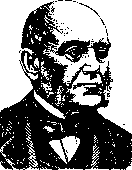
ROKITANSKY Karl (Karl von Rokitansky, 1804–78), the greatest pathologist of the mid-19th century. Upon graduating from the medical faculty in Vienna in 1827, he took the position of assistant at the Department of Pathological Anatomy of the University of Vienna under Prof. J. Wagner; in 1834 he was elected associate professor, and in 1844, after Wagner's death, full professor of pathological anatomy at the University of Vienna; Rokitansky held this position until 1875, when he retired due to length of service. Simultaneously, he served as prosector at the largest hospital in Vienna (Wiener allgemeines Krankenhaus). In 1848 he was elected a full member, and in 1869 president of the Vienna Academy of Sciences; in 1870 he was elected a member of the Paris Academy of Sciences. For many years he served as chairman of the Vienna Society of Physicians and the Vienna Anthropological Society. Rokitansky was the first to raise the teaching of pathological anatomy to its proper level and created a pathological-anatomical institute with a museum of preparations exceptional in their processing. Serving as a government referent for medicine, Rokitansky contributed greatly to the development of medical faculties in Vienna, Graz, and Innsbruck.
Rokitansky published a large number of scientific works that elucidated the pathological-anatomical essence of a wide variety of disease processes (incarceration and stricture of the intestines, spontaneous ruptures of the aorta, perforations of gastric ulcers, goiter of the thyroid gland, colloid cancer, neoplasms of the breast, defects in the cardiac septa, etc.). But of the greatest importance is Rokitansky's textbook on pathological anatomy (Handbuch der pathologischen Anatomie, vols. I–III, Wien, 1841–46; republished in a revised form in 1855). This manual was of tremendous importance for the development of pathological anatomy, as it represented the first systematic and exhaustively accurate description of the pictures of pathological processes, which prompted Virchow to call Rokitansky the "Linnaeus of Pathological Anatomy." However, in his views on the origin and essence of the pathological changes so well and truly described by him, Rokitansky stood on a false path. As a champion of the so-called iatrochemical trend in medicine (see Disease) and the most prominent representative of the humoral school, Rokitansky in his textbook, as well as in other works, explained all pathological phenomena from the standpoint of the doctrine of crases; at the root of all pathological manifestations Rokitansky saw the spoilage of fluids, some violation of the state of proteins and fibrous tissue, and spoke of various crases (inflammatory, typhoid, tuberculous, cancerous, etc.); the appearance of new cells during inflammation, e.g., leukocytes in purulent inflammation, he explained by their formation within the exudate, as if secreted from it. This doctrine of Rokitansky concerning crases was widespread and was supplanted only in the 1860s by Virchow's cellular theory.
In his worldview, Rokitansky was eclectic; he repeatedly spoke out with philosophical articles and speeches in which he sharply criticized the idealism of Schopenhauer, while on the other hand, he spoke out against materialist teachings; although Rokitansky did not explicitly join any definite philosophical trend, nevertheless, based on the tenets of his humoral theory, he must be considered a vitalist. As a public figure, Rokitansky was considered freethinking; this is evidenced in particular by his speeches in the House of Lords, of which he was a member, for example in defense of the separation of the school from the church.
Related articles
Cite this page
“Karl von Rokitansky.” Soviet Medical Encyclopedia. English translation of Bolshaya Meditsinskaya Entsiklopediya, 1st ed. (Moscow, 1928–1936), ed. N. A. Semashko. https://sovietmedicalencyclopedia.pages.dev/article/karl-von-rokitansky/