Rudolf Virchow
Historical document, translated for reference. It reflects medical knowledge of the 1920s–30s and is not medical advice.
Summary
A biographical overview of Rudolf Virchow, the 19th-century reforming pathologist, founder of modern pathology, anthropologist, and prominent sociopolitical figure. This first part details his early education and initial groundbreaking research in pathology at the Charité hospital in Berlin.
Encyclopedia article (1928–1936)
VIRCHOW, Rudolf (Rudolf Virchow, 1821–1902), one of the greatest scientists of the 19th century, reforming pathologist, founder of modern pathology, prominent anthropologist, and notable sociopolitical figure of his time. In 1843, having graduated from the Friedrich-Wilhelm Medical Institute in Berlin and defended his doctoral dissertation on «De rheumata praesertim corneae», Virchow entered the Charité hospital as an assistant to the prosector Froriep. In the very first two years of his work as an assistant prosector, Virchow published a number of remarkable studies (on blood coagulation, vascular occlusion, arterial inflammation, and pathological pigments) that immediately attracted the universal attention of the medical world, not only by bringing clarity to the understanding of the essence of diseases and pathological processes that had hitherto been poorly understood, but also by the method strictly applied by Virchow in these works, which consisted of a complete abandonment of the highly popular speculative reasoning of that time and the strict substantiation of conclusions with factual observations. Already from this time, Virchow began to enjoy the fame of an outstanding scientist, as seen from the fact that he was entrusted with delivering the anniversary speech at the ceremonial meeting on August 2, 1845, on the occasion of the 50th anniversary
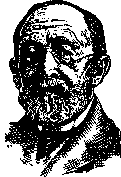
of the Charité prosectorium.
Medical Institute of Friedrich-Wilhelm; for this speech, Virchow chose the topic «Uber das Bediiif-niss und Richtigkeit einer Medizin vom mechanischen Standpunkt» (On the necessity and correctness of medicine based on a mechanical standpoint). In this speech, Virchow shattered the then-reigning provisions of humoral pathology, the doctrine of crases and dyscrasias, and contrasted them with factually grounded data on blood as a liquid tissue, on thrombosis, inflammation, exudate, regeneration, etc., while putting forward purely mechanical considerations to explain both normal life manifestations and pathological processes. Virchow conveys the impression made by this first public appearance in a letter to his father: «My views were so novel that they turned upside down everything hitherto known. The old military doctors climbed out of their skins; the idea that life is constructed mechanically seemed to them subversive of state foundations and unpatriotic» («unpreussisch»). The following year, Virchow launched a scathing attack on the book by the leading pathologist of the time, Rokitansky, who headed the humoral trend in pathology that dominated at the time. These «revolutionary» scientific appearances of the young Virchow created a feeling of disfavor and suspicion toward him on the part of certain career professors and the administration. Despite this, in 1846, after Froriep's retirement, Virchow obtained the position of prosector at the Charité hospital, and in 1847, after delivering a brilliant trial lecture on the topic «On muscle inflammation», he became a Privatdozent at the university. This same year, 1847, is significant in that Virchow, together with Reinhardt, founded the famous «Archive of Pathological Anatomy and Physiology and Clinical Medicine», which has been published continuously to the present day and is well known under the name of «Virchow's Archive». In 1848, a serious political storm broke over Virchow (see below), and the very next year (1849) he had to leave the «stuffy and heavy atmosphere of Berlin» (Virchow's words) to occupy the chair of pathological anatomy in the provincial Bavarian city of Würzburg. Here Virchow devoted himself entirely to scientific work and produced a number of major studies of the greatest importance; the main ones are works on the structure and formation of tuberculosis, on the essence of scrofula, on the pathological anatomy of typhus, cholera, on the essence of amyloid degeneration, amyloid bodies, on cancer, on echinococcus, rickets, the structure of connective tissue, and on parenchymatous inflammation. In view of the fact that Virchow's studies pertained to the most diverse areas of pathology, it is impossible to give a brief concrete idea of what Virchow contributed that was new on each of the above issues; one can only note in summary that whichever topic Virchow touched upon, with his extraordinary logic he destroyed the concepts of the essence of the disease process grounded in the tenets of humoral pathology and, on the basis of his precise factual observations, gave such a clear description of the morphology of changes and such a true explanation of the essence of the process that in their main features they retain their validity even at the present time. Clarifying the essence of various processes, Virchow had to give them appropriate designations in the form of terms which thereafter became permanently established in medicine (e.g., «thrombosis», «embolism», «leukemia», «amyloid degeneration», etc.). A red thread running through all these works of the Würzburg period is Virchow's categorical displacement from pathology of the concepts of blastema and crases, and their replacement by definite and clear indications of the materialistic substrate of disease processes in the form of changes in the cells of which all tissues are built. Therefore, Virchow's works of this period can be considered as the foundation for Virchow's main brilliant creation—the so-called cellular pathology. In 1855, Virchow published an article in his «Archive» entitled «Cellular Pathology». In this article, Virchow put forward the following two propositions, which were of enormous importance if only because they fundamentally destroyed the views reigning at the time. 1. Regarding the formation of the organism's cells, Virchow argued that there is no spontaneous formation of cells from an unorganized mass («blastema»); cells can be formed only from other cells through their multiplication, which produces the continuously successive development of tissues. This proposition was expressed by Virchow in the dogma «omnis cellula e cellula». 2. The basis of every pathological process, of every disease, is the change in cells, the disruption of their vital activity. Using a large number of concrete examples, Virchow proved the correctness of these propositions and established the dogma «all pathology is cell pathology». The propositions of cellular pathology, in turn, gave Virchow the opportunity to fundamentally change the conception of the essence of disease; whereas previously disease was considered some alien, extraneous, unnatural phenomenon, Virchow clearly showed that disease is also a manifestation of life, but under altered conditions of existence. Cellular pathology, developed by Virchow in a number of articles and in 1857 in a course of special lectures, soon received universal recognition; even the creator of humoral pathology, Rokitansky, had to publicly renounce his views and acknowledge Virchow's cellular pathology; in particular, here in Moscow, Professor of Pathological Anatomy Polunin, who in the spring semester of 1857 taught humoral pathology, in the autumn of the same year switched to Virchow's cellular pathology, frankly declaring to the students the erroneousness of what he had lectured on in previous years. In subsequent years, the cellular pathology created by Virchow, with its morphological and experimental methods, served as the basis for the luxuriant flourishing of both pathology as a whole and its branches—pathological physiology and pathological anatomy—which, thanks to Virchow, occupied an honorable place among biological disciplines. And right up to the present time, despite the fact that the development of physical and colloidal chemistry, as well as changes in our views on the structure of certain tissues, have forced us to depart partly from Virchow's initial propositions, pathology nevertheless remains to a large extent Virchowian cellular pathology. It goes without saying that Virchow's cellular pathology, which fundamentally changed the conceptions of the essence of disease processes, created a major epoch in the historical development of medicine and exerted an enormous influence on the progress of all its branches; thanks to this, it subsequently became customary to distinguish between medicine of the «pre-Virchowian period» and the «post-Virchowian period». In 1856, Virchow, already a generally recognized authority, returned to Berlin, where a new chair of pathological anatomy was founded for him and a special Pathological Institute was created. Subsequently, Virchow published a number of remarkable studies in which he elucidated the pathological anatomy and pathogenesis of tuberculosis, syphilis, leprosy, multilocular echinococcus, trichinosis, endocarditis, chlorosis, the essence and limits of metaplasia, and many others. On the subject of neoplasms, he wrote a three-volume work («Uber krankhafte Geschwiilste», Berlin, 1863–67), which brought considerable clarity to the then-reigning chaotic ideas about the nature of tumors. A whole series of articles by Virchow concerns the pathology and epidemiology of infectious diseases, and it is interesting to note here that Virchow, already in the 1870s and 1880s, when many researchers of that time showed a tendency to attribute the entire essence of infectious diseases to the specific pathogens being discovered then, warned against such a fascination and constantly pointed out that a much greater role in an infectious disease belongs to the cellular reaction of the diseased organism than to the manifestation of the microorganism's vital activity. This same period includes Virchow's creation of the autopsy methodology (see) and the plan for teaching pathological anatomy, which retain their significance to the present time. Attaching enormous importance to demonstrations in teaching, Virchow created a museum of pathological-anatomical preparations in his Pathological Institute, which by the end of Virchow's life numbered 23,000 exhibits and is still the largest collection of its kind in the world.—Thus, it can be noted that Virchow destroyed the old humoral pathology and created that general materialistic orientation of pathology that it, in general, retains to the present time; he pointed out the methodological paths along which work in the field of pathological physiology and anatomy should proceed, and with his studies elucidated the essence of almost all pathological processes, giving them appropriate terminology and classification. As a pathomorphologist, Virchow sharply differed from his predecessors and even contemporaries in that, in the words of one of his biographers, «he was not a dry grave-digger, but always strove to connect his dead material with life». The words of Virchow testify to this necessity for a pathomorphologist to work hand in hand with the clinic: «The pathomorphologist in his material must see life instead of death», or «The pathomorphologist from the anatomical theater must go to the patient's bedside, and on this road he must meet the clinician making the journey in the opposite direction». Virchow began to engage in anthropology, archaeology, and ethnography in his early years, studying the shape of skulls, and was the first to outline a number of definite types here, giving them appropriate designations.
Later he turned to archaeological excavations, conducting them both in Germany and in other countries. In particular, together with Schliemann he participated in the excavations of Troy, and later with him he visited Egypt, Numidia, and the Peloponnese. As a result of his archaeological research, Rudolf Virchow published a number of special articles (on urns, kurgans, the Bronze Age, pile dwellings, the ruins of Troy, mummies, etc.). For 20 years Rudolf Virchow served as president of the Berlin Medical Society; for a number of years he was dean of the medical faculty, and later rector of the University of Berlin. Toward the end of his life Rudolf Virchow was an honorary member of almost all scientific societies and academies throughout the world. Rudolf Virchow also wrote a large number of articles and speeches on general biological topics and the philosophy of natural science. Regarding Rudolf Virchow's general biological views and worldview, a definite distinction must be made between the young Rudolf Virchow and the Rudolf Virchow he became after the 1870s. As an example, one can point out that as early as 1856, that is, three years before the publication of Darwin's «The Origin of Species», Rudolf Virchow expressed views in a completely clear form that fully coincided with evolutionary theory; in the initial period after the publication of Darwin's work, Rudolf Virchow adhered to the latter's views, but already in 1877 he warned against a fascination with Darwinism, pointing out that, on the one hand, the evolutionary theory had not yet been proven by anything, and on the other hand, consistently pursued Darwinism leads to socialism; finally, later Rudolf Virchow even insisted on the necessity of excluding evolutionary theory from teaching in schools. Incidentally, this also includes Rudolf Virchow's view on the significance of fossil skeletons of primitive humans (Neanderthal man, etc.), which serve as proof of man's closeness to primates; Rudolf Virchow objected to this and (without sufficient grounds) asserted that these skeletons pertain to pathological manifestations. Given Rudolf Virchow's immense authority, this attitude of his toward evolutionary theory undoubtedly exerted a restraining influence on the progress of biology; this circumstance lies as it were like a dark spot on Rudolf Virchow's activities pertaining to the period after the 1870s. As for Rudolf Virchow's worldview, he himself called himself a vitalist and is even considered one of the founders of neovitalism; however, it must be noted right away that all of Rudolf Virchow's writings from his youth have nothing in common with vitalism as an idealistic world understanding; on the contrary, in some of them Rudolf Virchow reasons as a mechanist, in others as a dialectical materialist. After the 1870s, in Rudolf Virchow's natural-philosophical articles, his neovitalism becomes more explicit. In general, it must be acknowledged that Rudolf Virchow's worldview, not being sustained on any definite platform, was to a significant degree eclectic. Rudolf Virchow's first socio-political public address dates back to 1848, when, as a result of a trip to study a typhus epidemic in Upper Silesia, he came to the conclusion that the basis for the spread of typhus is hunger and the appalling social conditions in which the poorest working population lives, and he spoke out as a champion of the trampled rights of the people. A number of reports and articles by Rudolf Virchow with openly expressed demands to the government for improving the condition of workers, as well as his publication together with Leubuscher of the journal «Die medizinische Reform» («Medical Reform») saturated with the spirit of protest, and finally, participation in the revolution of March 18, 1848—all this made Rudolf Virchow clearly unreliable in the eyes of the Prussian government, and the question was raised in government circles about removing Rudolf Virchow from state service. Thanks to the intervention of Rudolf Virchow's friends, the matter was initially settled, but the following year he left Berlin and moved to Würzburg. Subsequently, under the influence of these government repressions, Rudolf Virchow was placed in a position of having to withdraw from public activity for some time; however, upon his returning to Berlin, Rudolf Virchow again took up work in the field of public medicine and sanitation, especially from 1859, when he was elected to the Berlin municipality. In this period, thanks to tireless energy and active work, he managed to achieve a significant improvement in the sanitary condition of Berlin and other German cities, as well as the implementation of a number of sanitary and hygienic measures in hospitals, schools, and workers' housing. A number of articles by Rudolf Virchow on public medicine, comprising generally two solid volumes, concern both various general questions and such particularities as sewerage, the cleaning of Berlin, medical statistics, school hygiene, etc.; in all these articles Rudolf Virchow constantly emphasized the important significance of medicine as a social science and the importance of public health measures for raising the people's welfare. Rudolf Virchow also paid much attention to improving the situation of physicians. In addition to his work in the municipality, Rudolf Virchow from the late 1860s served as a member of the Prussian Diet and, as one of the leaders of the «freethinking» party, took an active part in the discussion of general political issues, frequently taking a sharp opposition to the Prussian government; an example of this was his very acute conflict with Bismarck at a meeting of the budget commission in 1865, which nearly ended in a duel between Rudolf Virchow and the «Iron Chancellor». It must be noted, however, that all this pertains to the relatively young Rudolf Virchow; already after Würzburg, the inclinations of a revolutionary, so vividly expressed in the young Rudolf Virchow, dim significantly, and in his speeches one has to hear the words: «we strive for reforms, not revolution», «it is necessary to preserve the old and merely build the new upon it», etc.; and in the 1870s, after the Franco-Prussian War, Rudolf Virchow moved even further to the right, began to openly oppose socialist doctrines, and drew closer to the Prussian government.
Related articles
Cite this page
“Rudolf Virchow.” Soviet Medical Encyclopedia. English translation of Bolshaya Meditsinskaya Entsiklopediya, 1st ed. (Moscow, 1928–1936), ed. N. A. Semashko. https://sovietmedicalencyclopedia.pages.dev/article/rudolf-virchow/