Taxonomy
Historical document, translated for reference. It reflects medical knowledge of the 1920s–30s and is not medical advice.
Summary
Taxonomy is the science that studies organisms based on their similarities and differences, aiming to construct a natural system by classifying them into various categories. It serves both practical registration purposes and theoretical development of natural classification systems.
Encyclopedia article (1928–1936)
TAXONOMY, the science that studies organisms from the point of view of their similarity and difference and seeks to construct a natural system, i.e., to distribute all organisms on the basis of the totality of their characteristics of similarity and difference into groups of varying volume, designated as systematic categories. The basic systematic category, or in other words, the systematic unit, is the species (species). Morphologically close species are united into genera (genus), genera into families (familia), families into orders (ordo), orders into classes (classis), and classes into types (typus or phylum) (in botany there is no commonly used term to designate this category, but the expression 'order' is usually used), finally types (or orders) are united into kingdoms (regio), of which there are only two—the animal kingdom and the plant kingdom. The systematic categories listed above are basic, i.e., every animal and every plant belongs to a certain species, genus, family, etc. But in addition, when necessary, a number of additional categories are introduced, such as: subclasses (subclassis), tribes (tribus) (a category intermediate between family and genus), superfamily (superfamilia), subfamily (subfamilia), etc. On the other hand, species are often divided into geographical races or subspecies (subspecies). The tasks pursued by T. are of two kinds: practical and theoretical. However, to distinguish between them in many cases is extremely difficult. The practical task of T. is purely registration: to make it possible to sort out that enormous number of plant and animal forms that currently inhabit and have inhabited our planet in previous geological times. For this purpose, all plants and animals are given scientific (Latin) names and are provided with characteristics and brief diagnoses, by means of which each form can be distinguished from any other form. Furthermore, they are distributed into subordinate systematic categories, as if arranging them in certain drawers of a cabinet, where, if necessary, they can always be easily found. How great this registration work of T. is is evident from the fact that alone among currently living animal species, over 500 thousand have been described, among fossil species over 100 thousand, and among modern plants alone about 300 thousand, and every year new species of animals and plants are described, mainly from lower plants and invertebrate animals. For the purpose of establishing uniform nomenclature and avoiding the description of the same form under different names, taxonomists are guided by international nomenclatural rules. The most important of them are as follows. All species, genera, families, etc. are designated by Latin names, and whereas higher systematic categories are designated by one word, the species is always designated binominally, i.e., by two names (hence the expression 'binomial nomenclature'). Thus, the mountain hare will be Lepus timidus (literally 'hare timid'), the European hare-Lepus europeus ('hare European'), where the word 'Lepus' is the generic name and denotes the hare in general, while 'timidus' and 'europeus' are the specific names. In case a species is divided into subspecies, three names are used to designate them. For example, the middle Russian European hare will be Lepus europeus hybridus, the Caucasian European hare-L. europeus cyrensis, etc. Furthermore, there is the so-called 'rule of priority,' according to which once generic, specific, and subspecific names have been given, they are not subject to replacement; the original work for botanical nomenclature is considered to be Linnaeus's book Genera plantarum, published in 1753, and for zoological—the 10th edition of the same author's Systema naturae, published in 1758, in which Linnaeus for the first time applied the binomial nomenclature with all strictness. The only exception to the rule of priority consists of cases where the author, when describing a new form, gave a name that was already in use. In such a case, this name must be replaced by a new one and becomes its synonym. For example, in 1878, Rivolta described a new species of tapeworm from the genus Taenia, giving it the name T. ovilla, but it turned out that the specific name 'ovilla' had already been used by Gmelin in 1790 to denote another species of tapeworm from the genus Taenia, therefore Rivolta's name was replaced by a new one; or for example, in 1835, Owen gave the name Trichina to one of the nematode genera, but it had to be replaced by a new one, since in 1830 Meigen had already used this name to denote one of the genera of dipteran insects. Thus, the specific (and subspecific) name is replaced by a new one if it has already been used in this genus, and the generic name—if it has been used in either the zoological or botanical nomenclature, which are completely independent. The names of all systematic categories, starting from genus and higher, are always written with a capital letter, while the specific and subspecific names themselves are written with a lowercase letter (in botanical nomenclature, if the specific or subspecific name is a personal name, it is written with a capital letter). Often after the specific or subspecific name, the full or abbreviated name of the author who gave this name is placed, which facilitates various kinds of reference. Theoretical T. develops questions related to the principles of constructing a natural system. Whereas artificial systems are constructed on the basis of a few, usually the most conspicuous characteristics and pursue purely registration purposes, the natural system is constructed on the basis of taking into account all characteristics (practically—as many as possible of them) and aims to express the existing grouping of forms in nature. Furthermore, whereas there can be many artificial systems, there can be only one natural system. At one time artificial systems played a significant role, making it possible to begin the systematic study of organisms and to accumulate material for constructing a natural system. But even now artificial systems are still applied in relation to poorly studied groups. Determinative tables are also constructed on an artificial principle, which are currently widely used and pursue purely practical purposes—to make it possible to easily and quickly find out the name of a particular organism. The dichotomous principle is laid at their foundation, and for dividing groups, characteristics that are as external as possible, sharply expressed and easily observable are chosen. In constructing a natural system, T. relies on comparative anatomy, embryology, and paleontology; it has to take into account, for example, that the flipper of a whale and the paw of a terrestrial mammal, despite strong external differences, have a single anatomical structural plan, that the larva of the formless, sac-shaped sacculina, which leads a parasitic life, represents a highly organized creature similar to the larvae of free-living crustaceans. At the same time, not only the number of characteristics of similarity and difference is taken into account, but also their systematic significance. Thus, two characteristics functionally related to each other (for example, the number of teeth and the length of the jaws) have less systematic significance than two characteristics functionally unrelated to each other (for example, the number of teeth and the number of fingers). In constructing a natural system, special difficulties arise in connection with the placement of so-called composite types, i.e., forms that combine in themselves characteristics of groups far removed from each other (for example, the flying lemur, which has common characteristics, on one hand, with bats and insectivores, on the other—with semi-apes; the hoatzin, which combines in itself characteristics of such distant groups as gallinaceous, columbiform, and cuculiform). Great disagreements among taxonomists also arise regarding the systematic weight of individual groups, i.e., whether a certain group should be considered as an independent class or whether it deserves to be distinguished only as an order, etc. Finally, different taxonomists understand the species differently, sometimes in a broader, sometimes in a narrower sense. Although the principles of constructing natural and artificial systems are completely different, in practice it is sometimes impossible to draw a sharp line between them, since on the one hand, a system constructed on artificial characteristics, upon more thorough study of the organisms for which it was proposed, turns out to be at least partially natural, on the other hand, a system initially proposed as natural, upon verification turns out to be artificial. As a general rule, it can be considered that the vast majority of scientists who proposed one system or another considered it, if not completely natural, then at least close to natural. Since T. pursues registration purposes, it is equally necessary as an auxiliary discipline for all branches of biology dealing with various groups of organisms.
On the other hand, a whole series of biological disciplines are auxiliary to T.; while in constructing the natural system of higher systematic categories, data from comparative anatomy, embryology, and paleontology are of particular importance, for clarifying lower categories these sciences practically give very little or even nothing, but instead data from zoogeography acquire special importance, since one of the main criteria for distinguishing subspecies (geographical races), on the one hand, from species, on the other, from non-systematic variability, is the geographical distribution of the given form. The first attempts to classify organisms date back to the deepest antiquity. Thus, Assyrian cuneiform inscriptions dating from the 7th century B.C. have preserved lists of many animals and plants, arranged in a known order depending on what significance they have for humans (usefulness, harm, various uses). But the first attempts to classify organisms not from the point of view of their significance for humans, but from the point of view of a natural system belong to the time of the ancient Greeks and concern only animals. Indeed, in the 4th century B.C. Aristotle divided all animals known to him into two main groups, which correspond to modern vertebrates and invertebrates, and in turn divided the first group into 5 parts, and the second into 4. In regard to plants, this scientific approach was not applied, and Theophrastus in the 3rd century B.C. continued to divide them into groups based on human needs (food, technical, medicinal). During the period of Roman domination and the Middle Ages, T., along with all natural history sciences, fell into complete decline. With the beginning of the Renaissance (15th century), interest in the ancients awakened, they began to be studied and commented upon, and from the middle of the 16th century, scientists turned to nature itself, and the number of animals and plants being described began to increase rapidly (Gesner in 1541 names 800 plants, and Caspar Bauhin in 1596 already 6,000). However, the basic principles of classification had not yet been developed, there was no clear concept of the unit of the system, and both animals and especially plants were treated mainly from the point of view of their significance for humans (for example, plants were divided into groups such as "poisonous", "vegetable garden", etc., although some of the groups given were already quite natural). Only from the end of the 16th century, but mainly during the 17th century, clear concepts of systematic categories and their subordination gradually took shape, and the concept of the unit of the system—the species (Cesalpino, Tournefort, Bachman and especially Ray)—was developed. Thus, by the 18th century, the basic principles of an artificial system had already been developed, and in its middle half the major works of Carl Linnaeus appeared. 49& The significance of Linnaeus for natural science in general and in particular for T. is enormous: first, he fully understood the principles of constructing a natural system and applied them to the classification of animals (the botanical system he proposed was artificial, since it was based not on a set of similarity and difference characteristics, but on one characteristic: the structure of the sexual apparatus); second, he carried out enormous registration work, bringing into systematic order the accumulated scientific data on T. of the entire organic and inorganic world. In his book Systema Naturae (which went through 12 editions during the author's lifetime: 1st-1735, 12th-1766) Linnaeus 1) clarified the concept of species as the unit of the system and firmly established binary nomenclature, giving all animal, plant and mineral species known at that time a double Latin name (generic and specific); 2) distributed all species into subordinate systematic categories, of which he accepted 5 (kingdom, class, order, genus and species); 3) provided brief diagnoses for all species and higher systematic categories. As a result of this work, the chaos that had prevailed in T. before Linnaeus was replaced by a systematic system.
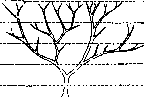
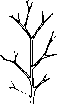
Fig. 2. Fig. 1. Paleontological genealogical tree. (After Plate.) Fig. 2. Phylogenetic genealogical tree. Projection on a vertical plane. (After Plate.) At the end of the 18th century, Jussieu reorganized the botanical system according to the principle of naturalness, and Lamarck united all classes of animals into two main groups—vertebrates and invertebrates—and established a number of new classes in the latter group. At the beginning of the 19th century, de Candolle developed the botanical system in more detail, and Cuvier united animals on the basis of the commonality of structural plan into 4 main divisions, which he called branches and which were later regarded as types. In the middle of the 19th century, when thanks to Darwin the evolutionary theory became established in science, the natural system received its first scientific explanation, fig. 3. Projection which amounts to the fact that the natural system reflects the phylogenetic relationship of groups. From this time, the prevailing direction that T. takes becomes phylogenetic, and most researchers, proceeding from the fact that the organic world developed monophyletically, i.e., by divergence from one original form, turn to depicting individual systematic groups (or even the entire animal kingdom; Haeckel) in the form of genealogical trees. In this case, the relationship of individual

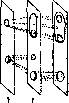
On the relationship of systematic categories (Subject of taxonomy)
Fig. 4. Diagram of the relationship between the subject of study of taxonomy and phylogenetics. groups is represented in space, i.e., in the form of a three-dimensional tree, and the diagrams below are projections of such a stereometric tree onto a plane. Two main types of genealogical trees are used: 1) paleontological (fig. 1), which aim to depict: a) from which group Branches «^ of branches„ DID Another Group (subject of phylogenetics). and b) in what geological time
* the separation occurred, and 2) purely phylogenetic trees (fig. 2), which aim to depict: a) from which group another group originated and b) the phylogenetic closeness of individual groups to each other, which is graphically expressed by the length of the branches. Both diagrams show a vertical projection onto a plane of a three-dimensional tree, but sometimes phylogenetic trees are depicted as a projection onto a horizontal plane (fig. 3). The period of enthusiasm for systematic-genealogical trees lasted during the second half of the 19th century and the beginning of the 20th century. At the present time, most researchers are moving away from them as extremely conventional schemes. The given diagram (fig. 4) clarifies the relationship between T. and phylogeny.
Related articles
Mentioned in
Cite this page
“Taxonomy.” Soviet Medical Encyclopedia. English translation of Bolshaya Meditsinskaya Entsiklopediya, 1st ed. (Moscow, 1928–1936), ed. N. A. Semashko. https://sovietmedicalencyclopedia.pages.dev/article/taxonomy/