Ersiman
Historical document, translated for reference. It reflects medical knowledge of the 1920s–30s and is not medical advice.
Summary
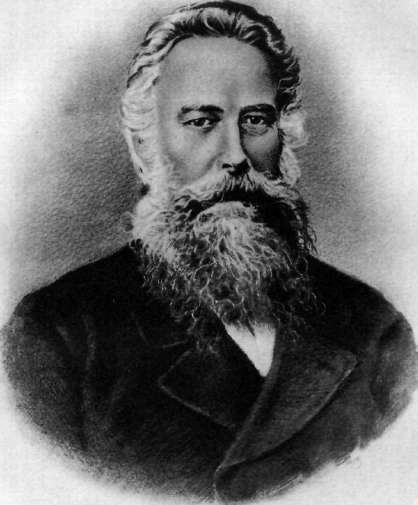
Fyodor Ersiman (1842-1915) was a prominent Russian hygienist of Swiss origin who made significant contributions to public health and social medicine in Russia. He established the first proper hygiene department at Moscow University and conducted extensive research on working conditions and public health.
Encyclopedia article (1928–1936)
Ersiman, Fyodor Fyodorovich (1842-1915), professor, the foremost Russian hygienist and an active participant in the creation of Russian public medicine. Swiss by origin and birth, E. was educated in his homeland, where he completed his medical studies at the University of Zurich. Initially, he specialized as an ophthalmologist, making his mark in this field with scientific works, but later gradually shifted to another area of activity—into the field of hygiene. In 1869, he moved to Russia, first to St. Petersburg and then to Moscow, and here his entire multifaceted scientific and public activity unfolded until his forced departure from Russia in 1896. In St. Petersburg, while working initially as an ophthalmologist, E. immediately gave his work a public direction, undertaking research on vision among students in secondary schools and then publishing his first work in Russian on the influence of schools on the origin of myopia (Arch. Jud. Med. and Public Hyg., 1870), and then moved on to studying other, broader questions of hygiene, focusing on the examination of housing conditions in St. Petersburg. His journal articles about basement dwellings in St. Petersburg (Arch. Jud. Med. and Public Hyg., 1871) and about the lodging houses of Vyazemsky (1871) were the first works in Russia in this field. Already having substantial general medical and scientific training and moving into the field of hygiene research, E. traveled abroad again in 1872 and for several years worked in a number of scientific institutions, improving his skills and studying hygiene problems. He worked in Munich under the famous professor Pettenkofer and professor Voit, the creators and founders of modern experimental hygiene. Even then, E. wrote his first major work "Guide to Hygiene" (St. Petersburg, 1872-1877), where he precisely and clearly formulates the tasks of this science, emphasizing along with the experimental aspects of this science its social goals and thus even at that distant time anticipating the modern development of these disciplines. "The immediate goal of hygiene is to investigate the influence on humans of all possible phenomena of nature to which they are continuously exposed, further—the influence of that artificial environment in which they live due to their social position, and finally, to find means for mitigating the effect of all conditions unfavorable to the human organism from the side of nature and society." Thus E. formulated these tasks as early as 1872 in the preface to the above-mentioned three-volume "Guide." In 1877, E. published another major work "Professional Hygiene of Mental and Physical Labor" (St. Petersburg, 1877), in which he addresses all the broad questions of this chapter of hygiene, closely connecting with hygiene problems their social evaluation and goals. Already an established major scientific worker, E. returned again to Russia, in 1877-78 participated in military-sanitary work on the front (Russo-Turkish War) and in 1879 moved to Moscow. Here begins a new, most fruitful period of his activity (1879-1896). At the invitation of the Moscow Provincial Zemstvo, E. undertook his famous work on sanitary research of factories and plants of the Moscow Province. Over 7 years according to a broad program, under his direct participation and leadership, a huge classical work was carried out, subsequently published in the form of 17 large collections (380 printed sheets). In addition to the general survey, extensive materials are given here on the anthropometric examination of workers and on their nutrition, materials which today are irreplaceable for the comparative evaluation of modern data obtained in similar works by sanitary authorities already under Soviet power. E. also took an active part in the creation of the first properly organized sanitary organization of the Moscow Provincial Zemstvo (headed by E. A. Osipov), joining in 1885 as one of the first 4 sanitary physicians in the composition of this institution. He conducted this work until 1892, being the most active participant in the initial period of work. At the same time, E.'s scientific work developed. In 1882, he was invited to head the department of hygiene at Moscow University and in the full sense of the word created this department in the university. For the first time, he established laboratory exercises in this discipline; only under him did this science become an independent course, and not an appendage to any other incidental course. Already after a few years, on the initiative of E., a special building for the Hygiene Institute was constructed on Devichye Field, richly equipped with laboratories, museums, and a library. A staff of young workers was assembled, intensive scientific work began; during the first few years, the "Collections of Works of the Hygiene Institute" (Moscow, 1886-91) were systematically published. At the institute, on the initiative of E., in 1891 a city sanitary station was organized to serve the needs of the urban population, which widely developed its research work, mainly in the field of studying the food market of Moscow. Its classic annual reports to this day are models and irreplaceable material on the methodology of hygiene research. Under the editorship of E., the first four reports of the station were published with a number of scientific articles. In 1887, a new supplemented edition of the "Guide" was also published.
The scientific and practical activity of E. went hand in hand with his public work. From the very beginning, he was a constant participant and leader of the Pirogov congresses, making reports at the latter, conducting practical work in commissions and on assignments of the congress. E. was the first and permanent chairman of the Moscow Hygiene Society, opened in 1892; he wrote articles on broad public topics whenever public thought was stirred by certain events; in 1892, in connection with the terrible famine of 1891-92, he gave a public lecture on the nutrition of the population; in 1893, E.'s well-known monograph on cholera was published, where in the most fascinating manner he presents a picture of the struggle of various views in the field of epidemiology of this disease (Pettenkofer's theory). Together with E. A. Osipov, in 1887 he gave a sharp rebuttal to the requests of a government commission (the so-called "Botkin" commission) for the improvement of Russia, emphasizing that no sanitary reforms would give anything to the people as long as the general social and economic conditions of their life are not changed. The socio-scientific work of E. was interrupted in 1896. In connection with student unrest, a group of professors submitted a memorandum to the then governor-general, Grand Duke Sergei, and to the Minister of Public Education, the well-known reactionary Delianov, in which they petitioned in a cautious form for the mitigation of the fate of students who suffered from police arbitrariness. In response to this, repressions followed against the professorate, and first of all E. was dismissed from the university. This was only a pretext for the government to get rid of a major public worker who stood in opposition, although purely legal, to the governmental system. E. was abroad at this time; he did not return to Russia and left it forever. He settled in Zurich, where he was elected to the municipal council, and from 1901 he managed the sanitary department of the city administration. He joined the Social Democratic Party of Switzerland and as before, in another country, he conducted socio-scientific work, appearing in print and at congresses. During these years, he published and released the well-known brief guide to hygiene, reprinted three times (1898, 1903, 1912). E. died on October 31, 1915, during the imperialist war, at the age of 73. The personal qualities of E. distinguished him as a rare man in his humanity and responsiveness. E. lived and worked in a difficult period of the autocratic regime and personally endured its blows. But he did everything he could for the scientific development of hygiene and healthcare in the country, thereby preparing the ground for the real implementation of the tasks he set in the conditions of the modern, revolution-created system.-The total number of E.'s works in Russian and German exceeds 100; his hygiene textbooks have been translated into a number of languages. A complete list of his works is given in Brockhaus-Efron's "Encyclopedic Dictionary", vol. LXXXI, St. Petersburg, 1901, and partially in the article by Prof. S. S. Orlov in the report of Moscow University for 1915. Biographies and articles about E.'s life, in addition to those mentioned above, are given in No. 1 of the journal "Public Physician" for 1916, in a number of articles (Igunova, Diatroptova, Popov, Sokolov, Ignatiev, etc.) and in the journal "Medical Affairs", 1926, No. 14.
Related articles
Cite this page
“Ersiman.” Soviet Medical Encyclopedia. English translation of Bolshaya Meditsinskaya Entsiklopediya, 1st ed. (Moscow, 1928–1936), ed. N. A. Semashko. https://sovietmedicalencyclopedia.pages.dev/article/ersiman/