Infectious Diseases
Historical document, translated for reference. It reflects medical knowledge of the 1920s–30s and is not medical advice.
Summary
This article provides a historical overview of the concept of infectious diseases, tracing the evolution of medical theories from ancient times through the 19th-century bacteriological revolution. It also details the clinical manifestations of these diseases, with a particular focus on cardiovascular pathology and hemodynamic changes during infection.
Encyclopedia article (1928–1936)
INFECTIOUS DISEASES. In the view of the Romans, the word "infectio" encompassed the concept of a group of acute diseases accompanied by fever, which often acquired epidemic proportions and were dependent on the contamination of the air by harmful vapors, or "miasms," emitted by the soil. Subsequently, the concept of diseases spreading through contact—"contagious" infections—was added to the concept of "miasmatic" diseases. From a modern point of view, infectious diseases are those diseases the mechanism of which is based on the introduction of an organized living principle—a microorganism—into the body of another, more highly organized being—a macroorganism. I. History. In ancient times, the nature of infectious diseases was interpreted differently by various schools of physicians: the mechanical school (Praxagoras, Erasistratus, 300–335 BC), the atomistic school (Asclepiades, 124 BC; Themison, 50 BC; Thessalus, 50 BC), and the vitalist-humoral school (Hippocrates, Herophilus, Athenaeus, 460–300 BC). The theories of the "mechanists" boiled down to explaining the mechanism of infectious diseases as the penetration of venous blood into "arteries normally filled with air"; the atomists attributed it to the clogging of skin pores by abnormally large atoms resulting from the decay of dense parts of the body; the humoralists attributed it to the mixing of blood with bile and phlegm due to a disruption in the regularity of the functions of the principle regulating life (Aristotle's pneuma). The gradual improvement of observation methods, along with knowledge of anatomy and physiology gleaned from the Egyptian school, enabled Galen (2nd century AD), Oribasius, Aetius, and Alexander of Tralles (4th century AD) to construct an ingenious theory of the mechanism of infectious diseases: heat produced by the heart can turn into fire; then, heat and corrupted humors, finding no exit, accumulate in the body in greater or lesser quantities depending on the temperament, and a struggle arises between the materialized disease-causing principle and the entire body. These authors already divided the course of an infectious disease into periods of invasion, increase, acme, and crisis. The Middle Ages contributed little to the development of the science of infectious diseases, despite the fact that smallpox and plague decimated the populations of entire regions. The epidemics that raged during this time were viewed as a punishment from God or the machinations of the devil and his minions—witches and sorcerers—who cast spells. The Arabs (Rhazes and, in particular, Avicenna) provided accurate descriptions of a number of infectious diseases (960–1037). Paracelsus (16th century) again resurrected the concept of the pneuma as a principle whose altered regulatory action causes infectious diseases in the human body. In the Renaissance, the revived schools of iatromechanists, iatrochemists, and animists (see Disease, history of the concept of "disease") sought the criteria for consolidating their basic dogmas precisely in infectious diseases. During this period, the experimental method of studying infectious diseases began to emerge, especially after Galileo's discoveries in physics and the invention of the thermometer. The most talented representative of this time, van Helmont, combined animism with the experimental method. According to his teaching, an infectious state was caused by the irritation of a special vital principle, the "archeus." Chills were a symptom of the irritation of the "archeus," while fever and sweating were symptoms of its calming. Using thermometry, Borelli (1608–79) proved the untenability of the doctrine regarding the heart as the center of heat and fever and proposed a new theory of infectious diseases. In his opinion, an infectious disease consists of inflammatory substances spreading from inflamed lungs and glands along the nerves to the brain, from where they pass to the heart and produce not only an acceleration of its action but also fever. The struggle between the animist-vitalists (Sydenham, Morton, Stahl, Hahnemann) and the iatromechanists and iatrochemists (Boerhaave, Van Swieten) led to a new stage in the evolution of the doctrine of infectious diseases, with the center of gravity shifting from the heart and blood toward the central nervous system. At the end of the 18th century, Brown created the theory of "excitability"—a reaction of excitation, accumulation, and exhaustion of excitation. He divided infectious diseases according to the organism's reaction into "sthenic" and "asthenic" forms. Lavoisier's discoveries enabled Broussais to reject the prevailing vitalistic theories in the study of infectious diseases and to place them on a firm pathophysiological basis. The discoveries of Liebermeister, Davaine, Virchow, Pasteur, Koch, and others made it possible not only to reveal the pathological mechanism of infectious diseases but also the etiological dependence between microbial infection and the reaction to this infection. II. Clinical Practice. The various points of view from which infectious diseases are viewed have created diversity in their classification. The old division of infectious diseases into miasmatic, contagious, and miasmatic-contagious has long been abandoned. Newer classifications are based on the morphological and biological properties of the pathogens. According to this principle, infectious diseases are divided into those produced by cocci, bacilli, fungi, protozoa, chlamydozoa, and filterable viruses, and according to the biological properties of the microbes—into toxic, septic, and mixed (Koch, Lehmann, Neumann, Gottshlich). This basic type of classification, however, cannot be considered to fully exhaust the problem and is therefore not universally accepted. Consequently, a number of authors have made modifications or included new principles. Thus, Jochmann divides infectious diseases into septic, with localization in the circulatory system and lymphatic apparatus; topical, with primary involvement of one organ; eruptive; and zoonoses. Bezancon and Philibert divide infectious diseases into diseases: 1) of microbial origin, 2) of fungal origin, 3) caused by Treponema, 4) caused by animal parasites, 5) from cytotropic viruses, and 6) from unknown pathogens. Zlatogorov and Solovyov (1928), proceeding from anatomical and etiological principles, propose dividing infectious diseases into seven groups according to the site of localization: 1) intestinal, 2) septic (of the blood, hematopoietic organs, and lymphatic pathways), 3) of the mucous membranes of the lungs, respiratory tract, and nasopharynx, 4) nervous (of the central nervous system), 5) cutaneous (of the skin and external mucous membranes), 6) localized in various organs and systems, and 7) infectious diseases that do not fit into the previous groups and whose precise localization in the body has not yet been sufficiently clarified. Each group of diseases is in turn divided according to the etiological principle into diseases: 1) caused by bacterial infections, 2) fungi, 3) Treponema (spirochetoses), 4) animal parasites (trypanosomes, leishmania, etc.), and 5) unstudied and unknown pathogens. All these classifications are, of course, of very relative significance. All infectious diseases share typical symptoms common to them all. Changes in the cardiovascular system lead to a weakening of the heart's strength. Due to paresis of the sympathetic innervation, blood pressure in infectious diseases falls, and the heart rhythm is usually accelerated. The improper distribution of blood in the body of an infectious patient, arising in dependence on the intermittent paresis of the celiac nerve and the nerves dilating the coronary vessels of the heart, has a significant influence on blood pressure. Under normal conditions, a mutual regulatory process occurs between the vessels of the abdominal cavity and the vessels of the rest of the body, maintaining blood pressure at a certain level through the proper distribution of blood mass. With paresis of the celiac nerve, blood flows into the abdominal cavity, and the heart begins to work with reduced filling of the other vessels (diphtheria, typhus, etc.). At the same time, due to the exclusion of the action of the sympathetic fibers that dilate the coronary vessels, they constrict, and the supply of blood to the heart muscle decreases. As a result of all these causes, persistent hypotension is created. It has been experimentally proven that vessels deprived of their normal state of tone become hypersensitive to fluctuations in temperature and respond to its increase with the strongest dilation, and to a decrease with constriction, with sharp fluctuations in blood pressure occurring. With intermittent paresis of the vasomotor nerves, rushes of blood occur not only into the abdominal cavity but also into the tissue of the lungs and brain. In the heart muscle, in addition to various anatomical changes, a number of functional changes are observed. Both during an infectious disease and for some time after it, an extraordinary excitability of cardiac activity is noted, which Dehio called "irritable weakness of the heart." A decrease in the volume and width of the heart's accommodation, i.e., in other words, the ability to realize reserve strength within the necessary limits, can be the cause of cardiac death even with a heart that is flawless from an anatomical point of view. The ejection force of the heart for each systole decreases, and the minute volume can then be maintained only by an acceleration of cardiac activity. In a number of infectious diseases, an increase in the excitability of the conducting apparatus of the heart is observed in the form of extrasystoles. In some infectious diseases, atrial fibrillation is sometimes observed (diphtheria, typhus, and others). In this period, embryocardia, gallop rhythm, and sometimes bradycardia are observed. The observed arrhythmias can occur both with a slowing and with an acceleration of cardiac activity.
Dicrotism is observed in a number of infectious diseases; it is considered typical for the second week of typhoid fever. Electrocardiographic examination of the heart indicates that at the height of an infectious disease, the diastolic phase decreases. X-ray examination of the heart at the beginning of infectious diseases (typhus, diphtheria, scarlet fever, rheumatism) reveals a general dilation of all cardiac cavities, and in later periods, dilation of the left ventricle. In infectious diseases, especially those accompanied by chills or loss of water, phenomena of disharmony between heart activity and the pulse wave are observed. The pulse in large vessels may disappear at a time when the heart is still beating with sufficient force (intestinal form of anthrax, cholera, typhus). The discrepancy between the increased heart rate and the slowing of pulse beats is a formidable sign of impending heart paralysis in a number of toxic infectious diseases. The reaction of the hematopoietic apparatus to infectious diseases consists of changes in the plasma and the morphological picture of red and white blood. In many cases, erythrocytes suffer not morphologically, but functionally, lowering their ability to absorb O2, which is especially pronounced in anaerobic infections. In other cases, the hemolytic effect comes to the fore, and then red blood cells dissolve in the bloodstream, and hemocytolysis can reach such a degree that 90% of erythrocytes dissolve, with phenomena of hemoglobinemia, hematuria, and multiple thrombosis of capillary vessels. Leaching of Hb occurs according to the type of action of saponin by disrupting the bond of the lipoid with the substance of the erythrocytes and the transition of the released Hb into the plasma. The amount of Hb in infectious diseases falls faster than the number of erythrocytes. In those cases where it comes to morphological changes, poikilocytosis, basophilic stippling in the substance of erythrocytes, normoblasts, spontaneous agglutination, and conglutination of erythrocytes appear. In some infectious hemotoxic infections, a foamy structure of the corpuscles and polychromatophilia are observed. The number of white blood cells changes in infectious diseases towards leukopenia or leukocytosis. In some of them, the number of white blood cells remains normal, but the leukocyte formula changes. Regarding morphological fluctuations of the blood formula, neutrophilia is most often observed (croupous pneumonia, erysipelas, scarlet fever, typhus, influenza, tuberculous meningitis, whooping cough, dysentery, epidemic meningitis, anthrax, Weil's disease, 5-day fever, spirochetosis, septic diseases). Monocytosis is observed in typhus, malaria, rubella, smallpox, measles. Eosinophilia is observed in infection with higher animal parasites, in infectious diseases with exudative phenomena in the skin, in the desquamation period after infectious diseases with rashes, and in acute articular rheumatism. In a number of other infectious diseases (diphtheria with severe intoxication, smallpox, typhus, etc.), a fairly large number of myelocytes, plasma cells, and histiocytes are observed. In some infectious diseases, pathological inclusions are found in neutrophilic leukocytes; the same inclusions are sometimes observed in the protoplasm of mononuclears (typhus, scarlet fever). These inclusions apparently represent grains of nuclear chromatin. Blood platelets can change sharply in some infectious diseases both qualitatively and quantitatively. Their number drops sharply in severe forms of pneumonia, measles, smallpox, typhoid fever, infectious purpura, cholera, relapsing fever, and its complication with bilious typhoid. In many infectious diseases, the physicochemical state of blood plasma changes sharply, as well as the content of enzymes and immune bodies in it. The decrease in the dry residue of the blood in a number of infectious diseases is noteworthy, with the fall in the dry residue running parallel to the severity of the disease. Changes in the specific gravity of the blood, surface tension of the plasma, viscosity, freezing point, osmotic pressure, refractive index, electrical conductivity, H-ion content, coagulability, alkalinity, antitryptic titer, enzymes, content of amino acids and proteinogenic amines, residual nitrogen, and sugar deserve attention in infectious diseases. The content of all types of globulins in plasma and serum changes greatly in infectious diseases, standing in a certain parallelism with the amount of immune bodies. The ability of erythrocytes to sediment was subjected to comprehensive study in infectious diseases. On the basis of the sedimentation rate, it was considered possible to establish the prognosis of the disease. Fluctuations can be very sharp and reach from 4-8 mm to 30 mm in 1 hour. Changes in lymph, in view of the difficulty of obtaining it in pure form, are taken into account only in experiments on animals. In some experimental infections, an increase in formed elements, sugar, and protein bodies is observed in the lymph of the thoracic duct. Changes in the area of the respiratory organs are extremely diverse in infectious diseases. These changes can arise both on the basis of primary damage to all parts of the respiratory apparatus and on the basis of secondary damage to it. Changes in respiratory functions can arise due to changes in blood circulation in the lung tissue, as well as due to changes in the rhythmic excitability of the central nervous apparatus. Irritation of the respiratory centers leads to a change in the type of breathing (Biot-Kussmaul type, Cheyne-Stokes, etc.). With paresis of the action of the n. vagus, respiratory movements become rare; irritation of the celiac section of the sympathetic nerve leads to intensified expiratory breathing. Changes in blood circulation in the lungs, facilitating the introduction of infection, depend on the weakening of cardiac activity in infectious diseases and on the paretic state of the n. vagus, which causes hypersecretion of the bronchial mucosa along with a decrease in the ability of expectoration. In the digestive tract, changes of a functional nature often arise. In most infectious diseases, a lack of appetite, disturbance of bowel movements, coated tongue, a decrease in the secretion of all digestive juices, and sometimes vomiting, abdominal distension, and an intensification of fermentation processes are observed. The tongue is most sharply affected in diseases with specific localization in the digestive tract, and then in infectious diseases accompanied by skin rashes. The function and structure of the large digestive glands also change in infectious diseases. Parallel to the decrease in the qualitative and quantitative relations of gastric and intestinal juice, the secretory activity of the liver and pancreas also suffers. Inflammatory processes arising in the liver and gallbladder, the loading of the reticulo-endothelium of the liver with disintegrating erythrocytes, and inflammatory changes along the biliary tract system lead to jaundice. Impairment of pancreatic function leads to a decrease in the absorption of fat and proteins. Kidney damage in infectious diseases is of a functional or anatomical nature. Albumosuria and albuminuria in infectious diseases are a common phenomenon, as is the appearance of hyaline casts and hematuria. The kidneys are most sharply affected in nephrotropic infectious diseases (especially streptococcal—scarlet fever, sepsis lenta), then in mycotic embolic processes. Affection of the urinary bladder arises on the basis of either descending infection from the kidneys or ascending infection upon the penetration of microbes through the urethra. Impairment of urination in infectious diseases depends on the disruption of the reflex arc and a decrease in the activity of urination centers in the region of the sacral spinal cord, the center in the diencephalon, and the voluntary cortical center. A decrease in the quantity of urine, an increase in its specific gravity and urea content, a decrease in chloride content, and the appearance in the urine of compounds giving azo reactions are linked to a metabolic disorder in the body. The skin in infectious diseases is usually dry, at times becoming moist with either hot liquid or thick, sticky cold sweat. Liquid hot sweat indicates an improvement in the patient's condition; sticky cold sweat gives a poor prognosis, combined with a drop in cardiac activity, cyanosis, pallor, and collapse. Gas and water exchange of the skin is significantly reduced in infectious diseases. Blockage of skin capillaries by microbes, the penetration of microbes into the lymphatic fissures of the skin, and phenomena of diverse skin reactions to its sensitization by decay products and toxins of microbes cause the appearance on it of diverse infectious rashes, which are often specific for the diagnosis of a given disease. The rash in some cases has a metameric character, corresponding to the distribution of sensory nerves. In a number of infectious diseases, these rashes appear in a certain sequence, occupying first the face and scalp, and then certain parts of the trunk and limbs. Sometimes various erythemas are observed, very rarely gangrene, often hemorrhages—from petechiae to large bruises. A peculiar skin reaction includes the formation of vesicles in places where the skin transitions into mucous membrane and in places rich in sensory innervation (see Herpes). The intensity of rashes is especially great in exudative and lymphatic diatheses. The consequences of many infectious rashes are desquamation, the formation of pustules, crusts, and scars, changes in nails, hair loss, etc. The skeletal system is affected in a number of infectious diseases.
In connection with microbial embolization, osteomyelitis may arise, which is encountered in the region of long tubular, short, and flat bones. Spondylitis during typhus, which usually affects the body of the V lumbar vertebra, deserves mention. Inflammatory processes in the periosteum and joints are frequently observed. Rheumatoid phenomena in the joints are characteristic of scarlet fever and sepsis (streptococcal and pneumococcal). Significant changes in water metabolism and general chemistry during infectious diseases lead to increased breakdown of muscle tissue proteins. In some infectious diseases, muscle excitability is sharply decreased, while in others it is sharply increased. Lesions of the genital organs are encountered in few infectious diseases (epidemic parotitis, glanders, paratyphoid, etc.) in the form of orchitis and epididymitis. The complex question of the participation of endocrine glands in the pathology of infectious diseases has been somewhat clarified in relation to the adrenal, thymus, and thyroid glands. Lesions of the adrenal glands during certain infectious diseases are expressed not only in a functional but also in a morphological respect. The irritation of the sympathetic nervous system, the maintenance of blood pressure at a certain level, and, in part, the regulation of sugar metabolism are connected with the function of the adrenal glands. Disturbance of adrenal function is especially pronounced in typhus, diphtheria, and pneumonia. The thyroid gland usually suffers in the convalescent period, but sometimes also at the height of the disease—in typhus, diphtheria, tetanus, dysentery, erysipelas, septic diseases, and miliary tuberculosis, resulting in phenomena of transient hyper- or hypothyroidism. Hypothyroidism more often arises on the basis of dysentery and erysipelas. In a number of infectious diseases that do not have a primary localization in the central nervous system, a number of psychic, motor, and sensory disturbances are observed (see Infectious Psychoses). Changes in blood circulation in the central nervous system, and especially in the brain, in the form of active and passive hyperemia are frequently observed in infectious diseases. The most severe circulatory changes are observed in septic diseases accompanied by blockage of brain vessels by the pathogens of infectious diseases (sepsis, malaria, spirochetosis). Deep cellular changes are observed in diseases of the toxic type (dysentery, diphtheria). Sometimes on this basis, paralyses and pareses are observed, being in some cases a typical symptom of infectious diseases (consecutive paralyses in diphtheria, early paralyses in infantile poliomyelitis). Lesions of the spinal cord in infectious diseases can take on the character of Landry's paralysis. Many infectious diseases, in which there is no severe lesion of the brain, are characterized by serous meningoencephalitis. Disturbances of the function of the sense organs are also connected with the lesion of the nervous system. Hyperesthesia of smell, hearing, and vision is often agonizing for the patient in the initial period of the disease and causes extreme restlessness, accompanied even by aggressive actions. Changes in the cerebrospinal fluid in infectious diseases are important in a diagnostic respect. Bacterioscopically and bacteriologically, the microbial flora can be determined in the fluid even in those cases of inflammation of the brain and its membranes when the fluid is transparent. Of the precipitation and flocculation reactions, the Pandy and Nonne-Apelt reactions are most often used, followed by the Goldsol and Mastix reactions. It is very important to determine the sugar content in the fluid, which normally contains 50-70 mg%. In a number of infectious diseases of the central nervous system (lethargic encephalitis, poliomyelitis), the sugar content in the cerebrospinal fluid sharply increases, reaching 120 mg%. Great importance is attached to measuring the pressure under which the cerebrospinal fluid flows out, studying the formation of a film on the surface upon standing, and the presence of lymphocytic pleocytosis and polynucleosis. Vagotonia and sympathicotonia manifest in infectious diseases in diverse and often inconsistent forms, even within the same disease. Scarlet fever, diphtheria, typhoid fever, and influenza are classified as diseases proceeding under the sign of vagotonia. Often in many infectious diseases, vagotonia manifests in the period of convalescence. The so-called parasympathetic reaction during the outflow of leukocytes from superficial cutaneous vessels into deep cavity vessels, constriction of vessels on the body surface with their dilation in the cavities, bradycardic vascular hypotension, extrasystoles, and atrial fibrillation in infectious-toxic forms must be attributed to the influence of the parasympathetic system, as well as a number of transient prodromal erythemas. Disturbance of metabolism in infectious diseases depends to the same degree on the rise in temperature as it does on general intoxication. Irritation of the adrenal glands, which regulate carbohydrate metabolism; the pituitary gland, which influences fat metabolism; the thyroid gland, which regulates protein metabolism; and the metabolic centers located in the regio subthalamica leads to increased oxidation in the liver and muscles, with the breakdown immediately directed toward protein. In this regard, irritation of the parasympathetic center, which regulates protein metabolism, plays a large role. In the prodrome (Birk), deposition of protein in the liver is observed, but already in the initial period of the infectious disease, its increased breakdown begins. The activity of intracellular enzymes is directed toward tissue breakdown. Associated with the intensification of these processes is an increase in enzymes in the blood, for example, nucleases in dysentery, diphtheria, and sepsis; an increase in lipase in toxic diphtheria and dysentery; and an increase in amylase in poisoning by diphtheria, dysentery, and tetanus toxins. Mineral metabolism changes sharply in the direction of chlorine metabolism. Dechlorination of the organism is especially sharply pronounced in such toxic diseases as cholera and cholera-like diseases; dechlorination is accompanied by a loss of body water. In other infectious diseases, despite the retention of water in the organism and, consequently, the retention of NaCl, the latter is contained in the blood within the percentage of the physiological norm. The alkaline reserve of the blood in some infectious diseases may be increased. Upon the end of the febrile period, the alkalinity of the blood quickly (4-5 days) returns to normal. The acidity of the urine during the febrile period decreases significantly; upon the end of the febrile period, both the combined and total acidity of the urine begins to increase. The sugar content in many infectious diseases proceeding with phenomena of severe intoxication exceeds the norm, reaching high degrees of hyperglycemia. This increase in the amount of sugar in the blood, in connection with an increase in the amount of ammonia in the urine during the febrile period, and the appearance of acetone in the urine are of great importance, indicating deep changes in metabolism. Acetone bodies (see), appearing in the urine, indicate the accumulation in the tissues of acidic metabolic products, against which the blood protects itself with increased alkalinity. In those cases where acetone bodies increase in the urine, lipemia appears in the blood. Fat, mobilized during infectious diseases, passes through an intermediate stage of acetone bodies, and then their synthesis into sugar occurs. The sugar formed in this way passes into the blood, is partially utilized and burned; the organism gradually becomes depleted of carbohydrates, and the formation of excess acetone bodies in connection with β-oxybutyric acid produces phenomena of general acidosis. In this process, the normal order of decomposition of oxybutyric acid is disturbed, i.e., its conversion into CO2 and water; it converts into acetoacetic acid, then, as acetone is formed, part goes to the formation of sugar, and from the remaining part of acetoacetic acid, CO2 is split off, saturating the tissues, while the excess of free acetone passes into the urine. CO2 is also displaced from bicarbonate salts, saturating the cells and blood. The processes of breakdown of not only fat but also proteins in infectious diseases are increased, and a decrease in temperature does not lead to a decrease in breakdown. Nitrogen in the blood of infectious patients in the form of soluble residual nitrogen increases both at the expense of urea and at the expense of creatinine and amino acids. Acidosis, water retention, the accumulation of nitrogenous metabolic products, and proteinogenic amines create the background upon which the processes of tissue regeneration occur. Of these amines, histamine and tyramine cause arrhythmias; choline and neurine slow the rhythm and lower the amplitude of cardiac contraction, constrict the coronary vessels, and after a short-term rise in cardiac activity, cause a drop in blood pressure, bronchial spasms, inspiratory dyspnea, and lower blood coagulability. Normally, blood contains 240 mg% sodium, 30 mg% potassium, and 9.3 mg% calcium. The content of their salts, as well as the formation of urea and the metabolism of protein and fat, is under the influence of the autonomic nervous system and, mainly, the centers located in the tuber cinereum and the diencephalon. Therefore, in infectious diseases with phenomena of severe intoxication of the autonomic nervous system and a decrease in blood alkalinity, the content of calcium ions increases, and with an increase in alkalinity, it decreases. In phenomena of vagotonia, the potassium content increases. Gas exchange, even in non-febrile infectious diseases, rises above the norm by 25% already in the incubation period. The metabolism of sulfate salts and especially the excretion of paired ethereal sulfuric acids with the appearance of H2S in the blood are associated with the destruction of proteins of a nucleogenic character; with extensive nuclear breakdown, the quantity of uric acid in the urine increases.
Infectious diseases have a more or less typical, and some of them a definitely cyclic course, where individual phases follow one another in a known order and end at specific intervals. From the moment the infectious agent enters the organism until the onset of the first pathological phenomena, a specific period passes, the so-called latent or incubation period, during which the multiplication of the pathogen and the accumulation of the harmful substances it releases occur. For each disease, this period has a different duration (see Incubation period). In some infectious diseases, the incubation period is immediately replaced by the period of disease development, which occurs suddenly amidst apparent full health (e.g., relapsing fever, malaria, lobar pneumonia); in others (measles, smallpox, typhoid fever), the latent period is followed by a period of precursors (prodromal), which does not provide a full picture of the disease but is accompanied by clearly expressed pathological phenomena (fever, general malaise, sometimes skin rash, etc.), although without the characteristic symptoms peculiar to the given disease. In some diseases, prodromal phenomena are so characteristic that they can serve as a diagnostic sign (measles, smallpox). The duration of this period varies for different diseases: from a few hours (scarlet fever) to several days (measles). The period of development of the acute pathological process also has a varying duration: from a few days (e.g., influenza, measles) to several weeks (scarlet fever, typhoid fever). The beginning of the period of development of the pathological process in some infectious diseases has the character of a gradual increase in symptoms (typhoid fever); in others, pathological phenomena develop rapidly, starting with a shaking chill and signs of sharp general intoxication (typhus, relapsing fever). In the period of development of disease processes, every rise in temperature signifies an intensification of the reaction, and a decrease signifies a weakening of the organism's reaction. Protein and fat are intensively destroyed in the period of full development of an infectious disease, the amount of urine decreases, and the excretion of moisture is achieved with the help of rapid breathing. The washing out of the poison is combined with periodic diuresis, the appearance of sweat, and a rise in blood pressure. A gradual subsiding of the reaction leads to lysis, accompanied by a more or less slow fall in temperature and a similar decrease in pathological phenomena; an acute end to the temperature reaction leads to a crisis. Crises usually occur in the night or early morning hours. At this time, abundant urination and sweating, a sharp drop in temperature, and a slowing of the pulse and breathing are observed. A crisis is often accompanied by convulsions in children, acute psychopathological phenomena in adults, erythematous rashes appear on the skin, and diarrhea and nosebleeds are observed. The course of an infectious disease, and especially of a crisis, is often complicated by collapse (see), during which a rapid drop in cardiac activity, pallor, anesthesia, cooling of the skin, cold sweat, embryocardia, rapid breathing, meteorism, vomiting, thirst, and the emptying of visible veins are observed. The course of an infectious disease is often accompanied by more or less typical complications for each (see individual infections). Atypical forms of the macroorganism's reaction to infection can depend on a number of causes. An atypical reaction can arise depending on a method of entry of the infectious agent into the organism that is unusual for the given disease. For example, scarlet fever introduced into the organism through a traumatic skin injury proceeds far differently than scarlet fever arising via droplet infection through the throat. The atypical nature of an infectious disease can depend on acquired immunity, constitution, age, climate, and living conditions. Diphtheria introduced into a family under conditions where all its members are infected will result in diphtheroid lesions of the nasal mucosa in one, carrier status in another, typical diphtheria of the throat in a third, and croup in a fourth. Some will endure paratyphoid infection in a flu-like type, others in a gastroenteritis type, others in a cholerine type, others in a sepsis type, others will develop a dysentery-like disease, and others will endure an abdominal form of the disease. In times of famine, atypical forms of the course of typhoid fever of a sluggish character were observed, with the duration of the disease extending to several months with the transition of one wave into another. The atypical nature of an infectious disease can be expressed in a special, unusual severity of the course, which can be judged by the mortality percentage. Clinically, the atypical course of an infectious disease can consist of the onset of exacerbations during the course of the disease, relapses, undulations, and abortive or ambulatory forms. Exacerbations of the infectious process depend on the formation of secondary foci of the primary infection. Relapses depend either on the sensitization of the organism that occurred during the first attack or on the exhaustion of the unstable immunity acquired during the first attack. If the organism has not acquired lasting immunity during the first attack, but only incomplete immunity, and was simultaneously sensitized, the relapse proceeds much more severely than the previous attack. The absence of parallelism between local and general immunity, and between tissue and humoral immunity, can play a role in the appearance of relapses. Conversely, rapidly and parallelly increasing humoral, tissue, and local immunity lead to an abortive course of an infectious disease. The latter is observed in subjects immunized with small doses or immunized artificially, who have lost their immunity over time but have retained the ability to quickly bring it to life under the influence of irritation by the same microbial agent. Ambulatory forms (see Ambulatory patient) depend perhaps on the insensitivity of nerve centers to the influence of toxic substances or on the properties of the microbe. Nevertheless, anatomical changes in these forms can be so sharply expressed that they sometimes serve as the cause of death (typhoid fever). Therefore, ambulatory forms cannot always be treated as mild forms of the disease. The transition of an acute infectious process into a chronic form also belongs to the number of atypical forms. An atypical course is also obtained in mixed infections. The outcomes of an infectious disease in the case of survival boil down to a full restoration of the organism's functions or to a partial restoration of its functions (with the loss of the functions of one or several organs), to the transition of the process into a chronic form, and to carrier status (see Bacillus carrier). Clinical diagnosis of infectious diseases is based on clinical symptomatology and on laboratory-experimental methods. Epidemiological moments can also play a certain role. Due to objective conditions (state, age), the diagnosis of infectious diseases often cannot be based on anamnesis. In childhood infections, the testimony of parents also cannot be taken into account with full confidence. Therefore, objective examination in the diagnosis of infectious diseases must stand in the foreground. When examining a patient, it is necessary to adhere to a specific scheme and not rely on a single symptom, no matter how typical it may seem. When making a diagnosis, it is necessary to reckon with age and constitutional moments that change the usual course of the disease. The examination scheme is as follows: assessment of the patient's appearance and consideration of all symptoms that can be determined by inspection; careful assessment of existing changes on the skin; in the case of a rash disease, clarification of the nature of the distribution of the rash. Next follows the physical examination of the patient. In conclusion, the taking of material for laboratory examination. Experimental-laboratory diagnosis is based on histological, bacteriological, biological, and chemical methods of research. Bacteriological diagnosis consists of isolating cultures from secretions, pathological products of the patient's body, blood, and tissues. Biological diagnosis consists of performing reactions, the majority of which belong to the category of immune reactions on the patient themselves or on animals. Then, a number of physicochemical studies are used. The development of certain immune substances in the patient's blood serum makes it possible to test these properties on the pathogen's microbes (agglutination, precipitation, bacteriolysis). The cerebrospinal fluid is subjected to the same examination if necessary. A frequent object of study is blood, both from a morphological side and for the purpose of clarifying the ability to clot, the sedimentation of erythrocytes, and the determination of sugar, enzymes, nitrogen, etc., in it. The therapy of infectious diseases is based on the following principles: 1) to remove the microbe from the nest formed by it or to destroy it; 2) to neutralize the poison produced by the microbes at the place of its formation and the absorbed poison circulating in the liquid tissues of the organism; 3) to promote proper blood circulation. Removal of the microbe is possible when its location is known and this place is accessible to direct influence. The killing of the microbe is achieved with the help of parasitotropic substances, which serve as bactericidal, bacteriolytic sera, and chemotherapeutic substances. A bactericidal specific effect can be achieved not only by sera but also by the use of antiviruses and bacteriophages.
Chemotherapeutic substances include such as quinine for malaria, salvarsan and similar preparations for spirochetoses, rivanol for coccal infections, optochin for pneumococcal infections, gold preparations (sanocrysin) for tuberculosis, etc. Bactericidal action is exhibited by illumination with ultraviolet rays, the Finsen method of treatment, cauterization with hot air, then certain coloring substances (methylene blue, pyoctanin), and finally a number of chemical substances (disinfectants) belonging to the group of phenols, cresols, and heavy metals. Neutralization of toxin is achieved with the help of antitoxic sera. In this regard, the use of adsorbing substances plays a certain role, of which the most frequently used are animal charcoal (finely ground), white clay, and silicic acid. Their adsorbing power increases sharply upon the addition of colloidal silver to them. These substances adsorb not only toxins, but even stable alkaloids (strychnine) and bacteria. The action of bactericidal sera is far from being as effective as the action of antitoxic sera. Modern sera are concentrated and freed from proteins not bound to the antitoxin. Antitoxic sera are rapidly excreted from the organism after their administration. Besides sera obtained from artificially immunized animals, sera and blood from people who have recovered from a specific infectious disease are used. These sera, in the case of sufficient bactericidal and antitoxic strength, often produce a more pronounced beneficial and lasting effect than sera from artificially immunized animals. All sera, even those purified from excess proteins, produce, in addition to a specific action, a nonspecific action as well. Protein therapy for infectious diseases is based on this nonspecific action (see Protein therapy). A milder type of therapy of this kind is obtained when, by the introduction of some substance or the influence of physical agents, the breakdown of the protein of the organism's own cells is achieved in a direction unusual for the constitution of the given organism, and the resulting products of the alteration of one's own protein produce an action analogous to the action of parenterally introduced foreign protein. The most pronounced reaction is given by killed cultures and complex vaccines or microbial autolysates, milk and its preparations (Aolan, Xyphall, Hypertherman, Caseosan, etc.). Some of these preparations contain an admixture of bacterial protein. Among substances acting indirectly, one can mention Yatren and Yatren-casein. By mixing Yatren with bacterial bodies, Streptoyatren, Staphyloyatren, etc., are obtained. Then nuclein preparations and deuteroalbumoses are used. When using all these agents, one must keep in mind sensitization and the possibility of the occurrence of anaphylaxis and allergy during treatment. Indications for the use of protein therapy are primarily concentrated in the field of subacute and chronic infectious diseases; furthermore, this therapy can be successfully applied in cases where, upon the conclusion of the acute phase of the process, non-resorbable pathological products remain. When using protein therapy, one must be extremely cautious with its intravenous administration to avoid both a primary toxic effect and allergic shock. Intravenous administration of salvarsan and similar arsenic preparations produces a peculiar effect in infectious diseases. The therapeutic effect of salvarsan in infectious diseases is based not on its specific bactericidal action, but rather on the nonspecific reaction (Reiztherapie) conditioned by it. Iodine preparations that slowly release active iodine (Yatren, David's solutions, etc.) also play a certain role in sterilizing therapy. In the fight against acidosis, intravenous infusion of sugar with parallel subcutaneous administration of insulin is used. In infectious diseases, especially those associated with dehydration and demineralization of the organism, and in cases of severe intoxication, intravenous, intraperitoneal, and subcutaneous administration of saline solutions is used. In diseases associated with weakening of cardiac activity, it is advantageous to use hypertonic solutions. The solutions are usually used alkalized with sodium carbonate. The dietetics of infectious patients, except in cases of gastrointestinal tract involvement where there are specific indications, is based on the necessity of introducing easily digestible, high-calorie food products in small volumes. Digestive capacity and appetite in the majority of infectious patients are lowered. Meanwhile, the breakdown of protein and fat in infectious patients is sharply increased. Artificial lowering of body temperature does not lower protein breakdown and does not increase its assimilation. The burning of fat and glycogen reserves places the organism of the infectious patient in a state of peculiar starvation, mitigated by increased thirst. Carbohydrates are most easily assimilated by the digestive apparatus of patients. Per day, a patient should receive no less than 50 calories per 1 kg of weight (3,000-3,500 cal.). The usual basis of nutrition for infectious patients, if there are no special contraindications, is milk and dairy products (kefir, clabber, varenets, cream, fresh cottage cheese, butter), then eggs, olive oil. In this way, the need for fats and partially for proteins is covered. Next come steamed vegetables (tomatoes, carrots, all types of cabbage, beets), freshly squeezed sauerkraut juice, watermelon juice. All varieties of porridges or "purees" from oat, barley, and buckwheat groats, all varieties of rice; fruits of all kinds in the form of mousse, compote, jelly. Carbohydrates in the form of flour soups and kissels, mashed potatoes, stale white bread. Of sweets—sugar (partly in the form of caramelized sugar), honey. Proteins in the form of various types of white meat and bony freshwater fish, in finely ground form. Squeezed orange and lemon juice. Coffee, cocoa with milk, tea. Drink: fruit juices with water, lemonades, table carbonated mineral waters. The ratio between proteins, fats, and carbohydrates in the food of an infectious patient can be as follows: 1.5:2.7:3.7. The daily ration practically amounts to 400-500 cm3 of milk, 100 cm3 of cream, 100 g of white bread, 4 egg yolks, 50 g of butter, 50-100 g of sugar, 100 g of meat or 150 g of fish, 50 g of vegetables, 100 g of flour dishes, 50 g of cottage cheese, 100 g of kissel or jelly, 100 g of potatoes. Alcoholic beverages are used only in special indications (alcoholism, acute drop in cardiac activity, sepsis). Physiotherapeutic treatment of infectious diseases is predominantly practiced in the form of antipyretic hydrotherapeutic procedures, the most important of which are water baths, baths with douches; then warm-moist wraps, mustard wraps, wet compresses, application of ice to the head and heart. All these procedures, and especially baths, must not cause sharp cooling of the patient's body. Hydrotherapy of infectious diseases is still in a primitive state due to the fact that very little attention is paid to the development of this aspect of therapy. The situation is even worse with light therapy. Isolated attempts at therapy with ultraviolet rays and light procedures have not yet been systematized and have not entered into general use, just as general inhalation therapy and anti-allergic chambers have not. X-ray therapy in infectious diseases has only begun to be applied recently (e.g., in croupous pneumonia). For lowering temperature, substances of a medicinal nature are rarely used. In particular, it is not recommended to use substances of the aniline group; it is better to use, in case of necessity, preparations of the pyrazolone and salicylic groups.
N. Rosenberg. III. Pathological anatomy. From a morphological standpoint, all changes observed in infectious diseases can be divided into general, i.e., characteristic of more or less all infectious diseases known to us, and specific, characterizing individual forms of infections and to a certain extent specifying them. General changes are essentially subdivided into 4 main categories: inflammatory processes, hyperplastic, infiltrative-degenerative, and circulatory disorders. Inflammatory processes occupy the most prominent place in the morphology of infectious diseases, as a result of which the latter are sometimes called inflammatory diseases, and some authors (Aschoff, Ribbert) even propose to consider the entire infectious process with all its characteristic details (such as: leukocytosis, temperature reaction, general phenomena) as a general inflammation of the body. The inflammatory processes themselves proceed with significant qualitative and quantitative variations, depending on the nature of the infection, often on the peculiarities of the given epidemic, the given infection; on the other hand, these processes are closely connected with the structure of the affected tissues and organs, i.e., with the very topography of the infectious processes. Finally, the nature of inflammatory phenomena often depends on the immuno-biological states that have formed in the organism at the present moment, in the sense of, for example, increased, or decreased, or generally altered sensitivity of the organism and its individual tissues to a given virus. An example of dependence on the infection as such and on its epidemiological peculiarities can be scarlet fever, which can be accompanied by both the lightest catarrhal and deep inflammatory-necrotic processes in the throat. Influenza can proceed as an acute vulgar catarrh of the mucous membrane of the nasopharyngeal space, as acute capillary bronchitis, as catarrhal or catarrhal-purulent or as fibrinous-hemorrhagic ("Spanish") pneumonia. Acute rheumatism can proceed to the end as productive-inflammatory myocarditis and endocarditis; sometimes as exudative pericarditis, polyserositis, or as so-called nodose rheumatism or as chorea. Syphilis can proceed as a gummatous, granulomatous, and as an exudative process (for example, fibrinous-purulent peritonitis of stillborns). The dependence of the inflammatory process on the structure of the affected organs can be observed in the pictures of tuberculous lesions of the lungs, on the one hand, and the skin on the other: in one and the same case, at one and the same time, an acute exudative process with a subsequent productive reaction will develop in the lungs, while in the skin, a productive reaction appears from the very beginning as a rule. Ceteris paribus, with one and the same infection, inflammatory processes of mucous membranes, especially of serous membranes, will proceed predominantly or even exclusively in an exudative form, and in parenchymal organs of the same cases we will often find only insignificant exudate and a bright proliferative reaction, and this reaction is sometimes more diffuse, sometimes more compact, "nodular," "tubercular," i.e., with a tendency to produce so-called infectious granulomas. The latter should generally be recognized as the most important and to a certain extent specific form of inflammatory reaction to an infectious agent. On the other hand, typical nodular granulomatosis is characteristic only of a minority of infectious diseases, and in 7/8 of all infections (dysentery, anthrax, cholera, pneumonia, gonorrhea, etc.) the exudative reaction predominates to such an extent that phenomena of proliferation may for a long time be almost completely absent and appear only in the final phase of the infectious process. As for the dependence of the character of inflammatory processes on one or another immuno-biological state, this is one of the most important problems of both pathology in general and infections in particular. The former doctrine of microbiology about the predominant significance of the genus, species, and virulence of a microorganism for the emergence of a corresponding infectious disease is currently being revised in the sense that different (clinically and anatomically) infectious diseases can develop as a result of one and the same infection, but under different immuno-biological prerequisites in the infected organism; it is these prerequisites that often create special forms of reaction (of a functional, anatomical, including inflammatory order), often mistakenly taken for fundamentally special infectious diseases with a special pathogen, as was the case, for example, in relation to erysipelas, sepsis lenta. It is undoubted that the streptococcus is the most widespread infectious agent, and on the other hand, the number of clinical-anatomical variants of this infection (scarlet fever, sepsis, erysipelas, pneumonia, abscess, phlegmon, carbuncle) is so great, the quality of the accompanying processes in them is so diverse, that the thought about the peculiarities of the organism itself, the immuno-biological factors contained within it, acquires ever greater significance. It is necessary, on the other hand, to remember that, speaking of a "single pathogen" for all the listed diseases, one has in mind only its morphological (phenotypic) side. Genotypically, however, externally similar microorganisms can be deeply different, which may also explain the difference in the diseases they cause. Hyperplastic processes in infectious diseases, insofar as they exist outside inflammatory foci, are expressed in more or less diffuse phenomena of multiplication of cellular elements of one or another organ, which is often accompanied by a significant increase in the volume of this organ, a change in its color and consistency. These processes can best be observed in hematopoietic organs (lymph nodes, bone marrow), in the reticulo-endothelial system, especially in the spleen (see below). Hyperplastic processes are often accompanied, and perhaps partly conditioned, by deposits in the tissue (adsorption) of various decay products arising during the infectious process, for example, lipoids (in relapsing fever, sepsis), hemoglobinogenic pigments (in malaria), slags, toxins, etc. Infiltrative-degenerative and necrobiotic processes in infectious diseases to one degree or another constitute a constant phenomenon. The main place is occupied by various types of protein degeneration, especially on the part of parenchymal organs (kidneys, liver, myocardium). To the category of degenerative changes should also be added a whole series of changes in nerve cells (phenomena of tigrolysis, vacuolization, homogenization). In chronic infections, mainly in tuberculosis, less often in syphilis, malaria, one sometimes observes deep and progressive disturbances of protein metabolism, expressed in amyloid degeneration of many internal organs (especially kidneys, adrenal glands, spleen, liver, intestines). Among degenerative processes on the part of internal organs and blood vessels, fatty degeneration is also often observed. In many, especially in acutely proceeding infections, one often observes focal and diffuse necrobiotic processes, such as: necroses in the liver, in the brain, spleen, so-called necrotic nephrosis, coagulation (Zenker's) necrosis of striated muscles, necrosis of the epidermis (in exanthems); destructive-necrotic changes on the part of vascular walls with the development of hemorrhages and thrombi are not rare. Circulatory disorders in infectious diseases are a common phenomenon; they can be of a more general and local character. In the first case, we are talking about various forms of redistribution of blood in the sense of, for example, predominant plethora of the skin, conjunctiva ("eruptive diseases") or individual organs, for example, the lungs, spleen, brain, or entire regions (for example, the region of the branching of the a. splanchnica); sometimes such redistribution of blood also affects the contents of the vessels in the form of, for example, the accumulation of leukocytes in them (so-called leukocyte thrombi), and slowed blood circulation sometimes leads to the formation of blood stasis, thrombi, etc. Circulatory disorders are often also expressed in hemorrhages, which usually have a small, petechial character; they are observed predominantly on the skin, mucous membranes, and serous membranes, often constituting a substantial part of so-called exanthems and enanthems. Hemorrhages can reach larger sizes, for example, in the brain, taking on the character of apoplexy (in some cases of influenza, typhus, anthrax). Ceteris paribus, the presence of hemorrhages, and even more so their prevalence, are signs of the most severe, rapidly proceeding, and often fatal infections. Thrombosis is observed predominantly in capillaries, as well as in small arterial and venous vessels; at the same time, thrombi (predominantly mural) are found in large trunks, for example, in the aorta, and even in the cavities of the heart (thrombo-endocarditis). The mechanism of development (pathogenesis) of all the above-indicated changes and disorders is different. Inflammatory processes are thus connected with the direct infection of the given tissues, whereby in some cases the presence of the bacterial bodies themselves is of the greatest significance, while in others it is their toxins, endotoxins, or finally various poisonous products of metabolism that have arisen already in the course of the developed infection within the organism itself.
The significance of toxic substances, both bacteriogenic and endogenous, is especially great for the development of hyperplastic, inflammatory, and infiltrative-degenerative processes, mainly those that develop in excretory organs and systems (in the kidneys, liver, mucous membranes, and skin) in connection with the very function of excretion inherent to these organs and systems. Since in infectious diseases there are always more or less definite pathways for the absorption, excretion, or binding of toxic substances, the basic pathological-anatomical pictures in these same infections are thereby predetermined to a certain extent; for example, the preferential excretion of cholera toxin by the small intestines (even when it is introduced into the blood) produces acute enteritis; the excretion of dysentery toxin by the large intestines produces diphtheritic colitis. For a whole series of infections, the basis for this or that localization of the process should be the moment of specific organotropism of the poison, by virtue of which the latter is bound by certain systems of the body or certain organs; thus one should conceive of the preferential involvement of the nervous system in typhus, poliomyelitis, and tetanus. In some cases, the binding tissues are the blood itself and the hematopoietic organs; this includes so-called blood infections, such as: malaria, relapsing fever, Weil's disease, and partly sepsis. Focal inflammatory processes and focal necroses are mainly associated with the localization of the microbial bodies themselves in the tissues; however, since the latter are rapidly subjected to bacteriolysis, phenomena of local intoxication of tissues appear here as well, not only by products of bacteriolysis but also by histiogenic poisonous substances. At the basis of circulatory disorders lie predominantly vasomotor disorders, associated partly with damage to autonomic centers and partly to peripheral nerves, for example, sympathetic nerves and ganglia, which has been repeatedly described in various infectious diseases. As has now been proven, hemorrhages of various volumes can be neurogenic; the cause of hemorrhage is usually diapedesis, less often the rupture of a vascular wall in connection with its degenerative-necrobiotic changes. Are there such general infectious morphological changes by which one could recognize an infectious disease without prejudging its more precise, or rather, specific designation? To this question, in the majority of cases of acute infectious diseases, a positive answer is possible; in individual cases, acute infectious diseases (and chronic diseases as a rule) do not have such a general characteristic, and their recognition proceeds either by the selection of signs inherent specifically to them, or it is generally so difficult that the very classification of the case as an infection becomes difficult. Among the general infectious anatomical symptoms, one should include acute swelling of the spleen, which in infectious diseases rapidly increases in volume by 1.5–2–4 times, less often by 5–6 times or more; its capsule becomes tense, easily giving rise to tears and ruptures even with not very rough contact; the capsule is often covered with a fibrinous or fibrinous-purulent coating (infectious perisplenitis), which, undergoing organization, may subsequently leave behind sclerosis of the capsule and adhesions with surrounding organs. The consistency of an infectious spleen varies greatly; more often the spleen becomes soft or even flaccid, sometimes easily loses its contours, and tears; in the latter case, they also speak of a 'septic' spleen, since this phenomenon is observed most often in sepsis. At the basis of the increase and change in the consistency of the spleen lies a series of anatomical and functional features of the organ, in particular the richness of the ramifications of its venous network, which can receive and retain significant masses of blood for a long time. Then, the rapidity and diffuseness of hyperplastic processes on the part of the pulp cells are of significance, which also contributes to the increase in the size of the spleen and its friability. This hyperplasia of the pulp is well revealed by lightly scraping the surface of the cut spleen with the back of a knife—a more or less abundant scraping of the pulp is obtained. As for changes in consistency, the state of the tone of the smooth musculature of the organ apparently has the greatest significance here; the paretic state of this musculature mainly gives the organ a flaccid consistency. It should be kept in mind, however, that such 'septic' flaccidity (without an increase in the volume of the organ) can also be observed in other afflictions that have nothing in common with infectious diseases (e.g., in acute anemia). On the cross-section of an infectious spleen, the follicular apparatus sometimes stands out clearly, while sometimes the pattern is erased and appears completely homogeneous, resembling raspberry paste. In the first case, they speak of follicular hyperplasia of the spleen; in the second, of hyperplasia of the pulp. Naturally, there are many mixed forms of reaction. In children and young subjects, especially in the presence of a generally well-developed lymphatic apparatus, a follicular reaction is observed predominantly; there are also indications that this reaction is more characteristic of toxic processes, whereas diffuse hyperplasia of the pulp is characteristic of infections with a distinct bacteremic factor. Upon microscopic examination of infectious spleens, as a rule, with only small exceptions, myelosis of the pulp is found, which is why the reaction to oxidase on the part of the cellular elements is more or less clearly positive. One way or another, it must be recognized that the state of the spleen is to a certain extent a key in the hands of the pathologist for recognizing infectious diseases in general, and in some cases, the state of this organ is so typical that it can be made the basis for recognizing specific forms of infections, e.g., relapsing fever, sepsis. On the other hand, it should not be forgotten: 1) that not in all infectious diseases does the spleen have the above-mentioned signs; e.g., in cholera, dysentery, glanders, diphtheria, rabies, the spleen is often of normal size and without a special reaction on the part of the pulp; 2) that in one and the same infection, the spleen can be both typically infectious and 'without special changes.' Regarding these two points, the following is known. Infections that do not produce a typical spleen usually belong to the category of those that are accompanied mainly by toxic moments, i.e., in which the bacteremic factor does not play any significant role and is even absent. Furthermore, both the general reaction of the organ and its characteristic details are possible only in those cases when the infectious disease develops over such a length of time that is sufficient for the development of this reaction: in rapidly or fulminantly proceeding forms (e.g., in scarlatina fulminans), almost any reaction on the part of the spleen (and other organs as well) may be completely absent. In the same direction, one should also take into account the general state of the sick: frail, emaciated, starving subjects, ceteris paribus, always yield a smaller number of signs characteristic of infectious diseases (in particular, on the part of the spleen) than subjects of good build and satisfactory nutrition. Among the very common, although not absolutely constant, signs of infectious diseases, one should also include swelling of the lymph nodes and lymph follicles of the mucous membranes, as well as hyperplastic phenomena on the part of the bone marrow. The reaction on the part of the lymph nodes is best expressed in the neck, in the mesentery, and in the mediastinum; of course, in the presence of corresponding regional processes, such a reaction will be a sign not so much of a general as of a local process; for example, in scarlet fever and diphtheria, there will be a sharp enlargement of the neck glands; in typhoid fever, of the mesenteric glands, etc. A diffuse hyperplastic reaction on the part of the entire reticulo-endothelial system is often observed, expressed in the swelling and active division of cells (for example, Kupffer cells in the liver), and in their protoplasm, one often finds this or that detritus, lipoid grains, and phagocytosed red and white blood cells. To what extent the indicated processes in the hematopoietic organs and in the reticulo-endothelial system are connected with irritation by bacterial substances and products of pathological metabolism, and what relation these processes have to immuno-biological perturbations in the organism—to these questions, only more or less approximate answers are given (see Reticulo-endothelial apparatus, Hematopoiesis). Finally, skin phenomena, so-called exanthems, should be included among general infectious manifestations. Typical rash infections, however, are only 1/3 of the total; about 2/3 of infectious diseases are not accompanied by rashes, or rashes are an accidental, rare phenomenon here. For the pathologist, infectious exanthems do not play a large role macroscopically, because 1) after death they fade significantly or disappear entirely, 2) patients do not die so often in the period of a blooming rash, but usually in subsequent periods, sometimes from subsequent infections and parainfections. Some infectious diseases are often accompanied by eruptions of herpes, such as croupous pneumonia, epidemic cerebrospinal meningitis, and coli-sepsis. As for other specific pathological processes in infectious diseases, the most important of them are the following. On the part of the heart and vessels: endocarditis, myocarditis, and various vasculitides.
Endocarditis is an almost constant finding for only one infection (rheumatism); in general, it is not encountered so often even in infectious diseases with pronounced bacteremic and intoxication phenomena. Myocarditis is observed significantly more often (rheumatism, diphtheria, typhus, etc.), and with some infections it proceeds with a pronounced alterative accent, i.e., as "parenchymatous" myocarditis (diphtheria), while in others, cellular-infiltrative and nodular processes predominate (interstitial myocarditis). The heart in infectious diseases is usually found to be flabby and dilated, which, apart from myocarditis, can be caused by diffuse degenerative changes; the myocardium muscle becomes dull, clay-colored, and yellowish in this process. Infectious vasculitis is distinguished by extreme diversity depending on the nature of the affected vessels (arteries, veins, capillaries, aorta) and on the very mechanism of the development of the condition and its duration. Classic vascular infections are typhus, syphilis, and, in part, scarlet fever. Regarding the respiratory organs, very often, and with some infections almost constantly, acute catarrhal and deeper, for example, diphtheritic processes are encountered in the nasopharyngeal space, larynx, trachea, and bronchi (influenza, measles, whooping cough, etc.). Pneumonias are observed especially often, and they can be catarrhal, fibrinous, hemorrhagic, serous, necrotic, and mixed in nature, and in their distribution, they can be miliary, acinous, lobular, lobar, confluent, etc. Pneumonias are especially frequent in typhus, measles, scarlet fever, diphtheria, and whooping cough. (Regarding the connection of pneumonias with the primary or secondary infection, see also Pneumonia.) It should also be emphasized that pneumonias in infectious diseases are one of the most frequent causes of a lethal outcome. Complications of pneumonias with pleurisy, and sometimes with pericarditis, are also common. The digestive tract, except for those cases where it is the main bridgehead for the deployment of the infection (typhoid fever, cholera, dysentery, less often tuberculosis, anthrax), may not show special changes, or the latter manifest in the form of enteritis or colitis, which must be linked to the excretion of pathological metabolic products, as well as bacteriogenic toxic substances, by the intestinal mucosa. As for the digestive glands, the liver undergoes the most frequent and significant changes: swelling, flabbiness, and yellowness of the organ testify to acute degenerative and sometimes inflammatory processes in it (infectious hepatitis). In the gallbladder (less often the bile ducts), catarrhal changes are sometimes observed, especially in infectious diseases accompanied by the prolonged presence of pathogens in the gallbladder (typhoid, paratyphoid, cholera). The bile in the gallbladder becomes liquid and cloudy, and the wall of the gallbladder becomes noticeably tense. Catarrhal and deeper cholecystitis (and cholangitis) are possible, however, with other infections as well, e.g., streptococcal, diplococcal. The excretion of microorganisms or their toxins through the system of bile ducts and the mucosa of the gallbladder apparently lies at the basis of these pathological processes. The pancreas and salivary glands participate less in infectious diseases; of the latter, however, the parotid glands are often affected, but this is observed as a rule at the end of an infectious disease and is associated with some secondary infection. The urinary system: the most prominent place is occupied by nephritis (glomerulonephritis, interstitial nephritis), especially in scarlet fever and in general in streptococcemia; degenerative processes were indicated above. Catarrhal processes of the renal pelvis and bladder are not rare. Excretory processes apparently play a significant role here as well. However, it should be considered proven that an infection can pass through the kidneys without leaving visible or even functional changes in their parenchyma. The male reproductive organs, besides gonorrhea, suffer most often in infectious diseases
682 chronic infectious diseases, e.g., in tuberculosis (lesions of the prostate, seminal vesicles, epididymis, testicles, their ducts), less often in syphilis. Of acute infectious diseases, smallpox and epidemic parotitis relatively more often than others cause lesions of the testicles. In women, tuberculosis is of the greatest importance, especially of the tubes, uterus, and mammary glands. Acute infectious diseases in pregnant women often lead to abortions or premature births. Chronic infectious diseases, and especially tuberculosis, as well as acute but recurring ones, such as rheumatism, are often accompanied by atrophic and sclerotic changes in the germinal glands in both sexes. Endocrine glands may not undergo special morphological changes; the most frequently affected organ is the adrenal glands, and for acute infectious diseases, a depletion of their cortex of lipoids is characteristic, sometimes swelling and edema of the organ; hemorrhages and necrobiotic changes are also not rare (diphtheria). The nervous system is often itself the sedes morbi in infectious diseases, but even apart from these cases, various changes are found in it, such as: edema of the meninges, phenomena of serous meningitis, hemorrhages (see above), and in the substance of the brain, in addition, edema of the perivascular and periganglionic spaces is observed, as well as encephalitic processes (typhus, typhoid fever, malaria, etc.), and sometimes systemic-degenerative phenomena of the Landry's paralysis type, polyneuritis, etc. Pathological-anatomical diagnostics of infectious diseases in some cases encounter significant difficulties due to the significant similarity of the found pictures with known more vulgar processes (e.g., the similarity of changes in Asiatic cholera, paratyphoid, and cholera nostras, or in typhus and paratyphus abdominalis, or in dysentery and diphtheritic colitis, or in epidemic cerebrospinal meningitis and ordinary purulent meningitis). In other cases, difficulties arise due to the fading of the primary anatomical pictures, when residual phenomena no longer allow one to lean toward anything definite. In all such cases, it is necessary to supplement the macroscopic and microscopic examination of the organs of the corpse with a bacteriological analysis, e.g., of the contents of the intestine, gallbladder, blood, exudates, etc.
I. Davydovsky. IV. Statistics. Infectious diseases, according to the international official nomenclature, are divided into two large groups: 1) epidemic and endemic diseases and 2) non-epidemic infectious diseases. The first group includes: typhoid fever, typhus, relapsing fever, Malta fever (brucellosis), malaria, smallpox, measles, scarlet fever, whooping cough, diphtheria, influenza, miliary fever (sweating sickness), mumps (epidemic parotitis), Asiatic cholera, cholera-like enteritis, dysentery, plague, yellow fever, icterohemorrhagic spirochetosis (Weil's disease), leprosy, erysipelas, lethargic encephalitis, meningococcal meningitis, and other epidemic and endemic diseases [chickenpox, rubella, trypanosomiasis (sleeping sickness), typhus of undetermined form, coli-bacillosis]. The second group includes: glanders, anthrax, rabies, tetanus, mycoses (actinomycosis, mycosis fungoides, thrush, foot-and-mouth disease), tuberculosis, syphilis, chancroid, gonococcal infection, blennorrheal eye inflammation, septicemia and pyemia, and other non-epidemic infectious diseases. I. Mortality from infectious diseases. Until relatively recently—in the 18th and 19th centuries—epidemics of infectious diseases devastated Europe. One can point to the plague (see), from which a significant part of the population died out at the beginning of the 18th century (in Königsberg in 1709, about 25% of the population died from the plague). Mortality from smallpox (see) in Germany, for example, in the 18th and the first half of the 19th centuries, accounted for up to 23% of all mortality in certain years; up to 5/6 of the entire population contracted it. In 1872, a smallpox epidemic in Germany claimed up to 130,000 victims in a short time. Cholera, which appeared in Europe in the 19th century, caused enormous devastation. The same applies to epidemic influenza (see), the last pandemic of which claimed about 3 million victims in Europe, and about 20 million worldwide. Wars and public disasters have always caused a significant development of infectious diseases (see below). At the present time in Europe, the majority of the most dangerous acute infectious diseases (plague, cholera, smallpox, parasitic typhus) have decreased to relatively small figures. Huge figures for acute infectious diseases are observed in colonial states. Such is, for example, British India (see), where, according to official data, 121,679 people died from cholera in 1922, 77,615 from plague, 40,836 from smallpox, 3,689,086 from 'febrile diseases' (malaria, etc.), and 177,852 from dysentery; in 1923, 73,002 died from cholera, 229,149 from plague, 44,084 from smallpox, 3,706,298 from 'febrile diseases', and 186,458 from dysentery. If one summarizes the mortality from the indicated causes, it turns out that about 4,107,000 people died from these infections alone in 1922, and about 4,239,000 in 1923, i.e., over 70% of all those who died (a total of 5,800,092 people died in 1922, and 6,036,931 in 1923). To judge the decline in mortality from infectious diseases in European countries in the 20th century, one can cite the following two figures for Germany: in 1905, 351 people per 100,000 population died from infectious diseases in this country, while in 1925, only 178 died from the same infectious diseases, i.e., over these 20 years, mortality from infectious diseases in Germany decreased by 51%. The same decline is observed in most other European countries. In pre-revolutionary Russia, the average annual number of deaths (in absolute figures, according to S. A. Novoselsky) from the main acute infections—smallpox, scarlet fever, diphtheria, measles, whooping cough, and typhus—was: in 1891–1895, 589,400 people; in 1896–1900, 500,311 people; in 1901–1905, 466,326 people; in 1906–1910, 423,088 people; in 1911–1914, 374,311 people. In 1891–1895, the population to which these figures refer was about 60 million people, and in 1911–1914, about 80 million. These figures give a certain idea of the decline in mortality from acute infectious diseases over a 20-year period. Table 1 provides an idea of the decline in mortality from acute infectious diseases in large cities of the USSR over a period of approximately 50 years. The decline in mortality from smallpox and typhus was particularly sharp. To characterize the infectious morbidity in pre-revolutionary Russia, one must mention cholera (see), from which the following number of deaths were registered: in 1848, 690,150 people; in 1855, 131,327 people; in 1871–1872, 238,027 people; in 1892, 300,324 people; in 1910, 109,560 people. In recent years (1927–1929), cholera in the USSR has not caused a single case of the disease. Despite a significant decline, mortality from infectious diseases continues to occupy a very high place compared to mortality from other causes. Thus, in Germany in 1922–1927, deaths occurred from the main groups of diseases (Table 2; Fig. 1): Table 2. Mortality in Germany (per 100,000 inhabitants). Causes of death: Infectious diseases, Diseases of the respiratory organs, Diseases of the circulatory system, Senile decay, Diseases of the nervous system, Diseases of the digestive organs, Cancer and other malignant tumors, Congenital weakness. For all the years cited in the table, mortality from infectious diseases occupies the highest place among the causes of death. (In 1926, it was only slightly surpassed by mortality from diseases of the circulatory system.) Table 3 gives an idea of the level of mortality in recent years in different countries from all infectious diseases (epidemic and non-epidemic). For each of the countries, the same 40 forms of diseases were taken. The table also provides indicators of general mortality. Indicators are provided for the RSFSR.
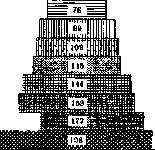
Congenital weakness, Diseases of the digestive organs, Malignant tumors, Diseases of the nervous system, Senile decay, Diseases of the respiratory organs.
Infectious Diseases. Figure 1. Mortality in Germany for the years 1922–1927 (average per year per 100,000 population) in cities with a population over 50,000 (according to Central Statistical Bureau materials). The fact of total mortality can be illustrated by the example of Germany (Table 4). Table 4. Mortality 1922 1923 1924 1925 1926 1927 From I. d. (per 100,000 population) 258.0 248.0 178.0 172.0 154.0 179.0 Total (per 1,000 population) 14.4 13.9 12.2 11.9 11.7 12.0. States. European part of the RSFSR. Hungary. Czechoslovakia. Japan. Northern Ireland. Spain. Austria. Irish Free State. Canada. Scotland. Sweden. Belgium. England and Wales. USA. Germany. Holland. Denmark. Australia. New Zealand. Mortality from I. d. per 100,000 population. Total mortality per 1,000 population. Table 3. Per 100 deaths; deaths from I. d. occurred 1926 1926 1927 1926 1927 507.9 426.9 531.0 18.9 17.9 22.4 286.5 304.8 16.6 17.7 30.0 286.0 244.0 15.6 16.1 18.3 246.0 234.9 19.2 14.5 16.8 243.2 228.9 15.0 18.9 12.4 224.5 253.2 19.0 14.9 18.1 211.5 196.0 14.9 26.8 17.1 194.0 188.4 14.1 27.0 14.5 186.0 161.9 11.5 18.3 17.5 173.1 192.5 13.0 14.9 12.0 164.3 130.7 11.4 16.4 15.7 159.5 179.0 13.3 12.7 11.6 158.9 173.6 11.6 15.1 18.1 154.0 14.8 16.8 151.3 15.0 9.1 127.0 16.9 11.0 98.0 13.5 95.9 14.3 15.2 13.5 12.3 12.3 13.8 11.3 13.1 12.0 13.1 10.3 15.4 11.5 9.4 10.4 1925 1926. The highest mortality rates from I. d. are in the RSFSR and Hungary, where these rates have amounted in recent years to approx. 5 cases per 1,000 population and more than 25% in relation to total mortality (for the RSFSR, the actual mortality from I. d. is higher than indicated in the table, as the figures provided do not include mortality from influenza). The most favorable indicators are observed in the Australian states. The difference between the indicators of these two groups of countries is quite large: in the first group, approximately 5 times more people die from I. d. per 100,000 population than in the second. Comparing the mortality indicators from I. d. with the indicators of total mortality by individual years, one can see that with an increase in the former, the latter also increases, i.e., a change in the mortality indicator from I. d. affects the change in the level of total mortality. In particular, the increase in mortality from I. d. (as well as total mortality) in 1927 was caused mainly by an increase in mortality from influenza. The latter occupies one of the highest places among the causes of death from epidemic diseases. Among non-epidemic I. d., the highest place is occupied by mortality from tuberculosis. Table 5 provides an idea of mortality from the main I. d. in some countries. Mortality from tuberculosis in all countries occupies the first place among the causes of death from I. d. In individual countries, this indicator varies greatly (the difference between New Zealand and Hungary is almost 5 times). Having a general downward trend (see Tuberculosis), this indicator shows small changes in the same country over individual years. Influenza shows large fluctuations by individual years and affects the change in the curve of total mortality from I. d. Approximately as many people die from influenza per year as from childhood infections (this group includes measles, scarlet fever, whooping cough, and diphtheria). Mortality from typhoid fever in most countries is significantly higher than from the mentioned infections (with the exception of Hungary, Spain, and Japan, where mortality from typhoid fever approaches that of influenza and childhood infections). In the USSR, mortality from tuberculosis approaches that of Hungary, mortality from childhood I. d. occupies an exceptionally high place, and mortality from typhoid fever is close to that of Spain. The listed infections determine the level of the general mortality indicator from I. d. in individual countries. Mortality from all other I. d. in most countries is significantly lower. Table 6 provides an idea of the change in the nature of mortality from some acute I. d. in European countries over the last 17 years (mortality per 100,000 population). Mortality from the acute infections listed in the table has decreased in all countries. In particular, mortality from smallpox at the present time in most countries, with the exception of the USSR, has been reduced to zero or isolated cases; the same applies to typhus. Mortality from childhood infections and typhoid fever has also decreased. In the RSFSR, despite significant 587.
INFECTIOUS DISEASES
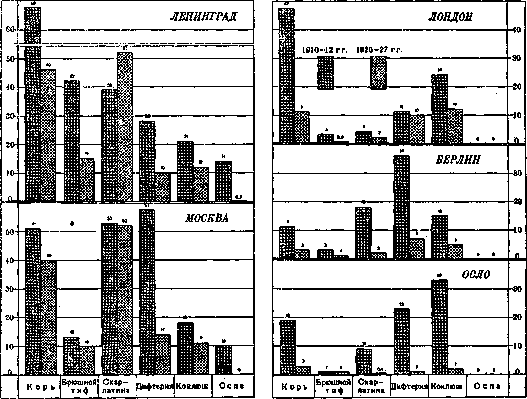
Figure 2. Mortality from acute infectious diseases in large cities of Europe in 1910–1912 and 1925–1927 (average per year per 100,000 population).
in all cities. Some idea of the significance of infectious diseases for Russian cities can also be given by the following figures: according to data from Moscow prosectoriums for 1923–27, out of 37,899 autopsies (including newborns), 19.2% were noted as acute infectious diseases, 16.3% as chronic, for a total of 35.5% (I. Davydovsky). II. Mortality by age groups. In connection with the unequal morbidity and unequal lethality across individual ages, mortality from infectious diseases by age groups was [Table 8. Mortality from infectious diseases in cities of the European part of the USSR in 1928 (as a percentage of the total). Age groups 0–1 yr, 1–4 yr, 5–9 yr, 10–14 yr, 15–19 yr, 20–24 yr, 25–29 yr, 30–39 yr, 40–49 yr, 50–59 yr, 60–69 yr, 70+ yr].
Mortality from infectious diseases in the USSR in 1926 by age groups as a percentage of the total number of deaths from each infectious disease (based on materials from the Central Statistical Bureau). The largest portion of deaths from typhoid fever falls into the age groups from 15 to 39 years; from typhus and relapsing fever—from 30 to 59 years; from malaria—up to 5 years. Deaths from smallpox are mainly concentrated in the age groups under 1 year and from 1 to 5 years. This type of mortality from smallpox is characteristic of those countries where vaccination is carried out insufficiently. Where smallpox vaccination is carried out completely, for example in Germany, only adults who for some reason remained without revaccination contract and die from smallpox. The main mass of deaths from measles, scarlet fever, and diphtheria falls into the age group from 1 to 5 years, from whooping cough—under 1 year. Influenza gives the highest mortality under 1 year and from 1 to 5 years; a small rise in mortality is observed in older ages. From dysentery, the main mass of deaths falls on the age under 5 years.
III. Morbidity. According to the reports of the Administration of the Chief Medical Inspector, in Russia in the years before the war, about 15 million cases of all infectious diseases were registered annually, or about 18 cases per 100 registered patients. In inpatient wards, infectious patients accounted for about 30% of all patients under treatment. Table 9 (Figure 4) presents absolute and relative figures (per 10,000 population) of morbidity for 22 forms of infectious diseases for 1912–13 and 1926–28 (for the last year—preliminary data). The total number of cases for these forms before the war in Russia amounted to over 12 million people annually, or about 8% of the population. In 1926–27, for the same forms in the USSR, over 13 million cases were registered annually, or about 9% of the population. This growth is explained to a significant extent by the improvement of registration in connection with the strengthening of medical care, as well as by a sharp increase in the number of influenza cases. Of the acute infectious diseases, both before the war and in recent years, the highest figures are given by influenza and malaria, with the former showing a clear tendency to grow in recent years (in 1928 the morbidity rate was almost twice as high as in 1913), while malaria, on the contrary, is decreasing and has dropped to its pre-war level. These two infections account for more than half of all infectious diseases.
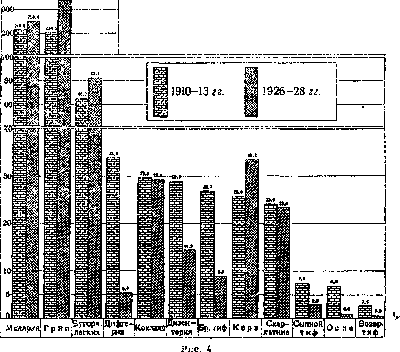
The next highest group consists of childhood infections, which before the war totaled more than 100 cases per 10,000 population, and in recent years about 90 per 10,000 population. The decrease occurred due to diphtheria; the remaining childhood infectious diseases are registered at the level of the pre-war period. The group of intestinal infections (typhoid fever, dysentery, and cholera) has decreased significantly; before the war, it totaled 50–60 cases per 10,000 population, while for 1926–27 it was on average about 23. There was not a single case of cholera in the USSR in 1927–29. Parasitic typhus fevers also decreased—from 8.7 per 10,000 population in 1912–13 to 3.5 in 1926–28; in recent years, they have shown a tendency toward further decline. Smallpox has decreased sharply—from 4.7 per 10,000 population in 1912–13 to 0.6 in 1928. Diseases associated with epizootics (rabies, glanders, and anthrax) have changed little compared to the pre-war period. Plague continues to cause 100 to 200 cases annually. Leprosy is registered less than in the pre-war period.
Among non-epidemic infectious diseases, the first place is occupied by tuberculosis, which has been registered in recent years at a higher rate than in the pre-war period. The widespread development of dispensary care for tuberculosis with greater patient attendance also plays a role here. In total (tuberculosis of the lungs and other organs), it accounts for slightly more than 10% of all infectious diseases and, on average for 1926–28, 122 cases per 10,000 population. Fresh forms of syphilis and chancroid are registered below the pre-war level, gonorrhea is at the pre-war level. The distribution of diseases does not correspond to the distribution of mortality from infectious diseases: the main mass of diseases falls on epidemic and endemic diseases, while the main mass of deaths among infectious diseases falls on non-epidemic infectious diseases, in particular on tuberculosis (cf. tables 5 and 7). To compare the incidence of infectious diseases in the USSR with that of other countries, Table 10 presents figures for infectious diseases for 1926 and 1927 for 4 countries: Germany, England, the USA, and New Zealand. All forms of typhus in the USSR are registered higher than in the listed countries; this especially applies to typhus and relapsing fever, which in most countries are registered in single or zero figures. Smallpox in England and the USA is registered higher than in the USSR; mortality from smallpox in these countries is lower than in the USSR. Of childhood infections, measles in the USA is registered higher than in the USSR, whooping cough is lower (for other countries there is no mandatory registration of these infections); scarlet fever in the USSR and England remains at the same level, in other countries it is lower; diphtheria in the USSR gives the same indicators as in Germany. In all the listed countries, not a single case of plague has been registered (single cases in England and the USA are of an imported nature). Dysentery in the USSR is registered significantly higher than in other countries. The incidence of anthrax and glanders in the USSR is very high compared to other countries. Tuberculosis of the lungs and other organs in the USSR is registered higher than in other countries. The data above refer to the incidence of infectious diseases throughout the USSR. In individual regions, the incidence of infectious diseases varies significantly depending on geographical location, but mainly on the economic and cultural level of the population (higher incidence in the outskirts and in most national republics and lower in industrial regions). Data on incidence in Moscow Province and the city of Moscow can illustrate the level of infectious incidence in one of the industrial regions of the USSR. These data are all the more valuable because in Moscow Province and the city of Moscow the medical-sanitary network is one of the densest in the USSR, and consequently, the attendance for medical help is the most complete. The registration of infectious patients here, one must think, is close to the actual incidence. The processing of materials from statistical cards provides here, in turn, the greatest guarantee of the correctness of the conclusions. These materials are especially valuable for 1926—the year of the population census, when the figures for diseases can be related to the exact number of the population. Based on the processing of card material for Moscow Province and the city of Moscow, the following figures for infectious incidence for 1926 were obtained (Table 11). Diseases
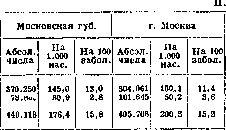
Epidemic diseases . . . Non-epidemic diseases . . . Total infectious diseases . . . As in Moscow Province, so in the city of Moscow, infectious diseases accounted for about 15% of all registered patients in 1926. In Moscow Province, about 17% of the entire population suffered from infectious diseases during the year, and in the city of Moscow—about 20%. The main mass of infectious diseases consists of epidemic diseases, from which about 15% of the entire population suffered during the year. The composition of infectious incidence in Moscow Province and the city of Moscow can be seen from Table 12. The main mass of epidemic diseases consists of influenza, which in Moscow Province accounts for more than 7/10 of the total number of patients included in this group, and in the city of Moscow—about 3/4 of all patients in this group. The second place in Moscow Province is occupied by malaria, and in the city of Moscow—by measles. Malaria in Moscow Province is registered twice as high as in the city of Moscow. In the latter, measles, whooping cough, scarlet fever, and relapsing fever are registered higher than in the province, smallpox—lower. Of the diseases of the second group—non-epidemic—the first place is occupied by tuberculosis, which is registered 1 1/2 times higher in the city of Moscow than in the province. A much smaller place is occupied by syphilis and other venereal diseases, which are also registered significantly higher in Moscow than in the province. The remaining infections give relatively small figures. Compared with the average indicators for the entire Union, Moscow Province and the city of Moscow give a higher indicator for influenza; for malaria, parasitic typhus, and smallpox, the indicators are lower than the average for the USSR. Of the non-epidemic infectious diseases, tuberculosis (especially in the city of Moscow) is registered significantly higher than the average for the Union, fresh forms of syphilis—lower.
Table 13 (Fig. 5) shows the distribution of infectious diseases by Moscow Province and the city of Moscow by age groups and sex for 1926 (per 1,000 population). Epidemic diseases are observed
are most common among infants, of whom over 30% in the Moscow Governorate and over 35% in the city of Moscow suffer from these diseases. The second age group—from 1 to 4 years old—accounts for about 21% of the incidence of epidemic diseases in the governorate and over 40% in the city of Moscow. In the following age group, the rate of epidemic morbidity decreases significantly and reaches its minimum at the age of 10 to 14 years (in the city of Moscow among women—at the age of 15 to 19 years). Rising thereafter, epidemic morbidity shows a second maximum at the age of 20 to 29 years, only to decrease in subsequent age groups and reach a minimum for the age group over 60 years. Non-epidemic infectious diseases are distributed more evenly across age groups. The maximum for men in the Moscow Governorate and for both sexes in the city of Moscow falls on the age of 20 to 29 years, the minimum—on old age. IV. Seasonality of infectious diseases. When summing up all infectious diseases, the following monthly curve of infectious morbidity is obtained (Table 14; the average monthly morbidity is taken as 100). Epidemic diseases in 1926 reached their maximum in March, which is explained mainly by the high incidence of influenza in that month; the minimum falls in August, when, in particular, the same influenza has the lowest incidence. The seasonal distribution of individual infectious diseases depends on the biological properties of the pathogen and the vector, on meteorological conditions, as well as on the living conditions of the population. For example, the incidence of bubonic plague is observed in the USSR in the spring and summer, which is associated with the time when field rodents (gophers and marmots) emerge to the surface. Malaria in the central zone of the USSR has its maximum in May-June, which is associated with the development cycle of the malaria parasite. Intestinal infections develop mainly in summer and autumn, which should be explained by the high temperature, which favors the reproduction of bacteria and the infection of water and food products, and the corresponding groups.
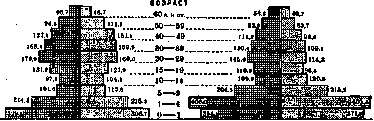
MEN WOMEN MEN WOMEN
Figure 5. Incidence of epidemic diseases in the Moscow Governorate and the city of Moscow in 1926 by age and sex (per 1,000 population of the corresponding age). also by the abundance of flies at this time of year, which contaminate food products. Parasitic Table 14. Distribution of infectious morbidity in the Moscow Governorate and the city of Moscow in 1926 by months. Epidemic diseases... Non-epidemic... 1,200 1,200 City of Moscow. Epidemic diseases... Non-epidemic... typhus in rural areas spreads mainly in winter, which is associated with the great overcrowding of the population at this time of year and the high prevalence of lice. In cities and industrial centers, on the contrary, outbreaks of parasitic typhus often occur in the spring-summer period, when there is an influx of seasonal workers from rural areas that are unfavorable for these infections. Childhood infections have the greatest spread in autumn and winter as a result of overcrowding and increased contact among children. Influenza reaches its maximum in early spring, which may be associated with meteorological conditions. Figure 6 shows the monthly distribution of some infectious diseases in the city of Moscow in 1926. V. Social causes of the spread of infectious diseases and their social consequences. Social factors play a major role in the spread of infectious diseases. The economic level of the population, its cultural level, the social position of its individual groups, housing conditions, the nutrition of the broad masses, and occupation—all this has a powerful influence on the spread of infectious diseases. Public disasters, by lowering the economic and sanitary well-being of the population, lead to a sharp increase in infectious diseases. Such are, for example, famine and war. On the other hand, the social consequences of infectious diseases are also very great. Accompanied by high mortality, infectious diseases, during mass development (epidemics and pandemics), change the general mortality curve, partially disrupt the country's economy, reduce its productivity, lower the well-being of huge masses of the population, and in individual cases lead to the extinction of populated areas (e.g., in the case of malaria). Infectious diseases also lead to mass disability. The strong development of some infectious diseases (e.g., plague, cholera) sometimes even disrupts the connection between individual states. All this has long forced state authorities in various countries to urge the population to carry out basic anti-epidemic measures through a series of legislative acts. This also prompted states to develop international laws for combating epidemics in the form of international sanitary conventions. Infectious diseases and war. Wars have always been accompanied by a high rise in infectious diseases and the development of epidemics. During the Franco-Prussian War of 1870-71, smallpox claimed three times more
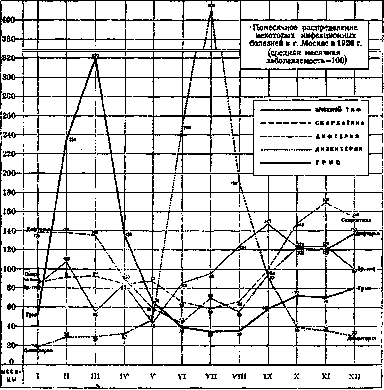
Figure 6.
human lives than the war itself. This same war resulted in the strong development of parasitic typhus in Germany. During the Russo-Turkish War of 1877-78, over 1 million people fell ill in the Russian army, with the main part of the illnesses being infectious diseases. After the Russo-Japanese War of 1904-05, a significant rise in parasitic typhus was observed in Russia. The World War of 1914-18 is considered the most favorable for European countries in terms of the development of epidemics compared to previous wars. Measures taken in a timely manner by sanitary authorities (sanitary processing of military units, preventive vaccinations) did not give infectious diseases the opportunity to reach the formidable proportions observed in previous wars. Nevertheless, this war also saw a significant growth in infectious diseases. The figures for deaths from the main infectious diseases in Germany from 1913 to 1926 are as follows (Table 15). Simultaneously with the morbidity at the front, infectious diseases began to spread among prisoners, refugees, and the civilian population. They assumed particularly threatening proportions during the Civil War, which was accompanied by a blockade of the country, intervention, and famine. Figure 7 shows the indicators Table 15. Number of deaths from infectious diseases in Germany in 1913-26 (in absolute figures). Diseases 1913 1914 1915 1916 1917 1918 Typhoid fever...
1,839
3
0
4,997
137
79,630 362 1919 1920 1926 All the infections listed in the table showed an unprecedented growth for Germany either during the war or immediately following it (e.g., influenza). A sharp rise was noted not only among acute infectious diseases but also among chronic ones, such as tuberculosis, syphilis, and other venereal diseases. The indicated rise in infectious diseases did not cease with the end of the war but continued for a number of years and was overcome only gradually. In active units of the German army during the years of the World War (1914-1918), typhus caused 0.64 cases per 1,000 of the actual strength, cholera—0.62, typhoid fever—7.9, dysentery—12.0, and malaria—15.96. Morbidity in the German army on the Turkish front reached in individual years: typhus—up to 10.7 per 1,000 of the actual strength, cholera—up to 9.2, malaria—up to 651. A significant rise in infectious diseases was observed during the war in other countries as well (see above). In Russia, during the World War, infectious diseases also showed a rise. According to Agranov, for the period from August 1914 to September 1917, the following number of people fell ill and died at the fronts (excluding the Caucasus) among military units (Table 16; in absolute figures). Table 16. morbidity of the main infectious diseases in the pre-revolutionary and Red armies, in Figure 8—before the World War and after it in the USSR, in Figure 9—mortality indicators from them in Moscow for the period 1900-28. During the Civil War, as a result of the deterioration of the sanitary conditions of the country, morbidity and mortality from a number of infectious diseases rose sharply. For the period from 1919 to 1923 in the USSR, it was regis
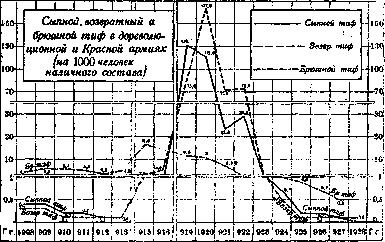
Diseases
Typhoid fever. Typhus. Relapsing fever. Dysentery. Cholera. Smallpox. Scurvy. 522 sick, 708 [sic] cases. 5,020 died, 1,810, 4,345. Deaths from infectious diseases (a total of 43,455 people) accounted for approx. 1/3 of deaths from all diseases. One- Figure 7. registered over 10 million cases of parasitic typhus (typhus and relapsing fever), over 1.5 million cases of typhoid fever and approximately the same number of dysentery, more than 230,000 cases of cholera. Smallpox assumed enormous proportions (about 550,000 registered cases during the specified period). Malaria took on the character of an unprecedented pandemic. The registration of patients during this period was severely disrupted. In fact, the number of illnesses was significantly higher than those registered, according to individual surveys—from 2.5 to 5 times higher. The damage inflicted on the country by epidemics during this period is colossal. Only gradually was it possible to reduce these infections in the USSR and bring them down to the pre-war level, and some even lower (for example, smallpox, parasitic typhus). Famine and infectious diseases. A lack of nutrition among the broad masses of the population leads to an increase in infectious morbidity due to, on the one hand, the deterioration of sanitary conditions, and on the other, due to the weakening of the organism and a decrease in its resistance to the infectious agent. The disorganized movement of the masses in search of bread (the flight of the starving) serves in turn as a cause for the mass development of infectious diseases. An example of frequently recurring outbreaks of epidemics in connection with famine is India. From Euro- dical outbreaks of cholera. Pilgrims heading to Mecca repeatedly brought cholera both to this city and to the nearest ports (Jeddah, etc.), from where it spread to the nearest provinces (e.g., in 1890-93). Pilgrims were the cause of the introduction and outbreaks of other infections as well (e.g., plague, smallpox). Moving military units and refugees, as mentioned above, as well as settlers, seasonal workers, and other moving groups of the population, can be dangerous in terms of spreading infectious diseases.
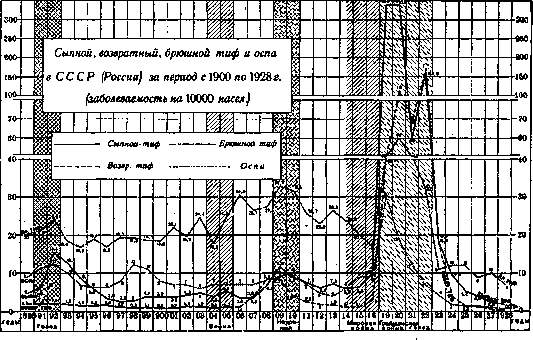
Figure 8
pean countries, one can point to the 'hunger typhus' in Upper Silesia in 1848. In Finland, the famine of 1867-68 caused a severe development of typhus and malaria, resulting in a sharp increase in general mortality (Fig. 10). Finally, Russia, with its frequently recurring crop failures and famine before the war, provides a number of such examples. In 1892-93, an increase in typhoid and typhus was observed in connection with the famine. A new outbreak of parasitic typhus in 1922 should be explained by the famine of 1921 (Fig. 8). A comparison of the harvest and infectious morbidity by year for individual regions also allows us to speak of a close connection between crop failure and the rise of individual infections (typhoid fever, dysentery, malaria). Fig. 11 shows the change in population movement in the city of Moscow in connection with the war, famine, and epidemics. - Movement of the masses of the population and infectious diseases. The connection between the development of infectious diseases and the movement of the masses of the population has been established for a long time. The reasons for this are the deterioration of sanitary conditions and the strengthening of contact between moving people. Koch once drew attention to the close connection between the movement of pilgrims in India and periodic other moving groups of the population. Before the revolution, prisoners from places of detention posed a great danger of introducing infectious diseases. Infectious diseases and the social status of patients. The social status of patients, in particular the degree of prosperity of individual groups of the population, plays a large role in the spread of infectious diseases. A number of studies clearly show that infectious diseases spread more strongly among the poorer strata of the population. Hamburg statistics show the following figures for morbidity and mortality during the cholera epidemic of 1892 among various groups of taxpayers (per 1,000 taxpayers; Table 17). Table 17. Income in marks Sick Died 800-1,000 62 1,000-2,000 55 2,000-3,500 27 3,500-5,000 22 5,000-10,000 16 10,000-25,000 10 25,000-50,000 11 more than 50,000 The difference in morbidity and mortality among the extreme groups is enormous. The plague claims its victims mainly among the poorest typhus is observed mainly among residents of doss houses, bunk-room apartments, and basement and semi-basement
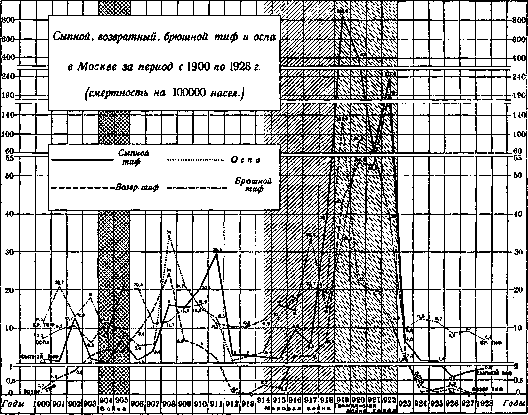
Figure 9.
premises. The same applies to typhus. During the 'Spanish flu' epidemic, the morbidity among soldiers was significantly higher than among the officer corps. There is a large literature in this regard in relation to tuberculosis. The mortality of those who fell ill among the underprivileged groups of the population is higher than among the wealthy, which is explained by poorer care for the patients. The influence of housing conditions on the morbidity of tenants is very great. Overcrowding predisposes to greater morbidity; a lack of light and air worsens the course of the disease. Table 18, relating to Budapest for 1879-82, shows the number of deaths on average per year per 1,000 children under 5 years of age depending on housing conditions. Table 18. Diseases Basement premises Other premises 5.3 4.4 3.7 10.5 5.5 3.3 Scarlet fever 4.5 3.1 2.3 3.2 The difference in child mortality from whooping cough and measles is particularly striking. Profession and infectious diseases. The influence of professions on the spread of infectious diseases also plays a certain role. In some professions, due to contact with infected material, workers are exposed to a constant danger of contracting infectious diseases. Such are persons dealing with animals or animal raw materials (meat, hides, hair, etc.) spread among so-called 'dusty' professions. Medical and nursing staff are also exposed to the danger of infection with acute and chronic infectious diseases. Laboratory infections, often leading to the death of researchers (plague, yellow fever), should also be classified as a group of occupational infectious diseases. Working conditions also sometimes lead to occupational infectious diseases. Such, for example, is malaria among those working in swampy areas (in peat bogs, on rice and cotton plantations). - Infectious diseases among the insured. According to the Central Administration of Social Insurance, the morbidity of infectious diseases among the insured in the USSR in 1925 accounted for from 23% to 32% in individual branches of labor in relation to all diseases with temporary loss of ability to work. Table 19 presents the corresponding indicators for individual branches of labor. Table 19. Percentage ratio of infectious diseases to the sum of all diseases, taken as 100. Branches of labor Mining and manufacturing industry Railway transport Soviet and scientific-educational institutions Cases of disease Days of disease 23.4 27.8 31.6 26.0 24.3 29.6 23.0 30.6 31.8
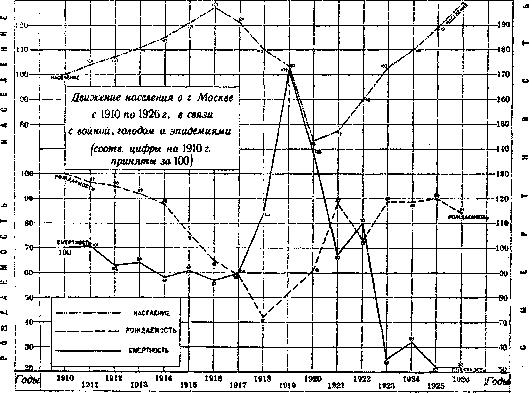
and are exposed to the danger of contracting anthrax. Glanders is observed in persons constantly in contact with horses, in particular among veterinary workers. Tuberculosis of the lungs has a special spread
Cases of disease Days of disease

Skin diseases and subcutaneous tissue Digestive [diseases] Injuries Infectious diseases Men Women Figure 12. Distribution of cases and days of illness among the insured in the mining and manufacturing industry of the USSR for 1925 by classes of diseases (in % of the total).

Figure 11.
Compared to all other classes of diseases, infectious diseases account for the highest percentage of cases and days of illness per year (Fig. 12). The number of cases and days of illness per 100 insured persons by individual branches of labor is shown in Table 20. The difference in the number of cases and days of illness per 100 insured persons between the extreme ranges is very large. In general, insured persons working in the extractive and, in particular, in the manufacturing industry, have significantly more cases and days of illness from infectious diseases than those working in institutions. The average duration of a single illness, on the contrary, is greater among employees in institutions. The following figures (Table 21) clearly illustrate what has been said. The number of cases of illness from infectious diseases per 100 insured persons per year among those working in the extractive and manufacturing industries is approximately three times higher, and the number of days of illness is twice as high, than among those working in various institutions; the average duration of a single illness among the latter is approximately 1.5 times higher than among the former. Women in general have a higher number of cases of illness and a higher number of days of illness per year than men. This is noted in almost all branches of labor. No noticeable difference in the duration of a single illness between men and women is observed. The most frequent causes of loss of working days due to infectious diseases in 1925 were influenza, tuberculosis, malaria, typhoid fever, and venereal diseases. Their frequency among insured persons of both sexes for certain branches of labor is given in Table 22. Regarding tuberculosis, influenza, and malaria, the difference in the number of cases and days of illness between individual branches of labor is very large. Workers in the garment industry had approximately 10 times more cases and days of illness from tuberculosis and approximately 7 times more from influenza per year than agricultural workers; malaria, on the contrary, causes the highest number of cases and days of illness in agriculture and the extractive industry. If one summarizes all branches of the extractive and manufacturing industries and compares them with Soviet institutions, the following indicators of cases and days of illness per 100 insured persons are obtained (Table 23).


Diseases of the bones and organs of movement; Diseases of the respiratory organs; Diseases of the nervous system and sensory organs; Diseases of the skin and subcutaneous tissue; Injuries; Diseases of the digestive organs; Infectious diseases. Table 23. Diseases, Industry, Soviet institutions, Cases, Days, Cases, Days, m., m., f., m., m., f., 5.3, 13.0, 5.8, 6.6, 18.0, 3.8, 157.0, 92.7, 54.0, 182.8, 135.1, 38.1, 2.7, 3.1, 1.1, 4.0, 4.8, 1.4, 95.7, 21.8, 12.5, 123.1, 38.1, 17.5. A noticeable difference between these two branches of labor is noted for all three infectious diseases. From what has been said, one must conclude that the profession (branch of labor) influences the frequency of infectious diseases and the average duration of the disease (Tables 20 and 21). The average duration of one case of illness in the mining and manufacturing industries for some infectious diseases is as follows (Table 24): Table 24. Average duration (in days) of infectious diseases in the USSR in 1925. Figure 13. Morbidity of insured persons in the industry of the Moscow Governorate for 1927 (per 100 insured). Types of industry up to 62.1 cases of illness from infectious diseases and up to 800 days of illness for these diseases. The main place among infectious diseases was occupied by influenza (for the entire industry 27.6 cases of illness and 203.5 days of illness per 100 insured), the second, significantly lower place is occupied by tuberculosis of the respiratory organs (4.9 cases of illness and 160.1 days of illness). Infectious diseases and disability. One of the frequent consequences of infectious diseases is disability. According to the data of the territorial insurance funds of the USSR for 1925, for every 100 disabled workers, there were disabled persons due to infectious diseases—among men 15.1, and among women 15.3. By individual professional groups, the percentage of disabled workers due to infectious diseases was (Table 26): Diseases, Typhoid fever, Typhus, Relapsing fever, Tuberculosis of the lungs, Syphilis and other venereal diseases, Malaria, Influenza, Men, Women, 46.4, 53.1, 38.6, 41.1, 29.7, 32.3, 29.7, 27.9, 21.3, 27.4, 9.3, 10.0, 6.7, 7.5. For all infectious diseases, the average duration of one case of illness in this group of industries is 13.1 for men and 13.6 for women. Above, data were provided on the morbidity of infectious diseases among the insured throughout the USSR. Materials on the morbidity of the insured in the industry of the Moscow Governorate for 1927 also speak of the enormous significance that infectious diseases have in the morbidity of the insured. The corresponding figures are given in Table 25 and in Figure 13. In the industry of the Moscow Governorate (average annual number of insured in 1927. Table 25. Morbidity of infectious diseases among the insured in the industry of the Moscow Governorate for 1927. Per insured, % of total, Average duration (in days), Leather industry 62.1, 799.2, 31.3, 36.0, 12.9; Rubber production 50.3, 638.1, 28.7, 34.7, 12.7; Processing of food and flavoring substances 44.0, 499.9, 28.3, 33.0, 11.4; Clothing industry 44.7, 475.0, 29.7, 34.9, 10.6; Wood processing 42.4, 499.0, 23.0, 25.9, 11.8; Metal processing 40.5, 444.6, 26.5, 29.0, 11.0; Textile industry 33.7, 424.1, 23.1, 30.9, 12.6; Printing industry 33.6, 358.5, 30.9, 34.0, 10.7; Glass-porcelain production 31.8, 448.8, 23.8, 31.8, 14.1; For the entire industry 36.6, 444.1, 27.7, 31.1, 12.1. For individual professional groups, the indicated percentage reaches 29.3 among men (printers) and 27.8 among women (glass-porcelain production). The main cause of disability due to infectious diseases is tuberculosis of the lungs. According to the data of the Moscow Bureau of Medical Expertise for 1925 and 1926, infectious diseases among all causes of disability constituted the following percentage (Table 27): Table 26. Groups of professions, Including infectious diseases, Including tuberculosis of the lungs, m., f., Printers, 29.3, 25.2, 22.9, 19.3; Garment workers, 18.7, 16.4, 21.3, 19.3; Leather workers, 16.7, 19.3, 20.0, 22.1; Metal workers, 16.9, 19.5, 19.1, 27.8; Glass-porcelain workers, 16.4, 27.0, 18.7, 19.5; Food workers, 15.8, 18.0, 17.2, 19.9; Miners, 13.8, 14.0, 16.6, -; Woodworkers, 13.8, -, 16.4, -; Construction workers, 14.2, -, 14.8, 22.7; Textile workers, 13.2, 21.5, 14.4, 17.8; Paper workers, 11.7, 16.6, 13.2, 14.5; Chemists, 12.8, 12.9, 16.3, 18.4; All workers, 13.8, 16.8, 13.2, 12.9; All employees, 11.3, 11.2, 15.1, 15.3, 12.7, 13.7. Table 27. Groups of professions, Including infectious diseases, Including tuberculosis of the respiratory organs, 1925, 1926, 1925, 1926; Printers, 27.3, 26.2, 21.0, 18.3; Construction workers, 26.5, 20.3, 22.3, 13.9; Food and tobacco workers, 23.7, 16.7, 20.4, 12.4; Garment workers, 52.8, 27.1, 18.2, 20.6; Metal workers, 22.5, 19.9, 16.7, 14.2; Woodworkers, 18.0, 21.6, 13.4, 17.0; Leather workers, 17.9, 17.9, 11.4, 11.7; Chemists, 15.8, 18.4, 14.0, 17.2; Laborers, 15.6, 18.9, 12.8, 12.5; Textile workers, 13.6, 15.4, 10.8, 12.0; All workers, 19.5, 19.5, 15.4, 13.9; All employees, 14.1, 14.7, 10.8, 10.4. Some infectious diseases lead to a specific type of disability. Smallpox, for example, is the cause of total blindness in some studies in 15% and even 20% of all cases of blindness. Economic significance of infectious diseases. Being the result of a low cultural level of the population, its economic insecurity, and poor sanitary conditions, infectious diseases at the same time cause major economic damage to the population, which consists of 1) mortality of patients, 2) loss of working days by patients, 3) loss of working days by caregiving personnel, 4) disability of patients, 5) state expenditures on the treatment of patients and social insurance, 6) reduction in production due to the cessation of work, 7) disruption in some diseases of trade and relations with other states due to quarantine measures, etc. The number of those dying from infectious diseases in recent years in individual states ranges from 10% to 30% in relation to all those who died (Table 3); this percentage increases significantly in epidemic years. The strong development of infectious diseases, as already mentioned, raises the curve of general mortality. One can judge the loss of working days by the insured from the following figures. For the Moscow Governorate, days of incapacity for work were paid in 1925/26—14,400,646, in 1926/27—13,789,475. The loss of days from infectious diseases constitutes about 30% of temporary incapacity for work for all diseases. Consequently, from infectious diseases for each year of these years, about 4 million working days were paid for in the Moscow Governorate alone. The number of paid days for temporary incapacity for work among the insured in the USSR in 1925-26 amounted to 87,565,014. The loss of working days from infectious diseases (at 30%) is expressed at approximately 26 million per year. A calculation for the USSR of the loss of working days from malaria alone during its pandemic showed that in 1923 the population of the USSR, according to an approximate calculation, lost 112.5 million working days and about 60,000 people died due to this disease alone. If even in prosperous years the country's losses due to a decrease in production from infectious diseases are very large, then in epidemic years these losses acquire a catastrophic character. Thus, during malaria pandemics in individual regions, the processing and harvesting of fields and the work of individual enterprises were suspended due to the universal morbidity of the population; entire industries, for example, peat extraction, actually ceased, and the construction of roads and traffic on them were disrupted, etc. VI. The fight against infectious diseases. Only with the study of the role of microbes in the origin of infectious diseases did humanity approach the construction of a scientific method of fighting them. One of the first measures to fight infectious diseases was the use of isolation in relation to infectious patients. This was done, for example, with leprosy patients. In the 15th century, the Venetian Republic, in order to protect itself from the introduction of infections, set up quarantines where arrivals and goods were isolated for observation for 40 days (quaranta) (see also Healthcare). Under the influence of cholera epidemics, England in 1840 approached practical measures for the sanitary improvement of cities. The first "Public Health Act" of 1848 entrusted the newly founded health authorities with the care of draining the soil, laying canals for sewage, supervising wells, organizing water supply, removing waste and filth, setting up slaughterhouses, supervising housing, etc. This laid the foundation for the improvement of populated areas, which plays such a prominent role in the fight against infectious diseases. But only from the middle of the 19th century, with the establishment of the parasitic nature of infectious diseases, was the beginning made for the widespread implementation of those methods of fighting contagious diseases that proceed from knowledge of their essence and methods of transmission. The study of infectious diseases continues even now. The system of fighting contagious diseases includes three large groups of measures: 1) for the study of infectious diseases and methods of fighting them, 2) for their prevention, and 3) for the fight against already emerged diseases.—I. Study of contagious diseases. Science has not yet said the last word about the nature of all infectious diseases, about the laws of their spread, and about the methods of fighting them. It is also impossible to mechanically transfer the experience of fighting infectious diseases from one country to another. It is necessary to study local conditions for the spread of infectious diseases, the causes supporting them, and methods of fighting that are acceptable under given conditions. The study of infectious diseases is therefore the basis for the correct organization of the fight against them.
For these purposes, in all civilized countries there exist institutes for the study of infectious diseases. Such are the Pasteur Institute in Paris, the Koch Institute in Berlin, the Lister Institute in England, the Rockefeller Institute in the USA, and others. In the USSR, there is a large network of state and regional sanitary-bacteriological institutes, which arose and developed mainly after the revolution (see Bacteriology, Institutes). Their task includes the study of infectious diseases, methods of combating them, methods of vaccination, etc. Besides the institutes, the study of methods of combating infectious diseases also lies with the sanitary personnel. The unification of the achievements of both finds its place at the corresponding congresses—international and of individual states. In the USSR, such congresses—all-Union, republican, and regional—take place periodically. II. The prevention of infectious diseases is closely connected with the improvement of the social position of the broad masses of the population, the raising of its economic and general cultural state, and with the raising of its sanitary culture. A major role in the prevention of contagious diseases is played by general sanitary measures. Improvement of the nutrition of the broad masses, improvement of housing conditions (see Dwelling, Housing Question), proper organization of water supply (see) and the removal of sewage and refuse (see Sanitation, Sewerage), proper organization of bath and laundry services (see), drainage of swampy areas, improvement of sanitary conditions of labor, etc.—all this results in a sharp decrease in infectious diseases and even the complete disappearance of some of them. The implementation of the indicated measures falls for the most part under the jurisdiction of communal bodies, but at the same time, it must represent a subject of constant concern for the entire medical-sanitary personnel, whose task includes not only the fight against contagious diseases, but mainly their prevention. A particularly large role in the implementation of the listed measures lies with sanitary supervision. This explains the state importance of this organization, the norms and rights of which are established in the USSR by special laws (see Sanitary Physician, Sanitary Legislation). In the group of preventive measures, a paramount role is played by sanitary education (see), which sets as one of its most important tasks sanitary-educational work in the matter of fighting contagious diseases. The fight against religious prejudices (carrying the sick to church, memorial services after the death of a sick person), against harmful everyday habits (wearing long hair, sleeping in a heap on common bunks, etc.), against quackery—also has as its goal the prevention of infectious diseases. Proper organization of labor protection also plays a large role in the prevention of contagious diseases among workers (prevention of anthrax among workers collecting, sorting, and processing raw materials, prevention of the transmission of syphilis in the glass-blowing industry, tuberculosis in dusty professions).—It is necessary to especially note sanitary supervision over places of congregation of groups of the population. This includes railway stations, hotels, inns, peasant houses, night shelters, places of detention, which are often foci and sources of infectious diseases. A special place is occupied by sanitary supervision over congregations of the child population (schools and other children's institutions), which is the most vulnerable in relation to a number of infectious diseases. To this same group belongs supervision over fairs, bazaars, public gatherings, places of worship (visiting the latter by acutely contagious patients is not permitted, as well as bringing those who died from these diseases into the church), etc. Sanitary supervision over baths (possibility of transmission of lice and infection with parasitic infections), laundries (lice, intestinal infections, etc.), hairdressers (lice, erysipelas, anthrax during shaving) has important significance. To the group of preventive measures also belong sanitary supervision and sanitary processing of moving masses of the population: seasonal workers, migrants, military units, pilgrims. All of them often became victims of epidemics themselves and brought infectious diseases to the places of their arrival. General requirements for all these groups of the population are: sanitary inspection at the place of departure with the goal of not allowing contagious patients or persons in the incubation period of the disease into the moving parties, preventive smallpox vaccination, preventive inoculation of other vaccines (typhoid, cholera) in case of an epidemic threat, sanitary processing at the place of departure with the goal of eliminating lice; sanitary supervision during movement, proper organization of nutrition, timely removal of contagious patients; sanitary processing at the place of arrival, provision with housing satisfying sanitary requirements (separate beds, etc.), proper nutrition, etc. Approximately the same measures must be carried out in relation to mass excursions.—One should especially mention veterinary-sanitary supervision over domestic animals (fight against anthrax, rabies, glanders, foot-and-mouth disease, etc.), the extermination of domestic and field rodents (fight against plague and some other infections), the extermination of insects: flies (intestinal infections, tuberculosis, etc.), Anopheles (malaria), Stegomyia (yellow fever), etc.—To specific anti-epidemic measures of a preventive nature belong preventive inoculations. Of these, the greatest significance is held by mandatory smallpox vaccination, first introduced by law in Germany (1874) after the war of 1870–1871, as a result of which there was a large smallpox epidemic. In the USSR, the first decree on mandatory smallpox vaccination was signed by V. I. Lenin on 10/IV 1919. Proper implementation of smallpox vaccination led to the complete eradication of smallpox in some countries (see Smallpox, Smallpox Vaccination). During the World War and after it, preventive inoculations against intestinal infections (see Vaccination, Typhoid Fever, Dysentery, Cholera) gained wide distribution in case of an epidemic threat, and recently—also against diphtheria and scarlet fever (see). (See also Active Immunization.) Inoculations against rabies (see) have the greatest preventive significance. To the group of preventive measures must also be attributed measures of personal hygiene: frequent change of linen, washing the body (prevention of lice), washing hands before eating, use of freshly boiled water and milk in case of a threat of a 'water' epidemic (prevention of intestinal infections), use of an individual towel (trachoma, scabies), separate dishes (syphilis), supervision over children's toys (possibility of carrying children's diseases), etc. (see Individual Hygiene and Infant). The prevention of contagious diseases is possible only with a conscious attitude toward this great problem on the part of the population, first of all its organized groups. The maximum development of the initiative of the working people is therefore the basis of prevention and the proper organization of the fight against infectious diseases. III. The scheme of the fight against already appeared infectious diseases includes the following main groups of measures: 1) registration, accounting, and notification of a contagious patient; 2) examination of cases of diseases or a focus; 3) timely recognition of the disease, and in those cases when during life the recognition remained uncertain, it is necessary to perform an autopsy; 4) isolation of patients and persons who came into contact with them; 5) transportation of contagious patients (sanitary transport), disinfection and disinsection; 6) neutralization of bacillus carriers; 7) measures for the protection of borders from the introduction of contagious diseases stand apart.—1. Proper registration of diseases of infectious diseases is one of the main measures for the fight against contagious diseases. It is necessary for the proper accounting of infectious diseases and for the implementation of practical measures for the fight against them. Registration of contagious diseases in the USSR is conducted on a 'general statistical card for the registration of diseases' (see Morbidity). For the registration of some infectious diseases, there are also special cards, which are filled out in special medical institutions (malaria, tuberculosis). Some most important forms of contagious diseases are subject, besides that, to current accounting in the form of emergency notifications about a contagious patient. Such notification in the USSR is mandatory for 15 forms of infectious diseases: plague, cholera, yellow fever, smallpox, typhus, relapsing fever, and typhoid fever, dysentery, scarlet fever, diphtheria, glanders, anthrax, tetanus, epidemic encephalitis, and leprosy (according to local conditions, the cited list can be expanded). Regarding plague, cholera, yellow fever, as well as the first cases of smallpox, typhus, and relapsing fever—notification is produced both in urban and in rural localities by way of communication to the nearest health authority by telegraph, telephone, or by messenger. This notification in relation to each case of disease or death from the indicated 6 forms is mandatory for all persons of the medical personnel. In the notification, it is indicated: 1) the place where the disease appeared, with an indication of the district, county, canton, city, or corresponding administrative unit; 2) the number and month of the appearance of the disease; 3) the form of the disease, as well as information whether the character of the disease has been established bacteriologically; 4) the number of established cases of the disease and the number of those who died from it; 5) in the case of plague—information whether there is plague or unusual mortality among rats and other rodents; 6) measures taken against the spread of the disease.
With regard to all other above-mentioned acute infectious diseases, an emergency notification in a specific form (see below) is mandatory only for urban settlements; in rural areas, such notifications are made by medical institutions by sending weekly reports to the district health department or the nearest sanitary physician. Based on the information received, health departments compile weekly summaries on the movement of infectious diseases. The remaining infectious diseases not listed above are subject to current accounting based on materials from medical institutions through the compilation of monthly summaries. These diseases include the following 16 forms: unspecified typhus, measles, whooping cough, malaria, epidemic jaundice, cerebrospinal meningitis, influenza, puerperal fever, rabies, bites by rabid animals, pulmonary tuberculosis, tuberculosis of other organs, primary and secondary syphilis, acute gonorrhea, as well as scurvy and trachoma (the latter 2 diseases, according to international nomenclature, do not belong to infectious diseases). Monthly information on infectious patients by region is sent to the People's Commissariats of Health, where a general summary for the republic is produced, after which the figures are published in the official organs of the People's Commissariats of Health. Most regional health departments usually publish more detailed monthly summaries (indicating the affected localities) for the region. As for the 6 specifically designated forms of diseases (plague, cholera, etc.), information about them is sent by the People's Commissariats of Health through the All-Union Bureau of Foreign Sanitary Information to the International Office of Public Hygiene (in Paris), by which they are published and immediately communicated to all states. The entire specified procedure aims at the timely receipt of information about infectious patients and the rapid implementation of appropriate measures on a local, state, or international scale. The emergency notification card for an infectious patient is sent to the health department by mail free of charge. Its content is as follows. Emergency notification of an infectious patient in an urban settlement. 1. Address of the patient: police department (commissariat), street, house No., apartment No. 2. Surname, first name, patronymic of the patient. 3. Sex: male, female. 4. Age. 5. Name of the disease. 6. Occupation of the patient (or parents), student. 7. Time of diagnosis of the disease. 8. Time of onset of the disease. 9. Time of admission to the hospital. 10. If arrived already ill with this disease, then from where and when. Table 28. List of infectious diseases subject to mandatory notification in European countries. 11. Name of the medical institution or signature and address of the physician sending this notification. - On the reverse side. (Open letter. To where, to whom, from whom.) Data from the sanitary physician's examination. 1. Measures: a) regarding persons surrounding the patient, b) notification of this disease to schools and other institutions, c) preventive vaccinations, d) terminal disinfection (was it done, when, was it not done, why), e) other measures. 2. Number of patients and time of onset of the same infection in the given apartment: a) before this patient, b) after this patient. 3. Time of the apartment visit by the sanitary physician. Signature of the sanitary physician. Mandatory notification of infectious patients and their registration for physicians have been introduced in most states. Initially, it concerned only plague and cholera; gradually, the list of diseases subject to mandatory notification expanded, but even at present, a fairly large variety in this list is observed in individual states. Table 28 (pp. 619-622) provides a list of infectious diseases subject to mandatory registration in various countries of Europe (1927). 2. Epidemiological investigation has the task of clarifying the nature of the disease, identifying its source and favorable conditions for development, and also establishing measures to prevent its further spread. It concerns the patient, the persons surrounding them, sanitary-living conditions, working conditions, and sometimes (when investigating foci) the sanitary state of the entire settlement. The investigation is carried out by the attending or sanitary physician according to a specific program, which changes depending on the infection. Regarding the patient, it is determined whether they are a local resident or a visitor; if they traveled, then when and where; whether they received preventive vaccinations, when, and which ones. Depending on the infection, primary attention is paid to one or another possible etiological factor. The dwelling is examined (flophouse, dormitory, separate apartment, room, corner, how many residents), its maintenance (clean, dirty); what they sleep on (separate bed, common bunks), presence of lice (if parasitic typhus is suspected), use of a bathhouse, usual method of nutrition (home cooking, canteen), what they ate before the onset of the disease, freshness of products, contamination (in case of suspected botulism - bacteriological examination of food residues), where products are bought, where milk is delivered from, etc. In the case of intestinal diseases, water supply sources and soil contamination are examined. For some infections, e.g., intestinal diseases (cholera, typhoid fever, dysentery), diphtheria, those surrounding the patient are examined for bacillus carriage. In the case of anthrax, the work environment is investigated. In the case of plague, rodents (rats, gophers) are investigated; in the case of malaria, breeding and overwintering sites of Anopheles. In the case of multiple diseases, the sequence of illnesses, sex and age of the sick, number of illnesses in individual families, etc., are clarified. All these materials form the basis of the plan of measures to prevent the spread of the disease. When investigating foci of infectious diseases, an individual approach to each infection is necessary, as well as to each locality.
For an example, a scheme for investigating a typhus outbreak is provided. 1. Previous outbreaks (individual cases) of typhus in the given locality. When was the last case? 2. Approximate number of people who had typhus before the current outbreak. 3. Incidence of typhus in nearby localities. 4. Characteristics of the given outbreak: a) time of the first case; presumed source of infection (did the sick person travel, when, where, etc.); b) were there any acute febrile illnesses with unclear etiology (atypical typhus) in the family of the sick person or in the given area before this; c) sequence of illnesses (plan of the locality indicating houses where there were illnesses, number of illnesses in each house, time of each illness, and the connection between them); d) total number of illnesses subdivided by sex, age, and profession; e) method of diagnosis (clinical, anatomical, laboratory); f) mortality (sex, age, profession); g) mild, abortive, and atypical cases. 5. Sanitary characteristics of the focus, in particular housing. 6. Personal hygiene (separate beds, sleeping together, on what, lice infestation, frequency of changing linen, etc.). 7. Bathing facilities. 8. Methods of control used. Investigation of foci of infectious diseases is also a task of sanitary-bacteriological institutes, by which a more detailed study of them is carried out; in doing so, they often use the experimental-laboratory method. In some cases, scientific expeditions are sent to investigate foci of infectious diseases. 3. Timely recognition of the disease allows for the necessary practical measures to be carried out in time. It is possible under two conditions: a) accessible medical aid and b) a sufficiently complete network of bacteriological institutions. Accessibility of medical aid means, first of all, its being free of charge. In the USSR, this condition is observed in all republics. The second condition of accessibility is the proximity of medical aid to the population. While in most cities this has been achieved (organization of home care, outpatient clinics, etc.), in rural areas, where the network of medical districts is still relatively too sparse, the remoteness of medical aid from populated areas is one of the most serious obstacles to the timely recognition of infectious diseases and the implementation of measures to combat them. During epidemics, the medical network (with the aim of bringing it closer to the population) should be strengthened. The same applies to populated areas where infectious diseases have a constant epidemic spread (so-called epidemic foci). Laboratory, and for many cases also pathological-anatomical analysis, is at the present time mandatory when diagnosing infectious diseases. Koch, when establishing a system for combating cholera, introduced a "bacteriological station" as a mandatory element of this system. Since then, the importance of the laboratory has grown greatly. Laboratory analysis is mandatory both when making a diagnosis (especially for the first cases of infectious diseases) and when discharging certain patients (e.g., intestinal infections, diphtheria, etc.). In cases of death, anatomical and bacteriological examination of the cadaveric material is performed. The laboratory network in the USSR (see Bacteriology, Laboratories) is established by law. 4. Isolation of infectious patients is one of the most important anti-epidemic measures. The task of isolation (see) is to make the patient safe for those around them. Isolation is carried out in a special medical institution—an infectious disease hospital or an infectious disease ward (see Hospital). In the case of a severe epidemic, isolation of patients is also carried out in general hospitals. With favorable home conditions, isolation of the patient at home is permitted. In special cases, isolation of those who have been in contact with the patient is provided for, or medical observation (see) is established for them. For the sanitary processing of those around, isolation houses (see) serve, and for mass sanitary processing—isolation-transit points (see). 5. Transportation of infectious patients is carried out in cities in special vehicles. Sanitary transport (see) is usually closely linked to the disinfection service. One of the main requirements for the transportation of infectious patients is the protection of the patient from secondary infection (special personnel, thorough disinfection of the vehicle after each patient). 6. Disinfection (see) at the patient's bedside (current and terminal), as well as disinfection and disinsection (see) of objects are described in special articles. Close to this group of measures is the sanitary processing of moving masses of the population. For the USSR, migrants, seasonal workers, and pilgrims traveling abroad (see above) are significant here. 7. Bacillus carriage and prolonged bacillus excretion are the causes of epidemic outbreaks of infectious diseases, as well as frequently recurring illnesses in individual houses, dormitories, etc. In order to reduce their number, it is necessary to perform a bacteriological examination of the patient before discharging them from the hospital (see Isolation, duration of isolation of infectious patients). The same examination is also necessary among those around the patient with the aim of catching bacillus carriers and registering them (see Bacillus carriage). 8. Measures to protect borders from the introduction of infectious diseases are divided into 2 groups: a) for the protection of land and river borders and b) for the protection of sea borders. To implement measures of sanitary protection of both, medical-observation stations and points (see) are set up. The measures themselves are provided for by international sanitary conventions (see), and for the USSR—by the decree of the Central Executive Committee and the Council of People's Commissars of the USSR of April 30, 1926 (published in the Collection of Laws of the Workers' and Peasants' Government of the USSR of November 2, 1926, No. 69). Such is the general scheme for combating infectious diseases. Combating each of them individually requires the development of a plan based on the methods of spread of the given infection (see individual infectious diseases).
Related articles
Mentioned in
Cite this page
“Infectious Diseases.” Soviet Medical Encyclopedia. English translation of Bolshaya Meditsinskaya Entsiklopediya, 1st ed. (Moscow, 1928–1936), ed. N. A. Semashko. https://sovietmedicalencyclopedia.pages.dev/article/infectious-diseases/