Sewerage
Historical document, translated for reference. It reflects medical knowledge of the 1920s–30s and is not medical advice.
Summary
This article from the 1928–1936 Soviet Great Medical Encyclopedia provides an overview of the history, engineering systems, and sanitary requirements of urban sewerage networks. It details the development of sewerage in the USSR and abroad, comparing combined and separate drainage systems, and discusses the sanitary implications of wastewater discharge.
Encyclopedia article (1928–1936)
KANA REACTION, see Precipitation. SEWERAGE. Contents: History of the development of S. and the modern state of sewerage facilities in the USSR and abroad 167. Systems of S. and sanitary requirements for them. Wastewater. Conditions for their discharge into water bodies .... 168. Sanitary significance of S. for populated areas ....... 173. Arrangement of S...................175. Purification of sewage waters.........185. Conditions and limits of application of S........188. Basic data for the design of S. . . . 187. Cost of construction and operation of S. Sanitary control over the operation of S...........191. Conditions for the reception of industrial waters into the municipal S. Local sewerage...........194. Sewerage (from Latin canalis-pipe, gutter), a series of structures serving for the removal of liquid waste from populated areas by means of underground pipes; it is one of the methods of sanitation, if one understands the latter in the broad sense of the word as a complex of sanitary-technical measures aimed at improving the health of a populated locality. History of the development of S. and the modern state of sewerage facilities in the USSR and abroad. Although the development of sewerage facilities progressed rapidly only in the second half of the 19th century, there are nevertheless data showing that people used this system of waste removal in deep antiquity. Thus, special networks of underground drainage pipes existed in Nineveh, Babylon, and other cities of ancient Asia. The famous Cloaca maxima, built in Rome by Etruscan engineers under Tarquinius Priscus (514 B.C.), is included in the network of the currently operating S. In Roman colonies (Cologne, Metz, Paris, etc.) there were water drains. The first water closet was installed in England in 1775. The S. of London was started in 1850. In Germany, the first sewered city was Hamburg (1842). Berlin was sewered in 1873, Paris in 1857, Zurich in 1860, Rome in 1879. The sewering of American cities began in the 60s-80s of the 19th century (Boston, Brooklyn, Chicago, etc.). At the present time, the sewering of populated areas is highly developed both in Western Europe and in America. As for the USSR, Odessa began to be sewered in 1862, in Kiev S. has been operating since 1894, in Moscow since 1898, in Rostov-on-Don since 1906, in Kharkov since 1914, etc. In total, 38 cities were sewered in the USSR as of October 1, 1928, and if one adds to them 4 cities in which S. is being built (Baku, Leningrad, Tver, and Tula), then a total of 42 cities will be obtained, which in relation to the total number of cities still constitutes a very insignificant percentage. The total length of sewerage networks in 27 cities of the USSR, for which more or less accurate information is available, amounted to approx. 1,165 km as of October 1, 1928, with Moscow alone accounting for approx. 600 km of this amount. Far from all households are connected to S. Thus, in Moscow, only 9,612 properties out of 29,449 are connected, in Nizhny Novgorod 641 out of 9,199 properties, in Rostov-on-Don 2,014 out of a total number of 16,170 properties, in Sevastopol 706 out of 5,749 properties, in Kiev 4,582 out of 17,209 properties, and in Kharkov 1,648 out of 21,418 properties. Data on the number of residents living in sewered properties for all these cities are not complete. In Moscow, it amounted to 1,500,000 out of a total number of 2,026,000 residents (according to the 1926 census). Systems of S. and sanitary requirements for them. Wastewater. Conditions for their discharge into water bodies. According to the basic principles of operation, sewerage systems are divided into gravity-flow, in which wastewater moves due to the action of gravity through pipes laid with a certain slope; mechanical, when the liquid is set in motion by mechanical devices (pumps, etc.); and mixed, where the majority of pipes are gravity-flow, and a part are pressure pipes, through which wastewater is supplied by mechanical devices. Due to orographic conditions, mixed systems are most often used in practice. Mechanical systems also include the Liernur system, operating by suction, and the Shone system, operating by compressed air. S. removes the following wastewater: closet and urinal, household (kitchen, bath, laundry, etc.), bathhouse, industrial (water from factories and plants), atmospheric (rain and snowmelt). An S. system is called combined if it removes water of all the above-mentioned categories, and separate if all household and industrial waters are removed separately from atmospheric ones. A separate system of S. is called complete if atmospheric waters are removed by a special independent system of underground pipes-drains (see), otherwise it is incomplete. In addition, the so-called semi-separate system of S. is also used, when two separate networks of pipes are also made. In this case, one network removes all dirty household and industrial waters and the first, polluted portions of rainwater, and the second network removes the remaining part of atmospheric waters. The switching of atmospheric waters is carried out either thanks to a special design of channels or with the help of special devices (shields, etc.). The difference between combined and separate systems in technical terms is as follows: with a combined system, thanks to the calculation of the network for the reception of atmospheric waters, the channels have much larger dimensions than with a separate one; the same must be said regarding purification facilities. The operation of combined systems is more complex than separate ones, since channels designed for storm waters discharge only an insignificant amount of liquid at a reduced speed during droughts, due to which sedimentation occurs. Sanitary requirements for structures serving for the removal of waste from a populated area must provide for two indispensable conditions: 1) the structure must be simple in its design and operation and 2) it must remove waste with exhaustive completeness. If one approaches the various systems of S. from the point of view of these two requirements, then preference should be given to gravity-flow S., where the movement of the removed liquid occurs by gravity, while in other systems it is achieved only with the help of more or less complex devices. Of the gravity-flow systems, the combined one solves the problem most completely, providing for the simultaneous removal and purification of not only household and industrial wastewater but also polluted atmospheric waters. However, the construction of a combined sewerage system with its large channels and huge purification facilities, designed for the passage of storm waters, turns out to be a very expensive structure, unaffordable for very many cities, even with the condition that, in practice, combined sewerage systems are built not for the full volume of storm waters, but for a double-triple volume of normal water consumption. Taking this into account, it is necessary in each individual case, in accordance with local conditions, to establish when exactly the construction of a combined S. is truly necessary. From the point of view of the completeness of removing dirty waters from the territory of a populated area, a complete separate S. is equivalent to a combined one. At the same time, it has some advantages over the combined one, namely: when using a complete separate S., construction can be staggered over two periods, which is a significant relief in financial terms for cities. However, from a sanitary point of view, objections may sometimes arise, since with a separate S., the discharge of atmospheric waters into a water body without any purification is usually practiced. And since atmospheric waters in cities are significantly polluted, conditions of significant pollution may be created in the case of a low capacity of the water body or in the presence of a stagnant water body. As a result of this, a correct decision on the question of preference for a combined or complete separate S. can be made only on the condition of taking into account the capacity of the water body and its ability to self-purify. In the case of the presence of a large river, the use of a separate S. is quite possible, and, conversely, the presence of a small river obliges the installation of at least partial purification of polluted atmospheric waters. A compromise between combined and separate S. is the semi-separate S., in which the first portions of atmospheric waters, washing away the greatest amount of pollution from streets, squares, and courtyards, enter the household S., and the subsequent ones are discharged directly into the water body. During heavy downpours, a combined S. does not remove all waters to purification facilities: when a certain level in the channel is exceeded, household waters together with rainwater go directly into the water body through storm overflows. This circumstance must be taken into account when it comes to the advantages and disadvantages of a combined S. An incomplete separate S., having only a partial network of pipes for the removal of atmospheric waters, is possible in the case of the location of a city on rugged terrain, where natural drainage of atmospheric waters is ensured, which is used for the removal of waters along street gutters either to the nearest water body or to an underground drain. From a sanitary point of view, its evaluation, like that of a complete separate S., depends on the size and nature of the water body, and in relation to the removal of waters along street gutters, it is permissible only in the case that it does not flood the low-lying parts of the city, lower floors, and basements, does not impede street traffic, and does not destroy pavements.
Thus, from the point of view of the completeness of removing all wastewater from a city, the combined and fully separate sewerage systems must be considered equivalent and indicated in all cases of flat terrain in cities, where stagnation of atmospheric waters forms and waterlogging of the area is created. From the point of view of the place and conditions for the discharge of atmospheric waters, the quantity and intensity of atmospheric precipitation, the capacity of the water body, its ability for self-purification, and the attitude of the population toward it (water use, sports stations, etc.) must be taken into account, and depending on these conditions, one must approach the issue of treating atmospheric waters (combined sewerage), semi-separate sewerage, or direct discharge into a water body. In view of the fact that the proper functioning of a water-carriage sewerage system requires a fairly significant consumption of water by the residents of sewered cities (only under such a condition is the gravity-flow transport of sewage through sewer pipes possible), the installation of a water-carriage sewerage system is possible only with the existence of a water supply system that ensures a certain minimum of water consumption. On the other hand, the sewerage system must remove from the populated area, in the form of wastewater, as much as possible of all the water delivered by the water supply system and used by the population for various needs in the household or industry. Thus, the installation of a sewerage system requires the installation of a water supply system as well, and the installation of a water supply system necessitates the installation of a sewerage system. Wastewater in populated areas consists of household and industrial waters, and in a combined system, also atmospheric waters. The character and composition of wastewater depend on a combination of many conditions: the composition of the tap water, the volume of water consumption, the living conditions of the population, the degree of industrial development, the character and technology of production, the consumption of water per unit of production, and the quantitative ratio of household and industrial waters; in the case of a combined sewerage system, it also depends on the frequency of precipitation, the paving of streets, squares, and courtyards, the method of cleaning them, etc. The composition of household wastewater in relation to the content of various ingredients is usually homogeneous, since the source of their formation is homogeneous (water closet, kitchen, washbasin, bathtub, etc.); they differ mainly by concentration, i.e., by the dilution that the main mass of organic waste receives, which depends on the cultural habits of the population and the volume of water consumption. Industrial waters from different industries and even from different equipment of the same industry can differ very sharply in their composition, as, for example, slaughterhouse wastewater from pickling waters, tannery waters from gas plant waters, etc. Similarly, industrial wastewater can differ sharply in its composition from household waters or, conversely, can approach them (for example, the same slaughterhouse waters). Thus, when industrial waters are included in the general household sewerage system, in the case of their large volume, they can significantly change the usual composition of urban wastewater, as is the case in a number of cities in the Moscow Region (Serpukhov, Orekhovo-Zuyevo, Tver, and others). This circumstance can be of great importance for the treatment of wastewater for the purpose of its neutralization. In the case of a separate sewerage system, the general composition of wastewater and the regime of their inflow are more or less constant. In any case, fluctuations in both do not give particularly sharp deviations from average values and, in terms of water inflow, fit into the accepted coefficient of irregularity. In a combined sewerage system, very sharp fluctuations in inflow can occur, for example during heavy rains, and depending on this, sharp fluctuations in composition, when the main mass of wastewater receives multiple dilution by atmospheric waters and simultaneously receives an admixture of mechanical runoff from the streets (sand, manure, etc.). The main ingredient of urban sewerage wastewater is household water, and only in rare cases do industrial waters predominate. By virtue of this, the sanitary significance of urban wastewater is usually determined by the greater content of organic substances in them, with their ability to quickly putrefy and spread foul-smelling and poisonous gases, and with a high content of intestinal bacteria and other organisms, among which there may always be pathogens. These properties of wastewater prompt the requirement for their removal as far as possible from populated areas and for such disposal that would not create danger or unpleasantness for the nearby population. At the present time, the most common method of liquidating wastewater is their discharge after greater or lesser treatment into open water bodies: rivers, seas, lakes. The discharge of wastewater into open water bodies is practiced because water bodies possess the ability to destroy the harmful elements of wastewater, namely, to mineralize organic substances and destroy bacteria of intestinal origin. This occurs at the expense of oxygen dissolved in the water bodies and living organisms that live in them in abundance in the form of plants and animals, from fish and higher plants to bacteria inclusive. In practice and literature, this phenomenon is called the ability of water bodies to self-purify. The upper layers of the soil possess the same ability to destroy organic substances, provided that the wastewater is spread over the surface in a thin layer, which ensures their proper aeration. The treatment of wastewater on irrigation fields is based on this. In this case, however, the accumulation of liquid in the soil is not allowed, and its mandatory removal with the help of drainage, drainage canals, etc., into the nearest water body is required. Otherwise, the soil becomes waterlogged and loses its mineralizing ability. Thus, even when irrigating fields with wastewater, they ultimately end up in a water body. However, the ability to destroy organic substances in water bodies is limited by a number of conditions, the first of which is sufficient dilution of wastewater in the water body. Under unfavorable conditions of dilution, i.e., with large quantities of wastewater with a high content of organic substances, the water body turns out to be unable to cope with the organic substances entering it, and then their accumulation and putrefaction occur, as a result of which the water body can turn into a large open latrine. But even in the case of favorable dilution of wastewater, the destruction of organic substances and intestinal bacteria requires a certain period of time, during which they can be carried by the current to populated areas located along the banks of the water body and contaminate the water there, which serves for the use of the residents. In view of this, the conditions for the discharge of wastewater into a water body are regulated by special rules for the discharge of wastewater into open water bodies, issued by the People's Commissariat of Health of the RSFSR on May 16, 1929. On the basis of these rules, wastewater before its discharge into a water body must be subjected to treatment to such a degree that it satisfies a number of requirements set forth in these rules. The treatment of wastewater has as its task the improvement of its composition and properties, which would ensure the further liquidation of it by the natural forces of the water body. The best method of treating household wastewater is biological—by means of irrigation fields, filtration fields, biological continuous filters, contact biological filters, aerofilters, and aeration tanks. In some exceptional cases, with the special permission of the People's Commissariat of Health, they are limited to mechanical treatment in settling tanks, septic tanks, Emscher tanks, or even with the help of screens or grates. In cases where industrial waters predominate in the wastewater, the biological method of treatment is not always acceptable due to the presence in the wastewater of substances that adversely affect living creatures. In such cases, it is necessary to raise the question of the experimental study of the method of treating these waters. The same applies to the treatment of industrial wastewater alone. Sanitary significance of sewerage for populated areas. Sewerage has a very great health-improving influence on populated areas. Numerous observations show that the installation of only a water supply system does not provide such reliable and stable health improvement as the simultaneous existence of a water supply system and a sewerage system. The health-improving influence of sewerage stems from two basic conditions of its operation: 1) the rapid removal of sewage and slops from residential houses and the limits of populated areas without contact with parts of buildings and with the soil, and 2) the promotion of widespread water consumption, which contributes to the development of cleanliness and general hygienic habits among the population. Besides the removal of sewage from the city, sewerage plays a positive role also in relation to the drainage of the area. Not to mention the fact that a combined or fully separate sewerage system removes atmospheric waters and does not allow them to stagnate and soak into the soil, many authors note the draining role of sewerage due to the removal of groundwater through pipes. The main influence of sewerage, like that of the water supply system, is felt on gastrointestinal epidemic diseases, but taking into account the above-mentioned development of water consumption and hygienic habits, we have the right to expect an improvement in the general sanitary state of the population of a sewered city. The drainage of the area should contribute to the same. Finally, the installation of a water supply system and a sewerage system is a serious stimulus for housing construction and the reconstruction of old houses, which also plays a positive sanitary role.
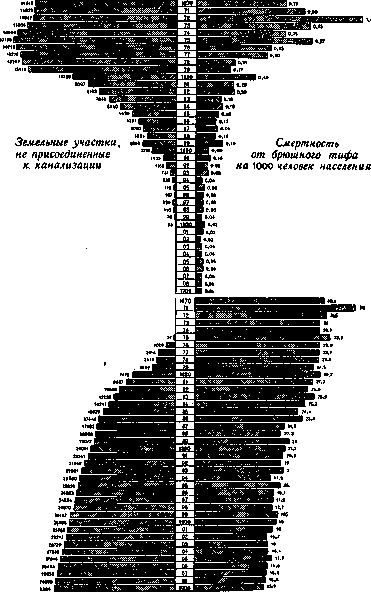
Erisman and Khlopin provide in their manuals on hygiene a fairly large amount of sanitary-statistical observations for a number of cities in connection with the installation of water supply systems and, mainly, sewerage, and in all these observations a positive and quite striking effectiveness is noted not only in relation to gastrointestinal epidemic diseases, but also in relation to general mortality, which can serve as an indicator of the general improvement of cities. Such, for example, is the trend of general mortality and mortality from typhoid fever in Berlin for almost 40 years, from 1854 to 1890 (Figure 1). Until 1876, there was only a water supply system there, and from that year, sewerage began to operate. On the diagram, one can observe a gradual decrease in mortality from typhoid fever until 1875, accompanied by jumps of sharp increases due to outbreaks of typhoid fever epidemics, especially in 1872. After the installation of sewerage, the drop in mortality from typhoid fever proceeded rapidly and without jumps. At the present time, Berlin does not know epidemics of typhoid fever. General mortality for the same years initially shows some rise, and after the start of the operation of the sewerage, it steadily goes on a significant decline. In Hamburg, mortality from typhoid fever had the following trend: per 1,000 deaths from all causes, the number of deaths from typhoid fever was: in 1838-44 (7 years before the construction of sewerage) - 48.5, in 1845-53 (9 years of construction of sewerage) - 39.5, in 1854-61 (the first 8 years after the construction of sewerage) - 29.9, in 1862-1869 (the subsequent 8 years) - 22.0. In Munich, the construction of the sewerage system began in the late 50s. The city already had a water supply system. Before the construction of the sewerage, in the period from 1852 to 1859, mortality from typhoid fever per 1,000 inhabitants reached 2.42. In 1860-67, it was 1.66‰, in 1866-80 - 0.99‰, by the end of the 80s - 0.01‰, by 1906 - 0.002‰. In Danzig, the water supply system was built in 1869, and the sewerage in 1871-72. The general mortality in the city in the last 9 years was 36.39‰, and for the next 12 years (1872-83) it dropped to 28.96‰. At the same time, mortality from typhoid fever decreased from 0.99‰ to 0.29‰. Erisman points out that the new water supply system in Danzig did not show an effect on mortality from typhoid fever. It began to decrease significantly only 2-3 years after the start of the operation of the sewerage. In Odessa, epidemics of typhoid fever had completely disappeared by 1910, and cholera, which raged in Russia in 1892-93, produced only isolated cases of the disease in Odessa and did not develop into an epidemic. According to Vasilevsky's data, general mortality and mortality from typhoid fever steadily decreased in accordance with the development of water supply and sewerage networks. Korchak-Chepurkovsky noted the corresponding influence of sewerage on the sanitary condition of Kiev in a report at the V Water Supply Congress in Kiev in 1901. Von Rieder, at the XI Water Supply Congress in 1913 in Riga, presented an interesting diagram from the Report of the Berlin Magistrate for 1906-10 on the mutual connection between the drop in mortality from typhoid fever and general mortality and the number of sewered and non-sewered properties (Figure 2). In Moscow and other cities, an improvement in the general sanitary condition of the population and a decrease in mortality from typhoid fever are also observed in connection with the start of the operation of the sewerage. For 1919-24, the general mortality in Moscow in districts that were fully sewered (I), partially sewered (II), and completely non-sewered (III) was: I - 18.3‰, II - 25.3‰, III - 27.0‰. Mortality from typhoid fever was distributed as follows: I - 2.7‰, II - 3.6‰, III - 4.2‰. Such are the statistical data objectively characterizing the influence exerted by sewerage (and simultaneously by the water supply system) on the health of the population. Although the progress of general urban improvement, housing construction, raising the cultural and economic condition of the population, etc., is of great importance in the dynamics of the sanitary condition of cities, there is no doubt that the water supply system and sewerage are among the most powerful factors in the improvement of cities.
Installation of sewerage. The details of the installation of sewerage are as follows: wastewater is directed through receptors and pipelines in buildings to the courtyard network, and then to street pipes, from which it enters collectors—pipes of large size; from the entire territory of the populated area, waters are diverted to treatment facilities by one or several pipes of even larger size—main collectors, conduits, mains, or channels, as they are sometimes called. In general, it should be borne in mind that a uniform nomenclature for sewer pipes has not yet been established. According to the layout of the sewer pipe network, the following systems are distinguished (Figure 3): perpendicular (Figure 3a), when wastewater is directed straight into a river crossing the city by collectors located perpendicular to it, often without any treatment. This system is used when the terrain has a slope towards the water body and the amount of wastewater entering it is small compared to the water body, i.e., significant dilution is obtained. This is rarely encountered in practice, and such a system is used almost exclusively for the drainage of atmospheric waters (for example, in Leningrad). If, to avoid pollution of the river, the mouths of the collectors are intercepted by channels running along the banks, an intersected (Figure 3b) system is obtained, in which wastewater is discharged into the river below the city (London, Paris, Kiev, Samara, etc.). In order not to deepen the coastal collectors too much into the ground, as this is usually associated with work in water-saturated soils, a fan-shaped or parallel system is used (Figure 3c; Breslau, Brussels, Wiesbaden, and Riga). In some cases, a zonal system is arranged (Figure 3d), in which each zone has its own special channel and may even have a special sewerage system. Such a system is installed in Warsaw, Dnepropetrovsk, Cologne, partly in Moscow, Stockholm, Frankfurt am Main, and other cities. Sometimes a radial system is arranged (Figure 3e), for example, in Berlin, when the city or the populated area in general is divided into special districts, each of which is sewered independently, in the direction from the center to the periphery. In practice, one usually has to combine different systems.
Figure 1. Mortality from typhoid fever per 1,000 of all deaths. General mortality per 1,000 people. Land plots connected to the sewerage.
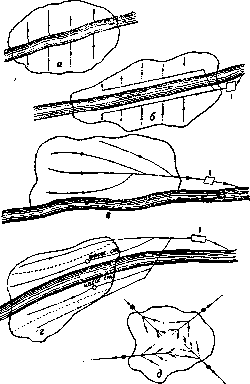
Figure 2. General mortality per 1,000 of the population. Figure 3. Sewerage network system: a - perpendicular; b - intersected; c - fan-shaped or parallel; d - zonal; e - radial; 1 - treatment facility.
Receivers into which sewage flows include water closets (see), urinals, floor drains, kitchen sinks and washbasins, bathtubs, and bidets (a device for external gynecological washing). In medical institutions, certain additional special sanitary fixtures are installed, for example, for washing bedpans and, in general, any kind of vessel contaminated with the excretions of patients. All rationally designed sanitary fixtures must satisfy the following conditions: they must have hydraulic seals (siphons) located directly beneath them, intended to prevent the penetration of gases from the sewer network into the premises. In some receivers, the siphon is integral with the sanitary fixture (for example, water closet bowls). Furthermore, all fixtures except for water closets must be equipped with permanently attached grates with openings of no more than 6 mm, and the total area of the openings must be no more than the cross-sectional area of the pipe carrying away the sewage. All receivers must have a rounded shape so that waste does not get stuck, and be made of materials that are not susceptible to the influence of sewage. Moving on to the sanitary and technical evaluation of various fixtures, it should be said that water closets (see) must be of the water-closet type, without any valves, moving parts, etc. Floor drains are cast-iron enameled siphons and serve to remove sewage from the floor into the sewer network. In operating rooms, floor drains are made of faience. Recently, in connection with the development of motoring, gasoline or benzene, which can become causes of explosions, have been entering the sewer network from the floors of garages and workshops, as well as from certain industries. In such cases, it is necessary to install special benzene or gasoline separators (Figure 4), the operating principle of which is based on the difference in the specific gravity of water and the flammable liquid. The latter collects in the upper part of the apparatus, and from time to time its excess is automatically removed into a special collection tank. In the right part of the apparatus in Figure 4, a settling tank for heavy objects—sand, etc.—is shown. Kitchen sinks and washbasins are manufactured from ceramic, faience, porcelain, enameled cast iron, and tinned copper. At sinks in large kitchens, hospitals, restaurants, etc., so-called grease traps are installed to catch grease, which in their design principle resemble separators for highly flammable liquids. The grease accumulating in them must be removed from time to time.
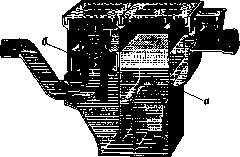
Figure 4. Gasoline separator: a—settling tank; b—the gasoline separator itself.
from it by the building's drainpipes, while the introduction of fresh air into the network occurs with the help of grated covers of inspection manholes (where there is no snow cover), lamp holes, or with the help of special intake pillars. The following table (on page 179) gives the dimensions of sewer pipes in buildings, established by All-Union water supply and sanitary-technical congresses. Purpose of pipes: Branch pipes, Stacks (cast iron, iron, cast iron, iron in mm, in cm, in mm, in cm). From single and double kitchen sinks, urinals, washbasins, and single bathtubs (1 bathtub is taken as 1.5 sinks) ... 3.8, 5.1. From 3 to 6 of the above-mentioned receivers, with the exception of bathtubs ... 5.1, 6.4. From 7 and more of the above-mentioned receivers, with the exception of bathtubs ... 6.4-7.6, 10.2. From large kitchen sinks and dishwashing equipment ... 6.4-7.6, 6.4-7.6. From water closets ... - >. From several stacks, if necessary according to the number and arrangement of receivers ... ~ ~ ~. Stacks must be located inside buildings; for the convenience of operation and repair, they should not be enclosed in walls. The diameters of vent pipes inside buildings are made the same as the diameters of the waste parts, and in the attic and above the roof, where freezing of pipes is possible due to climatic conditions—50 mm larger. Waste sewer pipes for the house network are manufactured from asphalted cast iron. Lead pipes should not be used in view of their poor resistance to mechanical damage. To clean house sewer pipes, special cast-iron fittings—cleanouts—are placed on them in places, having openings that close hermetically with covers. Figure 5 shows a cross-section of a building along a stack with an indication of the receivers. Foul air is removed from the sewer network along this stack in the direction opposite to the movement of the liquid. Depending on the nature of the discharged wastewater (domestic or atmospheric), their flow rate, speed of movement, and various local conditions (underground structures, street width, etc.), the shape of the cross-section of sewer pipes is very
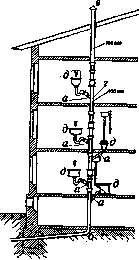
Figure 5. House sewerage: a—branch pipes; b—stack; c and d—its vent part; e—receivers (sanitary fixtures).
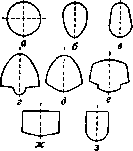
diverse (Figure 6). The most commonly used shapes are round and egg-shaped (ovoidal). Where there are significant fluctuations in the flow of sewage (which, for example, occurs with the combined sewerage system), the ovoidal cross-section has an advantage over the round one, since with it, at low water flow rates, a higher liquid flow velocity is obtained in the pipe. Trough sections (compressed) are used when it is desired to have an advantage in height, for example, when installing storm sewers or trough-shaped trays for rainwater.
Figure 6. Shapes of sewer pipes: a—round; b and c—egg-shaped (ovoidal); d—basket-handle; e—trough-shaped; f—with poor covering.
If channels or pipes are laid shallowly, compressed profiles with a flat covering are used. In some cases, bench sections are used; in this case, the liquid flows along the middle trough, and the benches serve for the passage of maintenance workers. The minimum dimensions of round street pipes are 150 mm (in Moscow, Kiev, some English and American cities). To avoid frequent blockages, recently in some cities of the USSR, pipes with a diameter of 200 mm are used as the minimum. The minimum diameter of pipes for courtyard networks with separate sewerage is taken as 125 mm, and with combined sewerage—150 and 200 mm. The minimum height of an egg-shaped section is 700 mm. The minimum depth of laying street sewer pipes is determined depending on the depth of freezing or the depth of the sewered basement premises on the property, the slope and length of the courtyard pipes, and the width of the street. Depending on climatic conditions, the minimum depth of laying pipes in the ground for the central zone of the USSR is established at 1.5 m (according to data from All-Union water supply and sanitary-technical congresses), and in extreme cases (with appropriate insulation of the pipes)—0.7 m. In Kiev, the laying depth is accepted as not less than 1.5 m, in Moscow—1.7 m, and in Kharkov—1.3 m. Pipes of sewer networks are laid with such slopes that the speeds of liquid movement along them do not negatively affect the pipe material and that the pipes and channels are, as they say, self-cleaning, i.e., so that the deposition of various suspended substances contained in the sewage does not occur in them. The materials from which the sewer network is built must satisfy, in addition to strength requirements, the following conditions: they must not be destroyed by the chemical and mechanical impact of sewage, be impermeable, and possess a smooth inner surface that does not present obstacles to the movement of sewage. Most often

Figure 7. Ceramic pipe.
Ceramic (stone-ceramic) pipes, previously inaccurately called "pottery" pipes, as well as brick, concrete, reinforced concrete, and metal pipes are used. The widespread use of ceramic pipes is explained by the fact that these pipes possess good hydraulic properties and are inexpensive. At the present time in the USSR, a standard assortment approved by the Committee for Standardization under the Council of Labor and Defense is mandatory. Ceramic pipes (Figure 7) and shaped parts must be of circular cross-section with uniform wall thickness, must be well and uniformly fired, and must be machine-made; the glaze must cover both surfaces of the pipe evenly and without gaps; it must be smooth, without under-glazing, drips, bubbles, or cracks. The connection of ceramic pipes to each other is done by sealing half of the gap between the pipes with a resinous strand, and the other half with asphalt mass (asphalt joint) or clay (clay joint). Recently, the asphalt joint has been most frequently used. Filling joints with Portland cement is not recommended, as the joint loses elasticity in this case and the pipe may collapse during ground settlement. Brick is a very common material for the construction of sewer channels. It must be of good firing and quality. The masonry is laid using Portland cement, which must comply with the technical specifications of the People's Commissariat of Railways. Brick collectors exist in Moscow, Kharkov, Samara, Riga, Warsaw, and other cities. Figure 8 shows several types of brick collectors of the Moscow Sewerage system. For the construction of street
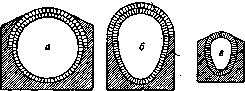
Figure 8. Brick collectors: a-circular; b and c-ovoid.
networks, pipes of small diameter made of Portland cement with sand, and large-diameter concrete pipes are also used. The use of such pipes is facilitated by their comparative inexpediency, the possibility of giving them any shape, and their smooth surface. However, such pipes should be used in sewerage practice with great caution, since cases of destruction of concrete pipes from the chemical action of sewage, gases released from it, as well as from groundwater, are known from foreign and Russian practice. In view of this, before using concrete, it is necessary to accurately study the composition of the sewage that will enter the sewerage system, as well as the composition of the groundwater along the route of the future laying of collectors. The use of concrete pipes for storm drains, which divert atmospheric water, is associated with less risk. What was said about concrete pipes is also true for reinforced concrete ones. They are used mainly in the combined system for main collectors and storm overflows. The use of metal sewer pipes for laying in the ground is very limited. They are used mainly as durable, pressure-resistant pipes for pressure water conduits, as well as for crossing all kinds of obstacles in the form of siphons and inverted siphons (see below). In households, asphalt-coated cast-iron pipes are used if they pass closer than 2 m from the walls of buildings, closer than 2 m from cellars and ice houses, or near wells serving for drinking, or if the pipe lies below the level of groundwater, or where ground settlement is expected. It is advisable to use cast-iron pipes of the water-supply type for laying in the ground. For the convenience of inspection, flushing, and cleaning of networks, inspection
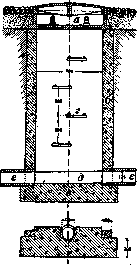
Figure 9. Concrete inspection manhole: a-cast-iron manhole cover; b-concrete walls; c-concrete bottom; d-rungs; e-trough; f-sewer pipes.
manholes are installed (Fig. 9). On straight sections of pipes, they are placed at a distance of no more than 50 m from each other, in yard networks no more than 40 m, and on large channels in which one can walk, at a distance of 100-150 m or more from each other. From above, the manholes are closed with cast-iron covers; to allow descent into them, cast-iron or iron rungs are embedded in the walls in a checkerboard pattern at a distance of 0.3-0.4 m from each other. On streets with heavy traffic, manholes are often placed to the side and connected to the channels by special galleries. In the bottom of the manholes, a special depression is made for the sewage, corresponding to the diameter of the pipes, the so-called trough. To reduce the number of inspection manholes, so-called lamp manholes were installed, which are a ceramic or concrete pipe connected to the sewer pipe. The lamp manhole is covered with a cast-iron cover on a special foundation to avoid damage to the pipe. To inspect the pipe, a burning lamp is lowered into the lamp manhole, and a worker inspects the pipe from the inspection manhole using a mirror. Recently, lamp manholes have also begun to be used as ventilation openings. If any obstacle, such as a river, ravine, water pipe, or gas pipe, etc., is encountered on the path of a sewer collector, a part of the collector for crossing the obstacle is made in the form of a curved pipe, called an inverted siphon (Fig. 10). In some cases, the curved pipe has a position opposite to that of an inverted siphon, and in this case, it is called a siphon. Siphons are used relatively rarely. With a combined sewerage system,

Figure 10. Inverted siphon: a-inverted siphon chamber; b-pipe; c-river.
for receiving atmospheric water on streets, squares, and in the yards of properties, special manholes of circular, square, rectangular, or oval cross-section with gratings are installed, so-called storm inlets (see Vol. V, art. 380, Figure 6). To prevent gases from the network from penetrating outside, storm inlets are equipped with hydraulic seals (siphons). Settling tanks are made in the manholes for the sedimentation of sand and other heavy impurities; for more convenient cleaning, buckets made of thick galvanized iron are placed in them. The dimensions of channels in a combined sewerage system are not calculated for the water of very large downpours, which happen only a few times a year and usually do not last long, because this would increase the costs of constructing channels and would make operation more expensive and complicated. In view of this, special openings—storm overflows—are usually arranged on channels or in manholes, through which, during downpours, sewage, highly diluted with rainwater, is diverted via storm drains by the nearest route into a river (Fig. 11). The dilution coefficient (m), i.e., the amount of storm water that must be mixed with 1 volume of domestic sewage during the hours of maximum inflow of the latter, is established while taking into account all local conditions and especially with consideration of the sanitary aspect of the matter. Average values for m within the city are 4-5, outside the limits—1.5-2, and in each case, this question must be coordinated with sanitary supervision. If, due to local conditions, it is impossible to divert all sewage by gravity, then water-lifting structures are arranged, which lift the sewage to a certain height. These structures include pumps, which are driven by various types of engines, and devices for lifting that operate by rarefied (Liernur system) or compressed (Shone system) air. Furthermore, there are hydro-pneumatic lifts
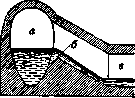
Figure 11. Storm overflow: a-sewer collector; b-storm overflow weir; c-storm drain.
of the Adams system, hydraulic ones—Griboedov, and pneumatic ones—Salmson, etc. The number and size of pumps when designing pumping stations are determined in accordance with the inflow of sewage, both domestic and storm. If a collection reservoir is arranged at the stations, its capacity is taken into account in the calculations. The construction of very large reservoirs at pumping stations located in populated areas is undesirable from a sanitary point of view, because suspended substances can settle in them, which easily undergo decay and spoil the air. Piston and centrifugal pumps are used. Their design must be such that they can be easily and quickly cleaned of contamination by sewage. Sometimes pumping stations are made
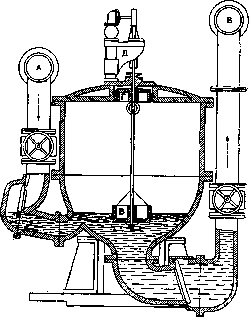
Figure 12. Shone ejector: A-sewage inlet pipe; B-outlet pipe; C and D-cups; E-compressed air distributor.
automatic (e.g., in Rostov-on-Don), where electric motors are switched on and off by means of floats floating in the sewage in a grit chamber, reservoir, or supply channel. At pumping stations, special screens or sieves are usually installed to retain large substances floating in the sewage. The Liernur system removes only fecal waters, without household ones. Under it, the city is divided into small sections; all latrines are connected by cast-iron pipes to hermetic cast-iron reservoirs, and these reservoirs, in turn, are connected by cast-iron pipes to a main reservoir, hermetically sealed and located outside the city, near the machine building. Local and main reservoirs can be appropriately switched on and off from operation by means of valves placed on the pipelines. By creating a vacuum by pumping air out of a local reservoir, sewage from latrines is forced to enter it, and by creating a vacuum in the main one, sewage is transferred from local reservoirs to the main one. In the Shone system, the lifting apparatus (ejector) is set in motion by compressed air delivered to it from the station. It consists (Fig. 12) of a hermetic cast-iron reservoir, into which sewage enters through pipe A, and is removed from it through pipe B by means of compressed air, which enters the ejector from a special distributor D, actuated by a cup-float C when it rises as the apparatus fills with water. As soon as compressed air enters the ejector, the valve on the pipe discharging air from the apparatus and the supply pipe A automatically close, and the valve on the discharge pipe B opens, and the liquid is removed from the apparatus through it. When all the liquid is removed, the float lowers, closes the valve on the compressed air pipe, and opens the valve on the pipe discharging air from the ejector. The discharge pipe then automatically closes, and the valve on the supply pipe begins to let sewage through pipe A into the ejector. The Shone system is used in some English and Western European cities; previously, Kiev was partially sewered using this system. In Moscow, Shone apparatuses were used in slaughterhouses; in Kharkov, they are used for pumping sludge from settling tanks of a biological station to drying beds. Sewage treatment. Before being discharged into a river or lake, sewage must be subjected to treatment. Depending on the requirements, treatment is mechanical (screens, sieves, settling tanks), sometimes with the use of chemical reagents (lime hydrate, ferrous sulfate, etc.), and biological—irrigation fields, biological filters, aeration tanks, and biofilters (see Activated sludge, Aeration, Basins, Biological method of sewage treatment). When discharging sewage into rivers, certain rules must be observed: first of all, the discharge must be located so that the best mixing of sewage and river water is ensured. For this, the mouth of the discharge is led out to the river's thalweg, where the current is strongest during the lowest water levels. It is desirable to locate the end of the discharge not along the riverbed, to avoid sediment deposits in it, but in the middle of the live cross-section. The direction of the sewage flow should be parallel to the direction of the water flow in the river or form an acute angle. The backwater of spring waters should not extend over a great length of the channel. When the discharge is located below the level of the lowest waters, it is not subject to the action of wind, which could disrupt the ventilation of the network, and the mixing of sewage with river water occurs more energetically. Recently, for better mixing of sewage with river water, discharges are divided into several jets using special apparatuses. The submerged part of the discharges is made of iron (Halle), steel, cast-iron, or wooden (Warsaw, Frankfurt am Main, Samara) pipes. When discharging sewage into the sea, it is necessary to provide for the fact that sewage does not return to the shore during tides or surf, which is especially important for seaside resorts. The point in the sea where there is a current carrying sea waters away from the coastal strip is usually located at a considerable distance from the shore, and in each individual case, it is necessary to consider two variants of the installation from sanitary and economic points of view: 1) with sewage treatment with short discharges and 2) without sewage treatment with longer ones. The length of the discharge in the city of Boston is about 1 km, and the water depth at the discharge point is 15 m. In Yalta, due to the insignificant length of the discharge, sewage is washed ashore. In the USA, projects for constructing discharges up to 36 km long are being developed. Since Sewerage does not cover all households, and outskirts in most cases do not use it, recently in sewered cities, so-called drainage stations (with smaller dimensions and simpler equipment, they are called drainage points) are often set up for draining cesspool sewage into the sewer network. This is done, on the one hand, so that for sanitary reasons, less land is allocated for dumps near cities, and on the other hand, for economic reasons, since transporting sewage to drainage stations is cheaper than to more distant dumps. Thick sewage must be properly diluted with clean water before entering the sewer network. Dilution depends on the concentration of cesspool sewage. Drainage stations usually consist of a building with settling tanks and various cleaning devices. The installation of drainage stations in sewered cities should be permitted with great caution, and the order and organization of operation should be provided for; with poor supervision, pollution of the surrounding air is observed; furthermore, the liquid is not sufficiently diluted, and too large a quantity of suspended substances enters the network, which settle on the walls of the pipes and cause their clogging. Conditions and limits of application of Sewerage. Taking into account the great importance of Sewerage for the improvement of populated areas, from a sanitary point of view, the question of the conditions and limits of the application of Sewerage is theoretically solved very simply in the sense that every populated area should be sewered. Practically, however, the question turns out to be very complex in view of the fact that Sewerage is an expensive construction requiring large one-time expenditures. These expenditures are so great that they usually turn out to be unaffordable for cities without loans or state aid. On the other hand, however, in the development of every city, there comes a period when the need for Sewerage becomes especially acute, when it can no longer do without Sewerage and, despite large expenditures, must install it. And since the need for Sewerage arises from the totality of elements of the sanitary state of the city, i.e., is caused by considerations of a sanitary nature, the task of sanitary bodies should include the timely establishment of indications for the construction of Sewerage. Small settlements with sparse one-story development and low population density, located in dry areas, suffer less in a sanitary regard from the lack of Sewerage. It is a different matter for large cities and settlements. The growth in the number of inhabitants of a populated area, the densification of development, the appearance of multi-story buildings, and the increase in population density increase the amount of waste per unit of city area, complicate and increase the cost of removal due to long distances and other reasons, and contribute to the scattering and accumulation of waste in the urban soil. The installation of a water supply system contributes to an increase in the quantity of liquid waste. An overloading of the soil with sewage is created, the conditions for its self-purification deteriorate, with all the consequences flowing from this. Large multi-story buildings are especially burdensome, which, in the absence of urban Sewerage, secretly discharge significant quantities of their sewage into nearby water bodies, into street drains, and into absorption wells. Often, the sanitary state of a given populated area is worsened by the progressive development of industry, which concentrates large masses of the working population on a small territory of enterprises, itself produces much waste, and in particular, sewage. All this affects the health of the population and causes increased morbidity and mortality, general and especially from epidemic gastrointestinal diseases. Accounting for the sanitary state of the population, establishing its disadvantage in relation to the development of epidemic gastrointestinal diseases, such as cholera, typhoid fever, etc., as well as in relation to the increase in the general mortality of the population, establishing the dependence of this disadvantage on the sanitary state of the city and its groundwater, soil, water bodies, drains, housing, etc., is, with the existence of a water supply system, the basis of sanitary indications for the installation of Sewerage. Practically, this is carried out by a detailed study of the city in terms of its topography, soil, groundwater, water bodies, planning and development, demography, water supply and sanitation, industry, cultural and economic state of the population, etc., and describing it according to a special program, which should reveal the places in the populated area that are disadvantageous in a sanitary regard and the necessary measures for eliminating such, including the need for sewerage. Basic data for designing Sewerage.
A long process of preparatory work for the implementation of sewerage usually begins precisely with a sanitary survey and description of the populated area, which indicates the full responsibility of this work for sanitary authorities. The drafting of a sewerage project for a given populated area must be preceded by a whole series of surveys and examinations regarding the population, its growth, density, the nature of the city's development, factories, plants, bathhouses, laundries, slaughterhouses, etc., with a determination of their output, the quantity and composition of wastewater, and their projected expansion; data are needed on the general water consumption by the population, data on the nature of the soil, the location of groundwater and quicksand, meteorological data, data for drawing up a financial plan, etc. In addition, the following topographic plans must be made: for a preliminary design, a general plan of the populated area with its surroundings on a scale of 1:10,000–1:20,000; a leveling plan of the point and its surroundings, having a slope in the direction of the populated area from the watershed line, with contours at least every 1 m on a scale of 1:5,000, with the marking of building blocks, factories, plants, bathhouses, laundries, slaughterhouses, etc.; plans and profiles along the route of the collectors on a scale of 1:500–1:1,000 (for plans and profiles – 1:1,000–1:2,000 for horizontal distances and 1:100–1:200 for vertical distances). For a detailed project, the same general and leveling plans are required, and in addition, plans of thoroughfares on a scale of 1:500 and profiles on a scale of 1:500–1:1,000 for horizontal and 1:100–1:200 for vertical distances, a plan of the plots designated for the construction of pumping and treatment stations on a scale of 1:500 with contours every 0.25–0.50 m (for irrigation fields, a plan on a scale of 1:1,000–1:2,000 with contours every 0.5 m). For the preparation of a sewerage project, it is highly desirable to have a project of developed planning or replanning of the populated area. To determine the amount of closet and household water subject to removal by sewerage, certain norms of water disposal in liters per 1 inhabitant per day are used. The table below shows current data for German cities, according to E. Genzmer. Number of inhabitants in cities: Suburbs and settlements – 40–60 liters; Up to 50,000 inhabitants – 60–90 liters; From 50,000 to 100,000 inhabitants – 80–110 liters; Over 100,000 inhabitants – 100–150 liters. In the cities of the USA, hundreds of liters are discharged per 1 inhabitant. In the USSR, the following water disposal norms have recently been adopted: 60–80 liters per 1 inhabitant per day. At the present time, it is recommended to take the following calculation periods for various parts of sewerage facilities: network-street pipes 25–30 years and main collectors 15–20 years; pumping stations-buildings 15–20 years and equipment 10 years, treatment facilities 10 years. The latter and pumping stations must be designed with consideration for their expansion. The reserve of the land plot must be calculated for at least 40 years. The calculated number of inhabitants is determined as follows: the existing number is taken from the last census, the population growth in percent is established on the basis of statistical data for a number of years, the period of time for which the sewerage facilities are designed is chosen on the basis of an economic calculation, and the following compound interest formula is used: N = n(1+0.01p)^t, where N is the calculated number of inhabitants, n is the existing number of inhabitants, p is the average annual population growth in percent, and t is the calculation period for the facilities. When establishing population growth, all local data should be taken into account—natural population growth and mechanical growth, conditioned by the economic or other development of the given place before the war, during the revolution, and later, and with the prospects for the growth of the given point. In general, for large (100,000 inhabitants and above) and medium (from 20,000 to 100,000 inhabitants) cities in the USSR, a population growth of 2–3% is assumed, for small ones—1–1.5%, but for the correct resolution of the issue, all local conditions must be taken into account, by virtue of which deviations from these average figures may be required; thus, K. Imhoff considers the annual population growth for some industrial cities to be up to 10%. The population is distributed unevenly across the city's territory. Population density is expressed in the number of inhabitants per 1 hectare of area. For the preparation of a sewerage project, it is necessary to establish several gradations (usually 2–3) of densities in different districts. For a correct technical and economic resolution of the task, one should beware of exaggerating densities. Examples (in inhabitants per 1 hectare) of calculated densities adopted during the preparation of sewerage projects for different cities are as follows: Moscow—440 and 220, Leningrad—550, 440, 330 and 220, Odessa—440, 220 and 132, Kharkov—440 and 275, Baku—450 and 300, Samara—300, 200, 150 and 100, Berlin—800 and 500, Munich—470, Budapest—500, Cologne—400, Königsberg—600.
When designing, the total amount of closet and household wastewater, otherwise known as domestic wastewater, is determined according to the above-mentioned water disposal norm and according to the number of inhabitants and density that will exist after a certain accepted calculation period. The amount of wastewater from industrial establishments, bathhouses, commercial laundries, etc., is established according to actual consumption with mandatory consideration of the future development of the enterprise. The basis for calculating the design flow of atmospheric water should be a moderate downpour, observed in the given area no more than once a year. Treatment facilities in a combined system are calculated for double or triple the amount of household water in the dry season. Since the inflow of wastewater changes according to the seasons, days, and hours, sewerage facilities are calculated using so-called irregularity coefficients, which represent the ratio of the maximum hourly flow per day to the average hourly flow per year. For the calculation of networks, the following irregularity coefficient is accepted: for pipes with a diameter of up to 1 m—1.5–1.8, over 1 m—1.3–1.8; for pumping stations—2–2.3; in the case of discharging water from industrial establishments with high flow irregularity into the sewerage network, the coefficients may be increased. The calculation of sewer pipes is performed according to empirical formulas, and not the full cross-section of the pipe is taken into account, but a certain part of it, since the liquid should not fill the entire cross-section of the pipe, i.e., a certain filling of the pipes is established in order to protect against their overflowing at certain moments of operation. There are many calculation formulas for sewerage networks; they can be reduced to the basic type of the Chézy formula: V = C√Ri, where V is the second-by-second velocity of the liquid in meters; R = A/P is the hydraulic radius [the ratio of the area occupied by water (live cross-section) to the wetted perimeter]; i is the hydraulic slope, i.e., the slope per unit length of the surface of the liquid flowing through the channel, and not the bottom of the channel (with small water flows in the channel, this slope can be taken as equal to the slope of the bottom of the channel); C is a certain numerical coefficient of friction (or velocity, as it is sometimes called). The value of the coefficient C is given differently by different authors. In the old Kutter formula, which is often taken for calculations, C = (a + 1/n) / (1 + (m/R) * n), the roughness coefficients n are taken as equal to the following values: Finely polished materials... 0.10–0.15; Clean (very well smoothed) cement and very carefully planed wood... 0.16; Well-fitted boards. Large iron and reinforced concrete water conduits...
0.25 Brick walls and walls made of thick planks that have been in use, stone walls and channels made of cement pipes, smooth brick channels, riveted iron pipes that are not very wide, laid across and lengthwise........... 0.30-0.35 For the calculation of sewer pipes in the USSR, n = 0.25-0.30 is most often adopted; in Germany, n = 0.35. In addition, the formulas of Bazin, Gorbachev, the abridged Ganguillet and Kutter, the power formulas of Manning, Milovich, and others, as well as graphical calculation methods (nomograms, diagrams, etc.) are used. For calculations, the second-by-second discharge of liquid Q is also of great importance, i.e., the amount of water in cubic meters (or liters) flowing through a given area of the live cross-section in 1 second: Q=F.V. Along with surveys related to the layout of the network and the main collectors or channels, surveys must be carried out regarding the water body designated for the discharge of sewage into it, regarding the place of discharge, sewage treatment, the location of treatment facilities, etc. If it is possible to choose a water body, one should first of all settle on a flowing one, i.e., a river, due to the better conditions for mixing sewage in it and self-purification. In addition, the distance from residential areas, the water discharge in the river, the free flow, the presence of populated areas downstream, and the nature of water usage from it must be taken into account. To establish the conditions for discharge and the need for preliminary sewage treatment, the river must be carefully examined from the point of view of water discharge and its fluctuations, flow velocity, distribution and mixing of jets, bottom relief, as well as in terms of chemical, bacteriological, and biological water composition. If more or less significant sewage discharges are already entering the river, it is necessary to trace their influence on the river and the processes of self-purification in it. The most important circumstance in sanitary terms is the location of populated areas downstream from the intended discharge and their water usage from the river. Therefore, along with the survey of the river, all downstream populated areas must be registered and surveyed, and their relationship to the river must be established. In addition to ordinary water usage for drinking, bathing, washing clothes, watering livestock, etc., one should not lose sight of the fishing industry, especially if it is of significant size. Along with river surveys, it is necessary to calculate the future composition of the sewage of the designed Sewerage, taking into account the shower water consumption adopted by the project, as well as the quantitative and qualitative composition of industrial sewage, and finally, taking into account the composition of sewage from other cities similar in character to the given one. Having indicative data characterizing the quality and quantity of sewage, and having data on the capacity of the river and the mixing of jets in it, its ability for self-purification, it is possible to calculate with a certain approximation the influence on the water composition in the river that the designed sewage discharge will have. On the basis of this, it is possible to calculate and establish the treatment and treatment facilities that would fully ensure sufficient liquidation of sewage and self-purification of the river before the sewage reaches the settlements downstream that use water from the river. In view of the fact that Sewerage is a technical structure built on the basis of sanitary indications and pursuing the goals of improving the health of populated areas, sanitary authorities should take part in the design of Sewerage; the actual design, i.e., the graphic presentation of the adopted basic provisions with a number of calculations of pipe diameters, slopes, etc., is an exclusively engineering function, while the business of sanitary authorities is the joint development of basic provisions for design with engineering forces. Questions of population movement, water consumption standards, the sequence of providing sewerage to certain districts of the city, the equipment of the sewer network with ventilation, the place and conditions for discharging sewage into a water body, the sewage treatment system, etc., must be worked out jointly. Likewise, sanitary authorities must take an indispensable part in the review and approval of projects. In this case, sanitary authorities must ensure that the previously adopted basic provisions are correctly applied, especially regarding water consumption, the design of treatment facilities, etc. In the USSR, the approval and review of large sewerage projects for populated areas is carried out by the NKVD and the NKZdr., while smaller projects are reviewed by local municipal services with the participation of representatives of sanitary authorities. Cost of construction and operation of Sewerage. Sanitary control over the operation of Sewerage. To estimate the cost of installing sewer networks, it is very important to have the most accurate indicative data possible, but unfortunately, the material for this is extremely diverse and unreliable, because in different cases different calculation methods are adopted; for example, sometimes including the cost of technical supervision and the cost of drawing up the project, sometimes without this, etc. Let us cite here some indicative figures. Thus, with the combined Sewerage system in some Western European cities, the cost of the network in pre-war rubles per 1 linear meter of length was from 28 to 54 rubles or from 22 to 35 rubles per inhabitant; in Bremen, a complete separate sewerage system cost 42 rubles per 1 linear meter (all figures without the cost of technical supervision and project preparation), in Moscow, a separate incomplete Sewerage (second stage of sewerage) cost 31 rubles 87 kopecks with administrative and technical expenses. According to the materials of the Main Administration of Municipal Economy of the NKVD of the RSFSR, the cost of separate incomplete Sewerage according to estimates for some cities is from 22 rubles 67 kopecks to 57 rubles 56 kopecks per 1 linear meter of network length, counting in modern chervonets rubles. The installation of pumping stations according to Moscow data cost from 11 rubles 42 kopecks to 14 rubles 70 kopecks per 1 cubic meter of pumped sewage per day in pre-war rubles. The cost of installing pumping for Tver is calculated according to the estimate at 40.8 chervonets rubles. The pace of construction of sewerage structures in the USSR, in view of their high cost, lags behind the requirements of life. Own savings for this business are either completely absent or insufficient for the above-mentioned purpose. This issue was given great attention at the III All-Union Water Supply and Sanitary-Technical Congress in Rostov-on-Don (May 1929), and resolutions were adopted: 1) on bringing credits for the construction of sanitary-technical enterprises in the USSR to 50% of their total cost, so that the crediting of individual objects would take place up to 75% of their construction cost, and in individual cases, depending on local conditions, in a larger amount; 2) on allocating the maximum possible sums from the local budget for the construction and reconstruction of sanitary-technical enterprises; 3) on the participation of industry, as well as transport and resorts, in the construction of Sewerage in amounts fully corresponding to their use of the enterprises for their production purposes and proportional to the interest of their workers in the services of these enterprises. To keep the sewer network in a satisfactory condition, it needs constant supervision and maintenance. Supervision is expressed in the regular inspection of the network and all structures related to it. Maintenance consists of flushing and cleaning the network and removing accidental blockages. The attitude of the population towards sewerage structures in our cities is very careless: the most unacceptable items are discharged into the network: household waste, ash, vegetable peelings are thrown into toilets; stones, bricks, hay, straw, broken glass, etc., are discharged through manholes, and as a result, the network becomes clogged, very often associated with the suspension of the operation of the Sewerage in entire districts. In Moscow, for every 100 properties using Sewerage, there were 48 blockages in 1928, and in Kiev in 1923, there were 75. Flushing the network can be done with sewage itself or with water from the water supply. To flush the network with sewage in pipes (manholes or chambers), plugs or valves are used, and in large channels, doors, with the help of which water is dammed up in the upstream sections of the pipe. By then quickly opening the valves or doors, the entire mass of accumulated water is directed at high speed into the downstream part of the pipe, thereby flushing it. When flushing the network with tap water, fire hoses with nozzles are often used. Water for flushing is sometimes collected in special wells with siphons or tanks that empty automatically. Special attention should be paid to the proper flushing of the dead ends of pipes. In addition to periodic flushing of the network, sewer pipes must be mechanically cleaned, and all technical devices inspected, valves and doors lubricated, etc. Small pipes are cleaned by pulling special cylindrical brushes between two inspection manholes using steel cables and winches, and larger pipes are cleaned with metal scoops. Large channels are sometimes cleaned with special shields driven by the pressure of the sewage itself. According to pre-war data, the cost of diverting 1 cubic meter of sewage to treatment facilities for combined-type systems cost 5-7 kopecks, and with regional pumping stations - 7-9 kopecks.
(these figures indicate how much cheaper the removal of sewage by sewerage is compared to the removal of sewage by hauling). The expenditure for current repairs of sewerage networks and other structures is approximately in the range of 0.5% to 1% of their cost. For the use of sewerage, specific tariffs are usually established. Their establishment is carried out on the basis of a calculation of the cost price per unit of municipal service output. The average cost price per unit of output is determined by dividing the sum of production costs for the year by the quantity of removed and treated wastewater. Production costs consist of current expenses, allocations for the depreciation of property, and the payment of interest on borrowed capital. We provide some examples of tariffs per 1 m3: Moscow—12 kopecks, Nizhny Novgorod—26 kopecks, Orenburg—29 kopecks, Rostov-on-Don—28 kopecks, Samara—15 kopecks, Saratov—14 kopecks, Sevastopol—9 kopecks, Simferopol—11.6 kopecks, Stalingrad—23 kopecks. Sanitary authorities must conduct regular observation of the operation of the sewerage system. Specifically, this should be expressed in monitoring the proper condition of the network and its ventilation, the timely development of the network in accordance with the needs of the city, new construction, industry, etc., the connection of households in need of it to the sewerage system, and the prevention of the discharge of wastewater in unauthorized places, etc. Special attention should be focused on monitoring the correct and uninterrupted operation of treatment facilities and preventing the discharge of insufficiently treated wastewater into the river. Monitoring of treatment facilities should also be conducted from the point of view of preventing their unfavorable influence on the surrounding area, especially if they are located near residential quarters. In view of the exceptional importance in sanitary terms of such structures as water supply and sewerage, one should not be limited to formal control over them, but should conduct observation on the basis of close cooperation with municipal authorities. The most important work of sanitary authorities, which consists of monitoring the correct treatment of wastewater, should be based on analyses of the water entering the water body from the treatment facilities. Samples for analysis should be taken, if possible, from all parts of the treatment facilities to evaluate their operation. In addition, samples of untreated wastewater should be taken to account for its composition and the overall effect of its treatment. The schedules for such studies are established depending on the scale of the facilities and in accordance with local conditions. Conditions for the admission of industrial waters into the municipal sewerage system. Local sewerage systems. In conclusion, it is necessary to dwell on two questions that have significant fundamental and practical importance: 1) on the conditions for the admission of industrial wastewater into the municipal sewerage network and 2) on local sewerage systems. The sewerage system must be designed to receive industrial waters. When designing the sewerage system, not only the wastewater of existing and operating industrial enterprises must be taken into account, but the possibility of their expansion and new construction must be carefully investigated. This is necessary because the lack of coordination in the development of industry and sewerage structures often leads to requirements to reconstruct the latter. While recognizing it as fundamentally necessary to accept industrial wastewater into the municipal sewerage system, one should in each specific case carefully consider the composition of the industrial waters, their physical properties, the regime of their inflow, etc. The fact is that in the composition of industrial waters there can be substances (e.g., acids) that act destructively on the material of sewerage structures; sometimes industrial waters contain easily flammable substances (gasoline) or suffocating gases, and finally, sometimes they contain substances that have a harmful effect on the biological treatment of wastewater (antiseptics, oil, etc.). In addition, industrial waters may contain such a large quantity of suspended substances that they can settle and clog the network (tannery waters, pickling waters, etc.); therefore, for such waters, the installation of preliminary settling tanks is required. Regarding the regime of industrial wastewater entering the network, one must keep in mind the possibility of salvo discharges of wastewater from enterprises, which can create an overflow of the network. To avoid such cases, one has to keep in mind the possibility of installing regulating reservoirs at the enterprises. Local sewerage systems have quite significant prevalence in cities and other populated areas where there is no general sewerage system; they usually serve large buildings and institutions, such as, for example, hospitals, educational institutions, factory enterprises, barracks, etc. In the absence of a city-wide sewerage system for such types of institutions, which concentrate large masses of people around them and require a large consumption of water, the installation of their own local sewerage system with proper wastewater treatment often represents the most rational method of disposing of the latter. Practice, however, shows that the installation of such types of structures, when calculated per 1 inhabitant, costs many times more than a city-wide sewerage system. Furthermore, in most local sewerage systems, the situation with wastewater treatment is unsatisfactory due to unskilled or negligent operation of the treatment facilities, especially when they have a complex design. Therefore, when building a general city sewerage system, large local sewerage systems should be integrated into the general network, and small treatment facilities should be eliminated. However, cases are not rare when hospitals, children's colonies, enterprises, etc., are located outside populated areas or in areas of a rural nature, where there is no question of any municipal sewerage system. In such cases, a local sewerage system is just as inevitable and permanent a structure as a local water supply, and sometimes an electric power station, etc. Obviously, the problem of sanitary improvement must be solved in the same way in agricultural settlements, which are being created in state farms and collective farms. The newest construction of cultural agricultural settlements with dense development (communal houses, bathhouses, clubs, schools, hospitals, etc.) must undoubtedly be connected with the installation of a local sewerage system. It is obvious, however, that the sewerage system of such settlements will have some peculiarities, namely: it must serve not only residential houses and public institutions (hospitals, bathhouses, etc.), but also livestock premises: cowsheds, stables, pigsties, etc. Thus, the sewerage system of agricultural settlements must collect and remove liquid waste not only from people but also from animals, as a result of which the composition of the wastewater here will be somewhat different than in ordinary sewerage systems. Another peculiarity of such a sewerage system consists in the fact that here the treatment of sewage must be combined with its agricultural use for fertilization on irrigation fields, meadows, or vegetable gardens, since the need for fertilizers in modern large-scale agricultural enterprises is very great, and such valuable fertilizing material as wastewater should not be thrown away unused.
Related articles
Mentioned in
Cite this page
“Sewerage.” Soviet Medical Encyclopedia. English translation of Bolshaya Meditsinskaya Entsiklopediya, 1st ed. (Moscow, 1928–1936), ed. N. A. Semashko. https://sovietmedicalencyclopedia.pages.dev/article/sewerage/