Kiers
Historical document, translated for reference. It reflects medical knowledge of the 1920s–30s and is not medical advice.
Summary
This article from the 1928–1936 Soviet Medical Encyclopedia describes kiers (devices for boiling or steam-treating infected, heavily soiled, or greasy laundry) used in hospitals and disinfection stations. It details various types of kiers, such as circulation and mobile models, as well as operational procedures, preparation methods, and sizing calculations.
Encyclopedia article (1928–1936)
KIERS, devices for boiling or steam-treating infected, heavily soiled, or greasy laundry. A simple kier is a tinned-copper boiler sharing a firebox with a water-heating boiler, but with a capacity about five times smaller. Kiers for boiling laundry with a local firebox consist of a tinned-copper (or galvanized iron) vat lined on the inside with wood, featuring a double bottom and a double screw-down lid, and equipped with a steam discharge pipe and a drain valve for emptying waste liquid. In circulation kiers, a circulation pipe with a flared top and a metal deflector fixed above it is located in the center above the inner bottom. Heated water rises through the pipe and, using the deflector, evenly irrigates the surface of the laundry. Portable kiers with a local firebox are mounted on two-wheeled carts. When a steam generator is available, heating is performed by steam. The latter is passed through a steam-supply pipe into a blind-ended annular coil with openings on its upper surface. The coil is located beneath the inner perforated bottom. Kiers of this type are also connected to water supply and sewage systems. For hospitals and disinfection stations, special apparatuses are recommended, installed in the partition wall between the dirty and clean sides and equipped with separate openable lids for loading dirty laundry and unloading disinfected laundry (see fig.). Opening one lid automatically prevents the opening of the other. Boiling can also be performed in washing machines of appropriate design, which provides significant savings in labor and time. Before boiling, a preliminary cold soaking of the laundry in a 1% soda solution for 1–12 hours is necessary, followed by a gradual heating of the water to a boil, to prevent the fixation (sintering) of blood, purulent, and other protein stains on the laundry. When soaking and boiling very greasy laundry, a little caustic soda is added. The dimensions and capacity of kiers are calculated on the basis of 8–10 liters of useful capacity per 1 kg of dry laundry. Thus, for example, for an oval-shaped kier holding 70 kg of dry laundry, the capacity is 700 liters, and the external dimensions are: length 1,250 mm, width 900 mm, and vat height 800 mm. A kier of this size can service a 30-bed hospital. Round kiers for 75 kg of dry laundry have an inner vat diameter of 900 mm and a height of 800 mm. Boiling laundry in a kier lasts 15–20 minutes, but water heating requires from 1 to
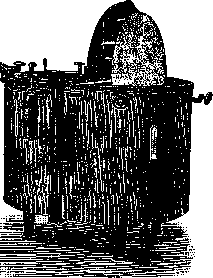
3 hours or more depending on the design of the kier and its heating method. In German hospitals, water in kiers is heated up to 92° and not exceeding 98°. In washing machines, after cold soaking in a soda solution and draining this liquid, the laundry is subjected to direct steam boiling for 45 minutes. The throughput capacity of a kier depends on its capacity, the speed of water heating, and the duration of its operation; on average, during an eight-hour working day, a kier can process 2 shifts of laundry. The required capacity of a kier is determined by the amount of laundry subject to boiling. For general hospitals, this amount constitutes about 20–25% of the total mass of dirty laundry.

and the design of steam mechanical laundries, collection Device and Equipment of Contagious Disease Hospitals, published by the Union of Cities, Moscow, 1916; Okunevsky, Y. L., Practical Guide to Disinfection, part 1, Moscow, 1926; Haller, E., Die Desinfektion (Weyl's Handbuch der Hygiene, vol. VIII, 1922); Besson, A., and Ehringer, G., La pratique de la désinfection, Paris, 1926.
Related articles
Mentioned in
Cite this page
“Kiers.” Soviet Medical Encyclopedia. English translation of Bolshaya Meditsinskaya Entsiklopediya, 1st ed. (Moscow, 1928–1936), ed. N. A. Semashko. https://sovietmedicalencyclopedia.pages.dev/article/kiers/