Aeration
Historical document, translated for reference. It reflects medical knowledge of the 1920s–30s and is not medical advice.
Summary
Aeration refers to the process of ventilating and saturating physical bodies with atmospheric air, including water and other liquids. It is used in both drinking water and wastewater treatment to enrich water with oxygen and remove volatile substances.
Encyclopedia article (1928–1936)
AERATION, a term in the general sense meaning ventilation and saturation with atmospheric air of any physical body (water, other liquids). This process should be understood as a two-way diffusion process (penetration): on the one hand, elements of air through the surface into the body, on the other hand, substances of the body capable of diffusing (volatile) through its surface into the air. The process of A. is governed by the Henry-Dalton law (1805) concerning partial pressure and partial solubility of gases. The element of diffusion distinguishes A. from the related process of ventilation, the essence of which consists in the mechanical renewal of air by displacement and replacement in one or another volume. Under natural conditions, one can speak of A. of the surface layers of soil, A. of water of open bodies of water, running water of rivers, splashing and foaming water of waterfalls, etc.; loss of gas by mineral water into the air is also A. In sanitary engineering, A. is applied both for saturation with air (its oxygen) of drinking and waste waters, and for removal into the atmosphere of gases dissolved in them. The task of technical use of A. is reduced to its intensification by increasing the surface of contact of air with liquid, for which purposes sprinkling, various types of cooling towers, blowing, etc. serve.
S. Ozherov. Aeration of drinking water, the process of breaking up one or another volume of water into separate streams, possibly as thin as possible, to obtain a larger surface of contact of water with the surrounding air; during this process, the water is enriched with oxygen from the air and freed from volatile gaseous substances, if any are contained in it. Natural A. is more often arranged, sprinkling by means of cascades, perforated gutters, sieves, etc. Artificial A. is resorted to less frequently, with the use of mechanical blowing of air into water through perforated plates, coarse filters, porous plates, or using aerators in the form of sprayers (Kerting system), which are small conical nozzles on branches of pressure pipelines. A. is applied both for surface and underground waters. Waters of open bodies of water are usually saturated with oxygen to a sufficient degree; but when they acquire a musty odor due to some loss of oxygen for oxidation of organic substances, or when due to the development of algae and shells in surface waters their taste and odor deteriorate—A. can be very useful. A. is also necessary for waters of those rivers which differ in slow flow, as well as for pond waters and when treating surface waters with a coagulant, when as a result of this the content of CO2 harmful to metal pipes (intensified rusting) and other metal, concrete and reinforced concrete structures of the water supply increases. As a rule, aeration of coagulated water should be applied when it enters the clean water reservoir after filters. The latest installations for drinking water purification abroad sometimes use double aeration: before and after filters, for better protection against gaseous products of decomposition of flora and better removal of substances corrosive to metal and reinforced concrete. Finally, A. makes it possible to free underground (usually artesian) waters from the hydrogen sulfide contained in them (mineral, when it appears here as a result of chemical processes occurring in the bowels of the earth). With the help of A., it is possible to remove significant amounts of hydrogen sulfide from water (up to 15-20 mg per liter). A. is also necessary in deferrization of iron-containing waters, for the conversion of bicarbonate ferrous oxide into insoluble hydroxide according to the chemical equation: 4 Fe(HCO3)2+2H2O+O2=2 Fe2(OH)6 + 8 CO2. Aeration is applied here both in open and closed installations (see Deferrization, or iron removal). The hygienic significance of aeration is determined by what has been said above about improving the taste and odor of drinking waters containing gaseous impurities or depleted of dissolved oxygen, the presence of which gives the water refreshing properties. The installation of aeration of drinking waters is usually not economically burdensome: its structures are simple, operation is not complicated and inexpensive.
H. Geniev. Aeration of waste water, one of the latest (1912) methods of biological purification of waste water (see Biological method of purification of waste water), achieves its purpose only in the presence of so-called activated sludge (see), and therefore in foreign technology this method received the names 'activated sludge treatment' (English), 'Abwasserreinigung mit belebtem Schlamm' (German), i.e., purification with the help of activated sludge. In our country, however, the expression 'method of A. s. v.' or simply 'A. s. v.' is mostly used. In all cases of application for purification of waste water of the aerobic oxidation process, aeration takes place, ensuring the supply of oxygen to the microbial population, which is the living catalyst of this process. Whether it be soil of irrigation fields, 'biological filters' or 'purification ponds', the supply of air is achieved in a natural way. But only in the case of artificial supply of air is A. s. v. spoken of as a special method of purification of these waters, which at the present time has received very diverse technical expression. Thus, A. s. v. can be defined as such a biochemical process of purification of waste water, in which the supply of oxygen is carried out artificially—by blowing air or mechanically.—As early as 1887 Dibdin—a pioneer in the field of biological purification—clearly formulated the principles of A. s. v. as a method of purification. But only in 1912 Americans Clark and Adams first dealt with activated sludge in its modern meaning, and their experiments were the beginning of research by Fowler and Arden in Manchester; they brought the method to the path of practical application (1912). In the past 15 years A. s. v. in one form or another has been tested by many cities, especially in the U.S.A. and in England. At present, according to this method, waters are purified in no less than 150 cities in quantities up to 2 million cubic m. In our country experiments with A. s. v. were first set up in August 1915 in Moscow in the laboratory of the Lublin irrigation fields (N. A. Bazaykina), where in July 1917 an experimental station with a capacity of 1,000 cubic m was already operating (engineer I. G. Povarnin). In 1916 experiments were begun in Kharkov (engineer D. S. Cherkas and M. I. Atlas). By 1927 A. s. v. is applied in Moscow (an experimental station with a capacity of 900 cubic m is operating, a station with a capacity of 12,300 cubic m is being built, several small stations at factories are operating), in Kharkov (1,000 cubic m), in Kashira (300 cubic m), is being built in Sergiev (420 cubic m). Although it is not yet possible to give the theoretical foundations of the A. s. v. process (since all research is predominantly of a purely empirical nature, describing constructions and methods of operation), nevertheless, in terms of the degree of study, it is illuminated to such an extent that it already lends itself to regulation and control, which cannot be said about any of the other methods of biological purification. The course of the effect of activated sludge on the composition of the aerated waste liquid is extremely typical, and analytical data of different authors (Ardern, Mohlmann, Bazaykina, Harris) give almost identical pictures. In the case where aeration is achieved by blowing air into a basin [so-called aerotank (more correctly aerotank)], filled with waste liquid containing about 25% (by volume) of activated sludge, the course of change in its chemical composition over time is schematically shown in Fig. 1. Milligrams per liter ..A/ ttumpanwt
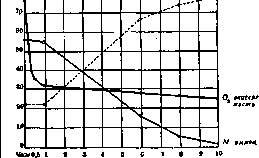
Figure 1. Change in the chemical composition of waste liquid during aeration of waste water.
For the first hour of A., a sharp decrease in oxidizability (up to 50%) is particularly characteristic. This is the first phase of the process. Nitrification—the second phase—begins only when the value of oxidizability (organic substances) has decreased to 25-35% of the initial (Bazyakina); according to American observations—to 10% (Theriault). The course of nitrate formation is depicted in the diagram as a mirror image of the decrease in ammonium nitrogen, which is quantitatively oxidized at an almost constant rate. Many authors consider the first phase of the process (decrease in oxidizability) as a kind of "coagulation," the clotting and adsorption of wastewater colloids by activated sludge. Along with the decrease in oxidizability at this time, there is also a reduction in the amount of organic nitrogen, and what is especially important, a decrease in the biochemical oxygen demand. In addition, there is a noticeable clarification of the liquid (increase in transparency). The characteristic odor of wastewater is lost at the moment of mixing with activated sludge. All this represents such a significant improvement in the properties of wastewater that in certain cases, purification can be limited to the first phase. The beginning of nitrification serves as a sign of the end of the first phase. Indeed, in many European and American cities, characterized by weak concentration of their wastewater (Paris, Essen, Milwaukee, Worcester, and most English cities), it is sufficient to obtain only a few milligrams of nitrate N in the purified liquid to produce a "non-decaying" liquid suitable for discharge. Therefore, they limit themselves to "clarification" (clarification). In the very latest time (1927, Harris), observations of many aeration tanks in England have shown that activated sludge is not something constant and identical for any installation, as was previously thought, but that activated sludge can, depending on circumstances, have different properties: it can clarify the liquid (coagulate) but not nitrify, and vice versa. It is therefore more probable to assume that these peculiarities are explained by differences in the microbial complex constituting the activated sludge. Practically, it is important that the significant "clarification" effect obtained in the first phase is achieved quickly (not more than 1 hour) and with the expenditure of not a large amount of air. Therefore, the first phase is used for preparing the liquid for further purification in ordinary oxidizers (bio-filters). In this form, it was first proposed by Clark in 1912, then in Moscow (1917) and, independently of us, in Birmingham in 1923, where since 1925 a large station of this type has been operating. The second phase of the process is characterized by nitrification phenomena. The course of this process and its conditions in the aeration tank are elucidated, mainly, by the works of N. A. Bazyakina (Moscow), who showed (1917) that the rate of nitrification per unit time is constant, proportional to the intensity of aeration and expressed by the empirical formula N = Const · v, where N is the amount of oxidizable nitrogen (mg per liter) per hour, v is the amount of volumes of air passed per hour per 1 volume of liquid in the aeration tank. On the other hand, it was clarified (Bazyakina, 1925) what great importance in understanding the process of A. s. v. the physicochemical conditions of O dissolution play, with which very few other researchers have hitherto taken into account. It turned out that the rate of O dissolution is proportional to its deficit, i.e., the difference between its content in the saturated and in the given solution, which is expressed by the formula ~ = K(b-w), where b is the content of O at saturation with air, w is the content of O under given conditions, K is the constant, t is time. At this, (b-w) depends on the rate at which activated sludge transfers O to the oxidative processes, and consequently on the amount of sludge. The value of K depends on the intensity of aeration, on the method of air distribution, on t°, etc. The amount of O that can be expended on oxidative processes in the aeration tank, of course, cannot be greater than that which dissolves in the same period of time. Meanwhile, this amount in aeration tanks is very small and amounts to only about 2% of the mass of the supplied O. Such slowness of O dissolution determines the slowness of the purification process in aeration tanks, which, depending on conditions, is prolonged from 3 to 10 hours and more, whereas in continuously operating oxidizers it ends in 10-15 minutes. These regularities relating to the second phase of the process allow a quite justified choice of a number of tasks that determine the design of the aeration tank and the conditions of its operation, and consequently the cost of purification. If the nature of the wastewater to be purified is known (the "oxygen demand" is especially important), and the required degree of purification in this case is known, then it is also known how much oxygen must be transferred for oxidation. From this, using Bazyakina's data, one can determine the appropriate intensity of aeration (power of machines) and the aeration period, and this will give, taking into account the dose of sludge, the size of the aeration tank. A. s. v. in the aeration tank allows obtaining liquid of any degree of purity, up to complete nitrification of the nitrogenous part. Externally, provided good separation from activated sludge, the purified liquid already in the initial stages of aeration has high transparency and a slightly yellowish tint. With respect to the effect of bacterial purification, aeration tanks give, roughly, the same as ordinary bio-oxidizers (see Biological method of wastewater purification), a reduction of 90-98% in the number of bacteria growing on gelatin and agar, and for the B. coli group—from 80 to 99%. One cannot fail to mention also the phenomena of denitrification, easily detectable in a liquid rich in nitrates in case of lack of air. This explains the decrease in total N in the purified liquid in case of defects in aeration or excess of sludge, which forces limiting the settling time of activated sludge in settling tanks to 1-2 hours to avoid violent rising of already settled sludge under the influence of gases (N and CO2) formed during denitrification. As a result of A. s. v. in aeration tanks, an increase in activated sludge (due to adsorption of colloids and due to bacterial growth) is observed, which amounts to 1% of the volume of treated liquid, whereas other methods of purification give much less sludge to be removed (from 0.1 to 0.5% per day). With prolonged aeration, a decrease in the amount of sludge due to its decomposition is also possible, which indicates the existence in the process of A. s. v. of a third phase—"wet combustion of suspended substances," but this process requires even more O and even more time than nitrification, and therefore has not yet found practical application. The temperature at which the A. process proceeds normally ranges from +9 to +30°. At t° from +5 to +9°, the rate is somewhat reduced. But fluctuations in t° affect the rate of purification retardation particularly sharply, no matter in which direction they occur. Blowing air even during severe frosts in Moscow lowers the t° in aeration tanks only very slightly (by 1-2 degrees). The amount of activated sludge favors the rate of the process provided there is sufficient air supply. The normal dose of sludge in an aeration tank is about 25% by volume (settling for 1/2 hour). The intensity of aeration (number of volumes of air per 1 volume of aeration tank per hour) for liquid of Moscow concentration (oxygen demand approx. 500 mg) was taken as 10 volumes per hour, but in European and American installations it is significantly less (from 2 to 5). The aeration period, the time the liquid remains in the aeration tank, depends on the intensity of A., on the properties of the liquid, on the dose of sludge, on temperature, on the design of the basin, and on the requirements for purification. In Moscow, to obtain non-decaying liquid, the period was 4-5 hours, abroad—approx. 2-3 hours. The total expenditure of air for A.—the product of the intensity of A. and the period of A.—correspondingly varies from 4 to 50 volumes depending on the concentration of the liquid. Sometimes (for liquids of high concentration with a large amount of suspended substances) regeneration of activated sludge may prove necessary, which is achieved by separate aeration of the spent sludge before feeding it into the aeration tank from the settling tank (see Figure 2).
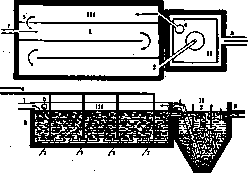
Figure 2. Aeration tank (diagram): I—aeration tank; II—settling tank; III—regenerator; 1—inlet of wastewater into I; 2—inlet of purified liquid into II; 3—outlet of purified water; 4—ejector for act. sludge from II to III; 5—inlet of regen. act. sludge; 6—air pipe; 7—aerators.
The above-stated principles of aeration of sewage have currently (1927) received quite diverse technical expression. The most common devices are the so-called aeration tanks—basins through which a mixture of sewage liquid and activated sludge flows, which is aerated at this time either by blowing air through aerators located on the bottom or by means of mechanical mixing. Both methods of aeration have, especially in England, energetic defenders (patents), but until now no impartial scientific evaluation has been made of them when tested under identical conditions. (A diagram of an aeration tank with pneumatic aeration is given in Fig. 2.)
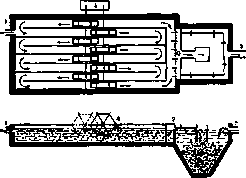
The basin, into which the sewage liquid enters through the supply channel (1), consists of a long, narrow channel, approx. 2 m deep. Along one of the long sides are located aerators (7), to which air is supplied through pipes (6) from a compressor (the compressor is not shown in the drawing). The aerators are mostly porous plates (so-called "filtros") or perforated pipes. The upward current of liquid above the aerator is deflected by the corresponding arrangement of the channel walls. This movement, combined with the forward current of liquid along the channel, creates a so-called spiral circulation, which facilitates the mixing of the liquid with air. The purified liquid, together with the activated sludge, enters (2) the settling tank (II), from where it descends into the discharge channel (3), and the sludge is pumped (4) either directly into the aeration tank or (as in the diagram) is fed into the regeneration channel (III), where it is additionally aerated and only after that is mixed with the newly entering sewage liquid (5). The velocity in the settling tank (vertical) for activated sludge should not exceed 0.5 mm per second; the settling period is sufficient (1 hour). The danger of denitrification does not allow leaving sludge in the settling tank for more than 2 hours. The volume of returned sludge, at a dose of 25%, together with the purified liquid, reaches up to 50% of the amount of sewage; this volume must be taken into account when calculating the aeration tank and the settling tank. Pumping out sludge from the settling tank is mostly done by an air ejector. Excess activated sludge (an increase of about 1% of the liquid volume) is transferred either to a drying bed or to a sludge chamber to reduce volume by settling and anaerobic decomposition (see Activated sludge). Often, the arrangement of aerators is used not along the channel, but across it, and the basin itself is divided into a series of compartments by vertical partitions, which alternately do not reach either the bottom or the water surface. But the most important thing in the design of an aeration tank is to avoid dead spaces where activated sludge could settle, accumulate, and rot. The supply of air to the aeration tank is done with the help of blowers or compressors of so-called high pressure, calculated for a pressure of 2-3 m of water column (approx. 0.25 atmospheric pressure) and requiring a very significant expenditure of mechanical energy, which constitutes the main operating expense, greatly increasing the cost of purification, especially when one has to work with high blast intensity and a long aeration period. This circumstance, in connection with the negligible use of air for the oxidation of organic substances (approx. 2% O), was the main motive for the development of mechanical methods of aeration. A very interesting system of structures, proposed by Haworth (Sheffield) and named bio-aeration (see Figure 3), is very interesting. The aeration tank in this case is formed by a long
Figure 3. "Bio-aeration" according to Haworth (diagram): 1-inlet of liquid into the endless channel; 2-overflow of purified liquid into the settling tank; 3-outlet of purified liquid; 4-wheels; 6-motor.
(up to 1,000 m), narrow (1.2 m x 1.2 m) channel with several bends (up to 18). With the help of an engine (5) and wheels with blades (4) half-immersed in the liquid, a rapid flow of the mixture of activated sludge and sewage liquid is maintained in the channel (flow velocity 0.5 m per second), which at the same time absorbs O of the air with its large surface of contact with it, and
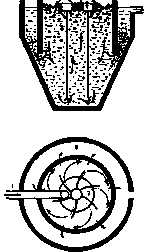
partly also as a result of the foaming of the liquid by the movement of the wheels, which rotate at a speed of 15 revolutions per minute. The purified liquid, passing over the settling tank (2-3), enters it in an amount equal to the inflow of sewage. But the main mass of purified liquid with activated sludge continues its path along the channel to the place of mixing with the sewage (1). Thus, in the Haworth method, strong dilution is applied. Figure 4. Surface aeration
according to Bolton (diagram): 1-inlet of sewage liquid; 2-rotating "cone"; 3-settling tank; 4-outlet of purified water.
of sewage liquid with purified liquid, which constitutes up to 96% of the circulating mixture (in an aeration tank usually 25-50%). The good effect obtained at these installations is explained exclusively by the weak concentration of the treated liquid (in Sheffield, oxidizability is 27.5 mg, ammonia nitrogen 20.8 mg). The actual effect of mineralization is negligible (nitrification rate 0.5-1 mg of nitrogen per hour). The same principle—dilution—is applied in mechanical aeration according to the Bolton system (see Figure 4). In a reservoir with a capacity equal to the daily inflow, a wide pipe (5) is lowered in the center, turning at the top into a cone in which a special stirrer rotates. By the rotation of the stirrer, foaming and constant circulation of the liquid are created, as shown in the diagram. Sewage liquid enters through the supply pipe into the reservoir continuously (1/24 of the reservoir volume per 1 hour) and is immediately mixed with a large volume of purified liquid (just as in Haworth's). An annular space (3) is separated by a peripheral partition, which does not participate in the circulation current and serves as a settling tank, while activated sludge (dose 10-15%) is automatically returned through the lower opening, and the purified liquid in quantities corresponding to
Figure 5. Aeration tank with a longitudinal stirrer (Essen-Rellinghausen).
the inflow of sewage, goes into the water body through the discharge channel (4). The purification of the liquid does not go beyond the first phase. This system is used as a self-sufficient method or as preliminary clarification for subsequent purification on percolators (Birmingham). A special advantage of both systems is considered by the authors to be the low expenditure of energy. Per 1,000 cubic meters, Haworth's requires 11 hp, Bolton's 3-10 hp. But in England (Ardern, 1924) for aeration tanks with air blowing, the energy expenditure per 1,000 cubic meters is of the same order—4.2-8 hp, in America—12-16 hp. In Moscow, where the concentration of the liquid is significantly higher, the aeration tank requires (Eng. Povarnin) 40 hp. A combination of blowing air through porous plates and mechanical mixing of the liquid in the aeration tank was applied with success in Essen (Essen-Rellinghausen). This is the first installation in Germany (1925). Here, a wooden stirrer is located on a common axis along the aeration tank (see Figure 5). It rotates at a speed of 7 revolutions per minute against the air blown into the liquid. Energy expenditure is 1.8 hp per 1,000 cubic meters (for the stirrer, for blowing air, and for pumping activated sludge). The aeration tank worked with a sludge dose of 8%. The aeration period is 3.5 hours. A total of 0.6 cubic meters of air is blown per 1 cubic meter of flowing liquid. The installation treats liquid after the Emscher tank (see). Water consumption per inhabitant, due to the large inflow of groundwater, is 600 liters per day. The purification effect is excellent, but here too the matter ends with the first phase and is expressed by a very strong decrease in oxidizability (from 196 to 30 mg) and a decrease in the biochemical oxygen demand from 133 to 17 mg. Nitrification is negligible, but according to local conditions and due to the low oxygen demand, this phase of the process is not needed. Above, a combination of an aeration tank was mentioned, which provides
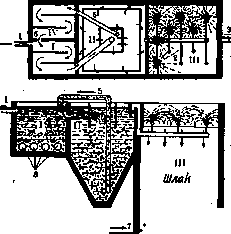
Figure 6. "Aerofilter" of the Moscow type (diagram): I-aeration tank-coagulator; II-settling tank; III-aerofilters filled with fine slag; IV-regenerator for activated sludge; 1-inlet of sewage liquid into the aeration tank; 2-inlet of sewage liquid to aerofilters (sprinklers); 3-outlet of purified liquid; 4-grates of the second bottom; 5-supply of sludge to the regenerator; 6-supply of activated sludge to the aeration tank; 7-supply of air to the aerofilter; 8-supply of air to the coagulator. the first phase of the process, with conventional bio-oxidizers carrying out the second phase (nitrification). This system of structures proved to be economically acceptable both for Moscow liquid (1917) and for Birmingham (England, 1925). Finally, aeration of sewage received practical application in the form of artificial aeration of bio-oxidizers. In this direction, attempts were made long ago (Waring, 1891), but, in connection with the study of the properties of activated sludge, the idea of artificial aeration of a continuously operating oxidizer was first implemented in Moscow (1917) in the form of the so-called aerofilter. In this case, aeration occurs by distributing the liquid in the air, whereas in all other designs air is introduced into the liquid. Aerofilters (see diagram Fig. 6) are a reservoir (III) with a double bottom, onto which slag is loaded (the size of the main mass is 0.5 to 1.5 cm) in a layer of 4 m, in order to
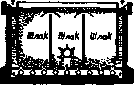
Figure 7. Contact "Emscher filter" of the Bach system (from Imhoff): 1-inlet of sewage liquid; 2-outlet of purified water; 3-aerators supplying compressed air; 4-channels for removing excess sludge.
ensure uniform distribution of liquid and air. Air (7) is supplied under the grates of the 2nd bottom (4) and rises to meet the liquid, which irrigates the filter (2). This achieves active oxidative work of a 4-meter thickness of slag, and therefore the load is increased 2-4 times (depending on the concentration and preparation of the liquid) compared to a non-ventilated percolator, i.e., compared to an ordinary irrigation biofilter. The air consumption in this case does not exceed 4-6 volumes per one volume of liquid, and the pressure at which it is forced into the aerofilters is not higher than 200 mm of water column. This is the reason for the low energy consumption, and hence the economy of this device. In Moscow, engineer I. G. Povarnin determined the energy consumption for 1,000 cubic meters at aerofilters to be 5.3 h.p., while for an aeration tank it was 40 h.p. The purification effect on the test installation of 1923 was higher than on a conventional percolator (see Biological method of wastewater purification): the liquid was transparent, non-decaying, with a high nitrate nitrogen content (from 12 to 27 mg). For 'contact' oxidizers, A. s. v. was proposed by Bach in 1923 in the form of so-called 'Emscher filters' (see figure 7), in which aeration of the liquid filling the oxidizer occurs. This construction has been applied for industrial waters. It is also necessary to mention the so-called submerged filters (Beluftete Tauchkorper - see figure 8). These are wooden boxes with slotted bottoms, loaded with slag, coke, brushwood, suspended in the middle third of the channels in Emscher basins. Air from a compressor is supplied under the bottom of the box with the help of a pendulum-like oscillating perforated pipe. It is very probable that such a device acts similarly to 'collodors' and to some extent reduces the flowing liquid's need for O. All these diverse

I "^
i
Figure 8. Submerged filters (cross-section diagrams) in Emscher basin channels: I - perforated drum filled with brushwood and rotating 1 time per minute; II - suspended box filled with slag or brushwood. Air is supplied -
air supply methods intensify the purification process, which is expressed in a significant saving of space required for purification structures and their volume. The cost of constructing structures for A. of wastewater, obviously, depends extremely strongly on many local 19 conditions; here only some data for Moscow wastewater are given. Cost of construction and operation (in pre-war rubles). Per 1,000 cubic meters of daily inflow Per 1 inhabitant Cost of construction Oxidizer-percolators. . Aeration tanks........ Aerofilters ........ Filtration fields.. Cost of operation Oxidizers . . . . Aeration tanks . . . . Aerofilters . . . Filtration fields. 6,200 7,700 1,920 4,060 4.0 4.0 0.8 4.0 0.61 0.70 0.19 0.32 When capitalizing operating expenses at 4% and summing them with construction costs, for a station with 12,300 cubic meters daily or for 125 t. inhabitants, it turns out that the biological station costs 2,210 thousand rubles, aeration tanks - 2,880 t. rubles, and aerofilters - 695 t. rubles. To these expenses must be added the costs of sludge treatment (which is not the case with filtration fields). The compactness of the device, the intensity of the oxidative processes, the absence of putrefactive odors, the relatively insignificant appearance of flies, the high degree of process controllability - all this places A. s. v. in a high place in the general hygienic evaluation. But simultaneously with the intensification of the purification process, the requirements for strict observance of normal operating conditions increase. Therefore, careful technical supervision is necessary, based on laboratory control data. For small installations, this is b. ch. completely unfeasible, and then obtaining a good effect becomes questionable. For factory-plant waters, the methods of A. s. v. are applied successfully along with other biological purification methods, but, considering the complexity and diversity of the chemical composition of these waters, it is necessary to point out the need in each case for preliminary tests on a trial installation.
Related articles
Mentioned in
Cite this page
“Aeration.” Soviet Medical Encyclopedia. English translation of Bolshaya Meditsinskaya Entsiklopediya, 1st ed. (Moscow, 1928–1936), ed. N. A. Semashko. https://sovietmedicalencyclopedia.pages.dev/article/aeration/