English Filters
Historical document, translated for reference. It reflects medical knowledge of the 1920s–30s and is not medical advice.
Summary
This article describes the historical development and operation of slow sand filters, known as English filters, used for water purification. It details their construction, the biological 'maturation' process required for effective filtration, and the maintenance procedures necessary for their continued operation.
Encyclopedia article (1928–1936)
ENGLISH FILTERS. For water supply systems taking water from rivers, lakes, ponds, and certain other reservoirs, sand filters of the English or American system are usually installed, through which water is purified before being directed into the water supply network. English filters belong to the slow-working type, while American filters (see) belong to the fast-acting type. Slow sand filters were named English because they were first built for water supply systems in England; the first English filter was built by engineer Simpson in 1829 in London for the purification of water from the river

Figure 1. A large closed English filter, buried in the ground and covered with sand over the vaults.
Thames. In Berlin, sand filters were built in 1853, in Moscow in 1902. English filters are huge, reinforced concrete or brick and stone basins laid in cement mortar, buried in the ground, loaded with filtering materials, and filled with water (see Figure 1). They are either 'open' or 'closed'. Closed filters have the advantage over open ones that the sturdy concrete vaults, which are also covered with earth on top, reliably protect the water from sharp fluctuations of the external atmosphere; in winter, the water in the filters does not freeze, and in summer, it does not heat up significantly, and such a huge quantity of green algae does not develop in them as in open ones; furthermore, they are protected from all kinds of accidental contamination by people and animals. English filters are built in various sizes depending on the demand, with the area of each individual closed filter often reaching 2,000–2,500 sq. m, i.e., about 1/4 of a hectare, while the area of open ones reaches up to 3,000–7,500 sq. m. The loading of English filters with filtering materials is carried out in the following order (see Figures 2 and 3): drainage channels are arranged at the bottom of the basin for collecting and draining the purified water; a layer of stones the size of a fist is placed on the channels, a layer of pebbles the size of a walnut is placed on them, then layers of coarse and fine gravel are poured, and a thick layer of fine sand is loaded onto the latter. The stones and gravel in the filter play only the role of a support, holding up the sand. The thickness of the layers of stone, gravel, and sand varies depending on the design features of the filters. For example, the new Moscow filters in Rublevo have no layer of stones at all. The following arrangement of filtering layers is considered most typical: Field stones... Grain diameter... 200–60 mm... 60–30... 30–20... Layer thickness 25 cm... 15... 12... 20–10... 4–3... 1.0–0.3... 8... 5... 150–60... Total thickness of layers—from 1.5 to 2.0 m. All material for loading the filters must be well-sifted, of uniform size, thoroughly washed, and freed from organic impurities.

After loading with filtering materials, the English filter is filled from the bottom up with water to a height of 1 m above the sand level and left at rest for some time, then put into operation very slowly. During the first days, a newly loaded filter does not produce perfectly purified water; then its operation gradually stabilizes, and it begins to purify the water. Such a well-functioning filter is called 'mature'. The maturation of a filter depends on the formation on the surface of the sand of a thin and very indistinct biological 'film', consisting of algae, bacteria, and clay particles settled from the water. Of the various types of algae, of which up to 160 species have been found in the film, Bacillariaceae are especially useful, giving the film a felt-like structure with very fine pores. The film is located not only on the very surface of the sand but also penetrates to a certain depth, with each grain of sand being covered with a mucous layer inhabited by saprophytic bacteria and protozoa that destroy water-polluting bacteria. Depending on the qualities of the water to be purified, a mature English filter operates continuously from several weeks to 6 months or more. As the filter operates, the thickness of the film gradually increases, and although the quality of the filtrate progressively improves, a film that is too dense slows down filtration significantly. To obtain the proper amount of filtered water, it is therefore necessary to gradually increase the water pressure, establishing an ever-greater difference in levels in the filter and the discharge chamber (see Figure 4). This is permissible only up to a certain limit, otherwise, a sudden rupture of the film and a sharp deterioration in the quality of the filtrate may occur. The drop in pressure loss of an English filter is usually proportional to the filtration speed; the efficiency of the filter does not decrease with the loss of pressure. The permissible limit of pressure loss is considered to be 0.9–1.2 m, but in other cases (double filtration) it can be brought up to 1.8 m. The higher the temperature of the water, the less the friction in the sand, so the pressure loss is usually lower in summer and higher in winter; at extreme figures, the ratio can become 1:2. As soon as the film in the English filter has reached a certain density, which is indicated by a significantly increased difference in water levels on the filter and in the discharge chamber, there is a need for 'cleaning' the filter. To do this, the operation of the filter is stopped, the water is drained from it, and a layer of sand 1–2 cm thick is removed from the top with iron shovels; this removes the densest upper part of the film and all the contaminants settled on the sand. Mechanical cleaning of English filters, which is highly desirable from a hygienic point of view, has not, however, become widespread. Upon completion of cleaning, the filter is very carefully filled with water, with the filling of the sand occurring by a flow of filtered water from the bottom up. Then the filter is put into operation, and for 2–3 days, the filtrate is discharged from it into the river until the filter matures again for proper operation. After several cleanings, the layer of sand in the filter decreases significantly, and when about half of it remains, fresh washed sand is added to the filter up to the original thickness. Deep layers of sand in the filter become contaminated very slowly, and only after many years may a complete reloading and washing of the entire filter be necessary. After reloading an English filter, it is sometimes observed that the pressure loss increases much faster than it happens on a young filter; cleaning in such cases does not restore the original value of pressure loss. This phenomenon, also observed on Moscow filters, is explained by subsurface contamination ('subsurface clogging' of the Americans, 'buried film' according to Moscow terminology). If, before the reloading itself, the layer of old sand is removed to an insufficient depth, then extremely fine turbidity settles on this contaminated layer, forming a kind of secondary film that does not yield to cleaning, as it is 'buried' under the reloaded layer. It is clear that cleaning the surface film will not help the matter. The cause of the phenomenon, besides carelessness during reloading, is explained, in the case of double filtration, by the penetration to a significant depth of colloidal compounds of Al with organic substances, which can occur even with a transparent preliminary filtrate entering the English filter. When coagulation is not used with English filters, such a phenomenon can occur from colloidal compounds of Fe with organic substances (floods). The cause also points to measures for preventing the undesirable phenomenon; if it has already occurred, then it is necessary to resort to reloading the sand.
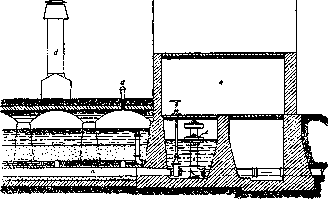
To obtain good results in water purification, English filters require that their operation be conducted according to a specific program developed in strict accordance with the performance and design features of the given filters. The filtration speed must be uniform throughout the day and night and not exceed 100 mm per 1 hour. Filtration speed is defined as the height of the water column that has passed through a unit of square area per unit of time. A change in filtration speed is always accompanied by a change in the pressure under the influence of which filtration occurs, and this easily causes ruptures of the delicate film and disrupts the proper operation of the filter. If English filters work in constant contact with pre-filters, as is the case in Moscow, then the filtration speed can be increased by 1.5–2 times without special damage. To regulate the filtration speed, each filter is equipped with a corresponding device—a regulator, located in the chamber that discharges purified water from the filter (see Figure 5). In this case, the regulator allows only a certain amount of water to flow out per unit of time, thanks to which a specific and uniform filtration speed is maintained in the filter. The water to be purified is taken from the reservoir by means of a special intake. To free the water from large objects and coarse impurities floating in it, the intake end of the pipe on the intake is grated, and tinned copper screens are often added.
filter; c—filtration speed regulator; t—discharge pipe; a—pipe leading water into the chamber (filter collector); d—filter ventilation. with gaps of about 1 cm. Occasionally used 'grid sections' of filtration stations play at the same time a secondary role as aerators. Independent aerators are also constructed, mainly in the U.S.A., in the form, for example, of large gushing jets, which help to reduce the odor and taste of water during the blooming of reservoirs, in the presence of oily films, petroleum residues, etc. Before entering the English filters, the water is usually subjected, after the intake, to sedimentation in large open or closed basins, where the greater part of the suspended particles (sand, clay, etc.) settles; this greatly protects the filters from rapid contamination and improves their entire operation. Sedimentation tanks are of two main types, differing by the period of sedimentation: in one case this period is measured in months and weeks, in the other—in hours. For example, in London, Washington, and Philadelphia, water is settled for 5-14 days; in Moscow, from 8 to 12 hours. The first type is structurally simplified, without a cover, but requires very large water reservoirs, since it plays, mainly, the role of a settling basin, greatly increases the effect of sedimentation, including in relation to bacteria, and is of great importance for English filters, as it significantly improves the water during periods of increased turbidity and bacterial count (spring floods, freshets). Its disadvantages are blooming (combated by using copper salts in negligible doses). During large river freshets, when the water is extremely turbid from suspended extremely fine clay particles, they resort, in addition to sedimentation, to chemical treatment of the water by 'coagulation' and to passing it through preliminary, fast-acting filters, after which it is directed for final purification to the English filters. The process of coagulation consists in adding a solution of aluminum sulfate in the amount of 0.5 - 2 g of Al2(SO4)3 · 18H2O to the turbid river water before it enters the sedimentation tank per
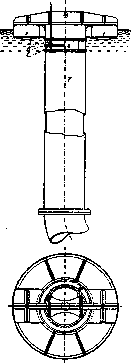
Figure 5. Lindley system filtration speed regulator: c-floating float; g-water inlet window; ABC-gate valve for regulating the window size, T-pipe draining water from the regulator into the purified water reservoir. Bottom drawing - top view of the Lindley regulator. 12.3 l of water. Due to the interaction with bicarbonate salts of lime and magnesia, which are always present in water, aluminum sulfate decomposes with the release of a flocculent precipitate of aluminum hydroxide, which envelops the clay particles and bacteria present in the water and, settling, carries about 75% of them to the bottom of the settling tank. Upon leaving the settling tank, the coagulated water still contains a significant amount of unsettled aluminum hydroxide flakes, and in order to retain them and thereby protect the English filters from their clogging action, the water from the settling tank is passed through fast-acting preliminary filters ('pre-filters') loaded with gravel and coarse sand. Depending on the properties of the water being purified, preliminary filters are arranged in various systems, e.g., Reisert's, Puech's, Maignen's, etc. In Bremen and some other cities, instead of preliminary filters, double water filtration according to Gotze is used, through two English filters arranged one after the other. In Moscow, where the operation of English filters is distinguished by great perfection, coagulation of river water is used only a few times a year, mainly during the spring flood and other large floods on the Moscow River. Preliminary filters in Moscow work all year round, because their continuous operation proved to be very advantageous in that it improves the quality of the filtered water and at the same time significantly lengthens the periods of useful work of the English filters, reducing expenses for their cleaning and additional loading. In Moscow, the settling tank retains up to 88% of bacteria during coagulation, i.e., during floods, and in winter and summer, when river water contains few bacteria and suspended particles, this retention drops to 0-37% of bacteria. In the winter months, more bacteria are often noticed in the settled water than in the river water. Preliminary filters retain from 32 to 51% of bacteria with coagulation and from 45 to 70% without coagulation. Often, water that has passed through preliminary filters and then enters the English filters contains less than 100 bacteria per 1 cubic cm, so that the English filters have very little work to do in purifying it. The main factors playing a role in the purification of water by English filters are: 1) biological processes associated with the vital activity of microorganisms inhabiting the film and the upper layers of sand in the filter; 2) mechanical retention of suspended particles by the fine-pored film; 3) attraction (pulling, sticking) of suspended particles and microorganisms by the mucous surface of the sand grains; 4) adsorption (absorption); 5) oxidation - chemical action of oxygen dissolved in the water. The first factor, i.e., biological processes, is of the most important significance. In Russia, Shidlovsky was the first in 1881 to raise the question of the participation of microorganisms in the chemical action of English filters on water. He experimentally showed that sand filters only convert organic substances of water into inorganic compounds when the sand has been in use for a sufficiently long time and substances serving as a soil for the development of lower organisms have managed to accumulate in its pores. If the sand is calcined, the microorganisms die and the chemical work of the filter ceases. Piefke in Berlin came to the same conclusions; he found that a filter loaded with sterilized sand works significantly worse than an ordinary one and retains bacteria from water very poorly. Not absorption (Adsorption) and oxidation (Oxidation), but consumption (Konsumption), according to Piefke, is the factor which improves water during the process of its purification by English filters. Well-functioning English filters eliminate all suspended particles and all visible turbidity from the water, they improve the taste and odor of the water, remove ammonia, nitrous acid, hydrogen sulfide, and significantly reduce oxidizability. Filters have an insignificant effect on the reduction of dry residue, lime, magnesia, chlorine, and on the color of the water. The number of bacteria in the water decreases sharply, with the percentage of their retention reaching 99.0-99.9%. Some authors, based on experiments in Lawrence, defend the rule: the permeability of bacteria of raw water is inversely proportional to the square of the filtration speed and directly proportional to the effective size of the loading sand. By useful ('effective') coarseness of sand, they mean the size of the sieve openings that allow the finest sand grains, which make up 10% of the sand volume, to pass through. The ratio of the average coarseness of sand grains to the effective coarseness is the uniformity coefficient. According to American requirements, the uniformity coefficient should be between 1.7 and 3.0. One cannot count on the complete removal of all bacteria from water by means of filtration through sand; although bacteriological control under favorable conditions may at times indicate the complete absence of bacteria in filtered water, this is only a very rare, and perhaps even accidental, phenomenon, depending on the fact that during bacteriological control, only a negligible amount of the total mass of filtered water is taken for inoculation, usually no more than 1 cubic cm. According to Koch's instructions, verified in practice, the work of English filters can be considered impeccable from a sanitary point of view if the filtered water exiting it contains no more than 100 bacteria per 1 cubic cm. At the present time, regular bacteriological control of English filters is considered absolutely necessary for all filtration stations purifying drinking water. Only filters that provide filtered water with a content of no more than 100 bacteria per 1 cubic cm should be included in the city water supply network. It should be noted that the work of English filters, if they have additional structures and if their operation is conducted correctly, is distinguished by great constancy, and a mature filter that has established good work provides high-quality water containing less than 100 bacteria per 1 cubic cm, almost until its complete clogging by an excessively overgrown film. As for the question of the retention by English filters of pathogenic bacteria (typhoid fever, cholera, etc.) from water, very thorough experiments (Piefke, Fraenkel, Kabrhel, and others) have shown quite clearly that pathogenic microorganisms can penetrate through a sand filter and appear in the filtrate. The probability of such an occurrence is, in general, small if one takes into account that in practice one never has to deal with drinking waters contaminated with such a huge amount of pathogenic bacteria as was used in experimental studies; nevertheless, the possibility of such a sad occurrence cannot be absolutely denied. Numerous statistical data, carefully developed for many cities of Europe and America (in particular for Berlin, Munich, Dresden, Hamburg, Vienna, Paris, Odessa, Warsaw), testify that cases of typhoid fever and gastrointestinal disorders in general in these cities decreased strongly after the installation of good water pipes fed by river water purified by English filters. The course of the famous cholera epidemic in the autumn of 1892 in the city of Hamburg and in the city of Altona located next to it is highly demonstrative. Both cities use tap water from the Elbe River. Hamburg, which was supplied with unfiltered water from the Elbe River, was severely devastated by the cholera epidemic in the autumn of 1892, while at the same time Altona, which used filtered water from the same river, remained spared by cholera. For the purpose of prophylaxis, constant sanitary supervision should still be established over the reservoir from which water is taken for filtration, and a sanitary protection zone (see) should be established. In case of fecal contamination of the reservoir, especially during an epidemic time, one should resort to chlorination (see) or ozonation (see) of the water. In Moscow, there is a special installation for chlorination at the English filters, which has been used frequently in recent years due to significant pollution of the water in the Moscow River. In order to be able to timely ascertain fecal contamination of the reservoir, during bacteriological control of English filters, in addition to standard bacteriological inoculations, regular examination of the water subject to purification, as well as filtered water, for colon bacillus (Bac. coli commune) is performed. Summing up everything said about English filters, one can fully recommend these filters for the central purification of tap water. English filters are applicable with the greatest success to waters distinguished by a low content of clay turbidity and low color, or, at least, to waters in which these qualities deteriorate for a relatively short (1-2 months a year) period. These are, mainly, waters of lakes and rivers with constancy in relation to the above-mentioned properties. In other cases, English filters require most of the above-mentioned additional installations for preliminary purification (periodic coagulation, pre-filtration, etc.). English filters are also very useful as a final process after American filters operating on heavily polluted water.
The English filters that have been operating excellently for a long time in Berlin, Warsaw, Odessa, Moscow, and many other cities can serve as a good example and even a guarantee that, with proper construction and appropriate operation, water purification will be fully ensured.
Related articles
Mentioned in
Cite this page
“English Filters.” Soviet Medical Encyclopedia. English translation of Bolshaya Meditsinskaya Entsiklopediya, 1st ed. (Moscow, 1928–1936), ed. N. A. Semashko. https://sovietmedicalencyclopedia.pages.dev/article/english-filters/