American Filters
Historical document, translated for reference. It reflects medical knowledge of the 1920s–30s and is not medical advice.
Summary
An article from the 1928-1936 Great Medical Encyclopedia describing American rapid sand filters used for purifying turbid river water. It details the combination of chemical coagulation using aluminum sulfate and mechanical filtration, contrasting them with slower English sand filters.
Encyclopedia article (1928–1936)
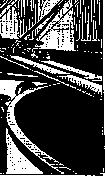
AMERICAN FILTERS, rapidly operating sand filters that began to be used for purifying turbid river waters at the end of the 19th century in America, which is why they received the name of American filters as opposed to slow-acting sand filters known by the name of English filters (see English filters). The filtration speed in American filters is from 3 to 5 m, and sometimes up to 10 m per hour and, thus, exceeds the normal speed of English filters by 30-100 times. As a result of this, the dimensions of American filters are many times smaller than those of English ones. For the installation of English filters with a productivity of 1 million buckets per day, about 1 hectare of land is required, whereas American filters of the same productivity can be placed in one small building (see Figure 1). Water purification in American filters represents a combination of chemical and mechanical methods. First, the water is treated with a chemical reagent, a "coagulant" (the first stage of purification), and then rapidly filtered through sand (the second stage). For the chemical treatment of water, aluminum sulfate is used, which upon addition to the water enters into exchange decomposition with the carbonic acid salts of calcium and magnesium present in the water. As a result, a loose flaky precipitate of aluminum hydroxide is released: Al2(SO4)3 + 3Ca(HCO3)2 = Al2(OH)6 + 3CaSO4 + 6CO2. The flaky precipitate of aluminum hydroxide during its formation envelops the turbidity and bacteria present in the water and together with them is partly deposited at the bottom of the settling basin, and partly carried with the water onto the sand filter, where filtration takes place. The treatment of water with aluminum sulfate is called "coagulation." Depending on the properties and degree of pollution of the river water, from 20 to 160 g of Al2(SO4)3·18H2O per 1 cubic meter is added for its coagulation, which corresponds to 0.25-2 zolotniks per 1 bucket. Along with the aluminum coagulant, others are also used, mainly iron sulfate, often simultaneously with lime. Turbid waters are better coagulated with lime, which is introduced both in the form of oxide and in the form of hydroxide (milk of lime); this is more convenient, especially for small stations, but less economical and requires constant mixing. In America at the present time, machines are used that supply these chemical additives in the form of powder (dry pulverization). The designs of the mixer are various: with the use of mechanical stirrers and without them, in the form of narrow basins where water makes a zig-zag path, turning around the end of each longitudinal partition by 180° ("around-the-end") or alternately falling from top to bottom thanks to partitions that do not reach alternately either to the ceiling or to the floor of the channel ("up-and-down"), and others. After the mixing chambers, the water with flakes of coagulant enters the settling tank, and its transition must be so designed as not to break these flakes. In the settling tank, the coagulated water leaves the greater part of its flakes, while the remaining floating flakes of coagulant are already retained by the filter, forming a thin gelatinous layer on the surface of the sand, partly analogous to the film of English filters, but not possessing the specific biological properties of the latter. Settling tanks with American filters are usually built of smaller sizes than with English ones. The settling period in them is from 2 to 6 hours, the average depth is usually 3.5-4.5 m.
The pollution of open reservoirs under the influence of the growth of industry in the USA and standard requirements for purified drinking water have now forced technical thought to improve modern purification methods. These include methods of so-called double coagulation, double chlorination, along with double water filtration. First applied in Portsmouth, Ayrton, and other cities of Ohio, this double coagulation was tested with success in the city of Cincinnati. Here the purification process developed as follows: coagulation [Al2(SO4)3] and prolonged settling (up to 72 hours), secondary coagulation and secondary 5-8 hour settling, filtration through mechanical filters, and chlorination. The final product met standard requirements, and the cost of double coagulation compared to ordinary was even lower by 18.1% due to the extension of the filter operation period and a decrease in water consumption for washing. In their outward appearance, American filters represent wooden, iron, or concrete tanks of various sizes, loaded with fine sand with a grain diameter of 0.3-1.0 mm; the thickness of the filtering layer fluctuates within the limits of 0.7-1.5 m. The bottom of the filter is made of a durable fine mesh or equipped with nozzles with small openings through which the purified water enters the outlet pipe. Instead of natural sand, Americans recommend using finely crushed, sifted
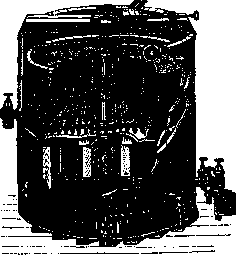
Figure 2. American open filter of the Jewell system.
quartz, distinguished by exceptional purity, hardness, and compositional uniformity. - There are two main types of American filters: a) open or gravity filters and b) closed or pressure filters. In open filters, filtration proceeds only under the pressure of the water level difference on the filter and in the regulator; in closed filters, the pressure is greater thanks to the head of the water supplied to the filter. Open filters generally work better than closed ones. Depending on design features, there are a number of American filter systems—open filters of the Jewell, Warren, Howatson, Continental, Candy, Desrumeaux systems, etc.; pressure filters of the Jewell, Riddell, and Neptune systems. Open filters of the Jewell system are the most widely used. They consist of (see Figure 2) tall wooden or iron tanks divided into two halves: upper and lower. The lower half serves as a settling basin; into the upper half is inserted another, smaller tank filled with sand, intended for water filtration. The water to be purified is mixed with a certain amount of coagulant and enters the settling basin; here it makes a slow circular movement for 15-20 minutes and, leaving part of the coagulant flakes at the bottom of the settler, rises through a wide central pipe into the upper vat and fills it, distributing itself evenly over the entire surface of the sand. After passing through the sand, the water is collected by a system of tubes equipped with mesh strainers and enters a pipe leading it into the clean water reservoir. To maintain a constant and uniform filtration rate, a Howatson regulator (see Figure 3) is attached to the discharge pipe, which passes only a specific amount of water per unit of time. To add a coagulant solution to the water being purified, a small tank with a cock is arranged, the opening of which is regulated by special diaphragms; sometimes the coagulant solution is injected into the water by means of a special pump. Passing large amounts of coagulated water, American filters become clogged after 6-12 hours of operation with coagulant flakes settled in it and other suspended particles from the water. This contamination gradually penetrates the entire thickness of the sand and leads to a rapid deterioration in the quality of the filtered water. As soon as the filter begins to show signs of clogging, its operation is stopped, and the filter is cleaned. For this, the filter is emptied of water and clean filtered water is passed through it in the reverse direction from bottom to top under a known head for 5-15 minutes. At the same time, a metal stirrer immersed in the sand in the form of a rake with long teeth is brought into action. These rakes are rotated by a machine around their axis first in one direction, then in the other, mixing the sand. Clean water, passing from bottom to top through the entire thickness of the stirred sand, carries away the accumulated dirt and, overflowing through the edges of the filter, goes first into the intermediate space between the walls of the tanks, and from there into the drain for dirty water. In some filter designs, instead of mechanical stirrers, during filter washing, compressed water or steam is blown through the sand from bottom to top, which mixes the sand. On average, from 5 to 10% of all filtered water is spent on washing the filter; during floods, this amount reaches 20-25%. The minimum velocities of the wash water current are about 3 m/min, 3.5-4.5 m/min are more effective, and sometimes they are brought up to 7 m. The duration of washing is 3-8 minutes. Upon completion of the washing, the filter is put back into operation, and the first filtrate, as unsatisfactory, must be discharged into the drain for 20-30 minutes. From time to time, it is recommended to treat the sand in the filters with a hot, strong soda solution to remove firmly adhered dirt that is not washed off during normal washing. The sizes of American filters, depending on their design and capacity, can be very diverse. Of the open filters of the Jewell system, the most convenient for operation are filters ranging from 3.5 to 4.5 m in diameter, with a normal capacity from 1,000 to 1,200 cubic meters (80-100 thousand buckets) of water per day. Jewell filters can also be arranged without settling basins in their lower part; in such cases, the total height of the tank is reduced, and the settling basin is arranged separately. The closed pressure filter of the Jewell system has approximately the same device as the open gravity filter; its closed tank is made of durable boiler iron; it operates under enhanced water pressure. Cylindrical reservoir shapes of American filters in the USA are currently used only for temporary and small installations or when operating under pressure. In 1901, the city
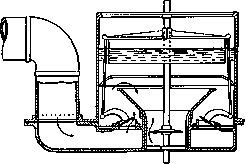
Figure 3. Filtration rate regulator of the Howatson system.
Marietta (Ohio) introduced rectangular reinforced concrete reservoirs, which have now become widespread. The thickness of the sand layer is 0.609-0.760 m; good results, depending on local conditions, are also obtained with smaller dimensions. The effective size is 0.35-0.60 mm, the uniformity coefficient is 1.5-1.7. The entire required filtration area of rapid filters is divided into a number of compartments with a capacity of 2,273-4,546-9,092-13,638-18,184 cubic meters per day (0.5-1-2-3-4 million gallons) and more. Measuring instruments and handles for controlling all compartments are often concentrated on one or two control boards. Properly functioning American filters retain all suspended particles from the water and yield a completely transparent filtrate. The yellow humic coloration of river waters sharply weakens, the amount of organic substances and ammonia in the water strongly decreases, the amount of sulfuric acid increases, as a result of which the permanent hardness of the water also rises. Bacteria are retained from 95 to 99%. The percentage removal of Bacter. coli is 90-99%. Laboratory control consists in determining water temperature, turbidity, color, alkalinity, hardness, bacterial count at 20° and 37° (presumptive Bacter. coli-test), and residual chlorine upon chlorination. Mostly, control is needed daily, and at large stations up to several times a day. Information is sent weekly to the relevant public health authority. Among the important disadvantages of American filters from a sanitary point of view, the following must be noted: 1) the lack of automatic operation and consistency in their work; periods of good performance are often replaced by periods of unsatisfactory performance; the filtration rate and the degree of water coagulation must constantly vary depending on changes in the composition of the water to be treated; 2) the filters require very attentive and highly qualified supervision and maintenance; 3) the onset of good filter performance after backwashing and the onset of its poor performance before backwashing are established only approximately, usually "by eye"; at the same time, there is no sufficient guarantee that water of безупречная in sanitary terms will continuously flow into the treated water reservoir; 4) due to frequent backwashes, several times a day, and the short duration of useful operating periods between backwashes, timely, namely preliminary bacteriological control over the operation of American filters is impossible; 5) unlike English filters, the operation of American filters shows a more abrupt dependence of bacterial water purification on the degree of bacterial pollution of the water body; the richer the water body is in bacteria, the greater, other things being equal, the number of bacteria that will pass through American filters, although the percentage of retained bacteria will be very high—95-99% (Friedberger, Khlopin). Therefore, when treating river and lake waters with American filters, it is necessary to monitor the sanitary protection of the water body very closely and, in case of any suspicions of its pollution, especially during epidemic times, resort to chlorination or ozonation of the water. Among the technical disadvantages, American filters have the following: 1) wasteful expenditure of large quantities of filtered water on frequent backwashes and on discharging the filtrate after backwashing; 2) not entirely uniform mixing of the coagulant with water; 3) fairly rapid wear of moving parts of the mechanisms in the filters. Among the positive aspects of American filters, one should include their property of retaining very fine clay turbidity from the water and sharply reducing the yellow humic coloration of the water. The question of using American filters for purifying drinking tap water has been repeatedly discussed at waterworks congresses, as well as in special scientific literature, but we still do not have a fully definite and final opinion on their operation. Unreservedly good reviews can be found in American literature. Very large installations of American filters operate quite successfully in various cities of the USA. Good reviews of American filters are given by Bitter, Gotschlich, Schreiber, and less than fully satisfactory ones by Friedberger and Hilgermann and the Moscow commission that worked under the chairmanship of S. Bubnov (1901-1903). From our practice, it can be pointed out that some cities, for example, Nizhny Novgorod, Stalingrad, Ulyanovsk, Vladimir, Rybinsk, Tobolsk, and others, which installed American filters back in the pre-revolutionary period for purifying tap water, were not always satisfied with the results of their operation regarding water purification. Likewise, at the present time, the operation of American filters in the cities of the USSR is not distinguished by perfection. The reason for this should be sought partly in the structural defects of the filters, partly in the complex conditions of their proper operation, which requires experienced and highly qualified maintenance personnel. The latter also explains the fact that newly installed American filters work properly as long as they are under the management of the instructors who installed them, but as soon as supervision passes into other hands, the results of water purification usually deteriorate. Filters of the American system in the USSR are built by the state firm "Neptun" (Moscow). In Germany: Maschinenfabrik Grevenbroich (Rhld.); Gesellschaft für Stadtereinigung und Ingenieurbau, Wiesbaden; Firma Dehne, Halle; Halvor Breda, Berlin; Wold. Lehrmann, Berlin-Südende, and many others. The agency for Jewell filters is located in Berlin at V.A.M.A.G. (Berlin-Anhaltische Maschinenbau-Aktien-Gesellschaft, Berlin NW 87).
Related articles
Mentioned in
Cite this page
“American Filters.” Soviet Medical Encyclopedia. English translation of Bolshaya Meditsinskaya Entsiklopediya, 1st ed. (Moscow, 1928–1936), ed. N. A. Semashko. https://sovietmedicalencyclopedia.pages.dev/article/american-filters/