Reservoirs
Historical document, translated for reference. It reflects medical knowledge of the 1920s–30s and is not medical advice.
Summary
Reservoirs are artificial structures for collecting and storing water, used for various purposes including water supply, navigation, power generation, irrigation, and flood protection. The article discusses their construction, historical examples, sanitary significance, and the importance of proper site selection and maintenance.
Encyclopedia article (1928–1936)
RESERVOIRS, artificial structures which serve for collecting and storing water. In private cases, with small dimensions, they are called ponds, but usually under the term R. are understood mainly large-capacity containers for spring or atmospheric waters, formed by damming valleys of rivers, outlets from lakes or mountain streams and gorges. Dams constructed at R. in the upper reaches of the Volga River and intended for regulating low-water flow in the upper course of the river have been given a special name - beishtov. In connection with the construction of R., a number of sanitary issues arise. In the case of spring waters, R. are arranged for more complete use of the varying debit of sources, and with surface waters, reservoirs serve for collecting water during spring floods or during periods of snow melting on mountain peaks. Then the accumulated masses of water are used for various purposes: 1) for water supply of cities and populated areas; 2) for navigation, - providing the necessary amount of water to feed locks and canals and increasing the depth of the river during droughts or low-water level; 3) for power stations by creating the necessary pressure and regulating the water flow depending on the consumed energy; 4) for reclamation and 5) for protection against floods. R. were already constructed in deep antiquity; thus, Lake Merid - one of the artificial R. of ancient Egypt - had a surface area of over 120 sq. km. In the USSR there is a large number of R., serving for navigation purposes; the most famous of them are the following R., constructed for feeding the Volga River: Reservoirs in k ch % * So sh Height of backwater in m S2 ~. go. K g mi Upper Volga . . Zavodskoe ...... White Lake .... 6.1 5.3 2.7 Figure 1 shows the Upper Volga reservoir, formed by backwater of a series of lakes located in the upper reaches of the Volga River. On our rivers there is often a large number of dams with low water backwaters, forming R. of small capacity, to drive mills and turbine installations of industrial enterprises; such dams have also received great development for water supply of railways, but the use of water energy reserves for the construction of central power hydroelectric stations has been widely applied only in recent years. At present in the USSR have been built and put into operation: Sterovskaya regional power station in the Donetsk coal basin; Zemo-Avchal power station, at the confluence of the Kura and Aragva rivers, 12 km from the city of Tiflis; Vol-;khovskaya station on the Volkhov River for supplying energy to the city of Leningrad, etc. The construction of R. for water supply is widely applied abroad, and many cities : of Europe and America, as, for example, New York, Washington, Manchester, Liverpool, Dundee, Halifax, St. Etienne and others use drinking water from reservoirs. In recent years, reservoirs for water supply of cities and populated areas have also received great development in Germany. The volume and purposes of several reservoirs are given: in tabl. (pp. 383-384).-In fig. 2 is shown the reservoir, du Gouffre-d'Enfer, serving for water supply of the city of St. Etienne. Location Capacity Height Material Purpose of reservoir cubic m in m dam Laonten, Nevada . . 370.0 37.8 Earthfill Irrigation Kachess, Washington . 250.0 19.8 » » Water supply West Ashok .... 500.0 - & New York Water supply New Croton . , . - Stone New York Water supply St. Etienne, river Furene 1.6 52.5 » Rubble St. Etienne Wupper, river Kerspe . 15.5 28.5 masonry Water supply Saxony, river Val- Rubble de Weisseritz . . . 18.5 45.0 masonry » Ruhr region, Rubble Water supply 134.1 40.3 masonry Rubble and regulation Protection against floods Silesia, river Bobr . 50.0 48.0 masonry nying Thuringia, river Upper Zadle .... 215.0 65.0 Concrete Power plant San.-hygienic significance of R. Water in R. of small capacity and shallow depth, called ponds, stagnates, undergoes blooming and often spoils. With large capacity of R. and sufficient depth, these unfavorable phenomena do not occur. In R., regulating the flow of rivers, water undergoes settling, large suspended particles and turbidity, which are brought into the river during floods and periods of heavy rainfall, settle, the water becomes transparent, and the bacterial content in it decreases. Therefore, such R. are arranged for water supply of populated areas. With a certain favorable combination of atmospheric and local conditions in R., water blooming may also appear, but the developed plankton in further movement along the open channel of the river undergoes processing due to the observed phenomenon of self-purification of rivers; if this process does not complete completely, then the plankton can be easily removed by modern water purification methods. With the construction of R. in the adjacent area, the regime of groundwater changes and their level rises, but since usually sections of the river with a wide floodplain and steep banks are chosen, then waterlogging of spaces lying above the water level, in individual cases, may not be observed. R., serving for water supply, should be arranged as far as possible in sparsely populated areas; in the same settlements, which will lie near them, it is necessary to take measures for their sanitary improvement and regulation of wastewater disposal. The construction of each R. must be preceded by detailed and comprehensive studies of the adjacent area in sanitary and geological aspects, and the water body itself, on which it is planned to construct R., must be studied from hydrological, chemical and biological sides. Only with favorable results of such studies R. can be used for water supply purposes, and for their proper operation a protective zone with constant sanitary control and supervision over the improvement and sanitary condition of the area and population adjacent to R. must be established. Lit.: Timonov V. E., Water supply and sewers («Reference book of the Petrograd district of communications», part 2, P., 1914); Kondrashchev A. V. and K r o t o v N. I., Water supply of the city of Moscow by means of constructing reservoirs in the upper reaches of the Moscow River and its tributaries («Works of the Commission for exploration of new sources of water supply of the city of Moscow», issue 1, M., 1927); Struganov S. N. and Z a-k h a r o v N. G., Volga, Oka and Moscow River as sources of water supply of the city of Moscow. Hydrobiological studies (ibid., issue 3); Ozerov S. A., Volga, Oka and Moscow River as sources of water supply of the city of Moscow. Chemical studies (ibid., issue 4); Akulov K. A., Navigation canals and their construction, 1912; Z i e g l e r, Der Talsperrenbau, B. I, 1925.
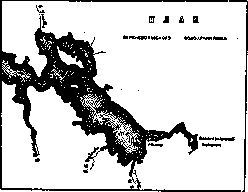
Figure 1.
Reservoir du Gouffre-d'Enfer. a M Aebvka te'W***Я'U, flg^UtSЩ. <1»^5«(ШИ^''^!>Й\ „.^EEB^^^*"^' Яплна USSfise®03" 'Ц'^^&ЩШяР'** "^sjSSZSrs^rii^'j^' Figure 2.
Related articles
Mentioned in
Cite this page
“Reservoirs.” Soviet Medical Encyclopedia. English translation of Bolshaya Meditsinskaya Entsiklopediya, 1st ed. (Moscow, 1928–1936), ed. N. A. Semashko. https://sovietmedicalencyclopedia.pages.dev/article/reservoirs/